Categories
Accountability general freedom nannyism national politics & policies responsibility too much government

Report from the Lab

The State of Idaho does something the federal government should emulate. The only state I can think of that has a popular candy bar named after it has a legislature that regularly nixes regulations made by the state’s executive branch.

Think of it as a line-item veto for the legislature.

Now, at this point, if you know the Constitution but not today’s “living Constitution,” you might wonder: Don’t legislatures write the regulations? Alas, at the federal level, as in most states, the legislative branch has granted to bureaucrats in the Executive Branch a great deal of leeway to cook up what sure feel like “laws.”

“Last year the Federal Register,” Wayne Hoffman explains in theWall Street Journal, “which publishes agency rules, proposals and notices, exceeded 80,260 pages — the third-highest in its history, according to a report from the Competitive Enterprise Institute.”

Idaho provides a good model for taking back such ceded legislative power.

Let’s remember the idea of “the several states” experimenting with new and old ideas separately, heralded in a famous phrase, “laboratories of democracy.”

This allows good practices to spread slowly throughout all the states . . . based on results.

Meanwhile, Mr. Hoffman informs us, Idaho’s practice is traditional, not hallowed in the state’s constitution. A 2014 referendum narrowly failed to get Idahoans to change the constitution to incorporate this “best practice” into explicit law — the legislature had not adequately explained the situation to the public first time around — Idaho solons are trying again.

Make representatives responsible for regulations, and therefore more accountable.

This is Common Sense. I’m Paul Jacob.


Printable PDF

bureaucrats, regulation, laws, Idaho, illustration


Illustration: Golconda by René Magritte
 

Categories
Accountability Common Sense general freedom ideological culture initiative, referendum, and recall insider corruption media and media people moral hazard nannyism national politics & policies political challengers responsibility too much government U.S. Constitution

America After November

Yesterday, I bemoaned the disaster that is this year’s presidential race. But big whup. As the LifeLock commercial rightly asks, “Why monitor a problem if you don’t fix it?”

Hillary Clinton or Donald Trump will be the next president. That means we have our work cut out for us. And we can’t wait for the 2020 presidential race to fix the problem. We must immediately assert citizen power to create an effective check on government-gone-wild.

So, what to do?

First, let’s admit that fixing Washington isn’t easy. We must fight the Feds through national organizations, of course, but we actually gain greater leverage by working closer to home — at local and state levels.

We need to elect mayors, governors, legislators and councilmembers in 2017 and 2018, men and women who will fight for free markets and against cronyism. And stand up to the federal government.

And where we have the power of ballot initiatives and recall, let’s use it.

By Inauguration Day, we can be changing the conversation in most of the top 25 media markets. How? By petitioning the right issues onto the ballot. By April and May, voters in those cities and counties can directly enact those reforms. Next November, Ohio and Washington state voters can weigh in with ballot initiatives.

Sadly, tragically, it’s too late to stop campaign 2016’s tornado from doing damage. The next disaster of an administration is on its way. But we can create a competing agenda to the Hillary Clinton or the Donald Trump agenda.

A pro-liberty agenda. Starting now.

This is Common Sense. I’m Paul Jacob.


Printable PDF

activism, politics, elections, initiatives, president, Trump, Clinton, meme, illustration


Original (cc) photo by Niklas Hellerstedt on Flickr

Categories
Accountability crime and punishment general freedom government transparency moral hazard nannyism national politics & policies political challengers Regulating Protest responsibility too much government

How Insidious the Plot?

The story of the Wisconsin John Doe raids against conservatives, covered yesterday and the day before, is a big one. Huge. So I now continue.

The rest of the story? Recently, materials that police seized from the subjects of those dawn raids were leaked, illegally, to the Guardian newspaper — in direct violation of a court order. Yet more lawlessness.

Who leaked this information? Well, it was in the possession of the Milwaukee County prosecutors, and they haven’t alleged a Russian hack.

What’s really going on? Eric O’Keefe stated on Monday that “even though they never brought a charge, the prosecutors did achieve one of their major goals: the unlawful seizure of millions of private communications to create a searchable database of political intelligence spanning Wisconsin and the entire country.”

In short, the abusive investigation was part and parcel of a partisan effort.

State Rep. Dave Craig is urging the creation of a special legislative committee to “take sworn testimony . . . to determine whether those charged with the public trust have acted maliciously by intentionally leaking sealed materials in violation of state policy.”

It’s important that justice be done. To prevent future tyranny.

We don’t want to see a repeat of the IRS abuse of Tea Party groups without anyone being held to account.*

This is Common Sense. I’m Paul Jacob.


* Speaking of the IRS, it turns out that the head of Wisconsin’s Government Accountability Board (GAB) was a pal of Lois Lerner, who headed the IRS division responsible for violating the civil rights of Tea Party groups — before she took the Fifth, refusing to testify before Congress and then retiring with a six-figure pension. Further, there is evidence the GAB may have illegally provided confidential information to the IRS in hopes of getting the Feds to join in harassing these conservative groups.


FOR MORE ON THIS INCREDIBLE STORY


Printable PDF

Eric O'Keefe, Gov. Scott Walker, John Doe, Wisconsin


Categories
Accountability crime and punishment government transparency moral hazard nannyism national politics & policies political challengers Regulating Protest responsibility too much government U.S. Constitution

A Morning After

Yesterday we celebrated the end to “a disgraceful episode in Wisconsin history” — the dawn police raids of the so-called John Doe investigations against conservatives alleged to have violated campaign finance regulations.

State and federal courts ruled that no laws were broken and some laws were unconstitutional — certainly Milwaukee County DA John Chisholm’s prosecutorial methods violated the rights of citizens the court called innocent.

The U.S. Supreme Court’s decision, announced Monday, not to hear Chisholm’s appeal thankfully ends this particular reign of error and terror.

So what have we learned?

First, courage is contagious. Had Eric O’Keefe with the Wisconsin Club for Growth not bravely spoken out, others would have remained quiet, and the prosecutors might have gotten away with what National Review’s David French called “a pure intimidation tactic to try to terrify conservatives into silence.”

Another unmistakable conclusion: yes indeed, it can happen here.

It has.

Obviously.

And if changes are not made, it will happen again.

Reforms have already been won. Not only is the John Doe investigation shut down, the law was changed, allowing for no more John Doe attacks. The Government Accountability Board, found to have acted from partisan motives, has been completely disbanded and new ethics bodies formed.

Another avenue of correction comes through the courts. The MacIver Institute filed a class-action lawsuit against Milwaukee County DA John Chisholm and others for illegally seizing documents, and Cindy Archer, whose home was raided by police, has filed a civil rights lawsuit.

Ms. Archer’s suit was dismissed after a federal judge ruled that the prosecutors had immunity. But that dismissal is now on appeal before the federal Seventh Circuit Court of Appeals.

The prosecutors will go to court . . . as defendants.

This is Common Sense. I’m Paul Jacob.


Printable PDF

Eric O'Keefe, Gov. Scott Walker, John Doe, Wisconsin


Categories
general freedom moral hazard nannyism national politics & policies Regulating Protest responsibility too much government

Undefeated

It’s over . . . but it’s not.

A conscientious Show-Me state activist has won his case, but . . .

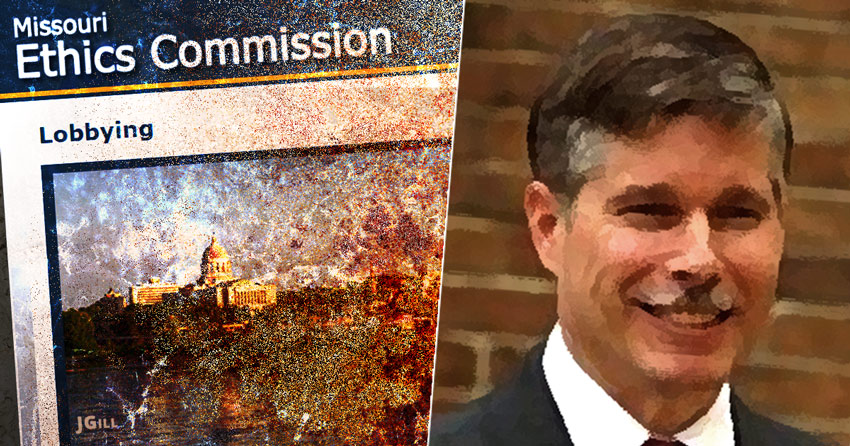
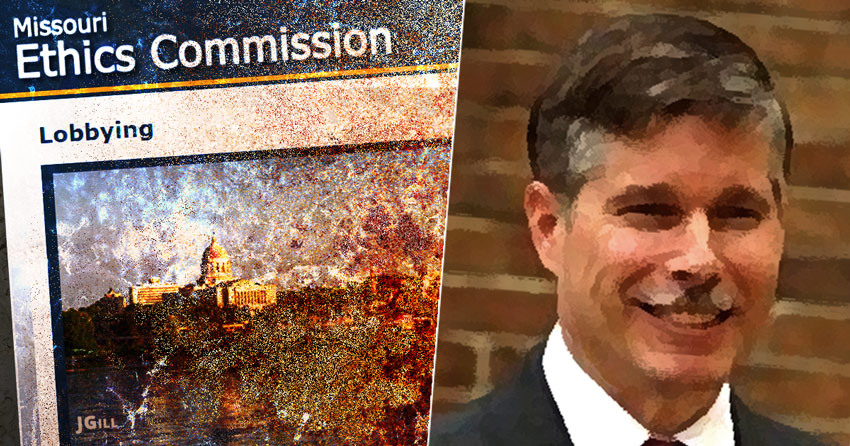
A year ago, the unethical Missouri Ethics Commission fined Ron Calzone $1,000 for not paying a silly $10 fee. To register as a lobbyist. They also ordered him to stop talking to legislators until he complied.

Citizen Calzone didn’t register.

He didn’t pay.

And he didn’t shut up.

On principle.

Instead, he contacted the Freedom Center of Missouri and the Center for Competitive Politics, a national outfit that defends our rights to participate in our supposedly participatory and representative democratic republic.

On Monday, a judge ruled in Ron’s favor, tossing out the “ethics complaint” against him. On a technicality, actually.

Winning is better than losing. But even if someone bothers to try again against Calzone, filing the suit properly*, Calzone would win.

You see, we have rights . . . including the freedom to talk to those pretending to represent us. It is not at all certain that government has any constitutional authority to regulate paid lobbyists.

But Ron is not a paid lobbyist. He volunteers for Missouri First, a citizen group.

So why did the speech police’s long arm reach out to grab him?

He’s effective.

More than a forthright advocate for what he believes, he has proven smart enough to find ways to allow fellow freedom-lovers to weigh in on bills they favor or oppose.

This has endeared him neither to legislators nor the lobbying “community” — professionals paid handsomely to lose to Calzone’s grassroots network. They will strike back. You can count on it.

But as long as there are citizens like him, the people will not be defeated.

This is Common Sense. I’m Paul Jacob.


* The charges weren’t filed by a “natural person,” as the law requires, but by the attorney for the Missouri Society of Governmental Consultants, the state lobbyist guild.


Printable PDF

Missouri Ethics Commission, lobbyist, lobbying, Ron Calzone, Missouri First


Categories
general freedom nannyism national politics & policies too much government

A Federalist Prescription

California has become the 32nd state to stand up for the dying.

Gov. Jerry Brown just signed the “right to try” law that the Goldwater Institute has been pushing. It allows diagnosed terminally ill patients with only a few months left to live to try “experimental” medications.

These are drugs that haven’t passed through all the Food and Drug Administration’s many hoops.

The rationale for the law is that the FDA’s decade-long, costly process is ostensibly designed to prevent “dangerous” drugs from being regularly prescribed and sold and used in the United States. To save lives, you see. But it is simply cruel to hold patients in the process of dying to the strict standards of the slow, bureaucratic federal bureaucracy. Cruel because purposeless.

The Goldwater Institute’s press release clarifies the law like this: “Right To Try is limited to patients with a terminal disease that have exhausted all approved treatment options and cannot enroll in a clinical trial. All medications available under the law must have successfully completed basic safety testing and be part of the FDA’s on-going approval process.”

Hardly radical. Indeed, it seems such a meek and mild move, to me. If you are dying, and your doctor is obliging, who is harmed?

Two things, though:

  1. Had Americans a right to self-medicate — like we did before the Progressive Era nanny state bureaucracies were set up — this issue would not even come up. These reforms are necessary because we are not Once upon a time, all Americans could choose any medication.
  2. This is yet another example of states effectively nullifying federal law.

More please.

This is Common Sense. I’m Paul Jacob.


Printable PDF

FDA, self medication, drugs, medicine, death, illustration


Categories
Accountability ballot access First Amendment rights general freedom government transparency initiative, referendum, and recall media and media people moral hazard nannyism Regulating Protest too much government U.S. Constitution

Four Measures for Rogue Government

Rule of thumb: don’t enact today laws that, had they been obeyed by folks in the original 13 states of our union, would have prevented independence.

Voters in Missouri, South Dakota, and Washington have the “opportunity” to enact such laws this November.

In “Beware of Anti-Speech Ballot Measures,” Tracy Sharp and Darcy Olsen, presidents of the State Policy Center and the Goldwater Institute, respectively, offer a warning. Focusing on Measure 22, the South Dakota Government Accountability and Anti-Corruption Act, they show how dangerous notions like forcing “nonprofit organizations to report the names and addresses of their donors to the state government” can be.

Such disclosure would subject non-profits “to possible investigation by an unelected ethics board that is given the power to subpoena private documents and overrule decisions made by the state attorney general. . . .” Rogue, star-chamber government.

Fever dream?

No. Sharp and Olsen highlight a famous U.S. Supreme Court case that protected the NAACP from the state’s demand for the group’s funding sources. Both women also offer personal tales of how nasty the opposition (in government and out) can become when big issues are on the line.

I can personally attest.

These measures fly in the face of what really matters — encouraging robust public debate. Democracy doesn’t work when people dread participation. As our authors challenge, “[d]o we want America to be a country where government keeps public lists of law-abiding citizens because they dare to support causes they believe in?”

Especially when, without the secret (unreported!) activities of the Committees of Correspondence, the USA would not have become united states in the first place.

This is Common Sense. I’m Paul Jacob.


Printable PDF

speech, anti-speech, NAACP, Supreme Court, First Amendment, Free Speech,


Original (cc) photo by Michael Tracey on Flickr


Categories
crime and punishment ideological culture media and media people nannyism national politics & policies

The Other Half of the Truth

Another terrorist event. And another.

Douglas A. French, of the National Review, while writing about Islam and terrorism, innocently drew up a half-truth: “In Saint Cloud, Minn., Dahir Adan’s family identified him as the man who stabbed eight people in a mall before being shot and killed by an armed civilian, an off-duty police officer named Jason Falconer.” So, what is the missing half of the truth?

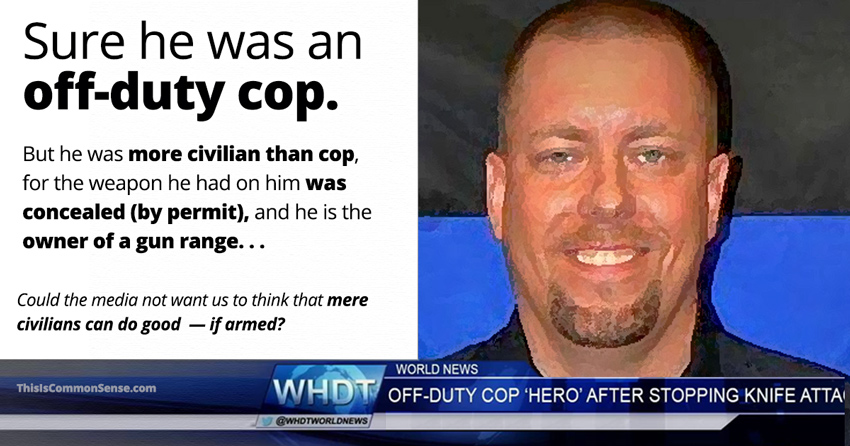
The heroic Mr. Falconer was armed, sure. And an off-duty cop. But he was more civilian than cop, for the weapon he had on him was concealed (by permit), and he is the owner of a gun range.

Actually, a firearms training business that teaches “individuals the mindset, knowledge and skills needed to be successful with firearms in order to secure their personal safety or that of their family, at home or in public.”

Falconer used to be a police chief, and still works part-time as a police officer. But, we should emphasize, his main gig is training. Indeed, he’s an advocate concealed carry and a member of the dreaded National Rifle Association.

I am not criticizing Mr. French. His focus was on something else. And he did use the word “civilian,” which is not the case in most coverage. But that “off-duty cop” meme is everywhere — pushed by most journalists.

Could they not want us to think that mere civilians can do good in a world of too much conflict and crime — if armed?

Let’s honor Jason Falconer. And let’s also reaffirm his message, the importance of concealed carry and trained firearms use by good people.

This is Common Sense. I’m Paul Jacob.


Poor Obama, gun control script in hand


Printable PDF


Categories
Accountability incumbents initiative, referendum, and recall nannyism national politics & policies

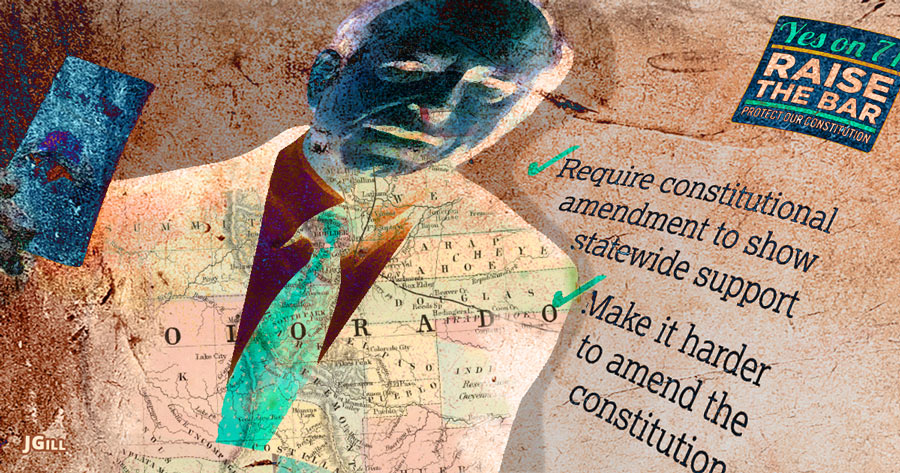
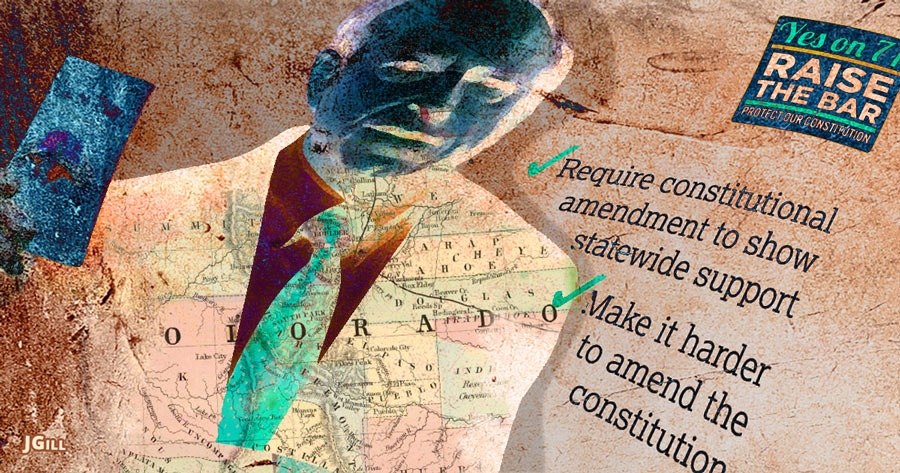
Colorado’s Problematic Solution

There’s a problem in Colorado, or so we’re told. And a solution. But the one doesn’t seem to match the other.

The problem, according to the supporters of Amendment 71, is too many constitutional amendments.

Their solution? Pass another constitutional amendment.

Moreover, even though two-thirds of constitutional changes have been proposed by legislators, not by citizen initiative, Amendment 71 makes it much tougher for citizens to propose amendments, while not altering the legislature’s power.

Maybe that’s because their committee, Rig the Bar . . . er, Raise the Bar, is a bipartisan group of politicians and political insiders. Their amendment would (1) increase the vote required to pass a constitutional amendment to a 55 percent supermajority, and (2) mandate that citizens qualify petitions statewide, as currently required, but also in each of the 35 state senate districts.

This means that to get an issue on the ballot citizens must successfully run 36 petition drives, not just one. And falling short in any single senate district would doom an entire effort. In short, future citizen initiatives would be much more expensive and likely to fail.

Meanwhile, the supermajority vote threshold provides well-heeled special interests with an ability to win even when they lose. Expect the powers-that-be to beat up reform measures with negative ads, knowing that simply by holding YES votes down to 54.9 percent, the establishment wins.

In a recent debate, Elena Nunez with Common Cause explained, “The problem with Amendment 71 is it’s designed to allow the wealthiest special interests in the state to act as a gate-keeper, because the cost of initiatives will go up dramatically.”

This Special Interest Protection Act sure is a problematic solution.

This is Common Sense. I’m Paul Jacob.


Printable PDF

Colorado, initiative, amendment, 71, incumbents, illustration


Categories
folly insider corruption moral hazard nannyism national politics & policies porkbarrel politics responsibility

Settled Science?!?

You probably know that America’s sugar industry is protected, making astounding profits because of high tariffs and artificially raised consumer prices.

And you likely know that government has worked hand-in-hand with agribiz interests to cook up (and regulate) a competitive sweetener, high fructose corn syrup. You understand that there are various types of sugar, and almost certainly suspect that refined sugar is bad for you, with high fructose corn syrup perhaps worse.

In fact, the scientific evidence for the danger of a high sugar diet has been around since the 1950s.

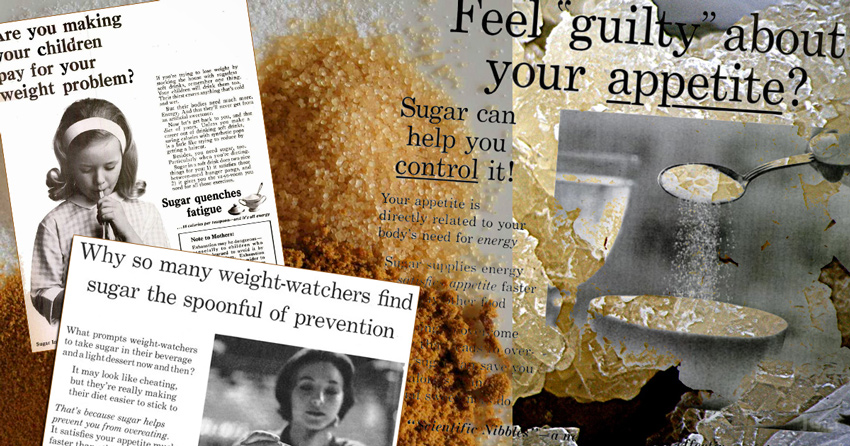
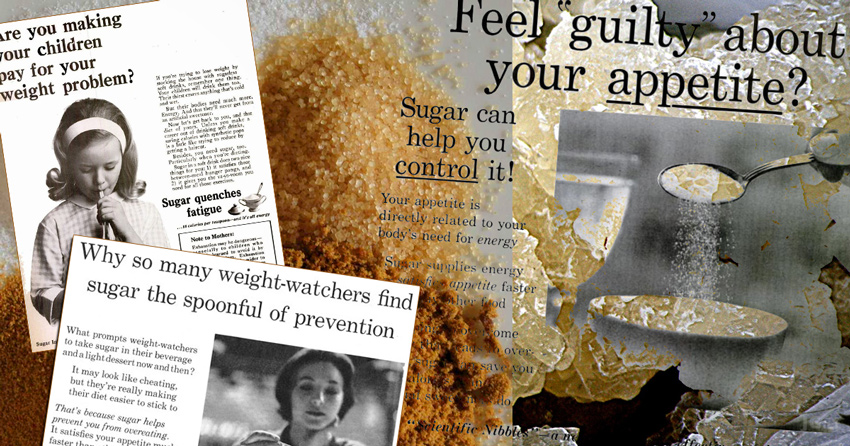
Well, what we now know, Elizabeth Nolan Brown writes at Reason, is “how the sugar industry essentially bribed Harvard scientists to downplay sugar’s role in heart disease — and how the U.S. government ate it up.”

Before Reason weighed in, my colleague Eric D. Dixon sent me a New York Times story, which stated the main proposition plainly: “How the Sugar Industry Shifted Blame to Fat.” But Reason’s Brown is right: it was government that really made this a nationwide disaster. The imprimatur of government sanctified the anti-fat craze, and the government’s own dietary guidance (and regulations) proved grossly wrongheaded.

Now we’re the ones who are gross.

Scientists and government (bought off by a protected industry) fed us a line that many swallowed. We increasingly swapped fat for refined sugars, causing health to decline as girths went out and weights went up.

So when I hear outrageous claims for the “settled science of climate change,” I look at my middle and doubt that “settled” part. And I nurture an unsettling thought. . . . it’s the political science that’s settled: government lies to us.

This is Common Sense. I’m Paul Jacob.


Printable PDF

sugar, lobbying, science, corruption, illustration