Categories
Accountability education and schooling folly local leaders moral hazard

Ugly Scrutiny

Prince George’s County Public Schools have increased their graduation rates faster than all other schools in Maryland. Measuring from 2013 to 2016, the graduation rate jumped from 74.1 percent to 81.4 percent.

Great! 

Well . . . a fly has stuck itself into the soothing salve of their success — what county principals called an “unfair, ugly scrutiny.” Said scrutiny came from the Old Line State’s Board of Education, which voted to pursue an investigation* into what the Washington Post described as “grade tampering” to “drive up graduation rates.”

Keith Maxwell, the county schools’ CEO, says he welcomes the investigation. 

Dozens of whistleblowers have reportedly come forward. Several spoke with the Post, anonymously, for fear of retaliation: 

  • “We knew that it wasn’t real,” said a teacher at a high graduation rate school. “It’s just common knowledge that they push kids through who shouldn’t be pushed through.”
  • “I’m not averse to helping a student pass,” one educator explained. “But when people are pressuring you to do it, when it happens behind your back, that’s when it’s problematic.”
  • “For a child not to come to class — maybe been in class three days in a whole quarter — and you’re going to change their grade?” questioned another teacher. “It’s not right. If they don’t come to school, and they don’t do the work, they deserve to fail.”

She added, “It doesn’t help them.”

Which is the point: the students are being cheated. If graduation doesn’t mean anything, then . . . their diplomas don’t mean anything.

This is Common Sense. I’m Paul Jacob.


*The investigation had been requested by Governor Larry Hogan.


Printable PDF


Categories
Accountability folly general freedom ideological culture moral hazard nannyism national politics & policies privacy responsibility too much government

UK Death Panel

Six days ago, the European Court of Human Rights sided against the parents of Charlie Gard, a severely ill boy, refusing to allow them to take their infant son to America where he could receive full (and privately funded) experimental treatment. The court ruled that removing the child from the hospital would cause him “significant harm” — and authorized the termination of life support.

Yesterday, this site quoted Ben Shapiro on the case. Shapiro sees this sad story as a grand demonstration of what is wrong with government-funded and -managed health care:

Bernie Sanders tweets about how nobody should be denied care because they can’t afford it? But that’s what happens all the time under socialized medicine — the difference being, it’s not about you not being able to afford it, it is about the government not being able to afford it.

Economists tell us that, in a world of scarcity, there will be rationing, willy nilly: either by price (according to consumer and producer choices) or else by government diktat.

Last week, the European Court of Human Rights did its due diligence to ration resources — serving as a Death Panel.

The scheduled to pull the plug on Charlie last Friday, but there’s been a last-minute reprieve — no doubt a result of pressure from America and the Vatican.

Though the doctor who testified before the court insisted that any American medical institution would have provided the treatment he offers, the best the Gards can apparently hope for, now, is to be allowed to take Charlie home to die.

Think of it as socialized medicine in action.

This is Common Sense. I’m Paul Jacob.


Printable PDF


Categories
Accountability folly free trade & free markets general freedom local leaders moral hazard nannyism national politics & policies property rights responsibility too much government

Against Flexibility?

Do politicians have any idea what they are doing?

In Oregon, Senate Bill 828 just passed the Senate and is now being favorably reviewed in the House. The law would require “large employers in specified industries to provide new employee[s] with estimated work schedule and to provide current employee with seven days’ notice of employee[’s] work schedule.”

But will the measure help employees? Really?

The notion is called the “Fair Work Week.” Pushed by Democrats, it has gained bipartisan support. The basic idea: allow time (under full force of law) for workers to manage their own schedules and personal economies.

Trouble is, in the name of making work easier to manage, it attacks flexibility.

Which is something many workers want. More than notification.

Indeed, the study commissioned by the City of Seattle for their similar regulatory scheme acknowledged that reducing flexibility is not necessarily a godsend for workers.

“A more predictable schedule,” the report noted, “is not always one that an employee would prefer. A schedule known with certainty is a cold comfort if it yields too little income to survive.”

The report went on to explain that many of the labor market’s scheduling inconveniences are themselves the result of other government regulations, such as ObamaCare.

Christian Britschgi, writing at Reason, predicts that passing the Oregon law would mean “a fairer worker week” for some, but for others, “no work week at all.”*

Meanwhile, the Seattle study noted that it was workers in small businesses who are most likely to be discomfited by last-minute scheduling changes. The Oregon law applies only to big businesses.

This is Common Sense. I’m Paul Jacob.


* A standard, negative consequence of most “well-intended” legislation.


Printable PDF


Categories
folly free trade & free markets general freedom ideological culture moral hazard nannyism national politics & policies property rights responsibility too much government

Minimally Mugged By Reality

It should shock no one: forcing businesses to pay steep minimum wages ends up pushing some businesses out . . . of business. Yesterday I looked at what minimum wage laws can do to low-skilled workers. Today, consider the employers. When we make it harder to turn a profit, it becomes harder to profit. Businesses that can’t at least break even close their doors.

Many business owners are inclined to promote, politically, politicians who in turn support minimum wage hikes. Do they change their minds when mugged by reality? Alas, the trauma alone won’t convert a person to principled allegiance to free markets.

I was reminded of this fact by a story about business owners in Minneapolis who stress their Sandernista credentials.  

“I’m a bleeding-heart liberal and I’m a big Bernie Sanders supporter,” says businesswoman Jane Elias, an art store owner. “But this whole flat-out, $15, one-size-fits all is just wrong.” Another victim, restaurant owner Heather Bray, says she’s a “proud, proud progressive.” But: “The arithmetic doesn’t work. People will not continue to go to budget-conscious restaurants when they’re no longer budget-conscious.”

So . . . arbitrary minimum-wage demands don’t add up in light of the demands of running their businesses under their particular circumstances. Well, no disagreement here. But take it further, please. Keep doing the math. The bottom line is that everybody, not just you — and always, not just sometimes — has the right to make his own decisions about his own life and property.

And profit by it.

This is Common Sense. I’m Paul Jacob.


Printable PDF


Categories
Accountability ideological culture local leaders moral hazard nannyism national politics & policies responsibility too much government

Minimum Wage Laboratory

Not every popular idea about government policy is good. Or bad. How do we tell the difference?

One way is evidence.

The modern administrative state was promoted heavily by social scientists who thought that piecemeal social engineering should be tested. A few even thought that the older experiment in limited-government federal republicanism gave Americans a near-ideal testing ground: “the laboratory of democracy.”*

Activists and politicians have been pushing big increases in the minimum wage in cities around the country. Seattle, Washington, has been one of those, establishing an $11.00/hour legal minimum in April of 2015, then raising that limit by two dollars in 2016. Now the results are in.

The City of Seattle commissioned a study of “the wage, employment, and hours effects of the first and second phase-in of the Seattle Minimum Wage Ordinance,” and it shows clear results:

  1. The first hike led to “modest reductions in unemployment” but scant change in over-all low-wage employment.
  2. The second hike led to a 9 percent reduction in hours worked at wages below $19/hour;
  3. a reduction of over $100 million per year in total payroll for low-wage jobs; and
  4. total payroll losses average about $125 per job per month.

Jonathan Meer, an economist teaching at Texas A&M University, calls this an “unmitigated disaster.” But he notices that a backlash against it was immediate.

To those who object: do you object to the method or the conclusions?

The only halfway plausible rationale for social engineering of this kind — top-down interventions into markets — has been “social science.” Rejecting evidence is to reject science, which is to reject . . . the minimum wage idea itself.

This is Common Sense. I’m Paul Jacob.


* The idea is to test policy tried in one location against its goals. What works should be mimicked, but only after the evidence is in and results accepted as good. And dropped in cases where not.


Printable PDF


Categories
Accountability folly free trade & free markets general freedom initiative, referendum, and recall local leaders moral hazard porkbarrel politics responsibility too much government

Go Nats?

Just a few miles away from where I live sits the stadium of the Potomac Nationals. I’m a fan. I’d hate to see the team we call the P-Nats leave.

But . . . Hasta la vista.

The owner of this minor league affiliate of Major League Baseball’s Washington Nationals is demanding a new stadium. He threatens to move out of Prince William County, Virginia, if he does not get it.

The Prince William County board of supervisors has already expressed interest in floating bonds to raise the $35 million the fancy new stadium would require — with the privately owned team paying the money back, with interest, over the next 30 years.

Compared to other crony-ish deals around the country, not such a terrible taxpayer swindle. Still, zillions of wrongs don’t make this right. County taxpayers would be on the hook in case of default. And if the marketplace believed the team could actually make such payments, a bank or other investors would come to the rescue.

Thankfully, a monkey wrench has been thrown into the deal. A county supervisor has proposed that voters should get a chance to decide, via a November referendum. The board of supervisors will consider the referendum tonight.

Voters should get the final say. But if there is a referendum, as much as I love having the team here, I will vote NO. I don’t cotton to forcing others to pay for my preferred entertainment.

Government has certain legitimate roles. Subsidizing sports is not one.

Even if the new stadium would be closer to my home than the old one.

This is Common Sense. I’m Paul Jacob.


Printable PDF


Categories
folly free trade & free markets general freedom moral hazard nannyism responsibility too much government

Signature Nonsense

Did anyone really need this?

Last year, California’s Governor Jerry Brown signed into law Assembly Bill No. 1570, which concerns collectibles, particularly signed-by-author or artist books. But it doesn’t mention books, and is confusingly written. What a mess.

Who asked for it?

It certainly wasn’t the struggling booksellers who have come to depend on signed authors’ copies. In the Age of Amazon.com, book vendors need to add value to stay afloat.* Author-signed copies help.

The law says that for signed-by-creator collectibles sold for more than $5 — yes, a mere five smackers — sellers must provide customers a Certificate of Authentication. The law specifies nine “helpful” directions for said certificates. So imagine an edition of Brian Doherty’s Radicals for Capitalism, signed by the author at, say, a non-profit dinner, or at a bookstore signing, or even a late-night bar —discounted to not much over five bucks.** The bookseller must not only provide a certificate, but list the book’s provenance. Talk about an added cost of doing business.

I mention Mr. Doherty not merely because of his excellent book, but because he has not unreasonably confessed that “my own interests could be harmed by any attempt to actually enforce the letter of this law.”

This week on EconTalk, economist Mike Munger mentioned the market’s built-in regulatory features — reputation being the most obvious — for helping consumers avoid getting ripped off buying books . . . and paintings . . . and anything else improved by creator signature.

But, really, can’t we make do with a little caveat emptor as well as caveat lector? Better than regulations this dense.

This is Common Sense. I’m Paul Jacob.


* The number of independent bookstores plummeted (down a thousand) around the country between 2000 and 2007. But there seems to be an increase since then, despite (or because of?) Abebooks and Alibris and other dot coms.

** I found a signed copy of Doherty’s history at Abebooks for $10.


Printable PDF


Categories
Accountability crime and punishment folly ideological culture moral hazard responsibility

Sticks & Stones

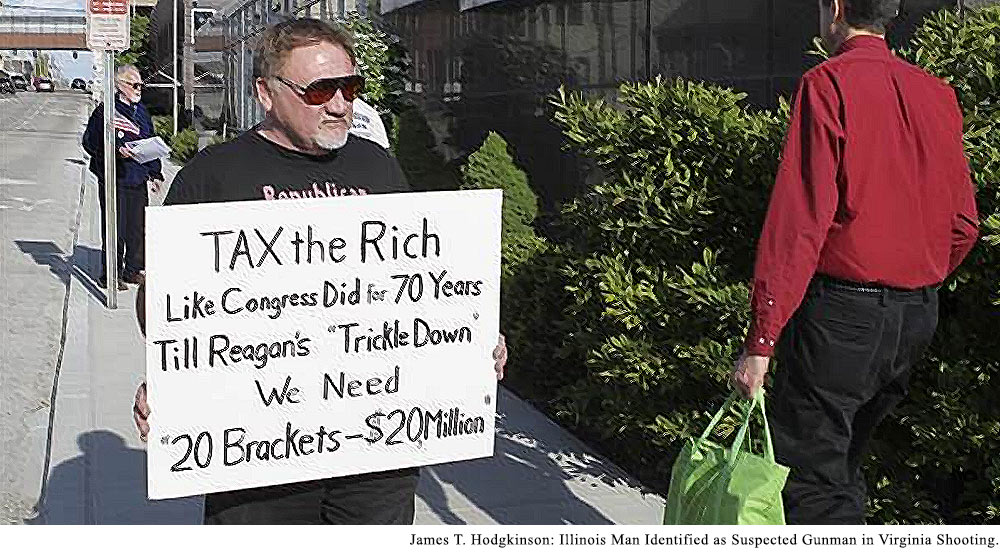
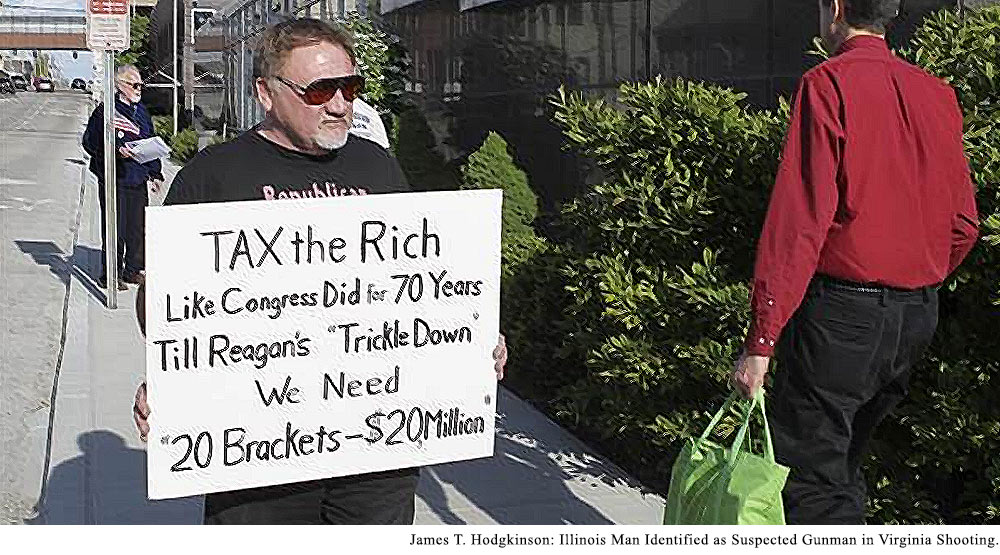
James Hodgkinson of Belleville, Illinois, came to Alexandria, Virginia, where for the last few months he lived in his van . . . undoubtedly down by the river. Yesterday, he wielded an assault rifle, attempting to massacre Republican congressmen at a park practicing for tonight’s annual charity Congressional Baseball Game.

He shot House Majority Whip Steve Scalise, who remains in critical condition; a lobbyist also in critical condition; a staffer, hit in the leg and released from the hospital; and two Capitol Police officers, who still shot and captured the shooter. Hodgkinson later died in custody.

Politically, the down-on-his-luck, 66-year-old assailant was a big fan of MSNBC’s Rachel Maddow and volunteered for Sen. Bernie Sanders’ presidential campaign. So, what does his act of violence say about Maddow? Nothing. How much is it Sen. Sanders’ fault? Zero.

The Washington Post reports that Hodgkinson was “angry with President Trump,” noting this violence came “amid harsh political rancor and a divided country.”

Michelle Malkin declared she had “warned for more than a decade about the unhinged left’s rhetoric.”

“The hatred is raw, it is undiluted, it’s just savage,” Rush Limbaugh offered. “These are the mainstream of the Democrat base, and I don’t have any doubt that they are being radicalized.”

It harkens back to then-President Bill Clinton’s success in blaming the 1995 Oklahoma City Bombing on “loud and angry voices” (read: Rush Limbaugh) who “spread hate. They leave the impression that, by their very words, that violence is acceptable.”

Sure, we should hold speakers accountable for dehumanizing verbal attacks on their opponents. But not for acts of violence these speakers do not commit, nor condone.

Condemn the violence. Stop using it to smear your opponents.

This is Common Sense. I’m Paul Jacob.


Printable PDF


Categories
First Amendment rights folly general freedom moral hazard nannyism responsibility too much government

Legal Not to Lie About Your Milk

Mary Lou Wesselhoeft doesn’t have to lie about the milk she’s selling. The Florida Department of Agriculture has lost in court. Mary Lou has won.

Ocheesee Creamery sells pasteurized milk without any additives. One of her products is skim milk. Ocheesee sells skim milk without vitamin additives, which is perfectly legal to do. But the Florida government claims that only skim milk with the additives counts as real “skim milk,” the kind you can call skim milk in speech to customers. (Kafka, did you write this horror story? Fess up!)

Give credit to the judge who asked: “Can the state, consistent with the First Amendment, take two words out of the English language and compel its citizens to use those words only as the government says?” The reply of the government’s lawyer? “Yes.”

Creepy.

Mary Lou’s victory is also a victory for all Americans who want to exercise their right to tell the truth about what they’re selling. And it’s a victory for the Institute for Justice, which took up the case on her behalf. At its website, IJ points out how easy it would be to annihilate freedom of speech by letting the government redefine words at will. We’re not free if our freedoms can be arbitrarily defined away by the people in power.

The Institute specializes in defending our rights against senseless government intrusions. Until such laws and regulations are repealed, it seems that the Institute will always have much to do — unfortunately. But, fortunately, it keeps on doing it.

This is Common Sense. I’m Paul Jacob.


Printable PDF


Categories
Accountability incumbents insider corruption moral hazard national politics & policies term limits too much government

Most Hated

I was once “the most hated man in Washington.”* Why? For my work on term limits.

I wore the appellation as a badge of honor.

Last year I noted that Ted Cruz had taken up the mantle, but now, certainly, it’s President Donald Trump’s.

Has ever a president been as hated?

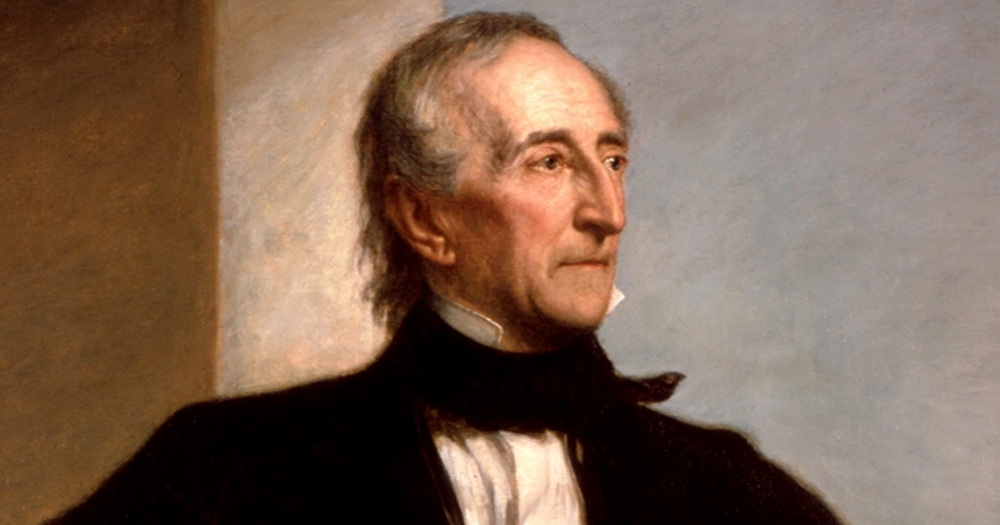
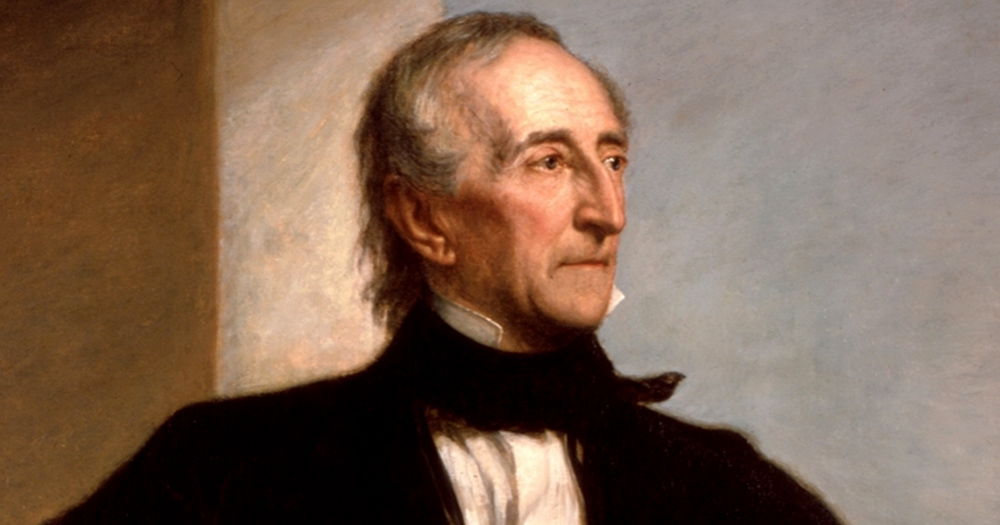
Thomas Jefferson was characterized as the Antichrist. Andrew Jackson made many enemies in overthrowing the Second National Bank. But John Tyler is the most interesting case.

President Tyler was a Jeffersonian democrat who took up the office from William Henry Harrison, who died several weeks after being sworn in. Tyler was never accepted as legitimate by — get this — the Whig Party that nominated him. He was dubbed “His Accidency.” After opposing a revival of the national bank notion, there were riots, and his party expelled him. He received hundreds of death threats in the mail. Later he was almost impeached.

Admittedly, Republicans haven’t abandoned Trump — yet. But the Democrats have opposed him from the beginning. And the Entertainment Industrial Complex never ceases to wage a culture war against him. What should the most hated man do?

Make the most of it.

One of his promises was to put congressional term limits into the Constitution. Congress is reluctant. But Trump can do what I couldn’t: use all the powers of the presidency — from the bully pulpit to the veto pen — to leverage those in Congress into proposing a constitutional amendment.

It won’t make President Trump any less hated in Washington, but will win support everywhere else.

This is Common Sense. I’m Paul Jacob.


* That was in days of yore, the 1990s, and it was Bob Novak who gave me the appellation. Politicians, lobbyists and other government insiders hate term limits.


Printable PDF