Categories
First Amendment rights judiciary

Untruth Speaker, Untruth Speaker

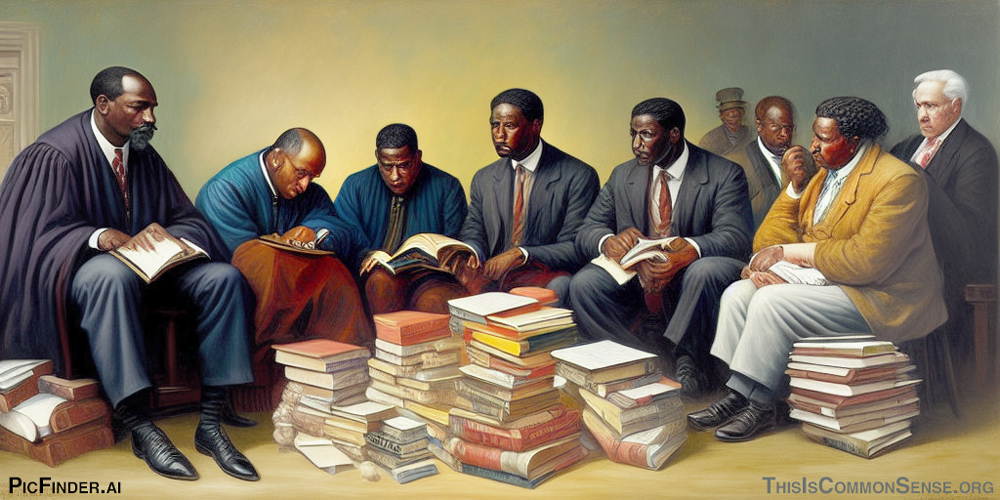
“You can’t call anyone a liar?” Judge Patricia Millett asked federal prosecutors, “with a tone of incredulity,” according to The Washington Post report.

Millett, along with Judges Cornelia T.L. Pillard and Bradley Garcia, serves on the three-​judge panel of the federal Court of Appeals for the D.C. Circuit. This week they devoted two hours to the appeal of a federal district judge’s gag order placed on former president Donald Trump.

Under Millett’s questioning, federal prosecutor Cecil VanDevender agreed that under the order Mr. Trump could say that someone testifying against him was “an untruth speaker” but not call that person a “liar.”

“He has to speak ‘Miss Manners’ while everyone else is throwing targets at him?” inquired Judge Millett. “It would be really hard in a debate, when everyone else is going at you full bore.”

She noted that the First Amendment importantly protects inflammatory speech, adding with some exasperation: “Your position doesn’t seem to give much balance at all to the First Amendment’s vigorous protection of political speech.”

Trump’s attorney argued that the current leading Republican presidential candidate has taken advantage of the order’s stay, pending this appeal, by “posting about this case almost incessantly since the day it was filed and they haven’t come forward with a single threat that’s even arguably inspired by any evidence in his social media posts.”

The three-​judge panel, at least as The Post reads the hearing’s tea leaves, “indicated it may narrow the order prohibiting the former president from attacking individual prosecutors … or from calling potential witnesses against him ‘liars’ in the heat of next year’s campaign.”

It should. Unless the speech is specifically criminal it should be freely allowed. Orange Man should have the same rights we all rightly possess.

This is Common Sense. I’m Paul Jacob.


PDF for printing

Illustration created with PicFinder

See all recent commentary
(simplified and organized)
See recent popular posts
Categories
judiciary property rights

Greed & the Innocent Owners

“We know there are abuses of the forfeiture system,” Supreme Court Justice Sonia Sotomayor declares. “We know it because it’s been documented throughout the country repeatedly.”

Civil asset forfeiture is a crime — if a legal one. I’ve devoted numerous columns to it, here, these past few decades. Interestingly, there’s no overt political reason for it not to stop, for opposition to it comes from both left and right — and middle.

The problem, explains left-​wing Justice Sotomayor, is that this legal practice of seizing property associated with crime does not have checks and balances in American law, since, until the 1970s, it had been used circumspectly, for the most part — against pirates and such. Since then, and in great part because of the War on Drugs, it has gotten out of hand: greedy functionaries in law enforcement have grabbed property and kept it, requiring even “innocent owners” — people not directly engaging in any crime — to go through absurdly difficult legal maneuvers, expending inordinate time and far too much money to get back what’s theirs.

It’s all very corrupt, as Justice Neil Gorsuch — no left-​winger, he — observes. “Clearly, there are some jurisdictions that are using civil forfeiture as funding mechanisms,” he said.

All this I glean from a terrific article by Jacob Sullum in Reason. Like many of my past columns, Sullum identifies litigation by the heroic Institute for Justice.

What strikes me now, however, is how unresponsive our governments have been. We are still dealing with this horrific practice year after year despite near universal opposition to it by citizens. Politicians could have stopped it cold years ago. 

Justice delayed is justice denied.

Why pussyfoot around this? Because politicians are not serving us. They are greedy, too. For power. They’ll even use our property for their cause.

This is Common Sense. I’m Paul Jacob. 


PDF for printing

Illustration created with Firefly

See all recent commentary
(simplified and organized)
See recent popular posts

Categories
crime and punishment insider corruption judiciary

Not Having It

U.S. District Court Judge Maryellen Noreika is not having it, as yesterday’s headlines indicate. The super-​lenient “deal” that Hunter Biden’s lawyers made with the Department of Justice to let the president’s son off with barely a scrape stinks.

And she’s not signing off on it.

But there is a hitch, which Reason summarizes in its title to Jacob Sullum’s coverage: “Hunter Biden Shouldn’t Go to Prison for Violating an Arbitrary Gun Law.”

And Sullum is right. Sort of. 

And wrong. Really.

The letter of the law that Hunter most definitely ran afoul of is, as Sullum argues, definitely ill-​advised and almost certainly unconstitutional. And, to add cream to the jest, had Hunter committed his lying infraction a little later, after his father signed the Bipartisan Safer Communities Act last year, he would have been in even deeper doo. 

“The fact that President Joe Biden stubbornly defends a policy that could put his own son behind bars,” Sullum concludes, “should not blind us to the injustice that would entail.”

True, but it’s not just about gun laws. It’s tax law, too, that Hunter defied.

The real problem, of course, is that Hunter Biden was engaged in an uber-​corrupt shake-​down operation — with his family, including his father leveraging his father’s position in government. Letting Hunter off with a wrist-​slap onlesser charges, allowing the statute of limitations to expire on various crimes, bestowing wide immunity, also lets President Biden andthe whole crime family off, thereby keeping a lid on a corruption scandal that makes Teapot Dome look like a child’s tea party.

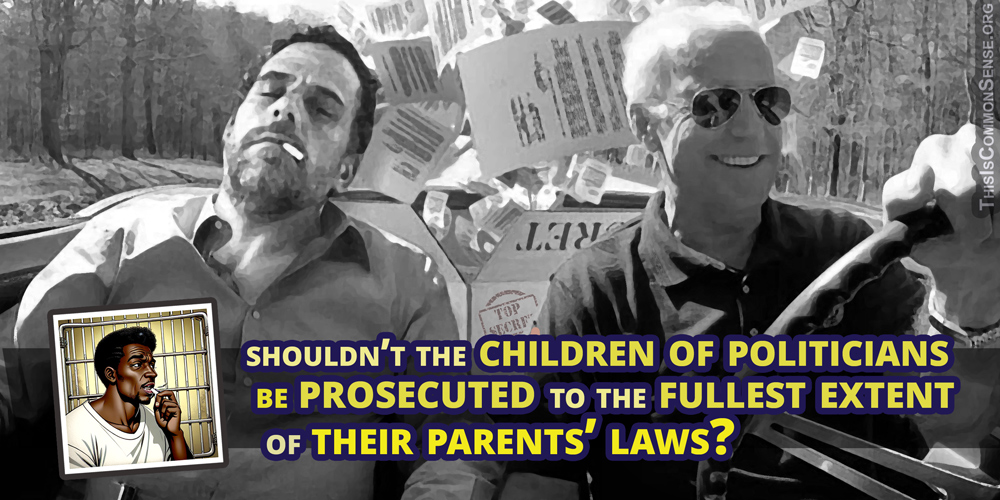
Besides, shouldn’t the children of politicians be prosecuted to the fullest extent of their parents’ laws?

This is Common Sense. I’m Paul Jacob.


PDF for printing

See all recent commentary
(simplified and organized)
See recent popular posts
Categories
education and schooling judiciary

Thomas & Thomas

In the Students for Fair Admissions decision, the Supreme Court rules that using race as a criterion of university admissions is unconstitutional.

Ambiguous aspects of the decision and the determination of some universities to keep using race as a criterion mean that qualified applicants may, alas, still be penalized for being the “wrong” color. Unambiguous, though, is Justice Clarence Thomas’s rebuke of the decision’s dissenters for, among other things, assuming that only racism can explain the different average outcomes of ethnic groups.

“[N]one of those statistics are capable of drawing a direct causal link between race — rather than socioeconomic status or any other factor — and individual outcomes. So Justice Jackson supplies the link herself: the legacy of slavery and the nature of inherited wealth. This, she claims, locks blacks into a seemingly perpetual inferior caste. Such a view is irrational; it is an insult to individual achievement and cancerous to young minds.…”

Has Thomas been perusing the work of Thomas Sowell?

One of Sowell’s career-​integrating insights is that statistics summarizing differences in average group outcomes are mute about the causes. 

One must investigate causally relevant facts.

Consider, for example, differences in characteristics and outcomes between subgroups of a broader ethnic group. Sole possible cause: racism? Or the fact that Asians on average perform better than whites in certain academic or economic categories. Sole possible cause: racism?

Just two of many pertinent questions that Dr. Sowell has asked as he, in his numerous books, surveyed our world’s cultures, lands, and histories.

This is Common Sense. I’m Paul Jacob.


PDF for printing

Illustration created with PicFinder​.ai

See all recent commentary
(simplified and organized)
See recent popular posts
Categories
First Amendment rights judiciary social media

Censors Cancelled

The verb is “enjoin.”

In a July 4 preliminary injunction, Judge Terry Doughty has enjoined federal officials from communicating with social-​media companies except on matters pertaining to criminality or threats to national security.

“The Plaintiffs are likely to succeed on the merits in establishing that the Government has used its power to silence the opposition,” explains Doughty. The government “seems to have assumed a role similar to an Orwellian ‘Ministry of Truth.’”

For a few years now, government officials have asked social-​media personnel to censor speech on topics like the pandemic, elections, and laptops dropped off by Hunter Biden, speech that officials want to suppress only because they disagree with it or find it inconvenient. Politically.

A lawsuit brought by Missouri and Louisiana argues that federal officials pressured and colluded with social-​media companies to block speech protected by the First Amendment.

Some critics of this and other lawsuits — and of more non-​formal objections to the government’s conduct — say that what has been exposed in documents brought to light during litigation, and in the Twitter files, cannot be called governmentally instigated censorship at all.

What’s really going on, they burble, is nothing more than persons working for the FBI, the CDC, the White House, and other such government-​force-​backed entities idly wondering — in incidental and nonbinding casual conversation, mind you — whether the social-​media company they’re just happening to hobnob with could come down like a ton of bricks on the accounts of persons saying things that government officials disapprove. No big deal.

Not the most plausible pseudo-​exculpation I’ve ever heard.

The relevant adjective? “Guilty.”

This is Common Sense. I’m Paul Jacob.


PDF for printing

Illustration created with PicFinder​.ai

See all recent commentary
(simplified and organized)
See recent popular posts

Categories
education and schooling ideological culture judiciary national politics & policies

Affirmative Action Disaffirmed

Congratulations to WHITE
SUPREMACY for winning
a huge victory today.

Thus tweeted Gene Wu, District 137’s representative to the Texas legislature. 

That was his reaction to yesterday’sSupreme Court decision striking down racial discrimination in picking students for colleges and universities.

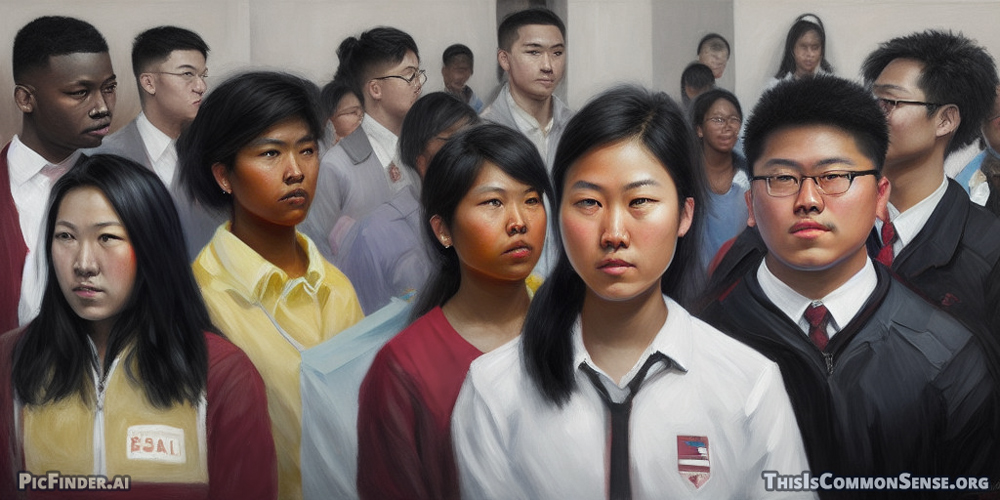
He’s a Democrat and in a tricky situation. The case was brought to the High Court by Asian Americans, who have been most discriminated against in college placement. Rep. Wu, himself Asian American, talks up the compensatory racial preference cause. 

“Asian Americans have consistently been used as a foil to eliminate Affirmative Action programs which serve to repair centuries of intentional discrimination against Black and Latino AND Asian communities,” he argues. “Having Asian Americans as parties doesn’t make it any less racist.”

Actually, of course, discriminating in favor of “Black and Latino” applicants has hurt Asian Americans’ college placements the most, and provably so. Racial discrimination was the criterion. Not academic achievement, IQ, or ability to pay. Asian Americans were the big losers. 

More than whites.

But all Rep. Wu can think about is WHITE SUPREMACY. In all-​caps, no less.

He worries not one whit about racial discrimination against Asians!

As absurd as what we used to call “reverse” discrimination is, we can be sure that, after this current ruling, DEI-​obsessed administrators will still seek ways to continue their discrimination on the basis of race.

Also being raised? The issue of legacy admissions, rewarding with preferential treatment applicants whose parents and grandparents previously attended the institution. Senator and GOP presidential candidate Tim Scott called for public universities to nix those policies as well. Scott was joined by President Biden and AOC.

Sounds like justice and fairness based on merit is on a roll.

This is Common Sense. I’m Paul Jacob.


PDF for printing

Illustration created with PicFinder​.ai

See all recent commentary
(simplified and organized)
See recent popular posts
Categories
incumbents insider corruption judiciary term limits

Term Limits for Thee

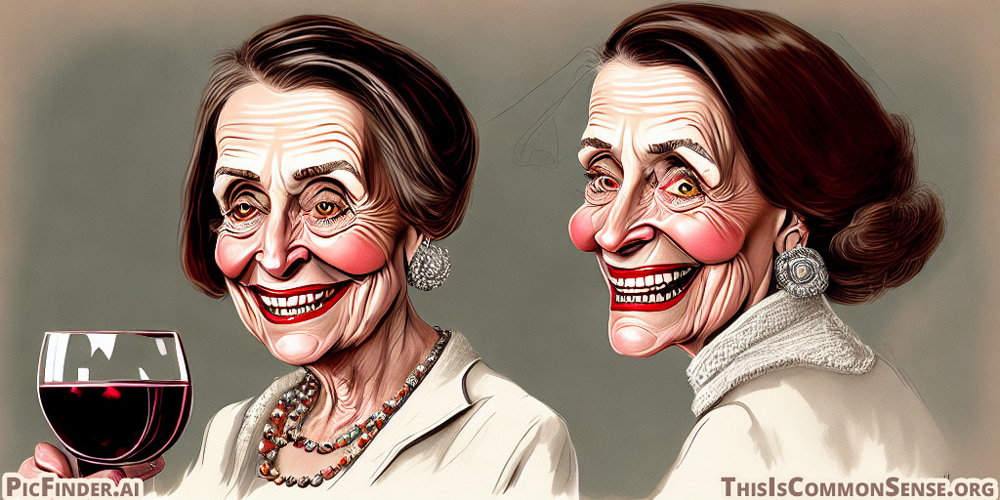
Last Sunday, former White House press secretary Jen Psaki, now with her own MSNBC program, asked Representative Nancy Pelosi (D‑Calif.) about packing the Supreme Court. 

Rep. Pelosi’s response was, shall we say, telling.

“It’s been over 150 years since we’ve had an expansion of the court,” Pelosi said. “It was in the time of Lincoln that it went up to nine. So the subject of whether that should happen is a discussion. It’s not, say, a rallying cry. But it’s a discussion.”

Ms. Psaki also asked about term limits for the justices, and Nancy eagerly endorsed the idea, insisting there “certainly should be term limits. There certainly should be and if nothing else, there should be some ethical rules that would be followed.”

Justices aren’t getting as rich as congressmen … but still.

“I had one justice tell me he thought the other justices were people of integrity, like a Clarence Thomas,” Pelosi went on. “I’m like, get out of here.”

This plays as comedy off the MSNBC channel, of course. Nancy Pelosi, introduced by Psaki as being in Congress for a long, long time (“first elected to the House when Roe v. Wade had been the law of the land for 14 years”) is herself a fit poster ch — er, octogenarian — for establishing legislative term limits. Highlighting the High Court’s dip in popularity, Pelosi scoffed that the 30 percent approval “seemed high.” Of course, congressional approval is ten percentage points lower, and has been consistently. 

Limits to power is something that applies to others, not oneself, I guess.

With permanent leaches at the teat of the State lingering year after year in office, like Pelosi, our attitude should be, like, get out of here.

This is Common Sense. I’m Paul Jacob.


PDF for printing

Illustration created with PicFinder​.ai

See all recent commentary
(simplified and organized)
See recent popular posts
Categories
First Amendment rights general freedom judiciary

High Court Too Busy

What is the U.S. SupremeCourt thinking by refusing even to listen to arguments about the effects of California’s AB5 law, which effectively outlaws certain kinds of freelancing and gig work, on the right to speak out and petition in California?

The case is Mobilize the Message, LLC v. Bona. Plaintiffs were challenging the constitutionality of AB5 because it bans independent contractors from doing door-​to-​door canvassing for candidates or initiative campaigns yet allows independent contractors to do the same kind of work if they’re doing it as newspaper carriers or salesmen.

Of course, if AB5 were completely consistent in its assault on independent contractors, that wouldn’t make it any less injurious to political work and freedom of speech. But the separate and unequal provisions of the act do mean that political workers are being forced to abide by different rules than certain nonpolitical contractors.

That’s not right, not just.

As the Institute for Free Speech puts it, “The only distinguishing feature separating the two [kinds of contractors] is the content of the speech they are paid to promote, a distinction that is presumptively unconstitutional under the First Amendment.”

Lead counsel for the plaintiffs, Alan Gura, says that the Court’s decision will “price political speech beyond the reach of many citizens.”

What’s the deal, are the justices too busy? 

We’re all busy. 

On the other hand, they have a job. A lot of folks in California could use one, too.

This is Common Sense. I’m Paul Jacob.


PDF for printing

Illustration created with PicFinder​.ai

See all recent commentary
(simplified and organized)
See recent popular posts

Categories
First Amendment rights general freedom judiciary too much government

Hollowed-​Out America

While Supreme Court Justice Neil Gorsuch’s comments in Arizona v. Mayorkas are worth studying in full — the case is about immigration — his thoughts on the late pandemic panic stand out.

“Since March 2020,” Justice Gorsuch writes, “we may have experienced the greatest intrusions on civil liberties in the peacetime history of this country. Executive officials across the country issued emergency decrees on a breathtaking scale. Governors and local leaders imposed lockdown orders forcing people to remain in their homes,” and the judge goes through a long list of decrees, including:

  • Closing churches but not casinos
  • Threatening violators with both civil penalties and criminal sanctions
  • Surveilling church parking lots, recording license plates, and issuing warnings against attending even outdoor services.

And he adds that the federal government got in on the tyrannies.

“Fear and the desire for safety are powerful forces,” he notes. “They can lead to a clamor for action — almost any action — as long as someone does something to address a perceived threat.” Gorsuch acknowledges this is not exactly a revelation: “Even the ancients warned that democracies can degenerate toward autocracy in the face of fear.”

There is a deeper problem, though, for the “concentration of power in the hands of so few may be efficient and sometimes popular. But it does not tend toward sound government.”

All the way through the pandemic, and even now, we have been barraged by messages about “misinformation and disinformation” about the disease and the treatments (proactive and reactive) against it. And the people in power — bureaucrats as well as politicians — were called “experts” while actual experts (along with earnest amateurs) were hounded, their ideas suppressed. 

Now we know that much of what was then held as good information was in error, even lies. 

Very unsound governance: Gorsuch characterizes it “a shell of a democracy.” 

“Hollow.”

This is Common Sense. I’m Paul Jacob.

PDF for printing

Illustration created with PicFinder​.ai and DALL-E2

See all recent commentary
(simplified and organized)
See recent popular posts

Categories
First Amendment rights judiciary partisanship

Disbar the Disbarrers?

After Texas Attorney General Ken Paxton legally challenged how several states conducted the 2020 election, dozens of lawyers submitted complaints. 

To the state bar. 

Their idea: disbar the Republican officeholder for daring to oppose the current Democratic narrative about “election denialism.” 

The Office of Chief Disciplinary Counsel dismissed those initial complaints as “not demonstrat[ing] Professional Misconduct,” but several attorneys appealed the decision, including a friend of Paxton’s Democratic opponent in the 2022 election for attorney general. The Texas State Board reversed the dismissal. Now a judge has allowed the case against Paxton to go forward.

The threat of disbarment is increasingly being wielded as an ideological weapon and without regard to whether targeted individuals have committed any wrongdoing worthy of disbarment. It’s the lawyers’ version of cancel culture.

This is demonstrated in a lengthy report by Margot Cleveland in The Federalist, who details many other instances as well as Paxton’s. 

These include the DC Bar’s pursuit of former Assistant Attorney General Jeff Clark and the California Bar’s pursuit of John Eastman, among a “barrage of politicized bar complaints pursued against Republican lawyers who provided legal advice or litigated various issues in the aftermath of the November 2020 general election.”

The purpose, then, is not to combat corruption but to corruptly intimidate any lawyers inclined to represent Republicans in challenges of dubious election results. One malefactor is a group called 65 Project, targeting more than a hundred Republican-​aligned attorneys but no Democrat-​aligned attorneys. Seems partisan.

Should lawyers who seek to disbar lawyers solely because of political disagreements be disbarred themselves?

This is Common Sense. I’m Paul Jacob.


PDF for printing

Illustration created with PicFinder​.ai

See all recent commentary
(simplified and organized)
See recent popular posts