Categories
ideological culture individual achievement nannyism responsibility too much government

Don’t Dress for Excess

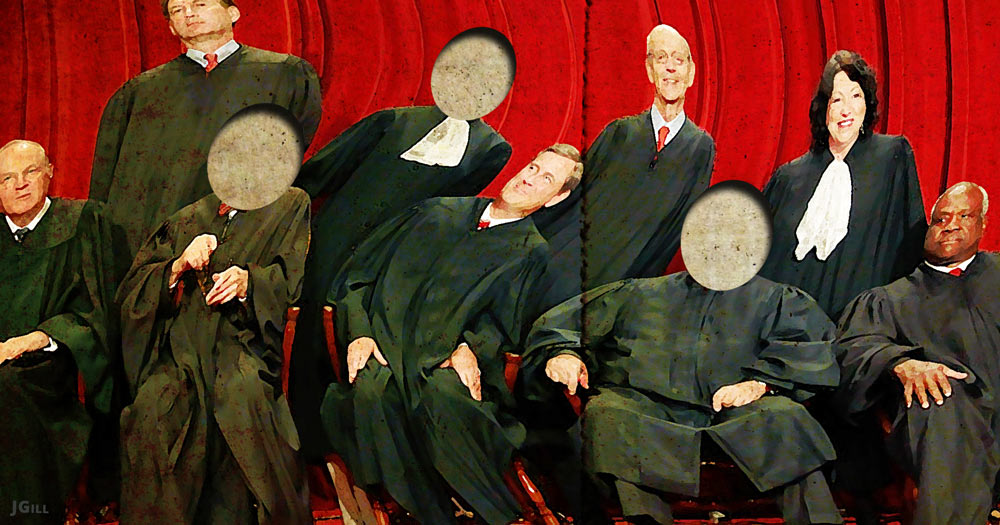
Undoubtedly, men have it easy in several ways that women do not. Take something only seemingly trivial: clothing.

When men need to dress to impress, the answer is simple: a suit. There is not really a lot of variety here, and little is required of a man in his choice of suit.

Women, on the other hand, do not have a business and formal occasion uniform to rely upon.

Instead, they have fashion.

Which is a whirl of constant change and a world of enervating expense.

I wouldn’t put up with it. But then, I’m a man. The modern dress suit was developed to meet men’s needs for functionality as well as excellence. And our need to not think hard on a matter of mere garment.

So it is with no small pleasure to read, in the Telegraph, of a professional woman who forswears fashion to wear just one design of clothing. “‘I can tell you the cashier in the store look[ed] pretty confused when I asked if she had 15 extra sets of the whole outfit,’ she jokes, ‘but all in all, choosing the uniform was a pretty pain-free process.’”

And the style choice seemed obvious: “I’ve always felt that black and white is a cool and classy look,” so that’s what she went with.

She made herself culturally equal with men. Took for herself a formerly all-male advantage. And she did not depend upon a man for that advance, he-for-she style.

And did not look to government.

This is the way forward.

This is Common Sense. I’m Paul Jacob.


Printable PDF

fashion, government, suits, illustration


Categories
general freedom ideological culture nannyism national politics & policies Popular too much government U.S. Constitution

The Venezuela Chaos

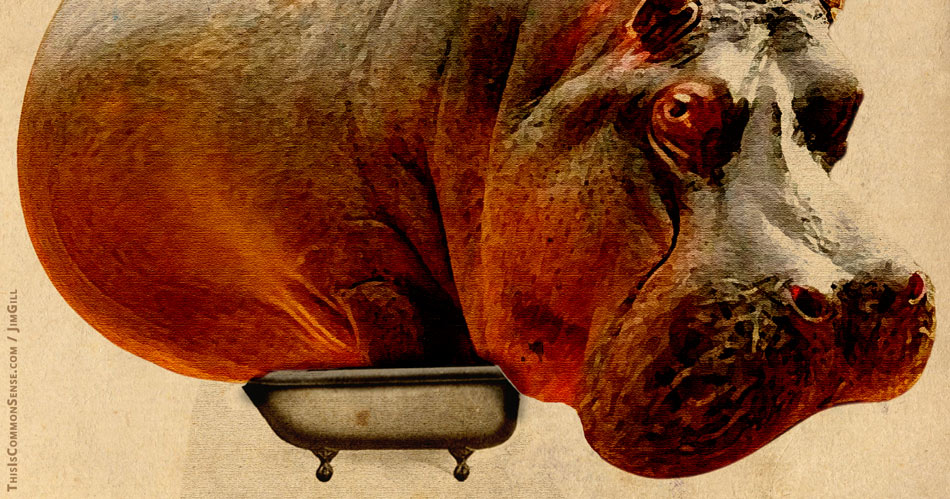
I have friends who call themselves anarchists. Their theory? Government is always merely an open conspiracy of some to live at the expense of others.

Republicanism, on the other hand, proposes that if we limit government, we can hone it down to the level where there is no conspiracy, and everything the government does can plausibly help everybody.

Not just a few insiders.

Socialism is the opposite notion. Socialists seek to grow government so far that it “naturally” serves everybody, not only the few. It’s all about “equality,” you see.

Here’s what we know for sure: socialism, when really tried, is so awful that it makes anarchy-as-chaos sound good.

The latest socialist horror is Venezuela, which is getting worse every day. Now hospitals place newborns in cardboard boxes. There are no other supplies.

But that’s not all. The special program for feeding everybody? It’s now mainly for feeding just those close to the government — precisely as my anarchist friends say all government is:

Six months after the creation of the Local Committees of Supply and Production (Clap) that is designed to “distribute food directly to the people,” the government has decided to change its approach by threatening those using the program.

The Venezuelan government announced that it will suspend delivery of food packages to those who criticize its policies.

Are socialist out to prove anarchists right?

I bet most of my readers still put some hope in limiting government to serve all. Venezuelan socialism demonstrates how badly the opposite idea is, showing us that serving everybody by total government just decays into the folks allied closely with government warring against everybody else . . . who starve in plain sight.

This is Common Sense. I’m Paul Jacob.


Ask the next question.

Questions Answered:

What is the difference between a republic and a socialist state?

What do anarchists think of government?

What happens when government tries to do everything for everybody?

The Next Question:

How do we convince well-meaning socialists that total government cannot work for the benefit of everybody? (Since the examples of the USSR, Communist China, and Venezuela haven’t worked so far.)


Printable PDF

government, bathtub, Venezuela, illustration


Categories
ideological culture national politics & policies political challengers

Double Bubble America

The “unexpected” Donald Trump presidential victory has put the folks at The Gray Lady a bit out of sorts.

Heather Wilhelm at the National Review pokes and prods at the absurdities of the New York Times’s cultural cluelessness. And ably enough. So I’ll stick to The Times’s recent “six views” of America’s ideological divide:

Julie Turkewitz recognizes two well-insulated informational bubbles at play. Nothing too controversial — or very deep.

Campbell Robertson muses upon the dominance of the “elites” against which Trump’s insurgents rebel, noting that “the elites are the still the ones who get to decide who gets to be elite.”

Laurie Goodstein takes on religious culture, making much of divergent spiritual outlooks, left and right.

Julia Preston peers at immigration and the prospect of sending a message by building a “wall.”

In the manner of the other five, Sheryl Gay Stolberg digs up real-world people — as does our speechifier-in-chief, Barack Obama — to lightly probe questions of assimilation versus multiculturalism.

Manny Fernandez concludes with a (yawn) discussion of giving and taking offense.

They all miss the underlying structural basis for the divide.

On one side: folks working in the private sector — or local governments and charities, or at home — who have seen the world pass them by in terms of income and security.

On the other: government workers and consultants (and other college grads) who make more, on average, than their “real world” counterparts.

The latter has advanced as a class; the former remain in stasis . . . at best.

A mystery?

No — it’s the predictable result of what Thomas Jefferson called “the parasite institutions now consuming us.”

This is Common Sense. I’m Paul Jacob.


Printable PDF

bubble, Trump, election, reasons, explanations, illustration


Original (cc) photo by diana MĂRGĂRIT at Flickr


Categories
ideological culture meme national politics & policies too much government

Warren and the Bogeyman State

“…the bogeyman government is like the bogeyman under the bed. It’s not real. It doesn’t exist.”

—Elizabeth Warren


Citation:

Categories
Accountability general freedom ideological culture moral hazard national politics & policies political challengers responsibility too much government U.S. Constitution

The Wisdom of the Founders

“At a certain point, you have to let go for the democracy to work,” President Barack Obama told HBO’s Bill Maher last week, praising “the wisdom of the founders.”

“There has to be fresh legs,” he continued. “There have to be new people. And you have to have the humility to recognize that you’re a citizen and you go back to being a citizen after this office is over.”

Maher failed to ask Mr. Obama how this “fresh” viewpoint squared with his support for Mrs. Clinton. Nevertheless, let’s applaud the president’s endorsement of term limits.

Speaking of the founders, and limits on power, and this being Election Day, I’m reminded of a commentary in Forbes, back on Election Day four years ago, written by Ed Crane, the man who built the Cato Institute into one of the nation’s preeminent think tanks. Bemoaning the “interminable presidential race,” Crane wished for “a nation in which it really didn’t matter who was elected President, senator or congressman.”

“Don’t get me wrong, because I’m not saying it doesn’t,” explained Crane, “only that it shouldn’t.” He added, “I believe the Founders had a similar view.”

His point is simple: Getting to vote for your next president and senator and congressman is swell, but it’s important to have a Constitution that restrains those elected, so they “don’t have a heck of a lot of power over you or your neighbors.”

“We are a republic of limited governmental ­powers,” or should be, argued Crane. “Such a nation allows for sleep on election night.”

Instead of gnashing of teeth.

This is Common Sense. I’m Paul Jacob.

Printable PDF

Constitution, voting, democracy, Ed Crane, fear


Categories
folly government transparency ideological culture media and media people nannyism national politics & policies

The Problem with Ruth Marcus

Channeling The Sound of Music’s Mother Superior, Washington Post columnist Ruth Marcus asks, “How do you solve a problem like Bill Clinton?”

Marcus means Bill’s problematic possible return to the White House, the scene of his crimes, as First Dude in a new Clinton Administration — specifically his difficulties with “the twin minefields of sex and money.”

Starting with sex, Marcus argues that, “Trump’s misbehavior with women is a far more important topic than Clinton’s” because “Trump is on the ballot; Bill Clinton is not.”

True, except that Mrs. Clinton has promised to place Mr. Clinton “in charge of revitalizing the economy,” which Mrs. Marcus called “crazy.” Maybe, but it wasn’t Trump’s idea to ballyhoo the old two-for-one Clinton couple “advantage.”

“There is no condoning a record that reflects not just serial adultery, but abuse of power,” writes Marcus. Yet, she does precisely that by adding, “Clinton was a successful president who deserved the two terms for which he was elected, but his misbehavior would disqualify him from a third term even if the Constitution allowed it.”

What?! Quite a convenient drawing of the line, eh?

Of course, the problem isn’t merely Bill, as the columnist admits: “[I]t has become clear that they cannot be trusted to appropriately navigate ethical boundaries between their private interests and public responsibilities.”

Complaining about the “incessant schnorring for private jets, luxury vacation lodging, expensive trifles” by the Clintons, Marcus warns that, “It cannot happen in a new Clinton White House, especially with a Republican Party already drooling over the prospect of congressional investigations.”

But, Ruth, how will electing Hillary Clinton the next president cause Bill & Hill to change their ways?

This is Common Sense. I’m Paul Jacob.


Printable PDF

Bill Clinton, First Gentleman


Categories
ideological culture media and media people moral hazard national politics & policies responsibility too much government U.S. Constitution

Pigs in Pokes

On Tuesday, Former Massachusetts Governor William Weld exhorted Americans to stop Donald Trump at all cost.

The Donald, he asserted, is dangerous because too touchy, too childish in his egoism, to withstand the pressures of the presidency of these United States. “In the statement, Weld made no mention of Clinton,” writes the AP. He focused on Trump and the GOP, instead.

Both progressive and conservative outlets interpreted this as a de facto endorsement of voting for Democrat Hillary Clinton — an uncomfortable conclusion, considering that Weld is Libertarian Party presidential nominee Gov. Gary Johnson’s VP running mate.

Looking at the statement itself, it is apparent that Gov. Weld prefers The Devil We Know to The Devil He Fears.

Which is where he loses me.

One need not like Trump to understand his appeal. Trump is a smoking sack of Who Knows What placed upon the doorstep of the Establishment, the insider classes running the federal government and the Fourth Estate. By taking offense at Trump but not Clinton, Weld sides with the insiders. My longtime respect for Weld aside, how can one plausibly do that?

We know what the Establishment wants most: perpetual war, permanent debt, and secure power.

Meanwhile, the ostensible Republican has been awfully vague on policy. Voting for Trump is buying a pig in a poke.*

The Democratic poke is fairly well known. But Hillary, the war-monger who accuses Trump of being Putin’s “puppet” and repeatedly plays chicken with the world’s other great nuclear power, puts her own policies in a poke by proclaiming her personal prerogative of telling the voters one thing and her insider crowd another.

Neither sack of . . .  uh, please.

This is Common Sense. I’m Paul Jacob.

 

* Old idiom: synonym for swine in a sack.


Printable PDF

Hillary Clinton, Donald Trump, war, danger, president, illustration


Questions Answered:
Who is Gov. William Weld most fearful of this election year?
How plausible is a preference of Hillary over The Donald?
What can we make of Hillary’s and Donald’s foreign policies?

Ask the next question. --Theodore SturgeonThe Next Question:
If pigs could fly, which one would you vote for?

Categories
Accountability crime and punishment general freedom ideological culture judiciary national politics & policies U.S. Constitution

The Best Case for Trump Isn’t

I support neither Hillary Clinton nor Donald Trump for the presidency. Still, I do understand several reasons to vote for Trump, including, most obviously, “he’s not a Clinton.”

The most persuasive strategic reason given for voting for the man, however, and the one that has most purchase with me, is that he would appoint better Supreme Court justices than would Mrs. Clinton.

Note: if the Democrats gain hold of the U.S. Senate, an elected Donald Trump would “negotiate.” And the next set of Supremes might be quite bad.

But is all this irrelevant? It does not look like Trump will be elected, so any vote thrown at him will be just as “wasted” as a vote for Johnson, Stein, or Mickey Mouse.

More importantly, if Hillary wins, no biggie on the Supreme Court front IF (a big “if”?) the Republicans maintain congressional dominance.

Why?

Our Senators are not required to vote for any of a president’s appointees. But, alas, that is not what Democrats are saying now! Forget such self-serving nonsense. The Constitution does not specify the number of justices on the Supreme Court. It is nine now, sure, but the Highest court in the land was first manned by five justices, then seven.

So, after the election, unpack the court.* Back down to seven, at least.

And then let’s talk terms for the currently “serving for life” justices, and term limits.

In any case, the best case for Trump isn’t so much a case for him, as a plan of action no matter who is elected.

This is Common Sense. I’m Paul Jacob.

 

*This notion is more doable, I think, than Franklin Delano Roosevelt’s infamous court packing scheme, in which he threatened to put more justices in to over-rule those justices who thought his “New Deal” program unconstitutional. Congress, not required to vote in any proposed Supreme Court candidate, could balk at all and then, by law, reduce the number, even removing one justice from office if need be.


Printable PDF

Supreme Court, Congress, Hillary Clinton, Donald Trump, election, illustration


Questions Answered:
Does the best reason to vote for Donald Trump really hold water?
Does the Constitution specify the number of justices that should be on the Court?
Is Congress really at the mercy of any bully who occupies the Oval Office?

Ask the next question. --Theodore SturgeonThe Next Question:
Will voting for someone other than Trump be more of a “wasted vote” than voting for Trump himself, if, as polls indicate, he loses?


Categories
Common Sense general freedom ideological culture initiative, referendum, and recall political challengers responsibility term limits too much government U.S. Constitution

Duck/Rabbit, Maiden/Crone, and Taxes

Revolution! Must we?

Can’t we reform at a reasonable pace?

Well, whether we change slowly or quickly, change must occur. Today’s in-place policies are not stable.

But a better future itself must be stable. Or else it will not be better.

And a key to successful change is change in the hearts and minds of the people. The vast majority, East and West, need to shift mental gears and shift their ideological paradigms. (That is the term most famously used by Thomas Kuhn.)

Take yesterday’s story. I first heard about it from proponents of Oregon’s big business excise tax hike. They were saying that Oregon had the lowest business taxes in the union, and took that as a cue to raise taxes. I looked at it as a great political success, and one that had contributed mightily to Oregon’s remarkable economic resilience in these trying economic times.

The difference between the Higher Taxes reaction (which views low taxes as an opportunity only to raise them, and the consequences mainly as who gets the tax funds) and my reaction (which concentrates on the consequences of the expropriation, and looks to a longer period of time to gauge results) is a paradigm shift. To go from one to the other (preferably from the pro-tax to the low tax position) requires a shift in vision.

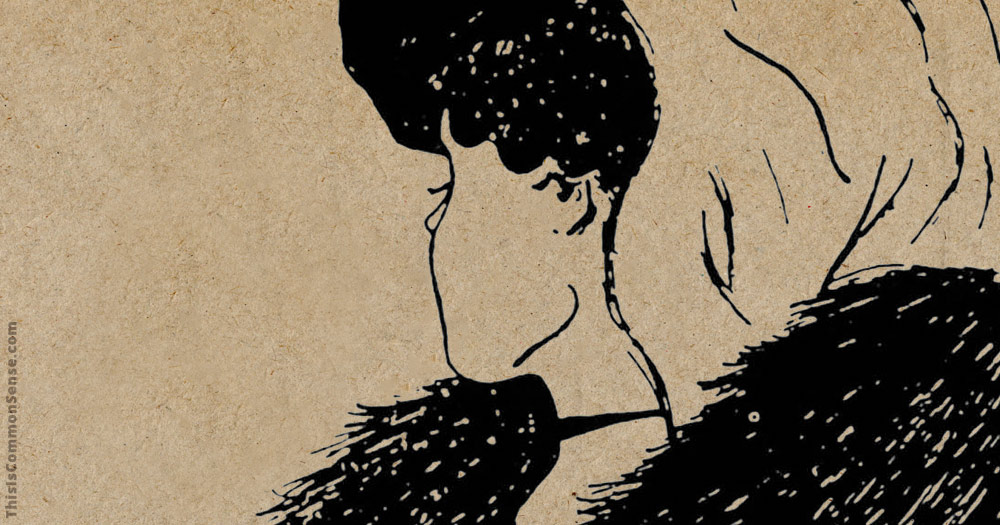
It is like what happens when you refocus on the Duck/Rabbit image, or the Maiden/Crone. Give a person some time. Be patient. And hint that a shift in perspective is warranted to see both.

And that we might gain something from a paradigm shift.

This is Common Sense. I’m Paul Jacob.

Printable PDF

maiden/crone, illusion, paradigm shift


Categories
Accountability Common Sense general freedom ideological culture initiative, referendum, and recall insider corruption media and media people moral hazard nannyism national politics & policies political challengers responsibility too much government U.S. Constitution

America After November

Yesterday, I bemoaned the disaster that is this year’s presidential race. But big whup. As the LifeLock commercial rightly asks, “Why monitor a problem if you don’t fix it?”

Hillary Clinton or Donald Trump will be the next president. That means we have our work cut out for us. And we can’t wait for the 2020 presidential race to fix the problem. We must immediately assert citizen power to create an effective check on government-gone-wild.

So, what to do?

First, let’s admit that fixing Washington isn’t easy. We must fight the Feds through national organizations, of course, but we actually gain greater leverage by working closer to home — at local and state levels.

We need to elect mayors, governors, legislators and councilmembers in 2017 and 2018, men and women who will fight for free markets and against cronyism. And stand up to the federal government.

And where we have the power of ballot initiatives and recall, let’s use it.

By Inauguration Day, we can be changing the conversation in most of the top 25 media markets. How? By petitioning the right issues onto the ballot. By April and May, voters in those cities and counties can directly enact those reforms. Next November, Ohio and Washington state voters can weigh in with ballot initiatives.

Sadly, tragically, it’s too late to stop campaign 2016’s tornado from doing damage. The next disaster of an administration is on its way. But we can create a competing agenda to the Hillary Clinton or the Donald Trump agenda.

A pro-liberty agenda. Starting now.

This is Common Sense. I’m Paul Jacob.

Printable PDF

activism, politics, elections, initiatives, president, Trump, Clinton, meme, illustration


Original (cc) photo by Niklas Hellerstedt on Flickr