Categories
Accountability folly free trade & free markets general freedom ideological culture media and media people nannyism national politics & policies too much government

Political Regroupings

What’s true for hurricanes is true for the Democratic Party.

After a disaster, it takes a while to regroup, really get a handle on what went wrong. Men and women take some time to absorb new realities.

A few interesting think pieces have come out of the left and center-left, recently, trying to digest what is wrong with the Democrats that they lost so much ground last year — even to someone like Donald Trump. To serious people, the “Russians did it” and “the Deplorables!” are not exactly winners.

Hillary Clinton may be stuck in that mode, but the Democratic Party needn’t be.

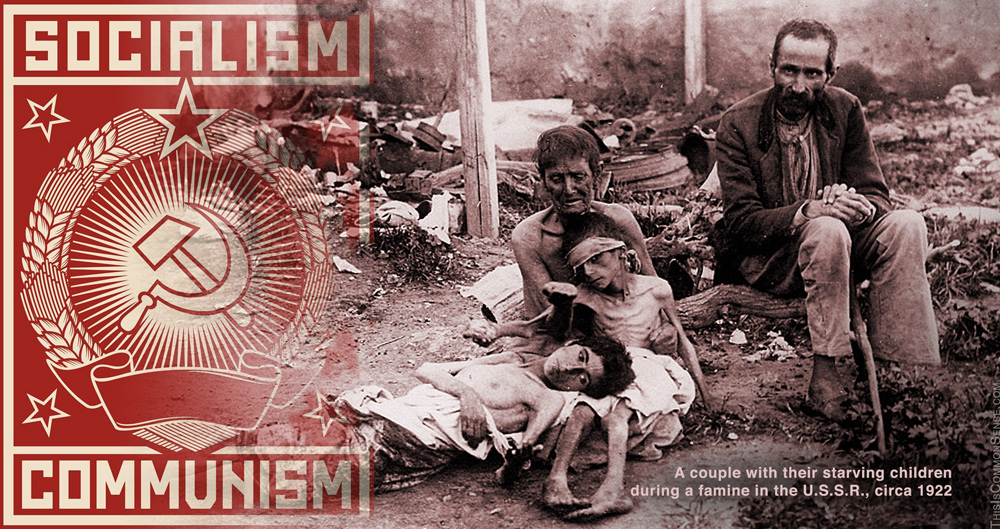
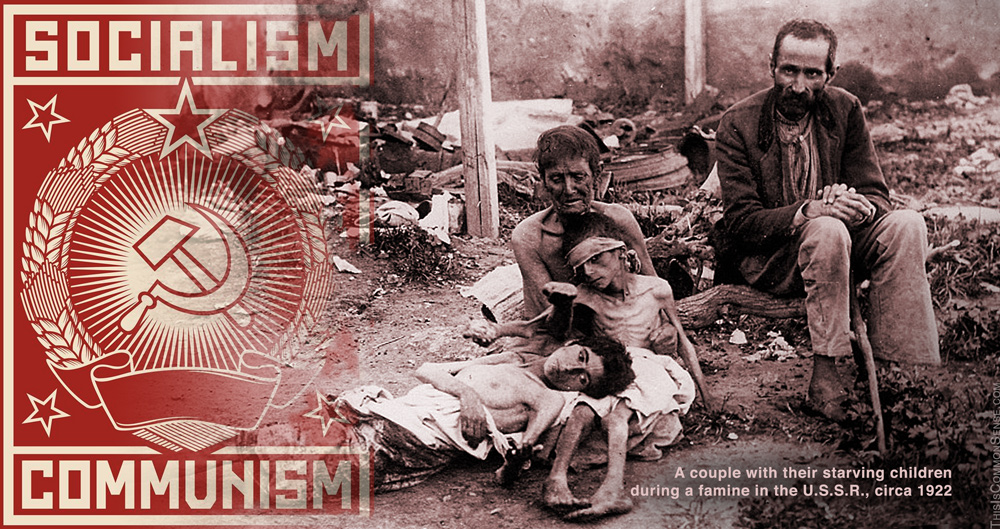
The more radical response came from John B. Judis, whose name was big in lefty magazines when I was young. His article “The Socialism America Needs Now,” in his old stomping grounds, The New Republic, tried to make the case for a vague leftism that could be called socialism, if you stretch the term, emphasizing bigger government without seeming too . . . Marxist.

Meanwhile, Mark Lilla has a new book of a somewhat more perceptive nature. Interviewed in Salon, Lilla makes much of the fact that while “smack in the middle” of the GOP’s website “is a list of 11 principles” . . . the Democratic Party could sport “no such statement.” Just a bunch of interest groups.

Interesting. Because, today, I went to GOP.com and saw no such principles list. But I did find a lot of Trump stuff . . . and a bunch of links to “identity groups.”

Talk about regrouping!

This is Common Sense. I’m Paul Jacob.


PDF for printing


Categories
Accountability ideological culture local leaders media and media people moral hazard nannyism national politics & policies

The Eye of the Storm

Hurricane Harvey has been amazing in its devastation. All that rain, all that flooding — what  a frightening time it must be for those caught within it.

While Harvey’s winds brought in waves and rain and floods, for most of us, far away and snug in our homes, it brought an occasion to donate, and . . . nostalgia.

Nostalgia? It’s not the disaster element so much as an old-time exhibition . . . of journalism. For more than just a few hours, we watched reporters actually report. We saw them stand waist-deep in water. We saw them cover actual events.

And we read them deal in facts . . . like the heroic efforts of the “Cajun Navy.”

Of course, this opinion-free window of media coverage did not last long. The talking heads and Twitter-journos and partisan hacks came flooding back not long after the worst.

Did Trump do enough? Or the right thing?

Did Houston’s no-zoning policy lead to the disaster?

Doesn’t “price gouging” really suck?

Did . . . Enough. It was and is too early for finger-pointing and “Brownie, you’re doing a heckuva job.”

Of course, the Houston zoning discussion is interesting. It is worth noting that there are building rules and governments in Houston, as well a national rules that made homes and businesses there less safe. And economists have already come to their usual defenses of “price gouging” and criticisms of disastrous government programs.

Still, the enormous relief efforts remain the biggest human interest story — thousands of individuals taking the initiative and their boats to join first responders and the National Guard in rescuing thousands trapped by flooding.

So, before we explain it all, let’s luxuriate in what remains of the fact-based reporting.

And help.

This is Common Sense. I’m Paul Jacob.


PDF for printing


Categories
Accountability ideological culture media and media people national politics & policies political challengers Popular responsibility

The Law of Unintended Trump Support

Last week, when President Donald Trump abandoned his previous policy position on getting U.S. troops out of Afghanistan in favor of continuing the establishment-supported policy of keeping those troops there, he was very well-received in our nation’s capital.

NeverTrumper/neo-con Sen. Lindsay Graham (R-S.C.) spoke of Mr. Trump’s “smarts” and “moral courage.”

The #NeverPraiseTrump Washington Post applauded the president’s valiant “self-correction.”

Yet when Trump holds a view contrary to the Washington consensus his wisdom and moral bravery elicit less celebration.

Instead, we hear that The Donald is unfit to command.

“I really question his ability to be — his fitness to be — in this office,” says James Clapper, the former Director of National Intelligence.

“The president has not yet been able to demonstrate the stability,” Sen. Bob Corker (R-Tenn.) concurred, “that he needs to demonstrate in order to be successful.”

And from the usual suspect list of television talking heads we get clinical diagnoses, talk of “erratic behavior and mental instability that place the country in grave danger.”

Mr. Trump combines every bad personality trait imaginable, the litany runs.

But all this is for nought.

Donald Trump has been able to withstand media negativity as well as the lack of support from his own party’s insiders for one simple reason: it validates him.

Every insider attack, every media-fueled outrage campaign, just proves him as the ultimate outsider to a system that the long-frustrated, increasingly angered electorate wants turned upside down.*

This is Common Sense. I’m Paul Jacob.

*This episode of Common Sense condenses my regular weekend remarks at Townhall.


PDF for printing


Categories
Common Sense ideological culture media and media people national politics & policies too much government

The Underground Amphibian

A new species of frog has been discovered, and I’m just happy it has nothing to do with online japes and jibes about Trump, social justice, or an ancient Egyptian deity. But before you can say “Praise Kek,” please note:

Sometimes a frog is just a frog.

But this frog is special, living most of its life underground. It is purple. And though this is not stressed in the reports, it’s markedly gelatinous.

In an article entitled “New Purple Pig-Nose Frog Found in Remote Mountains,” Jason Bittel explains that the frog comes above ground only when it rains — which in the Western Ghats mountain range in India is during monsoon season.

Named after the discovers’ late colleague, Dr. Subramaniam Bhupathy, it is dubbed Bhupathy’s purple frog (Nasikabatrachus bhupathi). I have to tip my hat to them, so to speak, for the herpetologist’s first name seems more fitting for a submerged-in-earth amphibian: “Subramaniam purple frog” would almost qualify as a pun. And, as readers of these Common Sense squibs will confirm, I am not always so valiant in resisting the art of the pun.

But you don’t read these commentaries for science news.

So, a moral.

Around the world, amphibians are disturbingly under threat. As Alex Jones hyperbolizes, “they’re turning the frogs gay!” But be that as it may (or, more likely, may not), even under greater threat is political common sense.

Let’s hope it, too, will emerge with the coming monsoon.

In India? Your neighborhood? Kekistan?

Probably not in Washington, D.C. But it’s Friday, we can at least hope.

This is Common Sense. I’m Paul Jacob.


Printable PDF


Categories
ideological culture media and media people moral hazard

Is This Even Funny?

Stand-up comic Amy Schumer made headlines in Variety, this week, for her re-negotiations with Netflix over her recent comedy special, The Leather Special.

It initially garnered her a “mere” $11 million, while, Variety reported, comedians “Chris Rock and Dave Chappelle were given $20 million per special as part of their deals with Netflix,” according to a summary at Vulture.com.* “Schumer then went back and negotiated for ‘significantly more compensation,’” scuttlebutt has it.

After-the-contract negotiations seem weird to me . . . almost . . . indecent.

But then, this might be apt, considering Schumer’s characteristic form of humor, which is almost relentlessly of an intimate sexual nature. Like many another Netflix watcher, I could not finish her special. “Indecent” is the nice word for it.**

The special was so relentlessly panned that Netflix created a new feedback system to discourage viewers from leaving severely negative criticisms and evaluations. It was a big deal months back.

So why did she think she could get more? Though she now denies it, the early reports said she demanded some sort of parity with Rock and Chappelle. And that “equal pay” for “equal work” ethic does seem to be behind the very idea of her ex post negotiating strategy.

The thing is, Rock and Chappelle got more money, obviously, because their ability to make money for their venues is amply proven. Schumer, though she is not without talent and definitely has her partisans, is not as big an audience draw.

Like wages in the normal labor market, it’s about productivity.

And you’d have to pay me to watch The Leather Special in its entirety.

This is Common Sense. I’m Paul Jacob.


* Variety is behind a paywall. I’m quoting Vulture because, like any good scavenger, I’m not paying for Variety.

** No idea whether I would have made it through a special with Chris Rock or Dave Chappelle. I get the impression I’m not in the target audience.


PDF for printing


Categories
Accountability ideological culture media and media people moral hazard national politics & policies

One Way to Do It

While reading CBS’s recent story on Iceland’s success at reducing the number of Down syndrome cases, I was reminded of the Amazon Prime series Man in the High Castle.

The show, based on the celebrated alternative history novel by Philip K. Dick (1928–1982), explores a timeline wherein the Axis powers won World War II. The United States is divided between the Greater Nazi Reich and the Empire of Japan.

In one scene, one of the protagonists — a hero? a villain? — is stalled on a Midwest country roadside. He smells something in the air. Smoke. Ash.

The very American sheriff explains: it is a local hospital destroying defective humans. The weak, the sick, the disabled.

And we, the viewers, recoil: how evil. Nazis actually execute the weak, the sick, the disabled. Well, they did, in history, not just fiction.

But, as CBS explains, the reason Down syndrome cases are disappearing all over the place, and in Iceland most of all, is not a new cure. Chalk it up to the rise of prenatal screenings. We see fewer Down syndrome people because, before birth, they are executed. Aborted.

In our non-fictional timeline, many Americans are incensed that a few folks proclaiming to be Nazis have been “allowed” to demonstrate in public.

Nazism is evil. I agree.

But how do these morally horrified people react about the very “progressive” and culturally acceptable practice of killing the unwanted?

Think I’ve gone over the top, have abused a revered author to make a point alien to his own? Well, please read Dick’s “The Pre-Persons,” a story about abortion, way post-natal . . . until the age at which a person can understand algebra.*

Quite the moral calculation we make, eh?

This is Common Sense. I’m Paul Jacob.


* That could mean it’s open season for murder as states are moving to drop algebra requirements because so many fail to master the subject. 


PDF for printing


Categories
Accountability folly general freedom ideological culture media and media people moral hazard nannyism national politics & policies too much government U.S. Constitution

Statues and Limitations

“Should they take down the Jefferson Memorial?”

That is what PBS’s Charlie Rose asked Al Sharpton. Now, the “Reverend” is not my go-to source for political insight, but his answer* caught my attention.

“I think that people need to understand that, when people that were enslaved and robbed of even the right to marry and had forced sex with their slave masters, this is personal to us,” replied Rev. Sharpton. “My great-grandfather was a slave in South Carolina . . . Our families were victims of this.”

Asked if this precluded “public monuments” for “everyone associated with slavery,” Sharpton argued: “When you look at the fact that public monuments are supported by public funds, you are asking me to subsidize the insult to my family.”

One can attack the messenger, Sharpton, sure. But what if we instead think of him as our neighbor? I certainly wouldn’t want to insult a neighbor, much less make him pay for the privilege.

Notably, the Reverend embraced privatization, suggesting, “You have private museums.” Privatizing controversial monuments would certainly solve Sharpton’s stated problem.

Of course, the logic behind taking down statues or dismantling the Jefferson Memorial — or merely privatizing them — might also lead to changing the names of cities, counties and states, rivers and mountains. And it’s not just Washington and Jefferson — twelve presidents were slave owners, including Union General U.S. Grant.

Who knows how many are undeservedly memorialized?

Frankly, I’ve never liked the name of my Virginia county: Prince William. A liberty-loving people ought not be stuck with such a monarchial brand.

Let the people decide.

But by vote, not street brawl.

This is Common Sense. I’m Paul Jacob.


* This exchange begins at the 15:22 mark in the interview.


PDF for printing


Categories
ideological culture moral hazard national politics & policies U.S. Constitution

The Great Diversion

Though the breakdown of civil debate seems new, the subjects are old. We are actually talking about Nazis, again. Nazi death counts. And the Confederacy. The former defeated by my father’s generation, the latter defeated several generations earlier.

Why?

Because talking about the future would require actual thought. It’s easier to fight over the past, over symbols of the past.

That is why there was a Charlottesville debacle. It is about a statue, a monument to dead soldiers featuring the Confederacy’s General Robert E. Lee. And what it means. The “Unite the Right” rally was set in Charlottesville because of the city council’s decision to remove it.

It is interesting, though, that the event did not unite “the Right.” Conservative and even many alleged “alt-right” groups refused to participate.

But “the Left” seems more united than before. If you focus on past racism and the persistence of Nazi and Confederate symbology, it’s pretty easy to agree. I agree.

And yet, I take a step back, and remember that those monuments do not have the univocal racist meaning attributed to them. They were intended to heal wounds.*

Now they open up old ones.

And yet this is all a diversion. We are facing a major set of crises that could lead to war, depression, chaos, and (possibly) worse. But we are not now handling them because we are fighting over symbols of the past.

This may be a very human thing to do.

But it is not smart.

This is Common Sense. I’m Paul Jacob.

* At least 350,000 young American men died wearing Confederate uniforms in the Civil War, and half a million Union soldiers are believed to have died directly from their war wounds. Today’s population is ten times greater, so adjusted for today it would be eight million deaths. That is a lot of searing wounds.


PDF for printing


Categories
crime and punishment folly general freedom ideological culture moral hazard nannyism

Loco Micro Repression

Close but no cakewalk prize.

Modern social justice advocates sometimes come up with legitimate complaints . . . only to wander off terra firma and into cloud-cuckoo land.

“Microaggressions” is one of these airy wanderings, and Katherine Timpf has spotted another in the ever-growing catalog of social justice beefs:

The size of our society’s chairs is now being considered a “microaggression” against overweight people, according to a guide released by The New School, a private college in New York City.

Proponents of this cause, Timpf notes, insist that “Microaggression is not ‘Micro’ in Impact,” and that the best response to faux pas, slights, indelicacies, and what-have-you is snitching to the administration and intervention from same. Quite overbearing, if you ask me. During my too brief college stint it would have been considered an insult — a microaggression? — to think that young adults could not handle minor affronts such as so helpfully listed at The New School.

But let’s get real here. Microaggressions do not justify treating adults as children and setting up college administrators as in loco parentis tribunals — much less Molotov cocktails, sucker punches or bike locks in socks. At best, as has been pointed out elsewhere, Ned’s microaggression justifies Zed’s microretaliation. Nothing more.

So how does one micro-respond?

Manners; etiquette.

In olden times, a well-mannered person, when snubbed or otherwise insulted had the option of responding with a cutting remark . . . without any actual cutting, without even raising the tone of his or her voice.

Activists and collegians really should look into it.

And not bring up chair size: the micro-chair/macro-posterior issue has too many “microaggressive” jokes built into it.

This is Common Sense. I’m Paul Jacob.


PDF for printing


Categories
Accountability crime and punishment general freedom ideological culture moral hazard national politics & policies Regulating Protest responsibility U.S. Constitution

Saturday’s Violence

After delivering the final address at the Liberty International World Conference in Puerto Rico, Friday night, I learned that there had been violent clashes between white nationalists and counter-demonstrators in Charlottesville, Virginia.

A dozen people required medical treatment after being sprayed with mace.

Then, after traveling to the airport with new friends from Kazakhstan, China, and socialist-torn Venezuela, I began my eight-hour trek home. I had the subject for my weekend column, I decided: the lack of reports of even one arrest.

Last I checked, dousing folks with a chemical agent was a crime.

“Men in combat gear, some waring [sic] bicycle and motorcycle helmets and carrying clubs and sticks and makeshift shields,” the Washington Post reported as I landed for my connecting flight home, “fought each other on the downtown streets, with little police interference.”

By the time I touched down in Washington, DC, James Field had driven his car into a crowd of counter-protesters, killing Heather Heyer and seriously wounding many others. A searing and sobering event.

My column, mostly written in transit, focused on the police response to political violence. From Trump rallies last year to the events at UC-Berkeley that “shut down” planned speeches . . . to attacks on Charles Murray and others at Middlebury College . . . to this Saturday’s events in Charlottesville, policing has been tepid at best.

People have a right to speak, to assemble, to protest, to let out a primal political scream. Our governments must protect that right, without regard to viewpoint, by preventing and policing against acts of violence.

When violence succeeds without consequences — garnering tons of attention for its perpetrators — we are likely to see more violence.

Government is not doing job one.

This is Common Sense. I’m Paul Jacob.


PDF for printing