Categories
ideological culture judiciary

Exhibit A+

“Do you really want me to rule the country?” Supreme Court Justice Neil Gorsuch pointedly asked CNN’s Ariane de Vogue.

“It is not a judge’s job to do whatever he or she thinks is good,” Gorsuch added, in response to her concern that judicial activism might sometimes be “needed.” 

“We wrote a Constitution; we put down what we wanted to put in it,” explained President Trump’s first SCOTUS pick. “We can amend it when we wish, and it is not up to nine people to tell 330 million Americans how to live.”

Gorsuch is making the media rounds promoting his new book, A Republic, If You Can Keep It — borrowing Ben Franklin’s famous quip when asked about what form of government the delegates at the 1787 Constitutional Convention had produced. 

Gorsuch follows the judicial philosophy of originalism, criticizing interpretations that jigger the Constitution with the times. “You know, the living Constitution is going to take your rights away,” the justice argues, “and it’s going to add ones that aren’t there.”

And defending the rights actually in the Constitution means, Gorsuch believes, that judges must enforce limits on government. Last weekend in The Wall Street Journal, Kyle Peterson noted that Gorsuch has been true to that mission, pushing back against the High Court’s longtime deference to the administrative state. 

This philosophy puts him beyond partisanship. “Gorsuch voted with liberal justices on important decisions on surveillance and sentencing,” Jonathan Turley writes in The Hill. “He also joined in key decisions supporting free speech against the government. . . .”

All this makes Neil Gorsuch the best justice on the Supreme Court. Perhaps the best in my lifetime. 

And surely Exhibit A in Mr. Trump’s case for reelection.

This is Common Sense. I’m Paul Jacob.


PDF for printing

Neil Gorsuch, Supreme Court,

See all recent commentary
(simplified and organized)
See recent popular posts


Categories
ideological culture international affairs

War Minus One Warmonger

At long last, John Bolton’s 17 month tenure in the Trump Administration is over.

I won’t pretend not to be pleased. Yet I also do not pretend this national security advisor was always and completely on the wrong side. He has consistently claimed to have an ulterior motive for his favored never-ending war footing: “Individual liberty is the whole purpose of political life, and I thought it was threatened then” — when he was a teenager and exposed to the ideas of Barry Goldwater — “and I think it’s threatened now.”

Unfortunately, he rejected the lesson that our Founders knew all too well: constant war-making doesn’t yield freedom. “Of all the enemies to public liberty,” James Madison wrote, it is war that “comprises and develops the germ of every other.” Madison’s list of reasons for war’s dangers include

  • Debts and taxes; 
  • Rule of the many by the few;
  • Discretionary executive power;
  • Special favors greed economy;
  • Propaganda; etc.

Nevertheless, folks like John Bolton continue to think that we can be free while our military micromanages the “resolution” of every conflict across the globe. 

Meanwhile, Donald Trump, who often comes off like a war skeptic, continues to side with the interventionists. 

“We’re going to keep a presence” in Afghanistan, Trump said the other day. “We’re reducing that presence very substantially. We’re not fighting a war over there. We’re just policemen.”

. . . policemen who do not arrest anybody . . .

Not a recipe for freedom. Here or in Afghanistan. 

This is Common Sense. I’m Paul Jacob.


PDF for printing

John Bolton, war, defense, peace,

Photo by Gage Skidmore on flickr

See all recent commentary
(simplified and organized)
See recent popular posts


Categories
ideological culture

Hurricane Apophenia

While Hurricane Dorian lumbered towards America, Axios unleashed a rumor: President Trump had wondered about “nuking” hurricanes in their early stages. 

Sounds goofy, I know. Many used the rumor to question Trump’s intelligence, prudence, and sanity, but fretting about a mere rumor at length might give us reason to question our intelligence, prudence and sanity.

Before the hurricane hit the Bahamas, Reason magazine made the logical point about how useful “price gouging” would be for dealing with a disaster like Dorian. Then came the hit, which, ABC reports, was quite devastating: “Hurricane Dorian kills at least 5 in the Bahamas; US coastline braces for impact.”

While others prepare for the worst, we on the sidelines merely wonder, could Dorian be a sign of global warming?

It is hard not to think that thought.

But Tony Heller of RealClimateScience.com cautions us against leaping to this cause for that effect. “Coolest January-August On Record In The US,” Heller headlines his piece providing graphs showing how amazingly un-warm it has been in our half-a-hemisphere so far this year.

There is no honest way to associate this storm with “global warming” or even climate change.

As real climate scientists know. Still, linking bad weather to the much-pushed Big Story Of Our Time is almost . . . irresistible.

Part of this is apophenia: our brains find patterns even where they do not exist.

Yet I sometimes wonder whether this weather-climate mistake isn’t being programed into us by insiders with an agenda.

But that might be mere apophenia, too.  

This is Common Sense. I’m Paul Jacob.


PDF for printing

apophenia

See all recent commentary
(simplified and organized)
See recent popular posts


Categories
ideological culture national politics & policies

Labor’s Holiday

Most of us celebrate Labor Day by not working. Labor and celebration being distinct, this is not really as funny as it may sound.

The celebration became federal law in the late 19th century, a time beset by “labor unrest” and “agitation.” At least two major violent incidents at that time can help us understand the origins of our Labor Day, and reduce the current collective blood pressure.

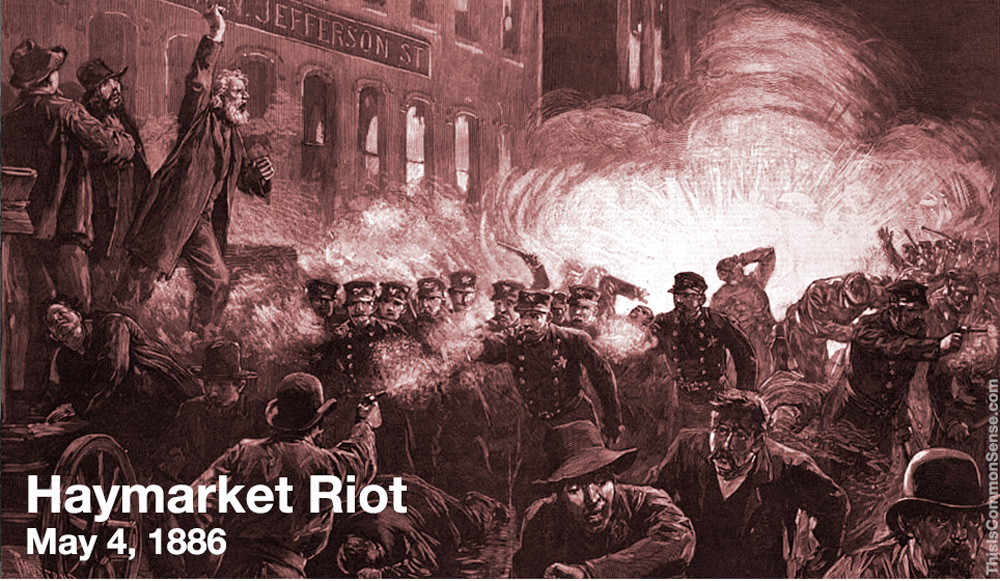
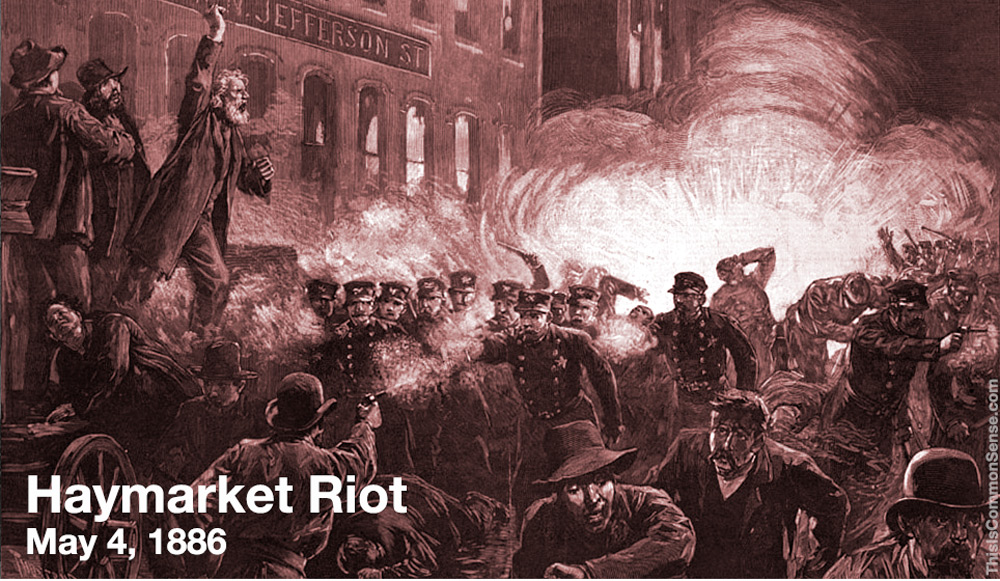
The date of the first was May 4, 1886, a labor demonstration at Haymarket Square in Chicago that went very bad. This Haymarket Affair is one of those handful of stories in our high school history books we tend to remember, involving bombs, deaths, anarchists, hasty prosecution, hangings, pardons, and much more. People still argue about who is to blame. What we don’t argue with is the aftermath: the Second International of communist and socialist parties chose, in 1889, the ancient celebratory day of May 1 to commemorate the Haymarket riot as “International Workers’ Day.”

It has come to be known as “Labor Day” in some countries.

But other, less radical labor activists had already pushed a Labor Day for their cities and states before Haymarket, and they had chosen early September as the proper time for a celebration of “the working man.” A majority of states had enacted early September labor holidays by 1894.

In June of 1894, Congress passed legislation making the first Monday of September “Labor’s Holiday.”

President Grover Cleveland signed the bill into law mere days after the Pullman Strike ended — with a not quite universal judgment that he had mishandled it. Cleveland’s intervention in the strike led to a higher body count and more property damage than the Haymarket riot. That being said, it does not appear to have moved President Cleveland as much as you might think — he did not spearhead the Labor Holiday legislation, and his signature is not as important as it may seem, since congressional support was high enough to override any veto.

Associated then with activism to increase the economic and legal power of unions, to this day the official Labor Day in September serves as an alternative to the more radical celebrations in May. But both seem antiquated, now. Our alleged “radicals” today have shifted their focus from labor remuneration and working conditions to providing to workers and non-workers alike free stuff. 

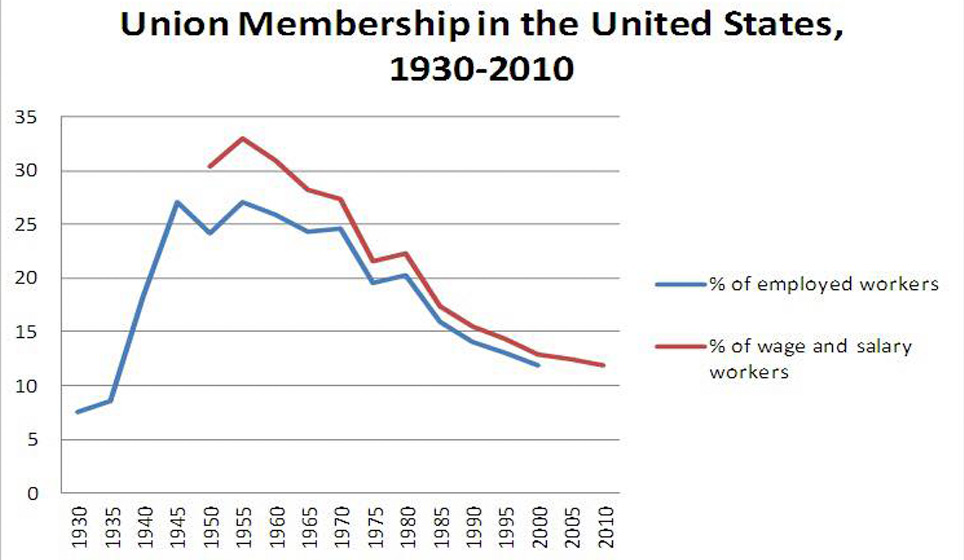
And union participation in America, which waxed up until about the time I was born, has waned since. Only the government worker segment is heavily unionized today.

Nowadays, Labor Day has about the same symbolic and political significance as Arbor Day.

The most important lesson may be this: we talk about how divided the country is, politically and culturally. But the level of foment is not nearly as violent as it was when Labor Day became a national holiday.  

This is Common Sense. I’m Paul Jacob


Haymarket Riot

See all recent commentary
(simplified and organized)
See recent popular posts

Categories
general freedom ideological culture Popular

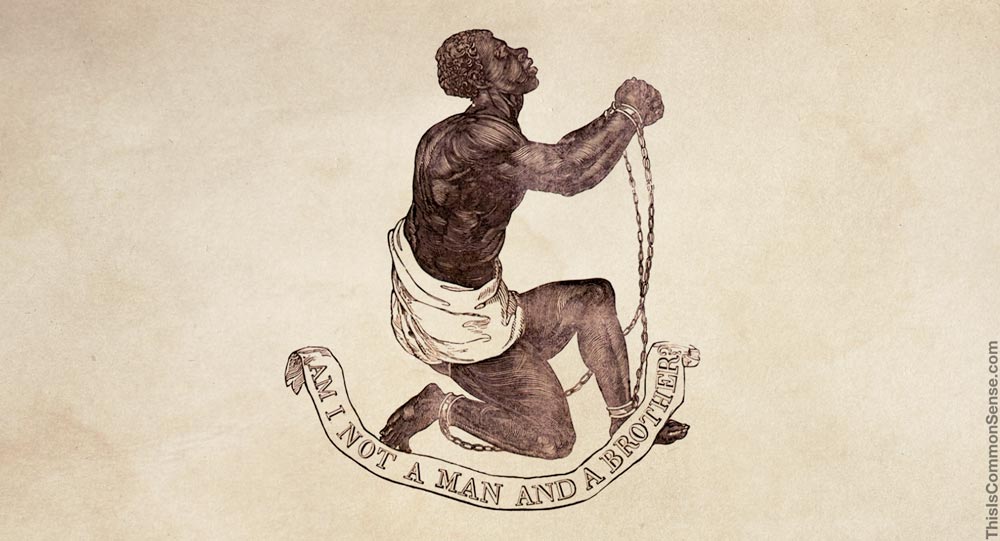
Slavery Is Not Free-Market Capitalism

Tarring free-market capitalism and limited government with the brush of slavery is old hat. What is new is that prominent journals and major media figures now shamelessly slop that brush around.

Indeed, the argument is so often made that addressing it from several angles, as I have — twice in the last few outings of Common Sense — is important. Today I make an additional point.

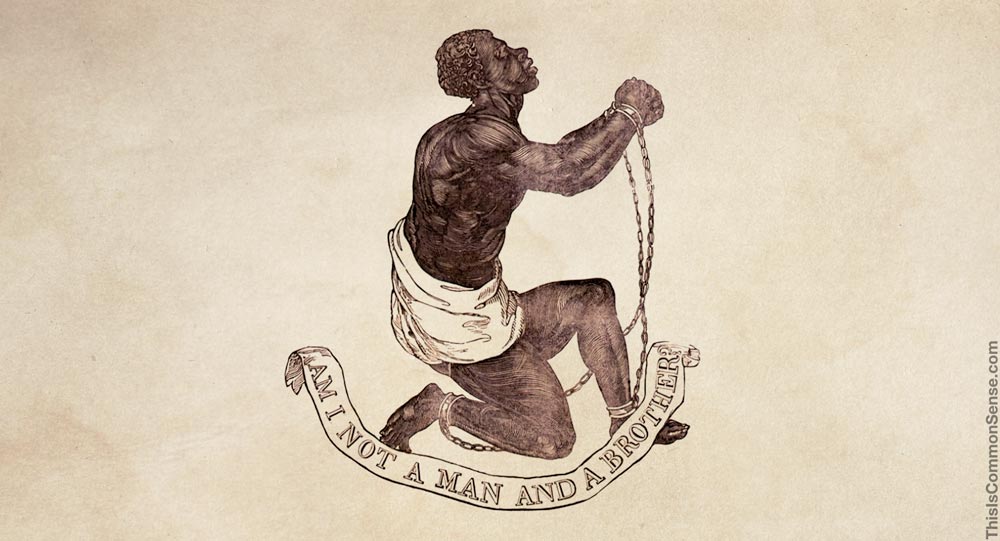
The fact that human beings were treated as property, to be sold and mortgaged and disposed of at will, does not make slavery “free market.” If we legalized and institutionalized the market in stolen goods, that might make those markets legally above board — but not morally

It is this moral argument against stolen goods that undergirds the case against slavery. 

Always has.

For slavery is stealing the rightful property of the people enslaved — their property in their own bodies. 

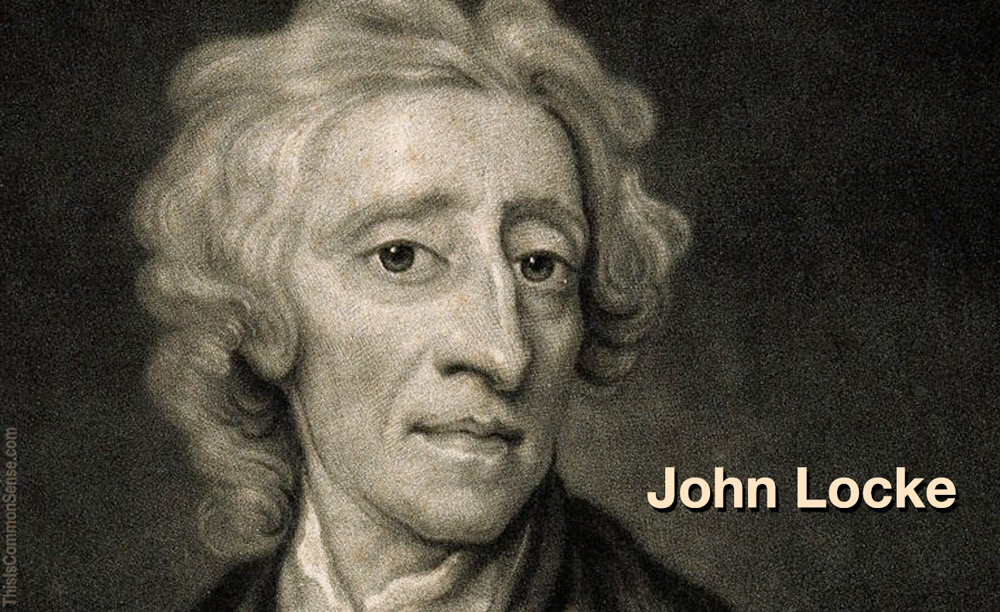
Richard Overton called this “self-propriety” in 1646, and at about the same time John Locke, following Hugo Grotius, wrote of every man having “a property in his own Person.” This is the old liberal way to think about personal freedom when you are dealing with property: self-ownership. 

“Free market capitalism” rests on it just as slavery abridges it.

Unfortunately, there has been a successful campaign to muddy up this logic and its history. Teacher Lawrence Ludlow recently informed readers of American Thinker about the results of this indoctrination: today’s students have “somehow ‘learned’” that “slavery was isolated to the United States instead of practiced worldwide for ages” and that “Westerners were the most enthusiastic practitioners of slavery instead of being among the first to abandon it.”

Freedom is not slavery and the truth shall set us free.

This is Common Sense. I’m Paul Jacob.


See all recent commentary
(simplified and organized)
See recent popular posts


Categories
ideological culture media and media people Popular

The Fifth Century Begins

When socialists and woke scolds talk about slavery, you can almost hear the chains and smell the leather of the slaver’s whip — and not always in a good way.

Project 1619 is the New York Times effort to acknowledge 400 years of Africans in America. Thankfully, the project’s page is more coherent and forthright than Matthew Desmond’s New York Times Magazine farrago of August 14, “In order to understand the brutality of American capitalism, you have to start on the plantation.”

Indeed, that piece (like others in the series) is such a tangle that there is no hope to unravel it in this limited space. Just note that Desmond does his darnedest to help the enemies of liberty tie slavery into the idea of free markets, private property, and free association.*

Project 1619, on the other hand, accepts the complexity of slavery in America without being idiotically tendentious. It recognizes that the captured Africans brought to Virginia shores in August 1619 were treated as indentured servants. Unfortunately, unlike the Englishmen arriving under indentured servitude, the first Africans in Virginia lacked explicit contracts. So negotiating their way out was . . . problematic. Still, one African, arriving two years later, was soon freed and became a landowner. And it was he who was awarded another African as a slave for life, in civil court in 1655, marking the real start of chattel slavery in America.

Which is to say, slavery in America was not exclusively a matter of race.**

Why is this important? Because slavery is wrong not because racism is wrong (as wrong as that is), but because people have a right to freedom.

Could it be that socialists emphasize racism regarding slavery because they fear that focusing on freedom might scuttle their socialism?

This is Common Sense. I’m Paul Jacob.


* See my discussion of slavery yesterday.

** This becomes clear once you read Mark Twain’s Pudd’nhead Wilson, or learn how Thomas Jefferson’s wife was related to Sally Hemings

PDF for printing

slavery, 1619, freedom, chains,

See all recent commentary
(simplified and organized)
See recent popular posts

Categories
ideological culture Popular too much government

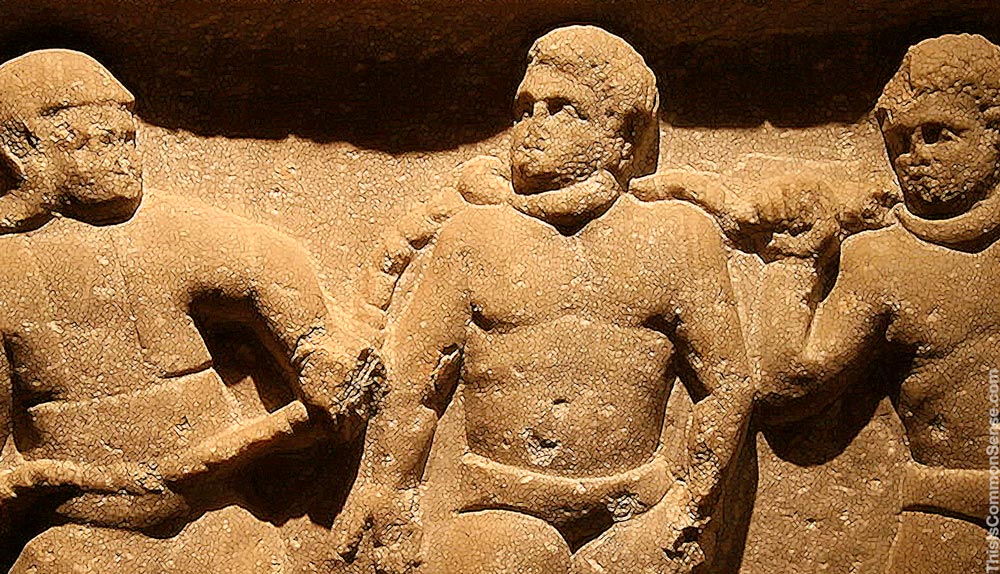
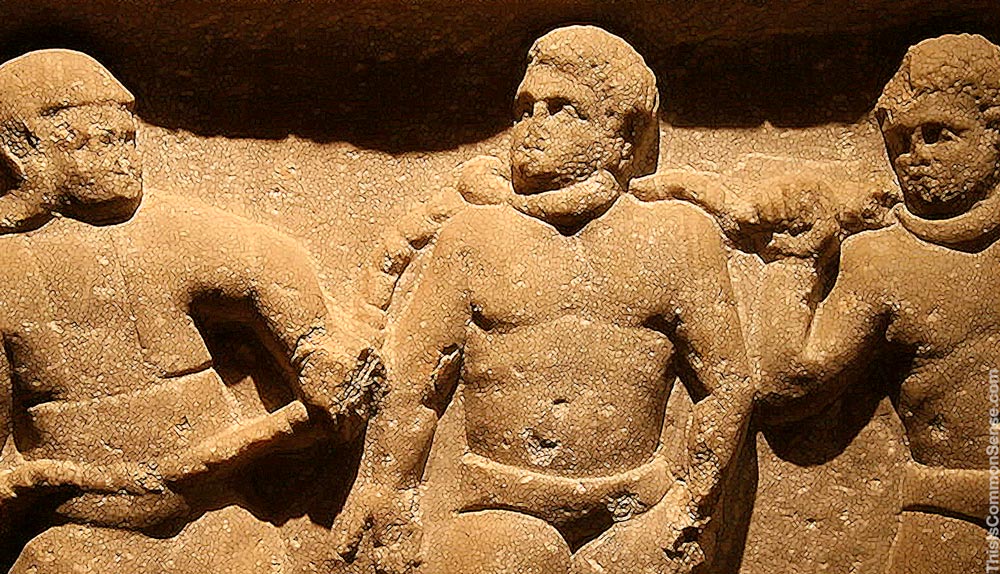
Slaves All?

A bizarre argument is gaining popularity: the United States of America not merely allowed slavery in its first hundred years, it depended upon it, grew rich by it . . .  and, “therefore,” not only the federal government but also its constitutional principles and even capitalism are all tainted . . . and . . . “therefore” . . . we must have socialism!

Why long-dead chattel slavery requires political slavery now is hard to figure.

And no, you should not need to read George Fitzhugh’s Cannibals All! or Sociology for the South to see that socialism is slavery.*

But these days it is more common to link slavery with . . . freedom (this is hard even to type) in the form of free markets. 

Leftists who make this linkage are helped by some popular historians who argue that since the   antebellum South (1) grew faster, economically, than the North, (2) slavery was profitable for slaveholders, and (3) slaves became more productive in picking cotton, the “peculiar institution” was key to American success. Vincent Geloso, a visiting assistant professor of economics at Bates College, writing for the American Institute for Economic Research, ably shows that not one of these three theses hold up to scrutiny.

Most importantly, though, Geloso demonstrates that the slavery system was like all other interventionist systems, with some people (slavers) benefiting at the expense of others (slaves, of course, but also free people . . . through a variety of subsidies).

Geloso uses the term “deadweight loss” to make his case that slavery made America poorer.

He is certainly not wrong. But once you understand why freedom and prosperity are linked, not much economic jargon is necessary.

This is Common Sense. I’m Paul Jacob.


* This pro-slavery southerner did argue against the very idea of liberty and free labor on the grounds that freedom is bad and socialism is good. Indeed, “Fitzhugh disliked ‘political economy’ (as economics was then called), which he saw as ‘the science of free society,’” economist Pierre Lemeiux explains, “as opposed to socialism, which is ‘the science of slavery.’” That forthright appraisal is about all that’s good in Fitzhugh.

PDF for printing

slave, ancient, Roman, Rome, chains,

Photo by Jun on flickr

See all recent commentary
(simplified and organized)
See recent popular posts


Categories
ideological culture partisanship

The False Binary

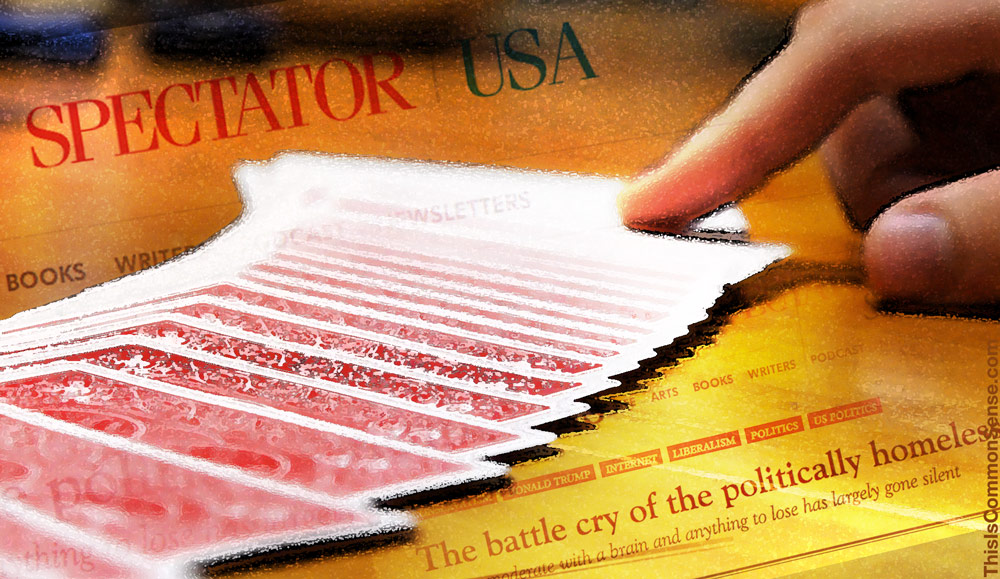
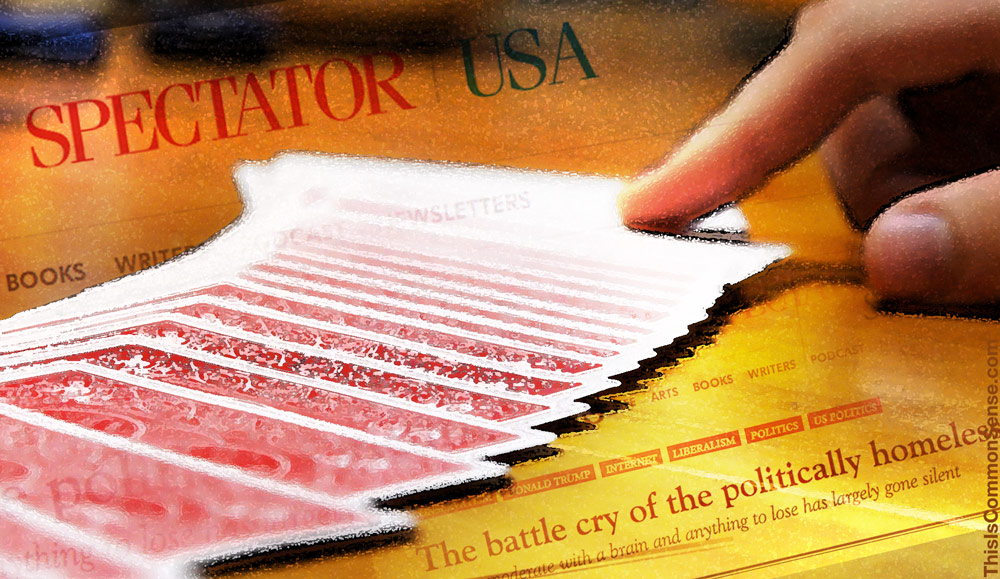
Characterizing herself as a “moderate with a brain,” Bridget Phetasy writes that things have gotten so bad that now “every vote is considered a statement on your personal identity and worth.” Her article in Spectator USA, “The battle cry of the politically homeless,” paints a bleak picture.

“Your value, who you are, what kind of world you want, whether or not you’re a good person or an evil person . . . it all boils down to which lever you pull. Damn your reasons. Vote for the ‘right’ person, or else you are a fascist, or a racist, or a globalist, or a communist.”

Ms. Phetasy expresses fatigue at “being afraid to voice my own opinions, of knowing how saying the wrong thing at a barbecue while someone is filming on their iPhone could result in a nationwide clarion call for my head on a pike.”

I, however, feel not one whit of a compulsion to cave to what Phetasy says is the “totalitarian-like” demand of the two parties for “devotion to their ideology.”

How did I become so blessed?

I know that Trumpians have almost no way to rationally defend their major positions — protectionism being the tippy-top of an Everest of an iceberg. Meanwhile, the far left is worse, flushing the old wine of socialism through the new-but-leaky bottles of racist (“anti-racist”) resentment.

Can we really fear such intellectual paper tigers?

There is a way out: Ranked choice voting. Witless partisanship rests on the A/not-A (=B/not-B) duality rut of the two-party system, into which I have never purchased admission. None of us are required to — and won’t be tempted to once our absurd electoral system is swapped for one not programmed to create false binaries.

This is Common Sense. I’m Paul Jacob.


PDF for printing

cards, playing cards, pick a card, politics,

Photo by Aaron Jacobs on flickr

See all recent commentary
(simplified and organized)
See recent popular posts


Categories
ideological culture national politics & policies Popular

Strange Days

We live in a strange time when a possible official UFO disclosure by the government doesn’t seem strange at all.

What’s odd is one of the two major American political parties proudly talking up socialism.

What’s weird is the increasing financial instability of the country’s top two social programs, Medicare and Social Security, while Americans seem unworried and politicians push not to shore the programs up, but expand them.

What’s bizarre is over $22 trillion in federal debt, and the current president and Congress piling on ever more with new trillion-dollar deficits.

What’s strange is . . . well, OK: UFO disclosure is a bit strange.

It is worth noting that Freedom of Information Act (FOIA) requests have unearthed quite a lot of information on UFOs already. When FOIA mechanisms were first set up, no one expected the avalanche of requests that would be related to UFOs. But that is what happened — and they haven’t dredged up nothing.

When President Trump was asked about the issue by George Stephanopoulos, his response was dismissive, however. “People are saying they’re seeing UFOs. Do I believe it? Not particularly.”

Like me, he probably has seen nothing first-hand, experienced nothing. But by now he has surely been briefed.

Or has the de facto Deep State coup attempt against his presidency entailed keeping him in the dark?

Meanwhile, Senator Bernie Sanders, running for Trump’s job, told YouTuber Joe Rogan that he would pass on whatever he might learn about UFOs if president. “Alright, we’ll announce it on the show. How’s that?”

Yet even that is not the strangest thing Sanders has said.

This is Common Sense. I’m Paul Jacob.


swing, space, weird, ufo, aliens, strange,

See all recent commentary
(simplified and organized)
See recent popular posts

Categories
general freedom ideological culture

The Atrocity Exhibition

News commentary can seem like a race, commentators reacting as if to the crack of the starting-gun, scrambling to make sure they do not come in last.

Yet, in stories like this weekend’s round of mass shootings, being last to comment might be something to aspire towards. 

As I have argued before, mentioning perps’ names has a tendency to encourage further mass murders, spree murders. But in cases of outright terrorism — as the El Paso shooting was immediately classified — the frenzy to comment is pretty much the same thing as using names. 

How?

Well, terrorism is the use of violence to effect political change. The old anarchists and syndicalists called it “propaganda by the deed.” And, in a mass- and alt-media drenched democratic society, the aim is to get people to go into alarm, in part by getting tongues tapping and keyboards clattering.

Focusing on terrorist murders does feed the idea that terrorism somehow works.

So, when Democrats immediately talk about racism and the need for gun confiscation (both seen on Twitter immediately after the El Paso event, of course) and Republicans leap to the “mental health” issue and . . . video games (as I saw inching across the news chyrons) . . . my urge to comment dissipates dramatically. 

But here I am.

Politicians can demand new laws to restrict firearms, or video games, but those laws won’t prevent future mass shootings. 

Nor do I hold any hope that we can perfectly police against white nationalists like the manifesto-writing El Paso killer or lewd socialists such as the Dayton shooter

Our best hope is to save kids from growing into angry, disaffected, violent adults.

This is Common Sense. I’m Paul Jacob.


PDF for printing

atrocity, exhibition, shooting, violence, guns, control, 2nd Amendment, boy, white,

See all recent commentary
(simplified and organized)
See recent popular posts