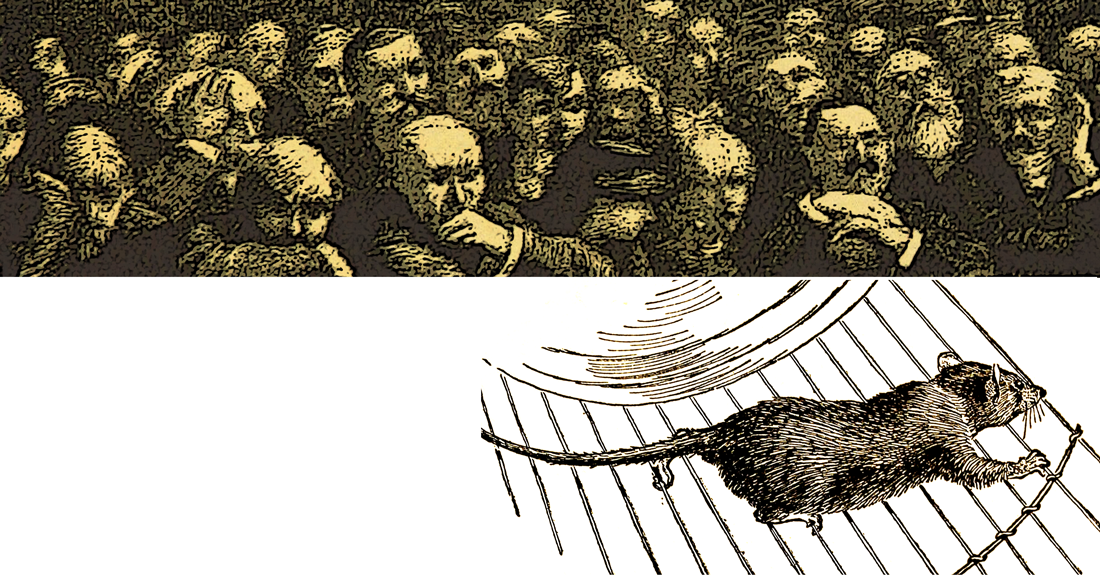
On Friday I lamented the picking up, by local police, of two children, 10 and 6, for walking home from a local park . . .
and the subsequent two-month Montgomery County (Maryland) Child Protective Services investigation, which found the parents “responsible” for “unsubstantiated child neglect.”
Left unanswered? Whether parents “may” let their kids walk somewhere without supervision.
There’s no law, of course, against children walking in public without parents. But the “swarms of Officers” employed “to harass our people” aren’t limited by trifling things like laws.
This Kafkaesque episode reminds me of my experiences with campaign finance agencies.
In both cases, agencies rely upon meritless complaints to investigate, intimidate and impoverish people without any law being broken. All that’s required? An unelected bureaucrat’s arbitrary decision.
Take Lois Lerner. She ran the IRS division targeting conservative groups. Remember her allegedly lost emails? Irretrievable! Until someone actually looked for them.
Before violating people’s rights at the IRS, Lerner did so heading the Enforcement Division of the Federal Election Commission (FEC). A recent George Will column detailed her threats and very public and politically damaging harassment of Al Salvi, the Illinois Republican candidate for the U.S. Senate. Sure, he was fully acquitted in federal court . . . after his defeat.
Using a spurious complaint by former Rep. Mike Synar (D-Okla.), Lerner launched a political persecution against U.S. Term Limits, costing us nearly $100,000 in legal fees and much more in dislocated time and manpower.
Finding no evidence — there was none to find — the FEC finally closed the matter. But agency officials still issued a news release proclaiming that they believed we had violated the law.
An Oklahoma newspaper headline read, roughly, “National Term Limits Group Broke Law, Says FEC.”
Talk about “unsubstantiated.”
This is Common Sense. I’m Paul Jacob.




 But what is that problem, at base? Those who fear a negative personal effect from vaccination (and there are some, though the “autism” charge
  “Why was there racially segregated seating on public transportation in the first place?” he asked on the occasion of her death in 2005. “[T]here was certainly plenty of racism in the South, going back for centuries. But racially segregated seating” did not have the same unbroken history. Sowell pointed out that no matter what their own views, owners of the private transit lines of the 19th and early 20th century lacked motive to enforce segregation and thereby alienate many of their passengers.