Categories
free trade & free markets national politics & policies political economy

Big Oil, Big Profits — Big Deal?

When President Joe Biden accused oil companies of excessive profiteering, and those profits as a cause of inflation, reactions were . . . mixed.

Democrats love that kind of talk. Ronald Reagan, back in his Democrat days, pitched precisely that sort of rhetoric when he campaigned for Truman’s re-election.

Republicans, along with most other Americans, are skeptical. Or just plain incredulous.

Meanwhile, what did Big Oil say?

Chevron’s CEO, Mike Wirth, took special care to complain of the president’s rhetoric, characterizing the administration as having “largely sought to criticize, and at times vilify, our industry.”

Perhaps Biden’s worst vilification was that Exxon had “made more money than God” — as if spending more money than God were his job and that he resented any money he couldn’t spend. 

EXXON responded by noting that the multinational had continued investing in infrastructure even during the pandemic lockdowns when the company “lost more than $20 billion and had to borrow more than $30 billion to maintain investment to increase capacity to be ready for post-pandemic demand.”

In a helpful mode, the company offered that “government can promote investment through clear and consistent policy that supports U.S. resource development, such as regular and predictable lease sales, as well as streamlined regulatory approval and support for infrastructure such as pipelines.”

Biden, who ran on decreasing oil production by regulatory crackdown, received a square hit.

Nonetheless, the Democrats double-down on their worn-out “windfall profits” alarmism. 

After a huge hit to consumption during the lockdowns, the profits are there not as recompense for Big Oil’s regrettable big losses, but as incentives to get out of the Great Suppression. 

We should want profits to entice more investment.

Could it be that Biden wants neither?

This is Common Sense. I’m Paul Jacob.


PDF for printing

See all recent commentary
(simplified and organized)
See recent popular posts
Categories
free trade & free markets ideological culture

The Woke Mob’s Capitalism

A prominent rating system has gone “woke.”

“Exxon is rated top ten best in world for environment, social & governance (ESG) by S&P 500,” Elon Musk tweeted a few weeks ago, “while Tesla” — the billionaire’s high-end electric car company — “didn’t make the list! ESG is a scam. It has been weaponized by phony social justice warriors.”

We could quibble. Is “phony” the right word? “Social justice” has always been slippery. It’s a “mirage,” explained Hayek, really just a stalking horse for power.

What Musk is objecting to, though, is worth thinking about. The ESG standard is supposed to mean something . . . based on objective criteria. The reasons to eject Tesla from its Top Ten and place Exxon at the pinnacle are laughably transparent. It’s a woke power grab. The leftist ideology has taken over another capitalist institution, the better to create . . .

What?

Socialism? Fascism?

Michael Rectenwald, in a fascinating essay, calls it “woke corporatism.” 

The plan is, he writes, to “establish a woke monopolistic cartel.” Musk’s company has been “subjected to the S in ESG — the ‘social’ or ‘social justice’ quotient.”

Musk, Rectenwald argues, “has been deemed a deplorable, and thus his company does not pass ‘social justice’ muster.” In other words, the putatively pro-inclusion folks are excluding him from the ranks of the favored.

And all because he wants free speech on a social media platform!

Laissez-faire grew out of economists’ objections to the grinding inefficiency and over-politicization of business. Adam Smith, back in 1776, called the pre-liberal, insider-based trade system “mercantilism.”

The leftist mob now pushes a neo-neo-mercantalism, mobocracy capitalism.

This is Common Sense. I’m Paul Jacob.


PDF for printing

See all recent commentary
(simplified and organized)
See recent popular posts
Categories
free trade & free markets too much government

Do More Than Baby Steps

Major disruptions such as pandemic policy in China and the Russian invasion of Ukraine obviously crimp trade and supply chains. But given such impacts, should governments here in the United States be making things better or making things worse?

Oil is one example of a good that would be more abundant and cheaper had the government left it alone — stopped blocking domestic production and the flow of oil from Canada.

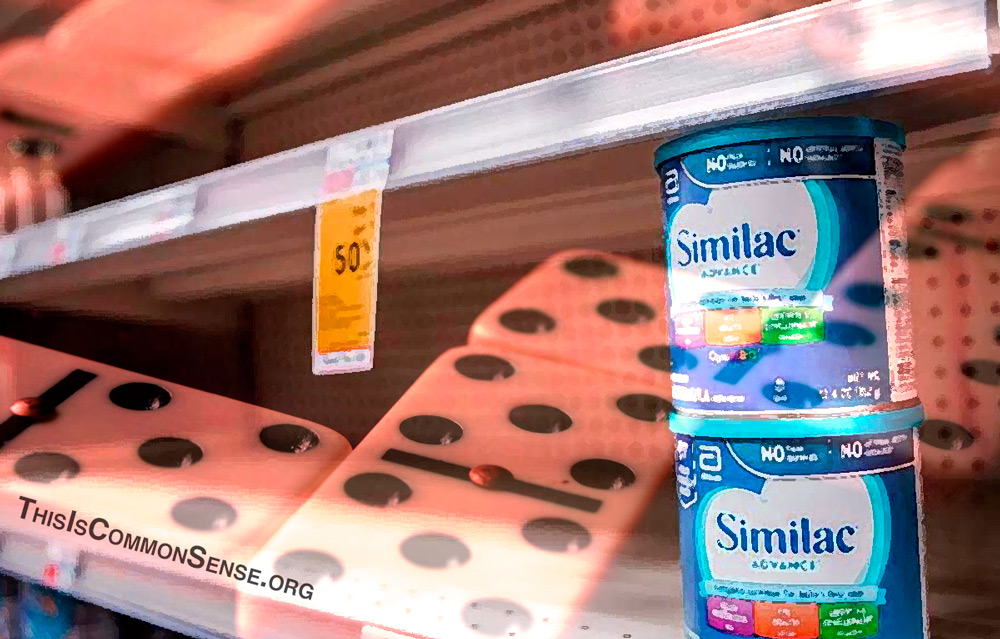
Now parents are having trouble getting baby food.

A proximate cause of the shortage is the closure of a single major factory producing baby formula. But Kevin Ketels, a professor who studies the global supply chain, argues that restrictions on production had set things up so that a blow like this would be crippling.

For one thing, only a few companies, Abbott, Reckitt, and Nestlé, are allowed to participate in a government program to provide baby formula to low-income families. This is not a minor program. The federal government provides substantial grants to the states to fund it.

More importantly, only a few manufacturing facilities are allowed to produce baby formula, and “startups don’t have the volume required to produce in these facilities.”

High tariffs on baby-food imports have also reduced supply.

You would think, then, that the first thing to do would be to remove governmental barriers to production and imports.

And all, not just some.

So why isn’t that what we are hearing about now?

Well, politicians do not gain their power, prestige, and insider trading advantages by leaving well enough alone. Admitting that their stock in trade — regulation and tariffs and the like — is the cause of this problem might suggest to distracted minds that it is the cause of most, if not all, our problems.

This is Common Sense. I’m Paul Jacob.


PDF for printing

See all recent commentary
(simplified and organized)
See recent popular posts
Categories
free trade & free markets general freedom national politics & policies

Quota Requirement Overturned

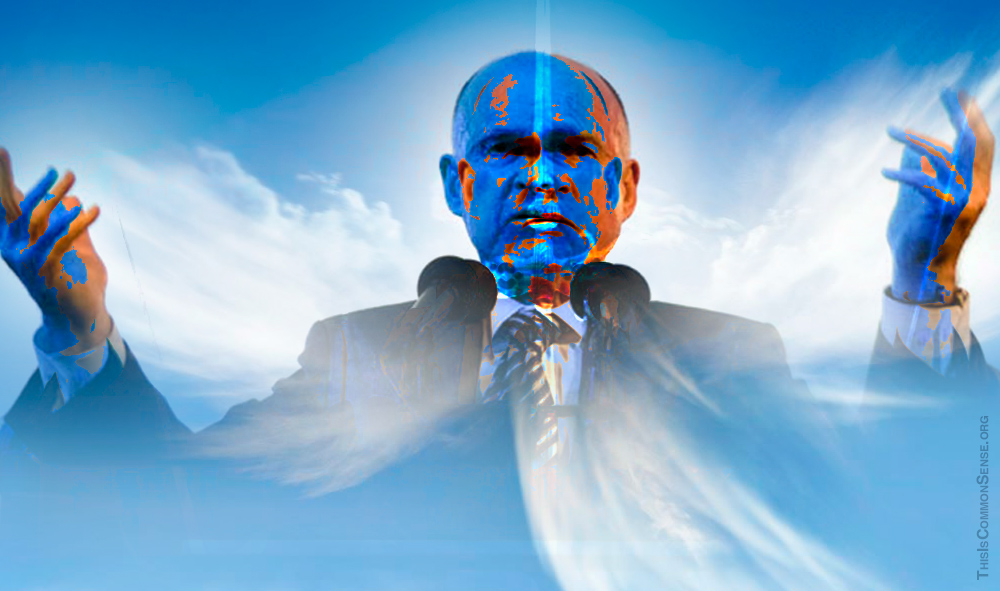
In 2018, Jerry Brown, then California governor, signed a bill requiring corporate boards to include a high percentage of women. 

Now a Los Angeles County Superior Court judge has determined that the state failed to show that “gender-based classification was necessary to boost California’s economy, improve opportunities for women in the workplace, and protect California taxpayers, public employees, pensions and retirees.”

No news yet on whether the state will appeal.

In 2018, Brown had conceded that the law was probably doomed to be judged unconstitutional. But he apparently regarded questions of legality or constitutionality as irrelevant.

“It’s high time corporate boards include the people who constitute more than half the ‘persons’ in America,” he burbled in his signing message.

Fines for disobedience were to be steep: $100,000 for initial violations, $300,000 for subsequent violations.

Of course, it is neither immoral nor a crime to choose a man instead of a woman for a post. Making specific hires criminal depending upon the complexion of a business’s other hires amounts to the politicization of everything, swapping the goals of business for the goals of ideologues. It is destructive of individual rights and the requirements of conducting business profitably to compel employers choosing personnel to be guided by any considerations other than relevant qualifications. Or by any assessment but their own.

Managers of all non-government organizations should be free to use their own best judgment in hiring and contracting, whether the work involved is that of clerk, CEO, or board member. 

This is Common Sense. I’m Paul Jacob.


PDF for printing

See all recent commentary
(simplified and organized)
See recent popular posts
Categories
free trade & free markets political economy

Unconscionable Greed!

It’s easy to blame others for greed. And when prices rise, I suppose I can imagine being so upset that . . . well, if not my mind, Bernie Sanders’ mind . . . would become unhinged:

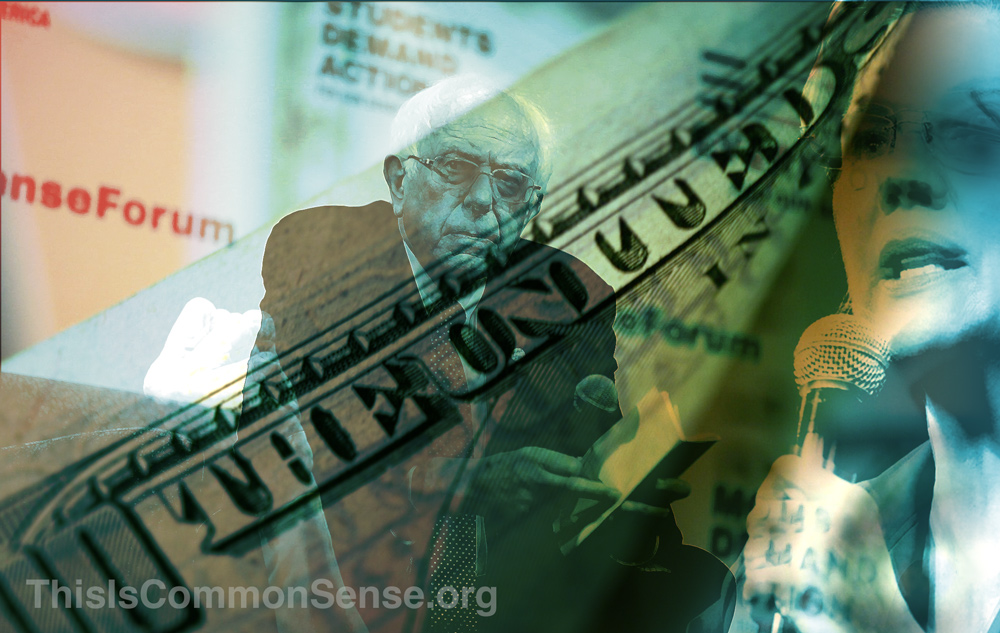
“Greed. Greed. Greed. While Americans are struggling at the pump,” the senator tweeted on Friday the 13th, “in the first three months of this year, oil and gas companies made over $41 billion in profits, more than double their profits from last year. The problem is not inflation. The problem is corporate greed.”

That’s Bernie Sanders for you. It’s not government profligacy or Federal Reserve monetary policy or the Biden Administration’s anti-fossil fuels agenda . . . or supply-line problems, persisting COVID-lockdown effects, or anything else.

Just greed.

But is greed somehow cyclical? Why were greedy corporations providing cheap gas a year ago and then able to raise it only under Democrats’ rule?

Alas, Bernie isn’t the only low-brow demagogue in the Senate. There’s Senator Elizabeth Warren pushing a new “price gouging” bill.

So, just as Bernie never answers “why is greed so successful at gouging now?,” how does Liz answer the burning question “how can we objectively define ‘price-gouging’?”

As journalist Catherine Rampell observes on Twitter, the senator’s definition in the bill is less than enlightening: “price-gouging” is “just pricing that is ‘unconscionably excessive.’”

Now that, Senator Warren, is unconscionably vague.

And incidentally, aren’t both senators on the record as demanding higher gas prices to usher in “green energy” to “save the planet”? This all seems unconscionably . . . deceptive.

This is Common Sense. I’m Paul Jacob.


PDF for printing

Photo credits: Warren/Bernie/money

See all recent commentary
(simplified and organized)
See recent popular posts
Categories
First Amendment rights free trade & free markets

Elon Musk Is Serious

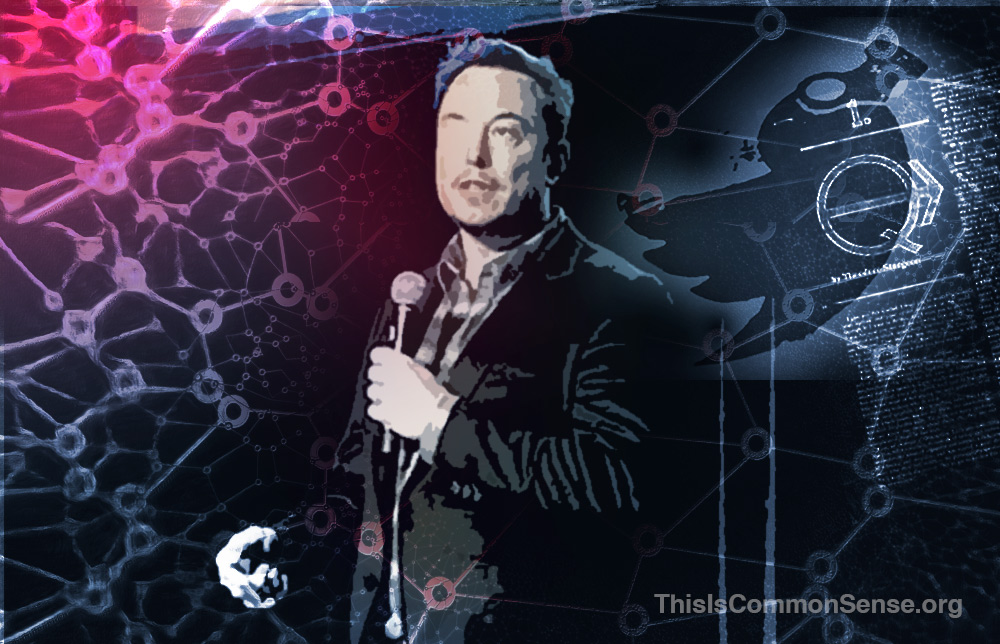
Billionaire Tesla and SpaceX entrepreneur Elon Musk is showing the world how capitalism reforms wayward companies — like Twitter. 

It is done from within the system.

By stock ownership.

Becoming Twitter’s top stockholder — right after Musk told the Babylon Bee he just might have to buy Twitter to reform it — surely demonstrates serious intent.

But Twitter honchos have stressed that the mere advent of Elon Musk portends no major changes, a hint of things not to come. 

Moreover, a restriction on how many shares board members may purchase meant that had Musk joined Twitter’s board, he’d have been unable to ramp up the pressure for reform by becoming an even bigger stockholder.

So Musk chucked his original plan to join the board and decided, what the heck: If I do need to buy Twitter to fix its anti-speech policies, I better outright buy it. He has reportedly offered $43 billion.

He says: “I invested in Twitter as I believe in its potential to be the platform for free speech around the globe.” But he now realizes that the company in its current form will never be that platform. 

“Twitter needs to be transformed as a private company.”

A week ago we asked, “Will Elon Liberate Tweeting?

We’re still asking. Maybe the current owners love banning disagreement with themselves too much to give it up. 

Someone should tell them that are worse things to sell out for than open discourse and freedom of speech.

This is Common Sense. I’m Paul Jacob.


PDF for printing

See all recent commentary
(simplified and organized)
See recent popular posts
Categories
free trade & free markets too much government

Production, It’s a Gas

Is this a news story?

“Electric-car baron Elon Musk calls for increasing U.S. oil and gas [production] to combat Russia.”

It’s news because of Russia’s invasion of Ukraine (and because gas has gotten awfully expensive) and because Musk is a major industrial figure. But a businessman calling for deregulation of an industry — is that also headline-worthy stuff?

Unfortunately, yes, given how businessmen so often want liberty for themselves along with ever-expanding restrictions for competitors (or the same restrictions for everyone as long as competitors end up getting hurt more).

I want a world in which we can make no sense of the word “but” in this opening paragraph:

“Tesla may be the world’s leading seller of plug-in electric vehicles, but CEO Elon Musk wants the U.S. oil-and-gas industry to ramp up production.” 

“But”?

Musk’s statement-by-tweet doesn’t help: “Hate to say it, but we need to increase oil & gas output immediately. Extraordinary times demand extraordinary measures.”

These words are not super-clear about what Elon Musk believes the government’s attitude should be toward markets during non-extraordinary times. War or no war, government policies safeguarding markets should not be resorted to only as emergency measures. No matter how much some may welcome sustained efforts to hobble an industry.

It’s rare that our businessmen clearly enunciate the principles of free enterprise that they are thought themselves to practice. We’re lucky if we get a tendency in that direction. 

I guess that’s better, at least, than a fervent statism that seeks to wipe out all economic freedom all the time.

This is Common Sense. I’m Paul Jacob.


PDF for printing

See all recent commentary
(simplified and organized)
See recent popular posts
Categories
deficits and debt free trade & free markets national politics & policies too much government

Inflation Evasion…Depression

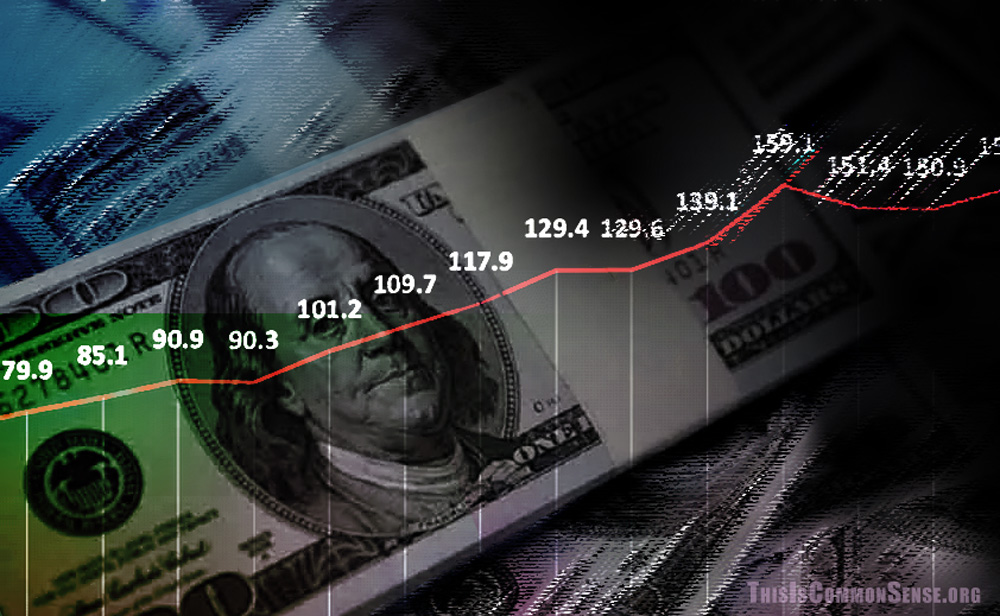
Going into the lockdowns and bailouts, a consensus of politicians and their court wizards, the economists, had belittled the specter of inflation.

Nowadays, when folks use the term “inflation,” they really mean upward movement on the consumer price index (CPI). Some economists, who have a sense of history,* reserve the word not for price level increases, but for increases in the supply of money. And the two concepts are tightly linked. 

But a whole lot of people seek to blame CPI rate increases on anything but monetary policy, as Veronique de Rugy notes in an article at The American Spectator.

“Theories for why we shouldn’t worry abounded,” de Rugy writes. “It was caused by a base-effect price increase, supply-chain restraints, a drought in Taiwan — everything but the Fed’s expansionary policies and Congress’ overspending, in part because some of these experts had cheered for these actions all along.”

And then inflation came back.

Big time.

While expressing some humility and an unwillingness to make predictions, de Rugy insists that “the amount of money printed, borrowed, and spent during the last few years led to a one-time price level rise, and we may have a way to go until we are done.” 

She also insists that the Pollyanna phrase “transitory inflation” is no comfort: “inflation was always going to be transitory. Even the inflation of the 1970s ended in the ’80s. What mattered is whether transitory inflation meant a few weeks, months, or years.”

And, I cautiously add, how de-stabilizing it is. Consumers rightly worry about rising prices, but inflation doesn’t hit all sectors the same. Credit expansion leads to imbalances that are hard to correct. 

And the correction is “depression.”

This is Common Sense. I’m Paul Jacob.


* Including the history of their own discipline. Readers of Austrian economists such asF.A. Hayek get a better sense of past debates than from other economists.

PDF for printing

Categories
Common Sense free trade & free markets general freedom property rights responsibility

Farming Is Fundamental

If you live in Maine, you may now grow your own food. The right to do so has been safeguarded in the state constitution.

If you have the right to life and to sustain your life, surely you have a right to farm. As we all know, though, governments regularly find excuses to interfere with all kinds of peaceful activities.

So this past November, Maine voters passed a constitutional amendment authored by Rep. Billy Bob Faulkingham (whose energetic campaigns for freedom have previously caught Common Sense notice) and proposed by the legislature. 

Maine’s Right to Food Amendment makes clear that “All individuals have a natural, inherent and unalienable . . . right to save and exchange seeds and the right to grow, raise, harvest, produce and consume . . . as long as an individual does not commit trespassing, theft, poaching or other abuses of private property rights public lands or natural resources in the harvesting, production or acquisition of food.” (So there’s no California-style de facto “right” to loot.)

Foes of the amendment worry that it will enable people to bypass regulations.

Let’s hope so. 

Don’t we want the new law to ban governments in Maine from banning agriculture for the sake of “esthetics,” protecting Big Milk, or any other rationalization for foiling farming on a person’s own property?

And for the idea to spread to the other states, where far too often the scales of justice don’t properly consider the citizen’s right to produce food against the bureaucrat’s regulations frustrating same. 

This is Common Sense. I’m Paul Jacob.


PDF for printing

See all recent commentary
(simplified and organized)
See recent popular posts

Categories
free trade & free markets property rights

Unions Must Stop

Golden State labor organizers want to be able to trespass on the property of companies to recruit new workers. But companies don’t want their operations periodically disrupted by trespassers.

Typical kind of political disagreement. One party wants its rights to be respected; the other wants to violate those rights.

That was pretty much where things stood in the Golden State until the California Supreme Court’s 6-3 decision last summer, which invalidated the relevant provision of the California law that had empowered unions to disrupt business for hours a day for up to a third of the year.

Let me repeat that: for hours a day for up to a third of the year.

The petitioners in the case were Cedar Point Nursery, which produces strawberries, and Fowler Packing Company, which produces grapes and oranges. Pacific Legal Foundation pursued the litigation on their behalf.

On September 1, a California district court followed up. In light of the high court’s decision, the district court ruled that the state can’t enforce union access without “just compensation” to property owners for temporarily taking their property.

This seems like an unnecessary and contradictory hedge, a misunderstanding of the context in which just compensation for government-authorized taking of a property for public use properly applies (if ever).

But, practically speaking, the rulings mean that California businesses have now escaped at least one of the many hassles that are encouraging so many to flee the state.

PLF attorney Wen Fa says that agricultural businesses in California can now function “without the threat of unions trespassing on their property and disrupting their workplaces.”

This is Common Sense. I’m Paul Jacob.


PDF for printing

See all recent commentary
(simplified and organized)
See recent popular posts