Categories
free trade & free markets too much government

Demands and Supply

A storm hits the east coast. Some homes are washed away. Others burn down. Millions lose power. Gasoline supplies are massively disrupted, even as mass transit is unusable for days.

Obviously, post-Hurricane Sandy, emergency measures are called for. It’s crucial, for instance, that the disrupted and reduced supplies of gasoline be gotten into the tanks of vehicles as inefficiently as possible, and by causing motorists to waste as much of their precious time as possible. Who but rational and well-informed persons could disagree?

To achieve this goal, rationing and laws against “price gouging” — in New Jersey, defined as adding more than ten percent to prices under normal conditions of supply and demand — come to the rescue! So Governor Chris Christie assures gas station owners that his government will “impose the strictest penalties on profiteers who . . . seek to capitalize on the misfortune of others in the midst of a crisis. . . .”

After all, what’s the alternative?

Well, it’s this: Let fuel prices rise to the height required to induce motorists who least urgently demand gas to give way to those who most urgently demand it. This would

  • shrink or prevent round-the-block gas lines;
  • encourage shipment of gas to those areas where prices have risen the highest, i.e., where gasoline is scarcest;
  • allow people to get back on their feet as quickly as possible by following their own best judgment in the face of local circumstances best known to themselves.

What do you call this strategy? Getting out of the way. Or laissez faire — but there’s nothing foreign about it. It used to be the American way.

This is Common Sense. I’m Paul Jacob.
Categories
free trade & free markets national politics & policies too much government

Panel Decides “Death”

The practice of medicine historically straddled between being a business profession and a charitable endeavor. When government took it over — nearly in one big gulp, in Great Britain— that uneasy mix mutated, leaving us with the occasional bout of stark horror.

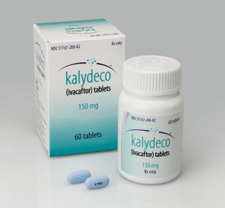
A British woman suffering from cystic fibrosis has been denied a new wonder drug that the manufacturer has agreed to provide for free, while the National Health Service gets around to approving it. But NHS says no.

Her family say she will die soon without it, yet managers at Heartlands Hospital in Birmingham say it would be unethical to provide the drug under the deal, only for it to be withdrawn later.

The drug, Kalydeco also known as ivacaftor, costs £182,000 per patient per year, and works for five per cent of people with CF who have a certain defective gene, around 270 people in England.

It corrects a malfunctioning protein which causes the characteristic build-up of fluid and mucus in the lungs that causes devastating damage.

A long shot, apparently. But is that any reason to deny a charitable offer?

These kinds of deals get offered and accepted in America all the time.

But then, when a private insurance company here decides not to cover some drug or treatment, that’s an excuse to excoriate American capitalism — while forgetting about all the characteristically American workarounds. But in “single-payer” Britain we see the state acting as a proverbial “death panel.” The outcry against socialism should be just as loud, if not louder.

This is Common Sense. I’m Paul Jacob.

Categories
free trade & free markets general freedom national politics & policies

Celebrities, Cannabis, Change

A new website, Marijuana Majority, makes an impression by listing famous people who think America’s laws against marijuana are crazy, unjust, or at least not very wise.

The site is elegant; it presents a long list. And by offering statements from each celebrity, we get a few ideas beyond the “marijuana should be legalized [to some degree]” message. Lawrence O’Donnell makes something close to an actual argument:Sarah Palin on Marijuana

Since Gallup starting asking Americans if marijuana should be legal back in 1969, most have always said no — until now. In a Gallup poll released yesterday, 50 percent said pot use should be legalized. . . . A minority of 46 percent continue to say marijuana should not be legalized. . . . In a democracy we should expect such a dramatic shift in public opinion to be reflected in our public officials.

Evangelist Pat Robertson offers the practical point, often iterated:

I really believe we should treat marijuana the way we treat beverage alcohol. I’ve never used marijuana and I don’t intend to, but it’s just one of those things that I think: this war on drugs just hasn’t succeeded.

A lot of folks, including British entrepreneur Richard Branson, enthuse about the taxing possibilities:

[I]t’s currently estimated that the annual revenue that would be raised in California if it taxed and regulated the sale of marijuana would be $1,400,000,000!

But this is not primarily a propaganda-by-the-word site, it’s a propaganda-by-the-celebrity site. Alas, the bulk of celebrities hail from the entertainment industry . . . not the most convincing bunch on the whole.

Still, the barrage of support and ideas is impressive, showing you don’t have to be a stoner to want to liberalize marijuana laws.

This is Common Sense. I’m Paul Jacob.

Categories
education and schooling free trade & free markets too much government

That Was Fast

Ah, Minnesota. The home of “nice” Big Government. And in keeping with that, last week the state produced a grand example of mindlessly intrusive regulation. That’s the “Big Government” part. The “nice” part is how quickly the government conceded it was wrong.

I read about it first at Reason’s Hit & Run, where Katherine Mangu-Ward proclaimed “Minnesota Bans Free Online College Courses from Coursera. I Give Up.” She briefly related the burgeoning online industry of offering college course lectures free to the public (minus the accreditation), and how one of them was singled out for prohibition from the state’s Office of Higher Education: “Coursera is unwelcome in the state because it never got permission to operate there.”

Ms. Mangu-Ward’s conclusion was simple:

Idiots.

A day later, however, the story had radically changed. Minnesota’s bureaucrats had rethought their position, as related by this particular bureau’s bigwig, Larry Pogemiller: “Obviously, our office encourages lifelong learning and wants Minnesotans to take advantage of educational materials available on the Internet, particularly if they’re free.”

Obviously.

Pogemiller went on to promise that, when the legislature “convenes in January, my intent is to work with the Governor and Legislature to appropriately update the statute to meet modern-day circumstances.”

The regulators of Minnesota’s higher education proved that they could learn a new lesson. How well? We’ll see, as online schooling continues to gain its foothold — and accreditation, too.

Gerard Piel famously wrote of the “acceleration of history.” With the Internet, we see the feedback time from bad policy to removal of said policy cut down to a mere day.

This is Common Sense. I’m Paul Jacob.

Categories
education and schooling First Amendment rights free trade & free markets

Demanding Demands

Logic and evidence? Or bullying and intimidation?

A member of a local Pennsylvania teachers union has demanded the resignation of the vice president of the West Chester Area School Board, Heidi Adsett, for suggesting in a letter to the editor that, instead of threatening to strike, teachers unsatisfied with hefty compensation packages try their luck elsewhere.Free Speech Zone

Adsett had also said that Pennsylvania should ban teacher strikes.

The member of the West Chester Education Association spoke up at the school board meeting after the letter had been published, objecting to Adsett’s statement on the grounds that it expressed “publicly venomous animosity [against] our teachers,” and clashed with support for public education. Other union members applauded. Others professed confusion about whether Adsett was speaking officially for the whole board.

In his report on the fracas, Ben Velderman quotes the president of Stop Teacher Strikes, Simon Campbell, who observes that congressmen “are interviewed all the time. None of them say, ‘Well, I want to make it clear that I’m not representing the whole of Congress.’”

Union defenders “can’t argue the facts,” says Adsett, “so they have to try and argue by bullying and intimidation.”

Whether public employees should be permitted to strike is debatable. Were education privately run and unions not free to bully persons crossing picket lines, then parents, taxpayers and schools wouldn’t have to worry about being pushed into paying teachers far above market rates. But that’s not the current situation. We have public schools, and our democratically elected school board members should be just as free to speak — to debate — as voters are.

Democracy, after all, requires free speech. And public education, for all its problems, surely doesn’t require democracy’s suppression.

This is Common Sense. I’m Paul Jacob.

Categories
free trade & free markets ideological culture national politics & policies

China Syndrome, 2012

The two major presidential candidates, incumbent Obama and challenger Romney, must spend their final weeks of the campaign appealing to

  1. Members of their respective parties disappointed enough to stay home on election day — or vote the dreaded “Third Party” ticket;
  2. Independent voters apt to find something distasteful about both candidates;
  3. The apathetic and the uninformed.

How to appeal to all three groups simultaneously? Well, go for the old standby: fear and hatred of foreigners.

This year, it’s the Chinese.

Romney started the China-bashing by calling our Chinese trading partners “cheaters.” Apparently he is much vexed about how the Chinese don’t respect established intellectual property rights, “stealing” our technology, “everything from computers to fighter jets.” Of course, this mainly happens after “we” set up manufacturing plants for that technology there. He charged that President Obama has not deigned to “stand up to China.”

Earlier, he had accused China of manipulating its money in its favor. He seems to have dropped that, perhaps out of embarrassment — our own Fed’s monetary manipulations, after all, dwarf China’s.

The Obama campaign responded by avoiding the intellectual property issue just as Romney now avoids the monetary one, calling Romney himself a “cheater.” You see, in his Bain Capital days, Romney invested in firms that relocated jobs to “low wage countries like China.” Romney, we are told, has “never stood up to China.”

By which is meant: Romney engaged in globalism and opposed protectionism.

Is Mr. Obama really suggesting that prosperity will come if we shrink from global competition and enact barriers to international trade in goods and services?

The biggest problem the U.S. economy faces isn’t Beijing; it’s Washington.

This is Common Sense. I’m Paul Jacob.

Categories
education and schooling free trade & free markets

Strikes and Rumors of Strikes

The tale of how Chicago’s teachers union beat the Chicago School District, and got their way, is inspiring . . . if you belong to a union, if you don’t care about costs, if you don’t want to improve the quality of education.

And if you define “inspirational” as inspiring copycats.

That’s happened already, and may break out big time. Illinois’s Evergreen Park District (#124) is now on strike. Lake Forest High School District (#115) teachers recently concluded a strike, with a tentative agreement allegedly being finalized as I type. At least two other district teachers’ unions have declared strikes, and contract negotiations have stalled elsewhere. Add to that, AFSCME bigwigs wrote their 40,000 members that “direct action at the work site” might be necessary. I’m hoping that’s a work stoppage, and not sabotage. (“Direct action” sounds ominous, doesn’t it?)

Paul Kersey, writing on the Illinois Policy Institute website, opines that it “would be unfortunate if union officials chose to shut down key government services at a time when so many Illinoisans are struggling economically, but unfortunately it seems that the results of the Chicago Teachers Union strike may have encouraged many of them to do just that.”

Unions arose in the 19th century as a way to deal with poor working conditions, and, over time, the idea of a closed shop took hold with the specific program of excluding competitive workers. That made it easier to negotiate for higher wages, etc.

While private sector unions fought “evil businessmen” — that’s what I read in school — public employee unions fight . . . taxpayers. I always wonder how taxpayers feel, being dragooned into the role of “evil” skinflint.

This is Common Sense. I’m Paul Jacob.

Categories
free trade & free markets nannyism

Food Freedom

In most areas of this country, selling raw milk is against the law, which puts folks like Alvin Schlangen into the black market. Schlangen, an organic egg producer when he isn’t being arrested for crimes against homogenization, recently stood trial in Hennepin County District Court, in Minneapolis, Minnesota, on three misdemeanor counts: “distributing unpasteurized milk, operating without a food handler’s license and handling adulterated food.”

Why the prosecution? Why the milk police?

According to the federal Centers for Disease Control, consumption of raw milk products caused a couple hundred hospitalizations and two deaths in the eleven years following 1998.

That shows a risk, but it’s a risk a lot of people are willing to take. Those who drink raw milk claim “pasteurization destroys important nutrients, enzymes and beneficial bacterial.” By drinking raw milk they are trying to improve the health and well-being of their families.

For millennia, people have thirstily consumed cow’s milk . . . like, right from the bovine udder. Pasteurization, wherein certain bacteria is killed, didn’t come along till the 19th century. Perhaps the fact that we’re alive today is evidence that raw milk can’t be all that bad for you.

Terry Flower traveled all the way from New Hampshire to see Schlangen’s trial. “I am very passionate about the fact that we need to be able to choose our own food,” Ms. Flower said. “In New Hampshire we can do that.”

Fortunately for Schlangen, a jury of three men and three women found him not guilty on all three counts. He now hopes to prevail against similar charges in another Minnesota county, where he’ll go to trial later this month.

Agree or disagree, but why not let free citizens educate themselves and make their own decisions?

This is Common Sense. I’m Paul Jacob.
Categories
free trade & free markets national politics & policies

The Bernanke Stretch

Last week, the Federal Reserve announced it was going ahead with “quantitative easing.” Chairman Ben Bernanke said that he’d be buying $40 billion dollars of mortgage-backed securities every month, no end in sight.

Now, the traditional way that the Federal Reserve influenced the money supply, economist Randall Holcombe explains, was via “open market operations by buying and selling government securities.” But this changed in 2008 with the $85 billion AIG bailout: “Since then it has engaged in continual bailouts of financial firms and purchases of non-government securities. . . .

The Fed has moved from engaging in monetary policy in a way that was neutral toward various businesses and industries in the economy to one in which monetary policy is targeted toward specific firms and industries. This current foray, specifically targeted at the housing market, is crony capitalism.

It’s actually worse. It’s crank policy, as the redoubtable Mr. Peter Schiff summarizes: “Ben Bernanke’s plan to revive the U.S. economy and create jobs is to inflate another housing bubble. That’s it. That’s what the Fed’s got. That’s what it came up with. As if the last housing bubble worked out so well for the economy that the Fed wants an encore.”

Our leaders are obviously desperate.

And out of control. George Will states that the Fed has gone far beyond “mission creep” — it’s “mission gallop on part of the Fed, which is on its way to becoming the fourth branch of government — accountable to no one and restrained by nothing, as far as I can tell, in exercising both monetary and fiscal policy.”

This is what forsaking limited government and the Constitution gets you: a sort of frantic idiocy in aid of politically connected speculators and financiers.

This is Common Sense. I’m Paul Jacob.

Categories
free trade & free markets ideological culture

Rescue Them

“Ideas are forces: the existence of one determines our reception of others.”

This is more than just a statement of associationist psychology.

Take the politics of “welfare.” The modern project has placed government at the heart of society, construing its basic mission as that of “rescuing” people who make mistakes or suffer ill fortune. Taking over where self-help, mutual aid, and charity left off — and at the risk of squelching self-help, mutual aid, and charity — government steps in and provides assistance. Often permanent assistance, and within the context of vast bureaucracies and inescapable institutions.

The socialists who most insist on this messianic government seem to be mostly driven by a concern for the poor . . . and a hatred for the rich. (Sometimes both, sometimes just one or the other.) But the Progressives and New Dealers who actually established the institutions of “welfare” didn’t stop with just the poor. Once the Rescue Mission mentality stuck, there was no class that “shouldn’t” receive benefits.

The result? We watch anti-corporate leftists squirm as they defend corporate bailouts.

But not all left-leaning folks buy the whole package. In America and Europe high-level panic led to vast fortunes squandered to bail out banks, etc. But in Iceland, the people let the creditors take their lumps and the banks fail while drastically cutting back on government deficits (though not targeting assistance for the poor).

That is, they behaved more like laissez faire economists than messianic technocrats.

And Iceland’s thriving, bounced back.

Of course, true believers in the awesome powers of government will resist any notion that bailouts aren’t necessary . . . ideas being forces and all.

This is Common Sense. I’m Paul Jacob.