Categories
First Amendment rights Internet controversy social media

One for the Memory Hole?

An important historical document. Though published all over the Internet, it was most linked-to where it was housed by The Guardian, the British newspaper.

But it has been taken down by The Guardian. This is what it says on the page where it formerly resided:

Removed: document

This page previously displayed a document containing, in translation, the full text of Osama bin Laden’s “letter to the American people”, which was reported on in the Observer on Sunday 24 November 2002. The document, which was published here on the same day, was removed on 15 November 2023.

The transcript published on our website had been widely shared on social media without the full context. Therefore we decided to take it down and direct readers instead to the news article that originally contextualised it.

Just like the news media, claiming their coverage provides full context, but deprecating the primary source document itself!

Orwellian.

In an article on Thursday, “TikTok ‘aggressively’ taking down videos promoting Bin Laden ‘letter to America,’” The Guardian explains some of the background of the current fracas. Youngsters on TikTok and elsewhere had recently discovered Osama bin Laden’s letter — which Representative Ron Paul has often famously referenced — and were expressing their surprise, interest, and judgments on social media. Many of them were awful takes, of course, as is common among the young . . . and others

But remember the keywords: free speech.

Under pressure from politicians, bureaucrats, Jewish activist groups, and conservative influencers, the free speech of users of Tik Tok and X (to name just two) were abridged, disallowed from expressing their opinions of — or even quoting — the late terrorist.

TikTok explained itself on X: “Content promoting this letter clearly violates our rules on supporting any form of terrorism. We are proactively and aggressively removing this content and investigating how it got onto our platform.”

Discussing the letter is not, of course, “supporting” “terrorism.”

Yet Osama’s letter has been scrubbed from most websites that had published it. It can nevertheless be found, by paying subscribers, at scribd.com — at least it could as of Sunday.

This is Common Sense. I’m Paul Jacob. 


PDF for printing

Illustration created with PicFinder and Firefly

See all recent commentary
(simplified and organized)
See recent popular posts
Categories
First Amendment rights national politics & policies

Limits “Of” not “To”

When people talk about “limits to free speech,” do they know what they’re talking about?

“Is there a limit, in your opinion,” an audience panel member on Fox’s The Faulkner Focus asked former U.N. Ambassador and former South Carolina Governor Nikki Haley, “to free speech?” 

The questioner explained that “we all know you can’t go into an airport and shout ‘bomb,’ and yet, right now, you can chant, on college campuses, to ‘kill all the Jews. . . .’” She demanded to know what the limits are.

Freedom of speech is a term of art for the speech that liberty allows; speech involving actual crime — in planning — has always been (and should now be) illegal. 

But don’t demand limits to free speech. Instead enforce the limits of free speech. There is a logic to the notion.

How did presidential candidate Nikki Haley respond?

She said we never want to give up on free speech, but “the difference is when you are pushing violence.” Then Haley went to a more mainstream set of arguments blaming current ideological turmoil on misinformation online. Her response: End anonymity on the Internet

This struck many critics as rather extreme. In a “partial” walk-back, yesterday, Haley told CNBC, “I don’t mind anonymous American people having free speech; what I don’t like is anonymous Russians and Chinese and Iranians having free speech.”

But of course if all are not required to register to speak, name attached, then there is no way to catch the non-Americans.

As inheritors of a political and legal system that was achieved, in no small part, by pseudonymous speech — think Cato and Publius and the Federal Farmer — I suggest another kind of limit: caution.

This is Common Sense. I’m Paul Jacob.


PDF for printing

Illustration created with PicFinder and Firefly

See all recent commentary
(simplified and organized)
See recent popular posts
Categories
First Amendment rights ideological culture Internet controversy social media

Domination by Pseudo-experts

It’s official.

The overt and covert censorship of social-media posts over the last several years has been extensively documented in a new congressional report, “The Weaponization of ‘Disinformation’ Pseudo-experts and Bureaucrats: How the Federal Government Partnered With Universities to Censor Americans’ Political Speech.”

Anyone paying attention knew that this was happening. We knew that Google, Facebook, pre-Musk Twitter and others of the biggest social-media companies were systematically stopping account holders from uttering opinions that contradicted official government doctrines about COVID-19, elections, and other matters.

We also knew that government officials were publicly and vehemently “suggesting” that social media companies try harder to stomp speech that some government officials disagree with.

We didn’t know — until government emails and other documents came to light thanks to various lawsuits — how routinely, behind the scenes, many federal officials were directing the censorship of specific disapproved posts.

The report’s authors say that as the 2020 election approached and the pandemic raged, people sought to discuss “the merits of unprecedented, mid-election-cycle changes to election procedures” and other controversial matters. But “their constitutionally protected speech was intentionally suppressed as a consequence of the federal government’s direct coordination with third-party organizations, particularly universities and social media platforms.”

We have other sources of many of the facts here outlined. But the fact that the abuses are being formally acknowledged and detailed by the anti-censorship wing of the federal government — instead of being swept under the rug, as is traditional — may help prevent this form of election interference from happening again.

This is Common Sense. I’m Paul Jacob.


PDF for printing

Illustration created with PicFinder / Firefly / DALL-E2

See all recent commentary
(simplified and organized)
See recent popular posts
Categories
First Amendment rights Internet controversy social media

Memester to the Pokey

It was a joke. For which he’s been sent to prison.

A political joke online.

Admittedly, it wasn’t very funny. It certainly wasn’t new. That is, the general idea has been floating around for as long as there have been ballot boxes. 

The ur-form of the joke is “Hey, [political opponent], why don’t you deposit that ballot right here in this handy receptacle [trash can]?”

The specific joke that got Douglass Mackey into big trouble sported an image of a smiling black woman in front of a white-on-blue “African Americans for Hillary/President” sign, along with the message: “Avoid the line. Vote from home. ¶ Text ‘Hillary’ to 59925 ¶ Vote for Hillary and be a part of history.”

It arguably flirted with dirty tricks of the sort honest people don’t engage in. But a lot of partisans do that sort of thing, not just Mr. Mackey, who posted the joke to his now-defunct “Ricky Vaughn” Twitter account. A better version of the joke about the same time was not only never prosecuted, the link to it’s still on Twitter (X). It just so happens, however, to have been made by a Democrat . . . against Trump voters.

Trolls flirting with Dirty Trick status are not criminals; there is the First Amendment. But what Mackey was successfully prosecuted for (he was sentenced last week to seven months) was “Election Interference.”

Tellingly, ZERO is the number of voters stepping up to testify that they were tricked into texting 59925 and then not voting by his lame meme. If there were any, they might understandably be too humiliated to bear witness.

Curiously, the law he violated does not mention misinforming a person as a criterion for criminality.

A country that selectively prosecutes this sort of thing — can it be said to be free?

This is Common Sense. I’m Paul Jacob.


PDF for printing

Illustration created with Picfinder and Firefly

See all recent commentary
(simplified and organized)
See recent popular posts
Categories
First Amendment rights international affairs too much government

The $145,000 Virtual Fine

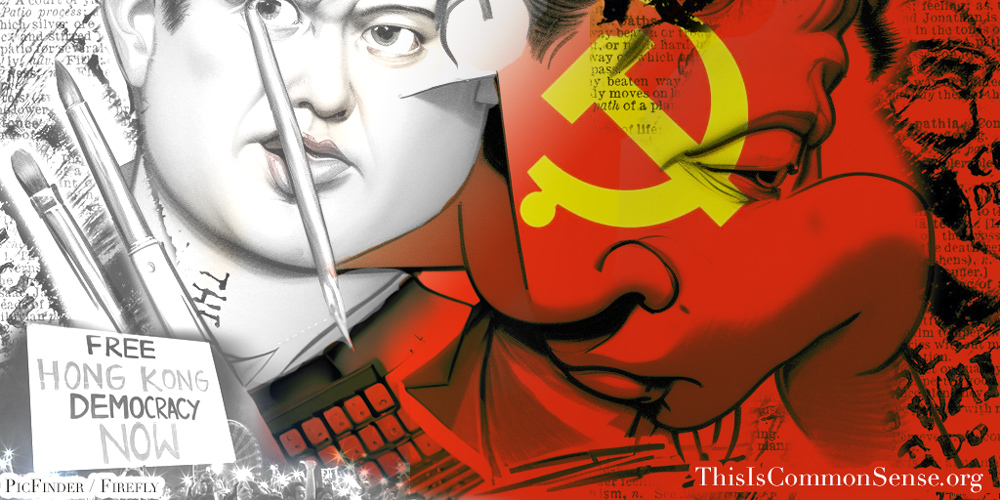
A Chinese programmer who worked remotely for a foreign company between 2019 and 2022 has been fined his entire earnings from that work, 1.058 million yuan or almost 145,000 USD.

We know only the surname, Ma, of the robbed developer. Ma’s crime was using a virtual private network to evade China’s great firewall, a censorship net used to keep people from seeing anything too politically thought-provoking.

Many others in China also use VPNs to circumvent the great firewall, and many China-based companies couldn’t function without using VPNs.

Authorities first noticed Ma because of a Twitter account that was not even his, and which authorities agreed was not his. But now they were looking at him.

He says that he explained that while his remote work could be done without bypassing the wall and that the company’s support site could be reached without doing so, he needed to use a VPN only to access Zoom for meetings. 

These details fell on deaf ears.

Whatever Ma’s exact alleged violation, something in what passes for law in China could be found to rationalize punishing him for it. He seems to be a victim of bad luck. A mix-up about a Twitter account. He ticked a few boxes. He had money. Money the local officials wanted.

The message to other Chinese: “You may think you’re getting away with X [“X” being one of the many peaceful activities that the Chinese government arbitrarily outlaws]. But we can get you any time.”

This is Common Sense. I’m Paul Jacob.


PDF for printing

Illustration created with Firefly

See all recent commentary
(simplified and organized)
See recent popular posts
Categories
First Amendment rights Ninth Amendment rights too much government

Unlisted Help

Kindness; generosity; aid — even these need defending from government.

In “Performing Charity Is a First Amendment Right,” C. J. Ciaramella writes about the difficulties people have had in feeding the poor in their towns and cities.

The problem is not lack of charity — unless you mean the lack of charity that local governments sport.

In Houston, Texas, and Fort Lauderdale, Florida, and Santa Ana, California — and in many other communities around the country — local governments have fined and prohibited the charitable from doing the good they do, often on grounds of “health and safety.” 

Houston even set up a hyper-specific charity area — reminiscent of the “free speech zones” set up for political rallies in recent years — in a parking lot near a police station. Just the kind of place that the destitute want to hang around in!

After the usual forms of police harassment came the court cases . . . and appeals to the First Amendment.

And as I read through Ciaramella’s article, the attempts to defend charity as a right of “religious expression” struck me as odd. Santa Ana politicians, for example, characterized charity as “incidental” to the core religious missions — a bizarre tack to take when dealing with Christian doctrine anyway! — and for once the U.S. Justice Department took the common-sense position on this. Thankfully.

But charity as “expression” leaves a bad taste. Charity’s more basic than “expression,” isn’t it? Some might see the art of giving as a duty, others as a rite, and others as mere generosity for its own sake. Jesus spoke of charity as something one did without speaking about it.

Could it even be more basic than free exercise of religion? Might it not more accurately be a Ninth Amendment right — one “retained by the people”? 

So fundamental there seemed no need to spell it out specifically. 

Our most basic rights are general rights, and charity is fundamental to being human.

This is Common Sense. I’m Paul Jacob.


PDF for printing

Illustration created with PicFinder and DALL-E2

See all recent commentary
(simplified and organized)
See recent popular posts
Categories
First Amendment rights partisanship too much government

Insane in the Meme Brain

Sane Republicans do exist, says Hillary Clinton. Even in the House of Representatives!

We know this because they voted to continue federal government operations by raising the debt limit. Or so Mrs. Clinton says. It’s just “common sense”!

Talking with Christiane Amanpour on CNN, last week, the former presidential candidate explained that these sane Republicans are “intimidated,” adding, “they oftentimes say and do things which they know better than to say or do.”

To get to common ground with these compromised GOP folks, however, the measures that intimidate them — while exciting their extremist, insane MAGA proponents — must be roundly defeated. 

No compromise.

In times past, our representatives in Congress could work together; but back then, argues the former First Lady, U.S. Senator, and Secretary of State, “there wasn’t this little tail wagging the dog of the Republican Party.”

That is, conservative representatives would kindly admit defeat every time the green light was given to more and more spending. Now they won’t cooperate.

It’s extremism, in Hillary’s judgment, to oppose the ceaseless growth of the warfare-welfare state.

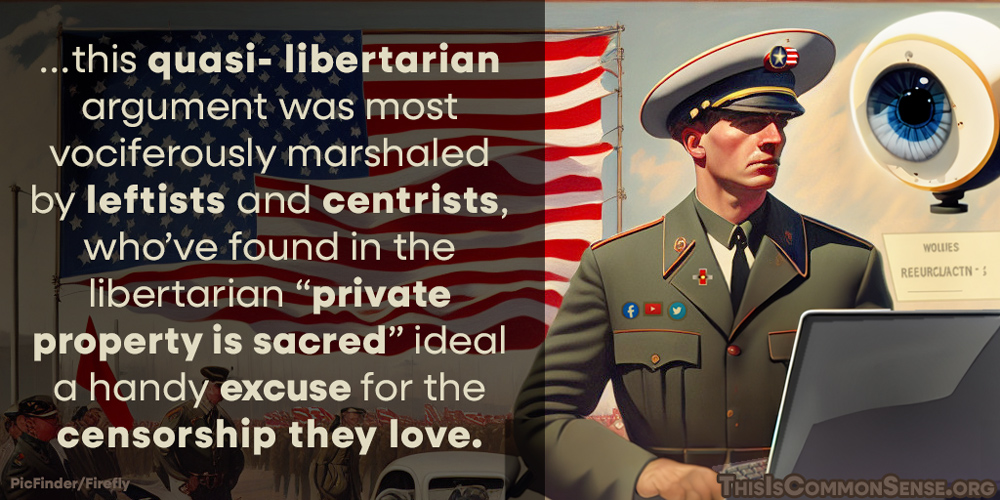
But, Hillary being Hillary, she had a corker to unleash. “Maybe at some point there needs to be a formal de-programming of the cult members.”

Just like Mrs. Clinton to generously offer re-education camps to her opponents.

Followed by an admonition: “we have to be smarter.”

How is it smart (or sane) to continually grow the federal debt, its mere service now larger than the defense budget?

By talking about formally deprogramming MAGA extremists Hillary Clinton skillfully deflects her supporters’ attention from the real need: informally deprogramming their own insane debt-piling status quo mindset.

This is Common Sense. I’m Paul Jacob.


PDF for printing

Illustration created with PicFinder

See all recent commentary
(simplified and organized)
See recent popular posts
Categories
crime and punishment education and schooling First Amendment rights

Campus Critic Defended

In an interim victory for freedom of speech that may lead to an important precedent, a court has refused to dismiss a lawsuit against the University of Texas.

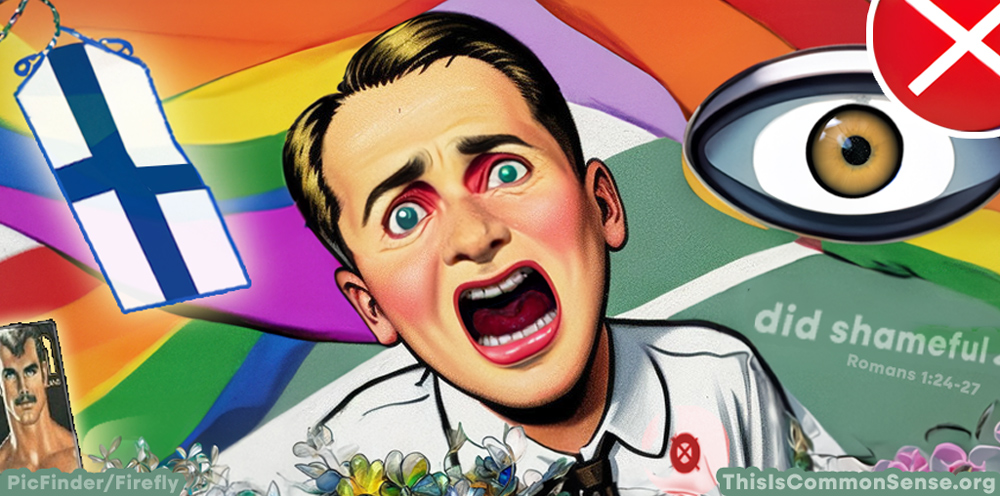
According to Richard Lowery’s complaint, filed in February 2023, university officials threatened his “job, pay, institute affiliation, research opportunities, [and] academic freedom” as part of a campaign to stop him from criticizing various stupid and/or horrific policies of the school.

An example of Lowery’s language that has the school’s administrators gunning for him is a College Fix piece, “At UT-Austin, teaching white 4-year-olds that they’re racist is funded by taxpayer dollars.”

Administrators repeatedly pressed a superior of Lowery, Carlos Carvalho, to “do something about Richard.” When Carvalho resisted, Dean Lillian Mills threatened to oust Carvalho as executive director of a Center at the school.

Officials also “allowed, or at least did not retract, a UT employee’s request that police surveil Lowery’s speech, because he might contact politicians or other influential people.”

Professor Lowery is represented by attorneys at the Institute for Free Speech, whose senior attorney Del Kolde stresses what should be obvious to the administrators: “Professors at public universities have the right to criticize administrators and speak to elected officials. The First Amendment protects such speech and, in a free society, DEI programs and UT’s president are not above public criticism.”

The goal of the lawsuit is, in part, to enjoin University of Texas officials from further threatening Lowery’s liberty to speak . . . and from acting on their previous threats.

This is Common Sense. I’m Paul Jacob.


PDF for printing

Illustration created with PicFinder.ai

See all recent commentary
(simplified and organized)
See recent popular posts
Categories
First Amendment rights general freedom social media

Must Known Musk

Enthusiasts for prohibiting political dissent must know that the First Amendment protects the right to utter controversial speech.

They must know that there’s no constitutional loophole for speech that they disagree with. 

Another “must know”? That calling the public statements of political opponents “misinformation,” “disinformation,” “hate speech,” etc. is no substitute for open discussion.

They just don’t care. 

They just know that if they keep plugging away, struggling to muzzle the badspeech, they’re more likely to get their way than playing by the rules of free speech and open debate.

Their determination is well shown in a new California law, AB587, passed about a year ago. The law compels social media companies to institute moderation policies to squelch “hate speech,” “extremism,” “disinformation,” “misinformation,” “radicalization,” etc.

Although AB587 is anti-transparently called a “transparency measure,” main author Assemblyman Jesse Gabriel admits the point: to force social media companies to “moderate or remove hateful or incendiary content on their platforms,” like “hate speech and disinformation.”

Since Elon Musk’s Twitter is affected by the new law, Musk is suing to block it.

According to his lawsuit, AB587 “compels companies like X Corp. [Twitter] to engage in speech against their will, impermissibly interferes with [their] constitutionally protected editorial judgments” and “has both the purpose and likely effect of pressuring companies . . . to remove, demonetize, or deprioritize constitutionally protected speech that the State deems undesirable or harmful.”

Politically, Mr. Musk has emerged as one of the country’s most frustratingly contradictory figures, often doing great things, sometimes very bad ones. With this lawsuit, even his enemies must know he is in the right.

This is Common Sense. I’m Paul Jacob.


PDF for printing

Illustration created with PicFinder.ai and DALL-E2

See all recent commentary
(simplified and organized)
See recent popular posts
Categories
First Amendment rights general freedom local leaders

De- and Re-certified

“Around the country, a slew of doctors had board certifications removed and licensure threatened for sharing their COVID-related opinions,” explains The Epoch Times, in an article devoted to one of those persecuted, Dr. John Littell of Florida.

Early in the pandemic, “Dr. Littell, a longtime family physician in Ocala and a medical school professor, began posting videos sharing his thoughts about COVID-19 testing, treatments, and vaccines early in the pandemic,” Natasha Holt’s Epoch Times article narrates. “He was frustrated to find his content often was pulled down from his YouTube channel.” 

But the establishment’s efforts didn’t stop there. “[I]n January 2022 and again five months later, he received warning letters from the American Board of Family Medicine (ABFM), the organization that issued his certification for his medical specialty.”

His videos on YouTube and then the safe, free-speech haven Rumble, spread “medical misinformation,” the board charged, warning that he could lose certification. But these were warnings. The board got a bit more serious and physical when they removed Littell from a public meeting, giving him the bum’s rush.

And then the board de-certified him.

It’s a long story, but appears to have a happy ending, with Littell re-certified and organizing a support group for medical professionals’ free speech rights, and the basic need to practice independent, patient-centered medicine, and to disagree with the gimcrack “consensus” policies that establishment organizations impose.

While there are multiple medical certification boards in America, these are not free-market concerns competing for customers. The government is heavily involved at every level. And the policies and “science” that Dr. Littell and others ran up against were not only political, but wrong — medically and morally. 

As we are increasingly discovering.

Which makes medical freedom more important than ever.

This is Common Sense. I’m Paul Jacob.


PDF for printing

Illustration created with PicFinder.ai

See all recent commentary
(simplified and organized)
See recent popular posts