Categories
Accountability crime and punishment government transparency media and media people national politics & policies responsibility

A Handy Evasion

Susan Rice, National Security Advisor in President Barack Obama’s administration (2013 – 2017), is being picked on, she speculates, for reasons pertaining to her race and gender.

Handy evasion.

At issue is not her infamous prevarication in the Benghazi affair. We are used to being lied to about foreign policy, so that was barely a shock.

What is news now? The Trump-Russia story.

Background: Ever since her defeat to Donald Trump, former Secretary of State Hillary Clinton has provided the very model of how to deflect attention from one’s own defects. She’s blamed FBI Director James Comey, the vast right wing conspiracy, and, of course, Russia.*

Amusingly, the Russia biz still boils down to how Russian hackers, apparently directed from high in the hierarchy of the Eastern warlord state, illegally liberated information from private servers. Those revealed emails showed Mrs. Clinton and her campaign in a negative light. Excuse-makers call this “hacking the election.”**

It turns out, the biggest crimes committed during the campaign, and somewhat regarding Russia, were engaged in by the Obama Administration, perhaps especially by Rice herself. She is accused of illegally surveilling the Trump campaign and those around it by “unmasking” their identities in the course of surveillance reports, which are legally required to be anonymous . . . when catching in the net folks tangential to the target.

The law requires FISA court go-aheads for such identifications. And the Obama administration was roundly reprimanded by a FISA court for not following protocols.

In any case, the idea that only women and African-Americans are hounded by opposition parties and the press does not hold up to scrutiny.

Nixon, anyone?

This is Common Sense. I’m Paul Jacob.


* Her team has also blamed President Barack Obama

** A private server was hacked, not an election.


Printable PDF


Categories
crime and punishment folly free trade & free markets general freedom nannyism national politics & policies responsibility too much government

Serving Consumers? Punish!

New media ballyhooer Douglas Rushkoff made waves this week. Citing an un-named friend who went hysterical about Amazon.com’s purchase of Whole Foods, he asserted that such “unease is widespread, and has raised new calls for breaking up Jeff Bezos’s impending monopoly by force.”*

The company has “surely,” he claimed, “reached too far.”

Apparently, serving customers exceptionally well is bad for business.

Yes, he almost totally ignored the pro-consumer benefits of Amazon. Had to — his case makes no sense when you factor in us consumers. He focused, instead, on Amazon’s success in terms of its recent “online and offline retail sales growth” and its control of 40 percent of cloud storage and streaming services.

He went on to spin a bizarre fantasy about how disruptive bigness is in business. His economically illiterate farrago reminds me of the sad case made against pre-antitrust Standard Oil, a company which, during the whole time of its growth prior to break-up, kept on producing more fuel at ever-decreasing prices.** Broken up because of . . . fears about how businesses change. And of bigness itself.

As long as consumers are being served, this reaction strikes me as paranoid. When businesses get big (and even near-monopolistic) and then cease to serve customers, they fail. While serving customers, there is no call for fretting over businesses that move from one success to another  — which is what Rushkoff has the gall to worry about.

The call for Amazon’s break-up over-sells government and necessarily under-serves consumers.

This is Common Sense. I’m Paul Jacob.


* Rushkoff’s piece in Fast Company was the first I heard of such a “call.” Rushkoff is the coiner of the term “media virus” and a sort of populist pusher of market skepticism.

** For the bizarre story of the Standard Oil case, and how it made no economic sense whatsoever, see Dominick T. Armentano, Antitrust: The Case for Repeal (Ludwig von Mises Institute, 1999), p. 41-43, and Antitrust and Monopoly (Independent Institute, 1990), pp. 57-60.


Printable PDF


Categories
Accountability crime and punishment folly ideological culture moral hazard responsibility

Sticks & Stones

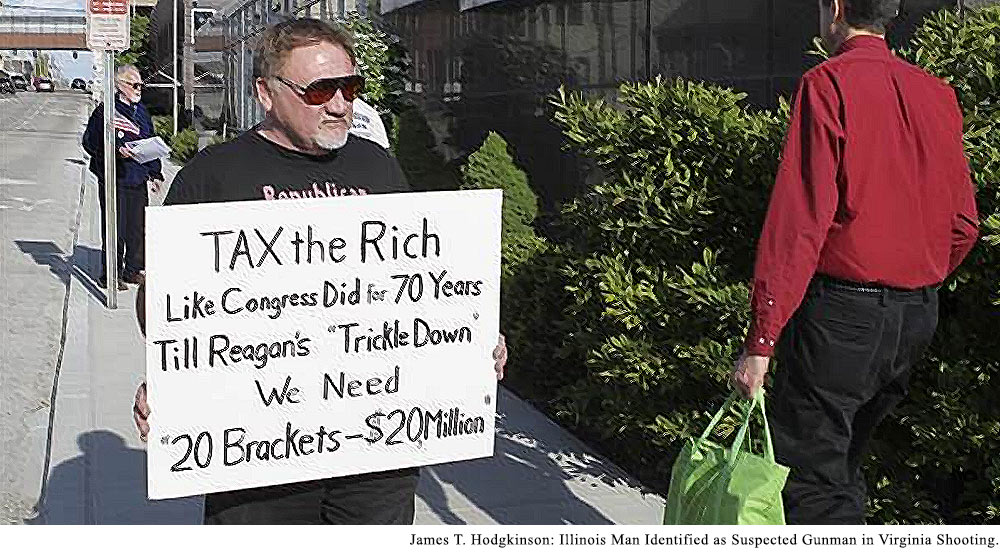
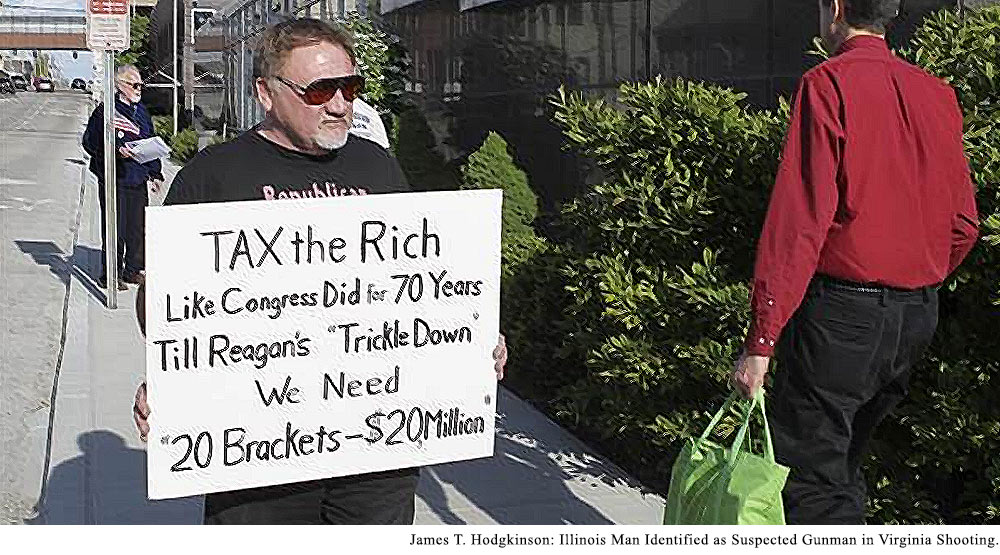
James Hodgkinson of Belleville, Illinois, came to Alexandria, Virginia, where for the last few months he lived in his van . . . undoubtedly down by the river. Yesterday, he wielded an assault rifle, attempting to massacre Republican congressmen at a park practicing for tonight’s annual charity Congressional Baseball Game.

He shot House Majority Whip Steve Scalise, who remains in critical condition; a lobbyist also in critical condition; a staffer, hit in the leg and released from the hospital; and two Capitol Police officers, who still shot and captured the shooter. Hodgkinson later died in custody.

Politically, the down-on-his-luck, 66-year-old assailant was a big fan of MSNBC’s Rachel Maddow and volunteered for Sen. Bernie Sanders’ presidential campaign. So, what does his act of violence say about Maddow? Nothing. How much is it Sen. Sanders’ fault? Zero.

The Washington Post reports that Hodgkinson was “angry with President Trump,” noting this violence came “amid harsh political rancor and a divided country.”

Michelle Malkin declared she had “warned for more than a decade about the unhinged left’s rhetoric.”

“The hatred is raw, it is undiluted, it’s just savage,” Rush Limbaugh offered. “These are the mainstream of the Democrat base, and I don’t have any doubt that they are being radicalized.”

It harkens back to then-President Bill Clinton’s success in blaming the 1995 Oklahoma City Bombing on “loud and angry voices” (read: Rush Limbaugh) who “spread hate. They leave the impression that, by their very words, that violence is acceptable.”

Sure, we should hold speakers accountable for dehumanizing verbal attacks on their opponents. But not for acts of violence these speakers do not commit, nor condone.

Condemn the violence. Stop using it to smear your opponents.

This is Common Sense. I’m Paul Jacob.


Printable PDF


Categories
crime and punishment free trade & free markets general freedom moral hazard nannyism too much government

Sin, Soda and Say

Government policy in Seattle, Washington, is being driven by an outright socialist on the city council. The mayor, apparently starving for attention, proposed a goofy new sin tax last year.

Now, writes Reason’s Baylen Linnekin, “Seattle lawmakers are expected to vote early next week on a citywide soda tax that would add more than $2.50 to the cost of a twelve-pack of soda.”

The tax’s proponents’ rationale is too familiar: sugary sodas are bad for us, so we must be discouraged from drinking them.

Besides, politicians want to spend our money.

The problem, of course, is that the more successful they are at the first task, discouraging the ‘sin’ itself, the less revenue for them to throw at voters to prove their ‘caring’ nature . . . and buy votes.

But it is not as if those are the only competing factors involved. “The tax would undoubtedly drive consumers,” writes Linnekin, “to buy more groceries in the city’s suburbs.” Bellevue and Kirkland are nice towns. And nearby.

Arguing for a tax like this — as a social engineering mechanism — is not only crude, but flies in the face of the very best wisdom, that of Jean-Baptiste Say:

A tax can never be favorable to the public welfare, except by the good use that is made of its proceeds.

But elitist nannyism corrupts politicians, who make it their job to steer our consumption.* And they tend to be resistant to the “best scheme of finance,” which is, as J.-B. Say put it, “to spend as little as possible; and the best tax is always the lightest.”

If the tax goes in, Seattleites, drive to out-of-town Costco or Walmart.

Then drive your greedy nannies out of office.

This is Common Sense. I’m Paul Jacob.


* Considering the mayor’s push to include diet sodas in the sin tax, how competent at this are they? It’s the sugary drinks that are known killers, but the diet drinks are mainly imbibed by wealthier folks. The mayor wants to appease the socialist on the council, and pointedly not favor the “privileged.”


Printable PDF


Categories
Accountability crime and punishment folly general freedom media and media people moral hazard nannyism responsibility too much government

Another Push for Censorship

It’s almost as if politicians are hell-bent on expanding government at the expense of our freedoms . . . and grandstanding to ‘look like they are doing something.’

The two proclivities are not unrelated.

Take Theresa May, Great Britain’s Tory Prime Minister. After yet another terrorist attack in her country, this time on the London Bridge, she re-iterated her party’s intent to censor the Internet.

“We cannot allow this ideology the safe space it needs to breed,” May said on Sunday. But this “safe space,” she went on, “is precisely what the Internet, and the big companies that provide Internet-based services, provide.”

Now, blaming ISPs and social platforms is a crude form of business scapegoating—something I would expect from her opponent in the upcoming elections, Jeremy Corbyn, the much-loathed (but inching ahead in the polls) top banana of Labour.

As a conservative, May should understand markets and the limitations of government interventionism a bit better than a nearcommunist. She might recall that previous attempts to regulate the means of communication almost never to work, and, in those few cases when they do, never stay scaled to the original target issue.

They expand. To cover more than just terrorism, as in this case.

What’s more, Jim Killock of the Open Rights Group makes the case that such a move would likely “push these vile networks into even darker corners of the web, where they will be even harder to observe” — scuttling the alleged purpose of the Conservative Party’s longed-for censorship.

May knows this. But she is a politician. She has power, and she wants to keep it.

It’s almost as if power corrupts or something.

This is Common Sense. I’m Paul Jacob.


Printable PDF


Categories
Common Sense crime and punishment ideological culture media and media people responsibility

Vinland?

Agreeing with a murderer is . . . uncomfortable. Even if the agreement is only in part.

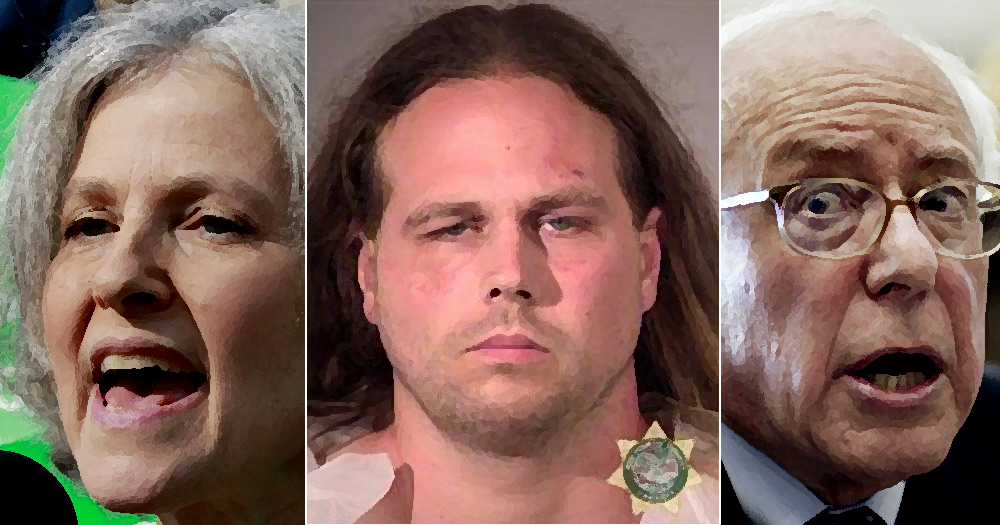
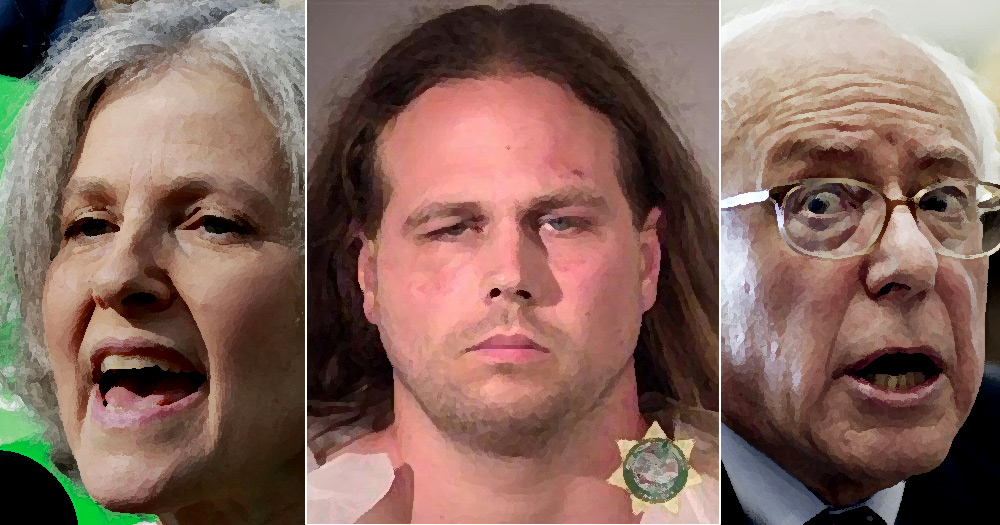
Over the weekend, the news hit that one Jeremy Joseph Christian was in custody for a stabbing spree on one of Portland, Oregon’s MAX trains. According to reports, Christian had been yelling religious slurs at two hijab-wearing women when three men intervened in defense. Christian then stabbed the men . . . two to death.

The next day, quadrennial Green Party presidential candidate Jill Stein politicized it in the now-de rigueur point-scoring manner: “Another heartbreaking tragedy in Trump’s America, as a white nationalist shouting anti-Islam slurs murders 2 on Portland, OR subway.”*

Immediately, other Twitterers (tweeters?) rushed to point the finger back at her. It turns out (investigation courtesy of BuzzFeed) the accused’s Facebook page showed the knife-wielder as supporting first Bernie Sanders and then . . . Dr. Stein herself.

But that is just the side story. Christian appears to have a long criminal record. It seems likely that he took to white nationalism as well as free speech — he brought a baseball bat to the recent Portland free speech rally I wrote about a few weeks ago, the police say, to “attack left-wing protestors” — and even progressive politics simply to fill his personal rage quota. The fact that he saluted Nazi-style, shouted “Hail Vinland,” and called himself a “nihilist” strongly suggest that he’s mostly unhinged.

You and I support free speech; he said he supported free speech. But free speech doesn’t include stabbing people. We can all agree that Stein is off the hook.

As is President Trump.

As are we.

We, after all, don’t support murder, heiling Hitler, or . . . Vinland?

This is Common Sense. I’m Paul Jacob.


* Portland has no subway; MAX is an on-the-surface light rail system.


Printable PDF


Categories
Accountability crime and punishment folly local leaders media and media people national politics & policies responsibility

The Early Vote Worm

Last week was consequential for Greg Gianforte. Awfully.

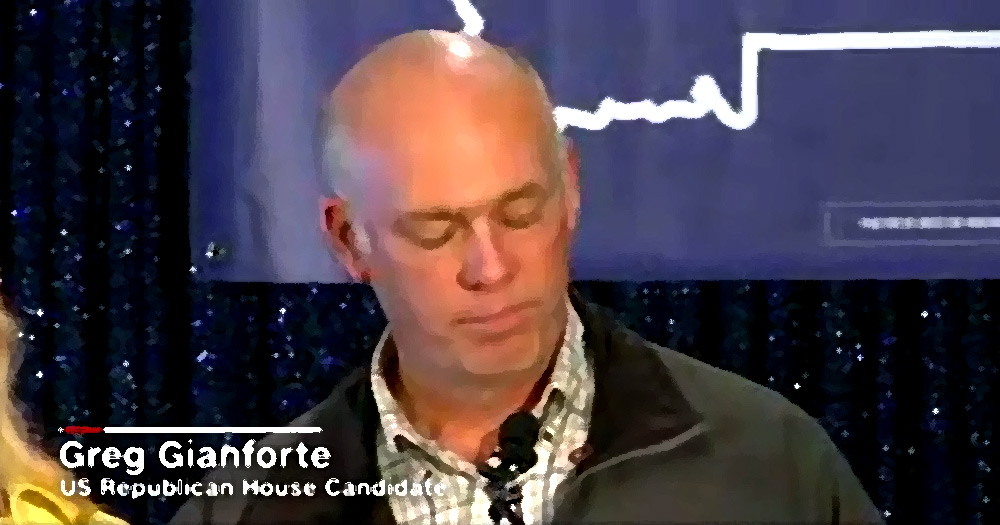
The Republican businessman won the special election for Montana’s lone seat in the U.S. House of Representatives. He also body-slammed a reporter. He now faces misdemeanor assault charges.

For which Gianforte apologized publicly . . . as he was declaring victory. Welcome to modern American politics.

Democrats claimed victory, nonetheless — with media cover to boot. “Republicans’ 7-point win in last night’s Montana election is great news for Democrats,” the progressive Vox headlined their report.

At Townhall.com on Sunday, I explained why that claim misses both the forest and the trees. Yes, Trump won Montana by 20 percentage points against Hillary Clinton’s mere 35.4 percent back in November, while Gianforte won last week by only 7 points. But Trump was lucky to be opposed by a very unpopular Hillary.

Moreover, at that same election wherein Trump trounced Secretary Clinton, Gianforte lost the governor’s race to a Democrat. Indeed, Gianforte performed 11 points better last week than back in November — winning, instead of losing.

How does that show Republican support slipping?

The message from the Montana special election is that early voting periods are far too long. Montana’s early voting began nearly four weeks before Election Day. The assault by Gianforte, with criminal charges, hardly mattered, because roughly two-thirds of Montanans had already voted when it occurred.*

Rather than a nearly month-long process, whereby a candidate can bank a majority of the vote before the campaign is over, let’s make Election Day a three or five-day period. Make it easy to vote, but let’s all vote together, with the same information.  

This is Common Sense. I’m Paul Jacob.


* This means not only that Gianforte may have “gotten away” with his violent outburst, but that those voters did not have time to adequately appraise Gianforte on information they would have possessed and been able to act upon, with a shorter voting period.


Printable PDF


Categories
Accountability crime and punishment government transparency moral hazard national politics & policies U.S. Constitution

Feckless, Indeed

Last night, House Oversight Committee Chairman Jason Chaffetz (R-Utah) appeared on Fox News’ Tucker Carlson Tonight, where Chaffetz was asked how he would know if the Justice Department fully complied with subpoenas issued by his committee for documents.

“Look, we have a storied and horrific background on this,” explained the Utah representative, retiring after this, his fifth term in Congress. “You can go from everything from Fast and Furious to the Benghazi investigation, email, IRS, anything pretty much over the last eight years, which I’ve served in Congress, and I don’t believe we ever got a full production out of the Department of Justice or the State Department.”*

“I can issue a subpoena unilaterally. It’s part of my constitutional responsibility to provide that check and balance,” argued Chaffetz. “But that subpoena is only as strong as its ability to be enforced.”

Problem? Enforcement requires Congress to work through the DOJ, part of the executive branch. Tricky . . . when the Department of Justice** itself is being subpoenaed.

“You’ve seen, for instance, Judicial Watch,” Rep. Chaffetz noted. “Tom Fitton has much more power using a Freedom of Information Act, because he can get to the courts and the courts can force them.”

“The Department of Justice is afraid of a court; they’re not afraid of Congress.”

He added, “And we don’t use the power of our purse; we don’t beat it over their head and we don’t enforce it. And so it’s somewhat feckless, and it’s very frustrating as somebody who is chairman of the oversight committee.”

“Congress should have an expedited way to get to the courts to enforce those subpoenas,” Chaffetz offered.

Why, then, doesn’t Congress enact such a process?

This is Common Sense. I’m Paul Jacob.


* “And that continues, by the way,” Chaffetz added. “One of my frustrations, with all due respect to the Trump administration, is that they have not loosened up the documents that we have been requesting for years.”

** Or, for that matter, any another executive branch agency.


Printable PDF


Categories
Accountability crime and punishment incumbents local leaders national politics & policies term limits

One Incumbent Falls

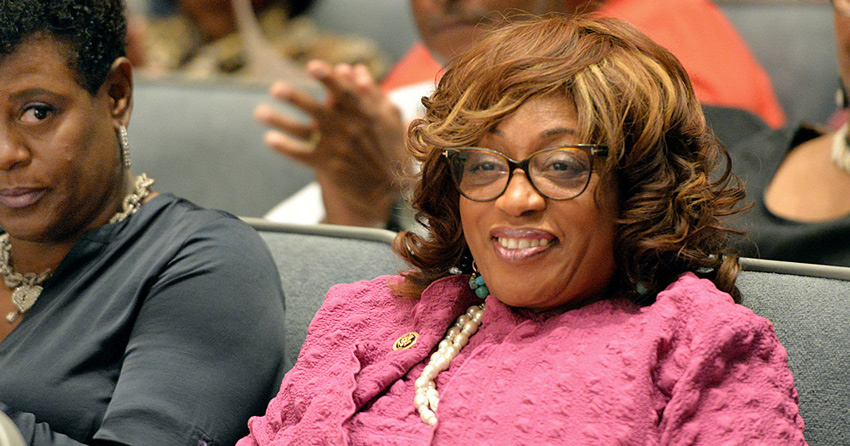
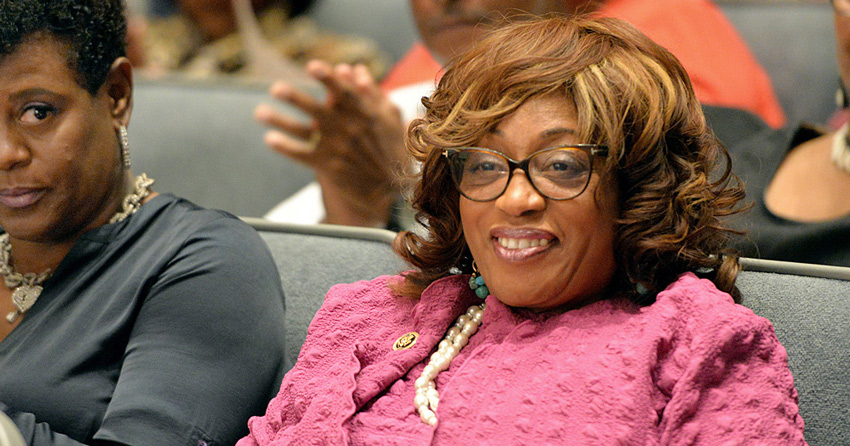
When former U.S. Rep. Corrine Brown (D-Fla.) was indicted last July on 24 felony counts of fraud and obstruction, she suggested that if the FBI hadn’t wasted time investigating her for milking a charity for personal gain, they might have prevented the Orlando massacre.

“These are the same agents that was not able to do a thorough investigation of [Pulse nightclub shooter Omar Mateen],” Brown screeched at reporters, “and we ended up with 50 people dead.”

Last week, the former congresswoman* was convicted of 18 felonies related to fraudulently raising $800,000 for the One Door for Education Foundation, which only spent $1,200 on two small college scholarships — 0.0015 of what was raised . . . for college scholarships.

As the Feds put it, Congresswoman Brown and her congressional chief of staff “used the vast majority of One Door donations for their personal and professional benefit, including tens of thousands of dollars in cash deposits that [her chief of staff] made to Brown’s personal bank accounts.”

Hundreds of thousands of dollars were spent on “events hosted by Brown or held in her honor, including a golf tournament in Ponte Vedra Beach, Florida; lavish receptions during an annual conference in Washington, D.C.; the use of a luxury box during a concert in Washington, D.C.; and the use of a luxury box during an NFL game in the Washington, D.C., area.”

The 70-year-old Brown spent nearly a quarter of a century in Congress. Now she awaits sentencing to as many as 277 years in prison — a quarter of a millennia.

It’s yet another good argument for term limits.

This is Common Sense. I’m Paul Jacob.


* As I explained in greater detail at Townhall, out of 435 congressional seats up for election in 2016, Congresswoman Brown was one of only five incumbents defeated in the 2016 primary elections. Two of the five defeated — Brown and Rep. Chaka Fattah (D-Penn.) — faced multiple-count felony indictments. Two others were victims of redistricting that pushed them into new districts. Only one incumbent who was un-indicted and running in an incumbent district was defeated.


Printable PDF


Categories
Accountability crime and punishment folly general freedom moral hazard nannyism Regulating Protest too much government

The Oregon Fail

My children used to play “The Oregon Trail,” an early computer game where one navigated the amazingly dangerous wagon trip out west — often dying of dysentery or drowning while crossing a river.

Oregon remains treacherous.

Yesterday, we bemoaned the cancellation of a parade because a Republican Party group’s participation elicited threats of violence. Now, we find that writing a thoughtful letter to public officials about problematic traffic lights garners a $500 fine.

Mats Järlström, a Swedish electronics engineer, made the mistake of moving to Beaverton, Oregon, and then compounded his error by sending an email to Oregon’s engineering board alerting them to a traffic light problem that put “the public at risk.”

The Oregon State Board of Examiners for Engineering and Land Surveying responded by informing him that statute “672.020(1) prohibits the practice of engineering in Oregon without registration . . . at a minimum, your use of the title ‘electronics engineer’ and the statement ‘I’m an engineer’ . . . create violations.”

Mr. Järlström expressed shock at the bizarre response. “I’m not practicing engineering, I’m just using basic mathematics and physics, Newtonian laws of motion, to make calculations and talk about what I found.”

After a red-light camera ticketed his wife, Järlström investigated and discovered that the yellow light didn’t give drivers slowing down to turn at the intersection enough time.

He wasn’t disputing the ticket, just attempting to right a wrong. Which is apparently against the law, when bureaucrats are committing the wrong.

The Institute for Justice accuses the licensing board of “trying to suppress speech.” Thankfully, they’re helping Järlström sue in federal court.

This is Common Sense. I’m Paul Jacob.


Printable PDF


Photograph by Tom Godber on Flickr