Categories
Accountability initiative, referendum, and recall moral hazard nannyism responsibility

Whose Constitution Is It, Anyway?

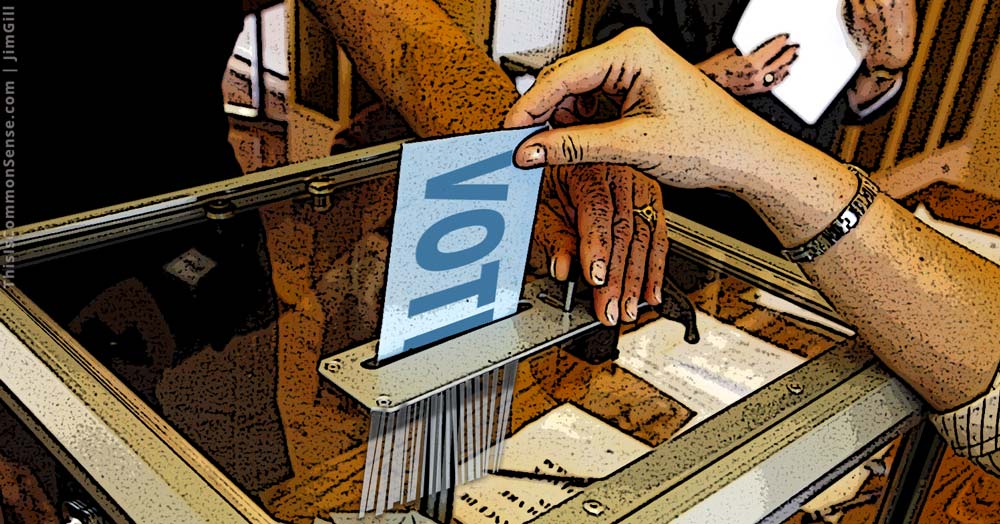
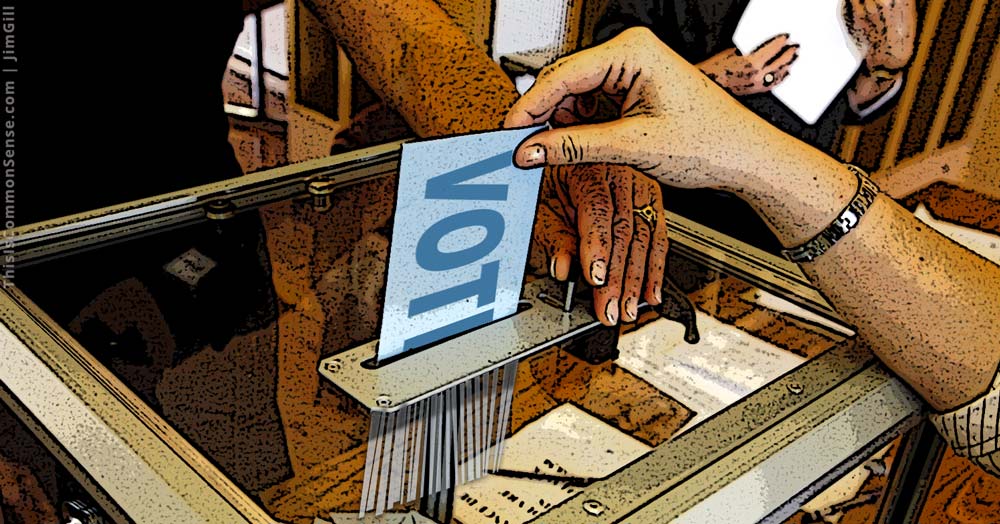
Last November’s biggest mistake? Colorado voters passing Amendment 71. It makes the Rocky Mountain State’s constitution exceedingly more difficult for voters to amend through the initiative petition process.

And more like it may be in the offing. Legislation is moving in Florida to require a 66.7 percent vote to amend the state constitution. Already, a 60 percent vote is required, but legislators remain fearful voters can muster that.

The Ohio Modernization Commission, a legislatively created mix of legislators and insiders, is recommending a new constitutional amendment to — you guessed it — make it tougher for voters to pass amendments. Future voter-initiated amendments must pass twice, by a 55 percent supermajority.

There are also efforts to weaken citizen initiatives in Arizona and Maine.*

The big money behind Colorado’s Amendment 71 told whopper after whopper to win. They pretended to love and revere the constitution. Finally, they put former Denver Broncos Super Bowl champion quarterback John Elway on television — spot after spot — telling voters the amendment “protects our constitution.”

But . . . from whom?

You see, politicians and special interests don’t have to amend the state constitution to spend money on themselves or their cronies. From their perch in the state capitol, they can do that with a simple statute.

But you and I need the ability to pass constitutional amendments. Why? Only through the constitution can we limit the power of those same politicians — the power of government. Legislators can overrule a mere statutory ballot initiative (and often do).

That’s what this battle is all about. Politicians mean to limit our power to limit theirs.

This is Common Sense. I’m Paul Jacob.


* Thankfully, South Dakota legislators defeated several bills aimed at making it tougher to place initiatives on the ballot.


Printable PDF


Categories
Accountability folly free trade & free markets local leaders moral hazard nannyism porkbarrel politics responsibility too much government

Small Target, Big Subsidy

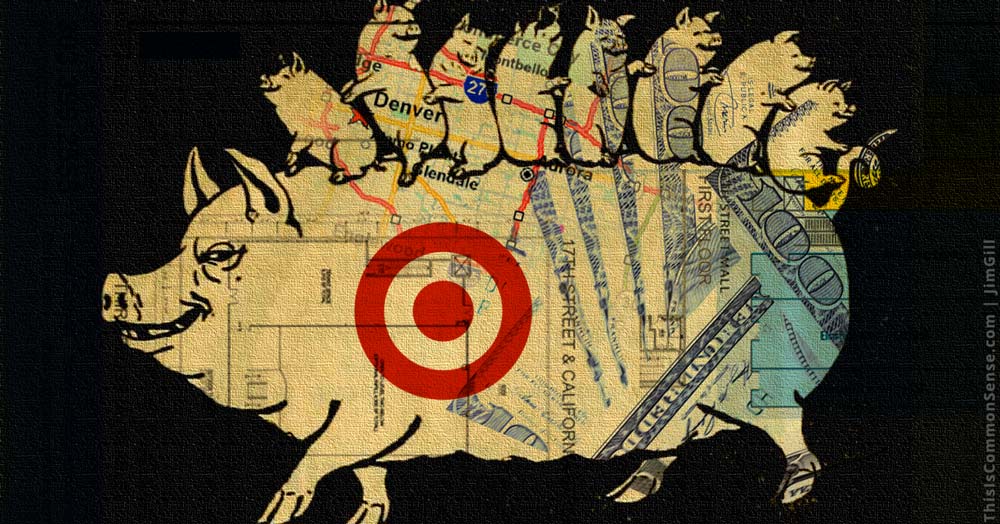
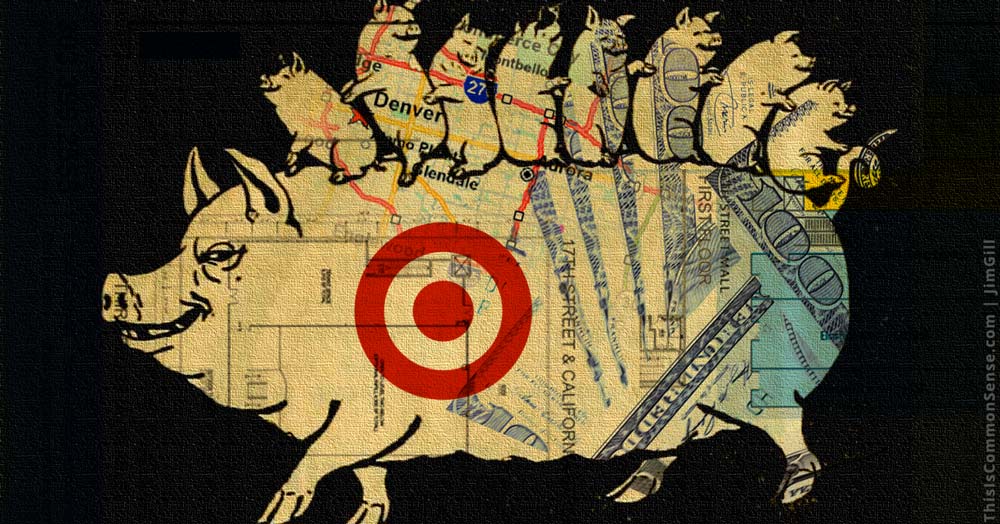
Something has gone wrong when, to get a tenant to move into an empty space in your prime-location building, you need a $4 million subsidy.

And when I say “prime location,” I’m not engaging in Trumpian over-statement. The downtown Denver, Colorado, property location sees over 35,000 pedestrians per day . . . and that’s with the primo slot empty.

But to get that slot filled, the owners have negotiated with the city government to nab a $2 million “incentive” to fix the place up for Target, which is thinking of leasing the location to put up a smaller-than-usual “flexible-format” store. Oh, and another $2 million for “operational” costs, which seems to be some kind of a loan to be paid back from taxes to be collected — and shared by the city for 20 years with the owners.

In other words, it’s the darnedest business deal you’ll ever see (and never get): up-front money not from a bank or investors, but from Denver’s city government “BIF” — Business Investment Fund — which is obviously part of a convoluted scheme fed by taxes and devised by . . . people I wouldn’t trust with my money.

Structuring deals like this is how modern cronies — er, cities — operate, I know. Am I alone in judging it corrupt on the surface and corrupting in the details?

If prime commercial property has gone unused for about a decade — as this three-storied mall space has — I’d think that maybe the owners have set the rents too high or the city has been a bit too greedy with taxes.

Or both.

This is Common Sense. I’m Paul Jacob.


Printable PDF


Categories
Accountability folly ideological culture media and media people national politics & policies political challengers

Bigly Truthiness

“Journalists should be tough when powerful people say untrue things,” writes the Books and Arts columnist for The Economist.

I’m with “Johnson,” that pseudonymous author, except for one thing. In calling President Trump a Big League liar, he himself seems to miss the whole truth, nothing but the truth.

At the very least, The Economist scrivener proves himself rather obtuse . . . especially for a column de plume tipping the hat to the great Samuel Johnson. Many of the Trumpian falsehoods he mentions are indeed whoppers. No doubt. But a few cry out for a more subtle reading.

After distinguishing between falsity, lying, and fantasizing, “Johnson” speculates that Trump may actually believe “his own guff.”

But then, about Trump’s murder rate statements, Johnson quickly runs off the rails: “Mr. Trump said something wildly wrong about something easily checkable, leaving an adviser, Kellyanne Conway, flailing to cover for him. . . .” But Conway did suggest that Trump may have been speaking about certain cities wherein the murder rate has gone up.

Trump often speaks as hyperbolist: murder has gone up in a few major cities; he relates the fact as if murder had gone up generally. This annoys sticklers. Me, included. But Trump’s been using the rhetoric of exaggeration.

You could call it the rhetoric of inexactitude.

It’s how he trolls.

Trump could also be charged with “truthiness,” comedian Stephen Colbert’s signature 2005 coinage about confidence in factoids for intuitive reasons, sans evidence.

But so might this “Johnson.” When subtle men miss homespun subtleties, one has to wonder whether they might miss it for . . . intuitive reasons.

This is Common Sense. I’m Paul Jacob.


Printable PDF


Categories
Accountability media and media people national politics & policies political challengers

Remember the Rigged Election?

Remember the 2016 presidential election?

You know, the contest that still bedevils us? The one allegedly rigged by the Russians and fake news? The one the outcome of which Michael Moore (and others) suggested, even this week, should be overturned by “the courts” simply by installing Hillary Clinton as president?

Turns out one major element of the election process was rigged: the debates run by the Commission on Presidential Debates.*

At least, U.S. District Judge Tanya Chutkan has ruled** that, “In sum, with respect to Plaintiffs’ allegation that the FEC acted arbitrarily and capriciously and contrary to law when it dismissed their two administrative complaints, this court agrees. . . .”

The plaintiffs*** are Level the Playing Field (LPF), the Green Party, the Libertarian National Committee, and Dr. Peter Ackerman. They sued the Federal Election Commission because the FEC, as the judge wrote, “stuck its head in the sand and ignored the evidence.” Prior to the lawsuit, LPF and others had filed complaints and asked the FEC to establish fair rules. They were told to go play in — er, far away from — traffic.

“The FEC was the defendant in the case,” explained IVN News, “but the real villain in the story is the Commission on Presidential Debates (CPD), a private organization . . . dominated by Democratic and Republican party stalwarts.”

Under federal law, the FEC, itself organized along bipartisan lines, is charged with ensuring that the CPD is using “objective” criteria, which doesn’t arbitrarily exclude independent and minor party candidates.

Now, thankfully, the court has ordered the FEC to come back, by April 3, with new thinking on how to ensure fair and open presidential debates.

This is Common Sense. I’m Paul Jacob.


* The problems with the presidential debate rules and the CPD itself were covered extensively last year in these four commentaries: “Smash the Duopoly,” “The Media’s Job,” “The Stupidity of 15,” and “The Two-Product Economic System.”

** Tellingly, there’s been scant news coverage of the court decision except by IVN News, the Independent Voter Network website, and . . . RT, the Russian government’s TV channel.

*** The case is Level the Playing Field, et al v. Federal Election Commission.


Printable PDF


Categories
Accountability folly ideological culture moral hazard nannyism national politics & policies responsibility too much government U.S. Constitution

Tough Luck, Chumps

Advertised as a big deal ahead of time, the debate didn’t get much play afterwards.

Especially from the Left blogosphere.

Why?

Billed as about the “future of ObamaCare,” it was really about what should replace ObamaCare.

The CNN debate pitted Sen. Ted Cruz, well-known Republican opponent of the Affordable Care Act*, against Sen. Bernie Sanders, well-known “independent” proponent of what he likes to call the “Medicare for All single-payer program.”

Upshot? While either Bernie or Ted may possibly be construed to have won, there was indeed one certain loser, ObamaCare itself.

Sen. Sanders conceded nearly every charge Sen. Cruz lobbed at the program. He merely countered with his support for treating health care “as a right, not a privilege” (a leftist farrago from days of yore) and moving on to single-payer medicine.

That’s how bad ObamaCare really is. Its chosen champion refused to champion it.

The basic tension was best summed up between “town hall” questioners Carol, suffering from multiple sclerosis, who asked Cruz to promise continued coverage for cases like hers, and LaRonda, a woman with a chain of hair care shops who cannot afford insurance for herself or her employees and also cannot expand her company because at 50 employees the ACA would force her to provide insurance.

Cruz expressed his sympathy for Carol, but seemed to meander around her request for a guarantee. He also evaded** a straightforward answer re: “healthcare as a right.”

Sanders was a tad more honest, in effect giving the “tough luck” answer that the entrepreneur just “should” pay*** for her employees’ medical insurance.

Well, we sure are all “paying” for ObamaCare, one way or another.

This is Common Sense. I’m Paul Jacob.


* Which is the same thing as ObamaCare. Some folks purportedly hate ObamaCare but love the ACA. No reader of Common Sense, of course.

** Cruz concluded the debate better, alluding to an old SNL skit about a recording session wherein the cowbell ringer always wanted “more cowbell” in every take. “It was government control that messed this all up. And Bernie and the Democrats’ solution is more cow bell, more cow bell.”

*** “[I]f you have more than 50 people, you know what, I think — I’m afraid to tell you — I think you will have to provide health insurance.”


Printable PDF


Categories
Accountability crime and punishment moral hazard nannyism national politics & policies property rights too much government U.S. Constitution

Watcha Gonna Do?

At a White House meeting last week between President Trump and law enforcement officials, a Texas sheriff raised a concern about legislation introduced by a state senator to require a conviction before police could take someone’s property.

Mr. Trump asked for that senator’s name, adding, “We’ll destroy his career.” The room erupted with laughter.

“That joke by President Trump,” Fox News’s Rick Schmitt said on Monday, “has the libertarian wing of the Republican Party raising their eyebrows, instead of laughing.”

Not to mention the civil libertarians in the Democratic Party and the Libertarian Party itself.

Civil asset forfeiture, as we’ve discussed, allows police to take people’s cash, cars, houses and other stuff without ever convicting anyone of a crime — or even bringing charges. The person must sue to regain their property.

Lawyers aren’t free.

Two bedrock principles are at stake:

  1. that innocent-until-proven-guilty thing, and
  2. Our right to property.

Since police departments can keep the proceeds of their seizures, they’re incentivized to take a break from protecting us — to, instead, rob us.

“Our country is founded on liberties,” offered Jeanne Zaino, a professor at Ionia College. “[G]overnmental overreach is not something that is natural for Republicans to embrace.”

Schmitt acknowledged that “Libertarians would hate this. They don’t want big government. But they don’t have a lot of pull.”

Libertarian-leaning Republicans like Sen. Rand Paul and Rep. Justin Amash are trying to end civil forfeiture, but the president will likely veto their legislation.*

Let’s not wait. Activists in three Michigan cities put the issue on last November’s ballot and won. You can, too.

This is Common Sense. I’m Paul Jacob.


* FoxNews.com reported that, “Trump signaled he would fight reforms in Congress, saying politicians could ‘get beat up really badly by the voters’ if they pursue laws to limit police authority.”


Printable PDF


Categories
Accountability government transparency insider corruption local leaders responsibility

Of Protests & Politicians

Last Friday, I applauded massive protests that erupted in Romania — over a since-rescinded governmental decree to decriminalize graft up to $47,000. On Sunday at Townhall, I wondered why there weren’t similar demonstrations against the corruption afflicting Prince George’s County, Maryland.

The county, bordering the nation’s capital, lavishes its nine council members with a take-home car or a $10,315 annual vehicle subsidy. The car allowance comes with free gas.*

These emoluments might have gone unnoticed had the politicians proven able to drive better than they govern. In the last five years, they racked-up 16 car accidents and 107 traffic violations.

Councilman Mel Franklin accounts for four crashes — three resulting in injuries to innocent motorists. The cost of totaled county vehicles, and fixing other people’s cars and bodies? Nearly $100,000.

Two months ago, Franklin slammed into a stopped vehicle at a red light. He claimed he was tired. True enough, if being tired of driving drunk counts. The police breathalyzer found him legally intoxicated.

Councilwoman Karen Toles racked up 47 tickets, including one for driving 105 mph on the Capital Beltway. Her excuse? She had been too busy applying make-up and sending emails on her cellphone to notice swerving across the multi-lane freeway at that speed — “executing,” she explained, her “duties as a public servant.”

An ongoing FBI probe has led to the indictment of two other county officials, a guilty plea by a state legislator and another legislator resigned awaiting indictment.**

Obviously, political corruption is not confined to other countries.

Just as obvious, providing top pay and benefits to politicians hardly guarantees the best and brightest.

This is Common Sense. I’m Paul Jacob.


* And these perks are on top of the councilors’ $114,000 part-time salary, healthcare, pension benefits, etc., etc., etc.
** Five ears ago, infamy found the county executive on a wiretap telling his wife to stuff $80,000 in bribe money into her bra.


Printable PDF


Categories
Accountability general freedom government transparency responsibility too much government

The Confidence Game

Romania’s parliament has confidence in . . . itself.

Sorta. A parliamentary no-confidence vote failed, despite 161 lawmakers voting for the resolution and only eight voting with the government.

Confused? The no-confidence measure failed because the Social Democrats, controlling nearly two-thirds of the 465 seats in parliament, abstained on the measure, which required a majority of parliament to vote affirmatively.

Not a very confident vote of confidence.

The vote came after eight days of protests in Bucharest, the capital, and around the country — the largest since the 1989 fall of communism. A quarter of a million people took to the streets of Bucharest last Sunday, and half a million nationwide.*

The protests came after last week’s late night corruption decree, issued “by the cabinet, without parliamentary debate,” as Reuters reported — and “designed to decriminalize a number of graft offences, cut prison terms for others and narrow the definition of conflict-of-interest.”

“The emergency ordinance . . . effectively decriminalized some forms of corruption if the amount involved was less than $47,000,” explained the New York Times, meaning amnesty for Liviu Dragnea, the head of the ruling Social Democrat Party, and dozens of other politicians convicted of graft and corruption.

The decree was hastily rescinded, but Romanians cannot trust their government.

“It’s too late,” one protester said. “Their credibility is zero.”

“This government has offered us a perfect demonstration of what it can do during its first 30 days in office,” another quipped. “Conclusion: they must leave.”

But Prime Minister Sorin Grindeanu told fellow legislators, “I do hope that as of today we get back to work.”

Unfortunately, that’s what Romanians fear.

This is Common sense. I’m Paul Jacob.


* The same ratio of protesters to population in the U.S. would mean eight million protesters nationally.


Printable PDF


Categories
Accountability free trade & free markets national politics & policies responsibility

No Set Prices?

“Paul,” an old boss of mine used to say, “there are no set prices.”

He meant that when a vendor said it would cost x, my choice wasn’t just yes or no. Negotiate. I could say, “Boy, I’d sure like that, but golly, I can’t afford to pay x. Any chance you’d consider 4/5ths of x?”

It was amazing how often I bought what was priced at x for less than x.*

Consider government waste — from the Pentagon’s $400 hammers to millions in cost overruns for weapons systems. Politicians pay lip service to getting waste under control, but actually do something about it?

Yeah, right.

That’s why I took notice last December when then President-Elect Trump tweeted “Cancel order!” in response to the high price of a future Air Force One from Boeing. Then, Trump sent Lockheed stock down 3 percent with another tweet:

Based on the tremendous cost and cost overruns of the Lockheed Martin F-35, I have asked Boeing to price-out a comparable F-18 Super Hornet!

“Mr. Trump . . . would like to squeeze Lockheed for a better deal . . .” the New York Times explained, adding that Trump had “sent shock waves through the military industry.”

Sen. Richard Blumenthal from Connecticut, where the F-35’s engines are manufactured, responded, “The suggestion that costs are out of control is just plain wrong.”

Well, last week, CNN reported that, “Defense giant Lockheed Martin has agreed to sell 90 new F-35 fighter jets to the US Defense Department . . . a deal that amounts to more than $700 million in savings over the last batch of aircraft delivered.”

There are no set prices.

This is Common Sense. I’m skinflint Paul Jacob. 

* Even when a vendor wouldn’t budge on price, I could always call back a day later and say I’d finagled a way to afford it. Even then, the message that cost mattered likely started any future negotiations from a better position. 


Printable PDF

Categories
Accountability free trade & free markets general freedom government transparency nannyism national politics & policies responsibility too much government

Sledgehammer to a Bureaucracy

The media hysterically pushes the line that the new Trump administration is so much “in chaos” it even frightens seasoned (salt-and-pepper?) heads in the Republican Party. But perhaps folks at the Environmental Protection Agency have more reason to panic.

“It looks like the EPA will be the agency hardest hit by the Trump sledgehammer,” writes Julie Kelly over at National Review.

Ms. Kelly offers striking reasons to hit the agency hard, quoting from Steve Malloy, the author of Scare Pollution: Why and How to Fix the EPA. “I can think of no agency that has done more pointless harm to the U.S. economy than the EPA — all based on junk science, if not out-and-out science fraud.” Malloy looks forward to the new president’s promised rethink and restructuring of the agency.

Just how bad is it?

Environmentalists often cry foul over any corporate funding of ecological research. But if one worries about money influencing results, the case against grants funded by regulatory agencies for regulatory purposes is even stronger.

Especially when the agency is run by ideologues.

Trump’s transition team seeks to make all the EPA’s relevant data public, for peer and public review, and would really like to curtail the agency’s research funding entirely.

Pipe dream? Better than the recent nightmare: “For eight years,” writes Kelly, “President Obama used the agency as his de facto enforcer of environmental policies he couldn’t pass in Congress even when it was controlled by his own party.”

The EPA needs to be checked. And balanced. And more.

This is Common Sense. I’m Paul Jacob.


Printable PDF