Categories
Accountability general freedom moral hazard nannyism political challengers too much government

How to Prevent Democracy

Quick — what is the very first thing government should do this year?

Maine’s Secretary of State Matthew Dunlap has urgent legislation. And just so you don’t get the wrong idea, “It’s really not a shadow effort to restrict the people’s right to petition their government,” he insists. “That is not our intent.”

Got that?

Citing voter and election official complaints — without documenting any specific person or incident — the secretary seeks to “virtually ban” signature gathering at the polls on Election Day. His special bill, L.D. 1726, would create a 50-foot buffer so that voters can get to the polls, cast their ballots, and rush back home without ever being approached by fellow citizens seeking their signatures to place an issue on the ballot.

Polling places, Dunlap thinks, should be more “civilized.”

“State lawmakers in recent years have lamented the number of citizen-initiated bills that have been approved by voters,” explained the Portland Press Herald, “including major changes to marijuana law, voting, taxation and the minimum wage in just the last two years alone.”

Legislators, apparently, do not like following laws enacted by voters.

It is interesting that the Ranked Choice Voting ballot initiative, which Mainers passed last November — and Dunlap strongly opposed — gathered tens of thousands of signatures at the polls. In a statement, that citizen committee declared, “Our constitutional right to direct democracy is under attack in Maine.”

Why would a Secretary of State so blatantly favor politicians over the people? In Maine, legislators choose the Secretary, not voters. It’s a bad system, lacking proper separation of powers.

Removed from the people.

This is Common Sense. I’m Paul Jacob.


PDF for printing


Categories
Accountability folly ideological culture local leaders media and media people national politics & policies

Where Have You Gone, Al Franken?

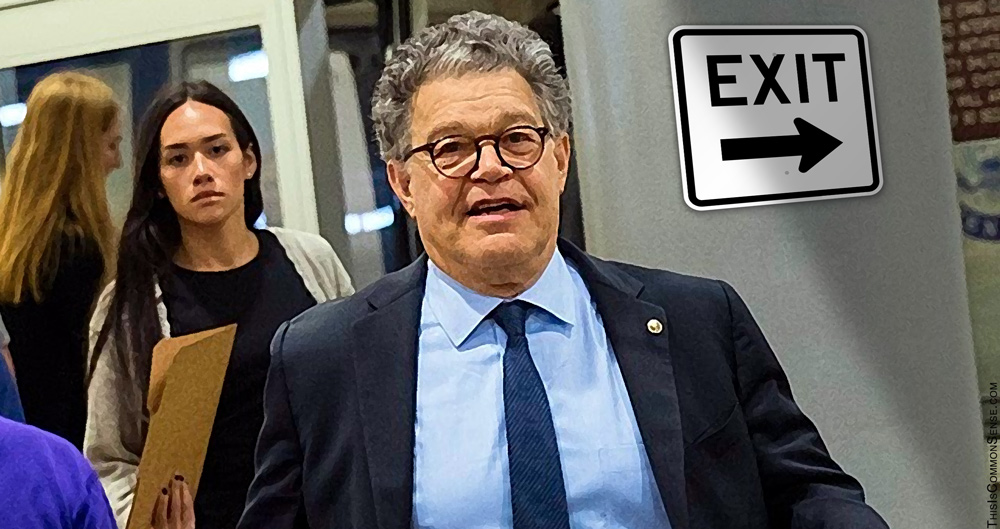
Today, finally, is the day. Barring some last-minute hijinks in the extended resignation ritual announced almost four weeks ago by Sen. Al Franken (D-Minn.), the comedian turned cad turned politician turned pervert leaves his U.S. Senate seat.

And hopefully keeps his mitts off other people’s seats to boot.

Even without deadline hijinks, the Franken saga has been strange. After hearing Franken’s resignation statement on the Senate floor, CNN’s Chris Cizzilla wrote, “He didn’t believe he had done anything for which he should have been forced to resign.”

But note: No one “forced” Senator Franken to step down. As my Sunday Townhall.com column reminded, he did so voluntarily. 

Why?

Peer pressure. Three-quarters of fellow Democratic Party senators demanded Franken leave, to clear the way for election-year attacks on Republican sexual sleaze-balls without partisan distraction.

And now some cry crocodile tears. They want the no-longer-amusing Franken out. Sure. But they also wish to continue the pretense that Franken is a wonderful fellow just the same.

“His voice will be stronger than ever,” argued fellow Minnesota Sen. Amy Klobuchar—ridiculously. A Vox article was headlined, “Al Franken resigned amid sexual misconduct allegations, but Democrats aren’t making him leave in disgrace.”

Is it a paraphrase of the old joke: “Don’t go away in disgrace, Senator, just go away”?

But Franken is leaving in disgrace. Should be.

Eight women have come forward with allegations of sexual misconduct. The senator’s response has been to publicly apologize, profusely, and then, later, claim that “some of the allegations” are “not true.”

Others he remembers “differently.”

Not good enough, ex-senator.

This is Common Sense. I’m Paul Jacob.


PDF for printing


Categories
Accountability incumbents insider corruption local leaders moral hazard national politics & policies responsibility

Queen Sheila: Terror of the Skies

What’s all the fuss?

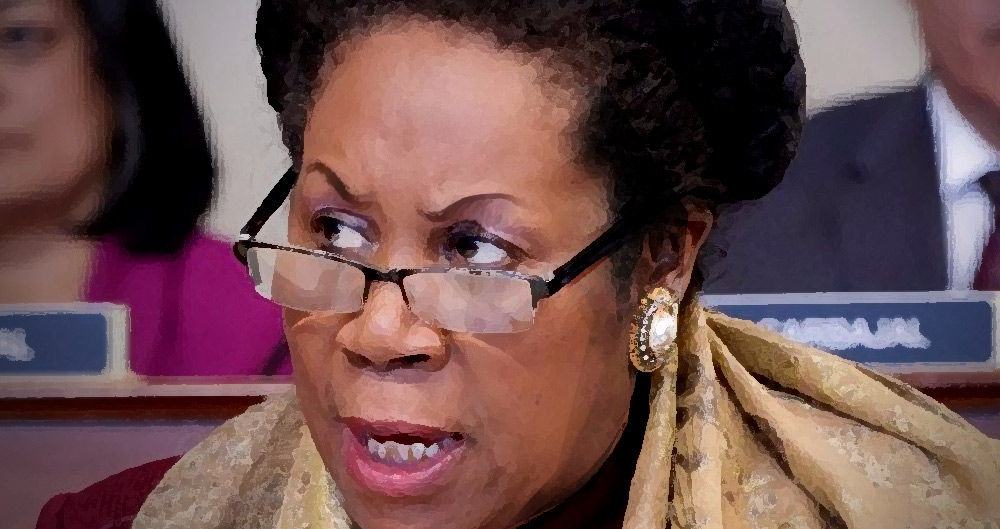
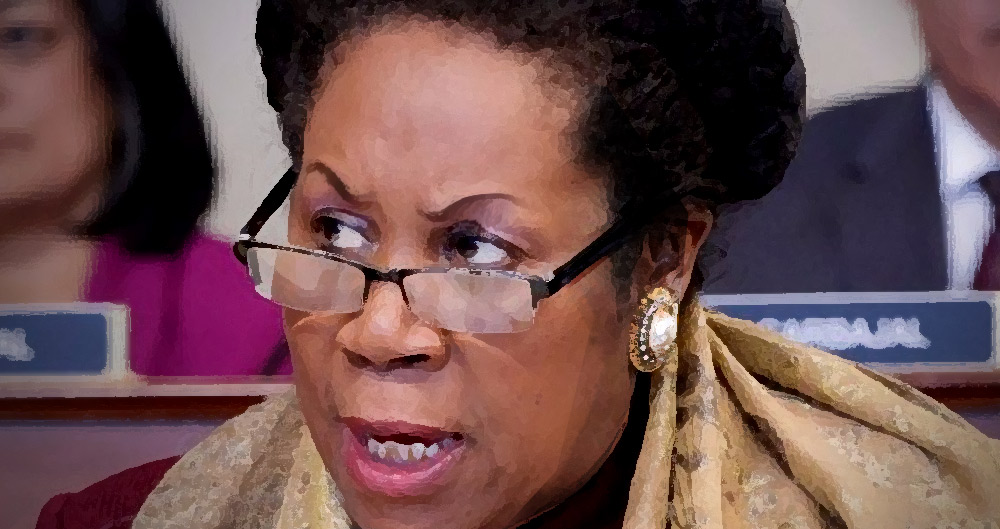
Congresswoman Sheila Jackson Lee (D-Tex.) was escorted ahead of all the other passengers onto a United Airlines flight from Houston to Washington, D.C., taking seat 1A in first class.

The congresswoman described it as “nothing exceptional or out of the ordinary.”

Meanwhile, Jean-Marie Simon possessed a boarding pass for seat 1A; she attached a photo to her Facebook post. Yet, Simon was stopped when boarding the plane and told her ticket had been cancelled.

Who cancelled it? United claimed Simon did.

Simon said that’s bunk — and it does seem strange to cancel your flight and then moments later attempt to board.*

“Since this was not any fault of mine,” Rep. Jackson Lee offered, “the way the individual continued to act appeared to be, upon reflection, because I was an African American woman . . . an easy target. . . .”

’Tis the season to cry “racism.”

And yet the congresswoman characterized herself as “kind enough” to apologize “out of the sincerity of my heart” —  and “in the spirit of this season.”

Doubt her kindness? You have reason:

  • In 2014, Rep. Jackson Lee won Washingtonian magazine’s contest for “meanest” member of Congress — garnering, incredibly, seven times as many votes as the second-place finisher.
  • Years ago, after several incidents, Continental Airlines told Jackson Lee that she had to behave or find another airline.
  • “You don’t understand,” the congresswoman once reportedly shouted at a staffer. “I am a queen, and I demand to be treated like a queen.”

Not “Queen for a Day,” mind you: Sheila Jackson Lee has been a congressional queen for the last 23 years! And today she is the ranking Democrat on the subcommittee on transportation security.

Feel more secure?

This is Common Sense. I’m Paul Jacob.


* And, if it was truly her own fault, United appears to be overcompensating in compensating Simon, giving her a seat in Economy Plus, a $500 voucher and numerous apologies (though not yet in writing).


Additional Background Information
Daily Caller: Congressional bosses from Hell: Sheila Jackson Lee (2011)
Weekly Standard: Sheila Jackson Lee, Limousine Liberal (2002)


PDF for printing


Categories
Accountability folly general freedom insider corruption local leaders moral hazard nannyism porkbarrel politics too much government

The Biggest Loser

Government is supposed to serve everybody . . . according to good, old-fashioned republican theory. But most governments serve some more than others. We can define as “corruption” any attempt to make government serve a few at the expense of the many — or the many at the expense of the few.

Illinois is corrupt, and most of us can only watch it get worse. But what can we say about those who live under the Prairie State’s thumb? When citizens see an institution slipping out of control, they can remain passive or take charge. Illinois citizens have petitioned for term limits, redistricting reform and a more transparent legislature only to be blocked again and again by the state supreme court.

What more can conscientious citizens, folks I like to call “liberty initiators” do? Well, they can

  • express themselves in criticism as well as offer alternatives;
  • vote thoughtfully and be well informed;
  • consider running for office or work for good candidates;
  • donate money to reform projects.

Alas, these and other expressions of “voice” have not exactly forestalled disaster.

The last resort is to “exit,” leave — vote with your feet.

The population of Illinois has declined. Many have pulled up stakes and fled across the border to Indiana and elsewhere. In the most recent year for which we have data, Illinois lost nearly 34,000 people, more than any other state.*

Unfortunately, this population loss is only an indicator of how bad Illinois State Government is doing. It offers no solution.

Except, of course, for the people who leave.

This is Common Sense. I’m Paul Jacob.


* Idaho has experienced the biggest population increase. See Reason’s reportage.


PDF for printing


Categories
Accountability crime and punishment folly general freedom government transparency ideological culture moral hazard Regulating Protest tax policy

Been Burned

“They’ve been burned. They’ve been hammered. They’ve been bludgeoned,” George Washington University law professor Miriam Galston explained to the Washington Post. “They’re trying to survive.”

In this heartbreaking discussion at this special time of year, the “they” are the poor, long-suffering folks . . . at the Internal Revenue Service.

According to the Post analysis, “conservatives” have schemed to “scale back the IRS and shrink the federal government.” (I guess this is supposed to tear at every American’s heartstrings.) Notably, they “capitalized on revelations in 2013 that IRS officials focused inappropriately on tea party and other conservative groups based . . . Among conservatives, the episode has come to be known as the ‘IRS targeting scandal.’”

Note that term of art: episode.

The Post saw no scandal, however — despite the IRS having admitted to harassing, blocking and delaying Tea Party and conservative groups from exercising their most fundamental First Amendment rights to freedom of association and freedom of speech, in some cases for four years.

Instead, the Post decries the response to this gross violation of citizens, a congressional check on the power — and budget — of the agency responsible: reducing the budget for the Exempt Organizations division of the IRS from $102 million in 2011 to $82 million in 2016.

Heavens, Washington is never supposed to work like that! It actually approaches . . . accountability.

The budget cuts, along with hefty settlements the IRS is now paying to victimized groups that sued, make it less likely the IRS will repeat this scandalous . . . episode.

“To many, the IRS targeting of Tea Party and conservative and even some progressive groups is not a scandal,” my Sunday Townhall.com column concluded. “To me, that’s the biggest scandal of all.”

This is Common Sense. I’m Paul Jacob.


N.B. The title reference is to Neil Young’s song, Burned, which begins, “Been burned, and with both feet on the ground . . .”


PDF for printing

IRS, I.R.S., corruption, taxes, budget, tears


Categories
Accountability folly ideological culture media and media people national politics & policies tax policy too much government

The Hyperbole Is Falling

A mad killer is on the loose!

That is one way to get attention . . .

The sky is falling!

You are getting the idea . . .

Trump is literally Hitler!

Extravagant hyperbole is not necessary to criticize the current President. Indeed, as Chicken Licken and the Boy Who Cried Wolf demonstrate, that can backfire. Especially when you are complaining about something on which Trump has proved to be pretty darn good — the tax bill, for instance.

Nevertheless, as it passed through Congress, Democrat pols and the major media dinosaurs have doubled down on overstatement: A “middle-class con job” was Sen. Ron Wyden’s characterization; singer-actress Barbra Streisand (presumably now living in Australia or Canada), re-tweeting a New York Times piece on “the Great American Tax Heist,” accused Trump of pushing the bill for “personal gain”; Bernie Sanders calls it a “tax cut for billionaires” who, instead of being helped, he says, should be “asked to pay more in taxes.”

Yes, the richest (by and large) will get the most reductions, since they pay the most taxes already. Bernie should be reminded that it is the very nature of taxes that “ask” is the wrong active verb. And calling a cut in what’s taken from taxpayers a “heist” is too absurd for commentary.

It does look like most taxpayers will get tax relief. That’s good. Alas, the debt may grow larger, depending on the economic growth spurred by the tax reform. But I notice that the Democrats tend to complain about deficits only when Republicans are in charge. And vice-versa.

Partisan Derangement Syndrome at work.

This is Common Sense. I’m Paul Jacob.


PDF for printing


Categories
Accountability general freedom media and media people moral hazard nannyism national politics & policies porkbarrel politics responsibility too much government U.S. Constitution

A Good Tragedy Not Wasted

No matter how “not as bad as we feared” President Donald Trump may be appearing, as we close out the year let’s remember why some of us did not trust him in the first place: his knee-jerk reactions are too often witlessly statist.

The speeding Amtrak train that derailed over I-5 in Washington State on Monday was a horror show, sure. And we have come to expect the President — any President, either party, all administrations — to provide words of comfort after such events. Trump conformed to expectations.

And, admittedly, his initial Tweet was all very proper. But his verbal response was . . . very . . . Old School. After mentioning the federal government’s role in handling the tragedy — “monitoring” and “coordinating with local authorities” — he used the event as an excuse to expound upon the idea that the event provides “all the more reason why we must start immediately fixing the infrastructure of the United States.”

This is bad, old-fashioned policy opportunism. The worst time to cook up “solutions” is right after a tragedy. That’s when emotions are highest and reason is lowest.

More importantly, the train was going through its initial run over newly upgraded infrastructure!

One could more reasonably surmise that the recent infrastructure upgrade was the cause of the derailment — though, let us be honest, it looks like the train was way above the stretch’s speed limit.

Note to Donald Trump: just because there’s a microphone in front of you doesn’t mean you are required to “make a point.” That’s not the President’s job.

Mister, we could use a man like . . . Calvin Coolidge again.

This is Common Sense. I’m Paul Jacob.


PDF for printing


Categories
Accountability ballot access general freedom government transparency initiative, referendum, and recall local leaders national politics & policies political challengers responsibility tax policy term limits too much government

What Unlimited Government Costs Us

“Olympia can’t restrain itself,” Tim Eyman wrote the other day, a judgment on legislative irresponsibility hardly unique to the Evergreen State. Citizens around the country have cause to lament the difficulty of obtaining anything close to a good legislature.

Too often the merely “bad” would constitute a significant improvement.

Which is why legislators need to be put on a short leash. Limits on government must be written into law, where possible into either the U.S. Constitution or state constitutions, so the limits cannot be tampered with by legislators, good or bad.

Washington State initiative guru Tim Eyman, cited above, has made a career of working for just those kinds of limits. In 2007, Eyman and the citizen group Voters Want More Choices petitioned onto the statewide ballot a requirement that any tax increase must receive a two-thirds vote from both legislative chambers.

Voters passed the measure* in 2007, 2011 and 2012.

In an email to supporters this month, Eyman presents data — an “amazing real-world comparison” — to help us understand how effective the limits were . . . while they lasted.

He notes that “with the 2/3 rule in effect from 2008-2012, those 5 legislative sessions cost the taxpayers $6.894 billion” in increased taxes.

And he compares that to the five years (2013-2017) since the state’s highest court struck down the voters’ two-thirds mandate: “WITHOUT the 2/3 rule, those 5 legislative sessions cost the taxpayers $23.679 billion.”

“Without the fiscal discipline imposed by citizen initiatives,” Eyman concludes, “politicians cannot hold back.”

Now we have hard evidence for what unlimited government costs us: more than three times more!

This is Common Sense. I’m Paul Jacob.


* Washington State’s ballot initiative process allows voters to pass simple statutes but not constitutional amendments. For two years after passage, legislators must garner a two-thirds vote to override a ballot initiative. After those two years, only a simple majority is required.


PDF for printing


Categories
Accountability crime and punishment education and schooling folly general freedom moral hazard nannyism national politics & policies too much government

Leave Them Kids Alone

This just in: oblivious little boys still play cops and robbers.

Just as in days of old.

Wait. Hold on. Breathe. Just breathe. This sociological fact doesn’t mean that we’re a nation of incipient international terrorists but for the galumphing grace of grumpy zero-tolerant schoolmasters.

Common sense says you don’t suspend toddlers from school for wiggling their fingers as if wielding a gun, or for sculpting a “gun” out of a slice of Wonder Bread or Freihofer’s. Yet evidence continues to mount that all too many teachers and administrators are immune to considerations of reasonableness when it comes to kids who misbehave. (Or “misbehave.”)

Such enemies of childhood innocence must be hindered. So let’s give two and a half cheers to Ohio lawmaker Peggy Lehner, who proposes to legislate an end in her state to suspending children in the third grade or younger who aren’t threatening anybody. (I’m not sure why kids in grades later than third can’t catch the same break.)

A new, probably imperfect government regulation is not the only way to counter blunderbuss government-school policies. The most fundamental alternative is the free market.

Ideally, no public-school monopoly plagued by mandatory insane rules would exist. Ideally, all K-12 (and university) educational offerings would be provided by an unregulated market economy, making it much easier for families to drop insane schools and patronize sane ones. The pressures of market competition would encourage school officials to become students of common sense.

We are not there yet.

This is Common Sense. I’m Paul Jacob.


PDF for printing


Categories
Accountability general freedom moral hazard national politics & policies responsibility

The Online Manipulation of Democracy

There exist many sneaky ways to get other people to do what you want, voluntarily — effectively blurring the line between legitimate persuasion and fraud.

When large, almost unavoidable private companies apply those techniques to targeted groups of voters, that blur might look something very much like election fraud.

Harvard psychologist Dr. Robert Epstein has been studying hidden online persuasion techniques. Interviewed by Tom Woods last Friday, the doctor explained several sub rosa persuasion techniques, especially the fascinating Search Engine Manipulation Effect (SEME), which he says has been replicated in studies by other researchers. 

SEME, he argues, is a “genuinely new” way to manipulate masses of people — without them realizing it.

And it sports “one of the largest effects ever to be discovered in the behavioral sciences.” Google, it turns out, can influence voter and consumer behavior merely by ordering search results in specific ways. Going into his first study, he suspected he might discover a 2 percent influence on voter behavior. He got 48 percent, instead.

There is more: not only can Google do this, the behemoth does do this — Epstein has documented that Google did it in the last election. 

Supporting, or to the benefit of, Hillary Clinton.

Understandably, Epstein scoffs at the “fake news” panic as something insubstantial in comparison. The potential impact of this online manipulation dwarfs the allegations of Russian influence.

I wonder: Did Mrs. Clinton know that her very special high-tech friends were pressing their very big thumbs onto the scale of democracy?

It seems a very old tech — the Electoral College — effectively counteracted the manipulation.

This time.

This is Common Sense. I’m Paul Jacob.


PDF for printing