Categories
Accountability national politics & policies term limits

Mrs. Term Limits?

Do politicians oppose term limits on principle?

For the answer to be yes, we would first have to explain to them what principles are.

Sure, politicians adamantly oppose term limits that cut against their self-interest, i.e. apply to them. But they are often for term limits . . . when the limitation applies to others.

The exception to this rule? When limiting one’s own terms — or pledging to do so in the future — is absolutely essential in order to win an election.

Take the case of House Minority Leader Nancy Pelosi, who wishes to be elected Speaker in January by the new Democratic House majority.

Mrs. Pelosi is an unlikely candidate . . . for Mrs. Term Limits. And yet, she has agreed to support a new rule imposing term limits on leadership positions — even her own speakership.

What gives?

A number of newly elected congresspeople won their seats on a promise to change Washington. And to gain votes, they had pledged not to support the exceedingly unpopular, long-serving Swamp Creature for speaker.

Or should that be Mrs. Swamp Creature?

Now with Democrats comprising a narrow 17-seat majority in the new Congress, these young upstarts wield enough votes to deny Pelosi the position she covets.

So, against the objections of her longtime lieutenants, Pelosi has promised these “rebels” that she will not merely bring before her caucus a new rule imposing limits of three terms for leadership positions, including her own, but she also insists that even if that rule fails to win the support of the Democratic caucus, she will personally, voluntarily, abide by those limits.

Meet the Missus. Don’t ask about her previous status.

This is Common Sense. I’m Paul Jacob.


PDF for printing

Nancy Pelosi, term limits

Photo credit: Gage Skidmore

See all recent commentary
(simplified and organized)
See recent popular posts

Categories
Accountability general freedom individual achievement Popular

Settling the Science

A paper in the august science journal Nature,* on the oceans’ “thermal inertia” and the ominous temperature rise therein, has been corrected. But not before the BBC (and other media outlets) ballyhooed the results in the usual “climate change”/“global warming” narrative: “Climate change: Oceans ‘soaking up more heat than estimated’” (Nov. 1).

The paper’s initial new (and alarming) estimate, however, proved wrong.

Over at Real Climate, one of the co-authors clarified the changes that had to be made: “The revised uncertainties preclude drawing any strong conclusions with respect to climate sensitivity or carbon budgets . . . but they still lend support for the implications of the recent upwards revisions in” . . . well, I will let you make sense of it.

I am not a climate scientist, nor do I pretend to be one on the Internet.

What is important to note is that the “strong conclusions” reported on were found to be groundless. 

Mistakes were made.

How were those mistakes identified?

They were caught at the ClimateEtc.not an “august science journal” — published online at judithcurry.com.**

Nic Lewis, the astute blogger, identified a major source of the inaccuracy in the original paper as having arisen “primarily because of the inappropriate assumption of a zero error in 1991.”

We have just witnessed science in action — the public testing of published findings.

“The bad news,” Dr. Roy Spencer reminds us on his Global Warming blog, “is that the peer review process, presumably involving credentialed climate scientists” — note the dig — failed to catch the error “before publication.”

The crucial science happened afterwards, online. 

This is Common Sense. I’m Paul Jacob.


* “Quantification of ocean heat uptake from changes in atmospheric O2 and CO2 composition,” by L. Resplandy, R. F. Keeling, et al.

** I have had occasion to mention climate scientist Judith Curry in the past.

PDF for printing


» See popular posts from Common Sense with Paul Jacob HERE.


Categories
Accountability ideological culture media and media people Popular

Fakes & Facts

“There was truth and there was untruth,” George Orwell wrote in his classic novel, 1984, “and if you clung to the truth even against the whole world, you were not mad.”

In the Age of Trump and Fake News, way past 1984, I’m hanging on for dear sanity.

Earlier this week, I commented on the brouhaha between the president and Senator Elizabeth Warren (D-Mass.). Today, I have a bone to pick with Snopes, the faux-fact-checking site, which found this statement to be TRUE: “President Donald Trump offered to donate $1 million to a charity of Sen. Elizabeth Warren’s choice if she would take a DNA test to demonstrate that she had Native American ancestry.”

Not “Mostly True” with some explanation, but just “True.” Problem is, that statement is false.

Mr. Trump did not make that offer; he promised people at a Montana rally that he would make such an offer in the future, if he found himself “in the middle of the debate, when she proclaims that she is of Indian [sic] heritage.”

Splitting hairs? Where is the split? Here is President Trump’s full statement.

Snopes was hardly alone in misreporting Trump. The Hill titled its story, “Trump denies offering $1 million for Warren DNA test, even though he did.” The Washington Post parroted The Hill’s “fact-checked headline.” Other major outlets from CNN to the Miami Herald declared, falsely, that Trump had made the offer.

Look, I don’t blame Warren for goading Trump to pay up. That’s the political game.

But the media, especially fact-checkers, should be diligent about what precisely the president has said — not playing that game.

This is Common Sense. I’m Paul Jacob.


PDF for printing


Categories
Accountability folly ideological culture national politics & policies Popular

A Fraction of a Reaction

“A little dab’ll do ya.”

That was from Brylcream, not 23andme.

President Donald Trump has been mocking Senator Warren, relentlessly, for her claims to native American heritage, calling her “Pocahontas.”* Some have dubbed him “racist” for doing this, but his point was plausibly anti-racist. In 1995, Harvard Law School ballyhooed her as its first “first woman of color” hire. 

 Some argue Warren benefited from this racial categorization, but that’s not been shown. Warren has ceased labeling herself Native American and defended her belief that she was of Cherokee or Delaware descent based on family lore as well as her physiognomy (“high cheekbones”). 

“Let’s say I’m debating Pocahontas,” Trump declared during an uproarious routine at a Montana rally back in July, promising the crowd that “when she proclaims that she is of Indian heritage,” he would toss her a DNA kit and offer: “I will give you a million dollars, to your favorite charity, paid for by Trump, if you take the test and it shows you’re an Indian.”

Under pressure, Warren took a DNA test.** And (inadvisedly?) made a big deal about it.

Upshot? Six to ten generations ago she may indeed have had one ancestor who was a native American. The post-test squabbles have been mostly embarrassing, but Trump at least had the wit to note the lower end of Warren’s native mix was “1/1024, far less than the average American.”

The “memed” jokes on the Internet have been hilarious.

But who gets the last laugh? While we allow ourselves to be done in by little dabs of trivia, the great crises of our age build ominously. 

At what ratio, though, I don’t know.

This is Common Sense. I’m Paul Jacob.


* And then apologizing to the real Pocahontas for the comparison.

** The full story of who she went to, and the reliability of her DNA report, is itself bizarre and complicated. See “Did Elizabeth Warren Just Kill Identity Politics?” See also Tim Pool.

PDF for printing


Categories
Accountability crime and punishment

TSA Abuse

Among the rights-trampling bureaucracies, many and various, the Transportation Security Administration is far from the most beloved.

Millions of Americans, in the course of trying to catch flights, experience TSA agents up close and personal. 

Some of these official gropers are way too “handsy.”

One report comes to our attention from Charlotte Ann Kimbrough, former law enforcement officer. 

When she told TSA agents that she had had two metal hip replacements, she expected to be wanded. Instead, “The woman groped my crotch — twice. She went underneath my dress. I knew I had to be calm for the man I was traveling with. . . . But he could see the look on my face. He started yelling. They got the woman who was groping me out of the way and brought in a boss, who tried to stop the situation from escalating. I do have anger at myself, that I let her do it to to me. . . . I keep getting feelings of guilt.”

Some TSA workers may be uncomfortable with what they are “forced” to do to innocents. Others enjoy the power they have to humiliate people. Still others — whistleblowers — do speak out against abuses.

But they face retaliation from higher-ups for doing so. All of these employees are subject to abuse by TSA bosses. 

A government report details alleged misconduct that includes sexual harassment, verbal abuse of employees, and obstructing investigations into misconduct. 

We should not be surprised. As Reason magazine puts it, “this isn’t an agency with a great track record when it comes to treating people well.”

This is Common Sense. I’m Paul Jacob. 


PDF for printing


Categories
Accountability ideological culture moral hazard national politics & policies term limits

The Self-Neutered Congress

Last week, the Senate Judiciary Committee again demonstrated why Congress’s approval ratings bob about in our toilet bowls. Amid the spectacle of Judge Brett Kavanaugh’s confirmation hearings, one senator spoke not about judicial philosophy, but political reality.

“What’s the hysteria coming from?” asked Sen. Ben Sasse (R-Neb.), noting the circus-like atmosphere. His answer? The Supreme Court “is increasingly a substitute political battleground,” because “the Congress has decided to self-neuter.”

Blunt assessment.

“In our system, the legislative branch is supposed to be the center of our politics,” Sasse argued, adding dejectedly, “It’s not.”

Why not? 

“What we mostly do around this body is not pass laws,” he offered. “What we mostly do is decide to give permission to the secretary or administrator of bureaucracy X, Y, or Z to make law-like regulations.” 

“More and more legislative authority is delegated to the executive branch every year. Both parties do it,” explained the senator. “The legislature is impotent, the legislature is weak, and most people here want their jobs more than they really want to do legislative work . . .”

Sasse continued, “The real reason, at the end of the day, that this institution punts most of its power to executive branch agencies is because it’s a convenient way for legislators to be able to avoid taking responsibility for controversial and often unpopular decisions.”

Better to blame the bureaucracy.

“If your biggest long-term thought around here is about your own incumbency,” he said dismissively, “then actually giving your power away is a pretty good strategy.”

But “when Congress neuters itself,” warns the Cornhusker State solon, “it means the people are cut out of the process.”

A powerful case for term limits.

This is Common Sense. I’m Paul Jacob.


PDF for printing


Categories
Accountability general freedom ideological culture national politics & policies Popular too much government

Pulling It Off

Give democratic socialism a chance? 

So says Dr. Cornel West, the “provocative democratic intellectual” who serves as one of eight honorary co-chairs of the Democratic Socialists of America. 

This accomplished Professor of the Practice of Public Philosophy at Harvard University, and Professor Emeritus at Princeton, explained to Fox News host Tucker Carlson that socialism’s “fundamental commitment is to the dignity of ordinary people and to make sure they can lead lives of decency.”

“What happened in Venezuela?” Carlson asked West. “They called that democratic socialism. But they don’t have toilet paper and it’s less equal than ever.”

“But part of the problem is though, brother,” the professor responded, “that any time there [have] been attempts by ordinary people to engage in self-determination, they can get crushed by external nations. Look at U.S. policies toward Venezuela [which have] been very, very ugly — Nicaragua in the same way.”

West offered nary a specific to his charge, but was handy stating his conclusion. “So, we have never had a chance to really pull it off,” the “it” being socialism. 

“So it’s only been a movement so far.”*

How convenient.

West implicitly acknowledges that those ruling Venezuela and Nicaragua are practicing socialism. But he won’t hold them or the -ism responsible for the economic collapse, the hunger, the exodus of millions of very desperate “ordinary” citizens, the arbitrary arrests, use of torture and murder of innocent citizens. 

Dr. West, a follow-up question: Just what specific U.S. policy triggered these socialists to murder and torture their own people?

This is Common Sense. I’m Paul Jacob.


* Dr. West also announced that socialism “is not an ‘ism,’ brother.” I think the professor needs to take a course in ism-ology.

PDF for printing


Photo by Gage Skidmore

Categories
Accountability government transparency incumbents initiative, referendum, and recall local leaders nannyism political challengers Regulating Protest term limits too much government

Strange It Is

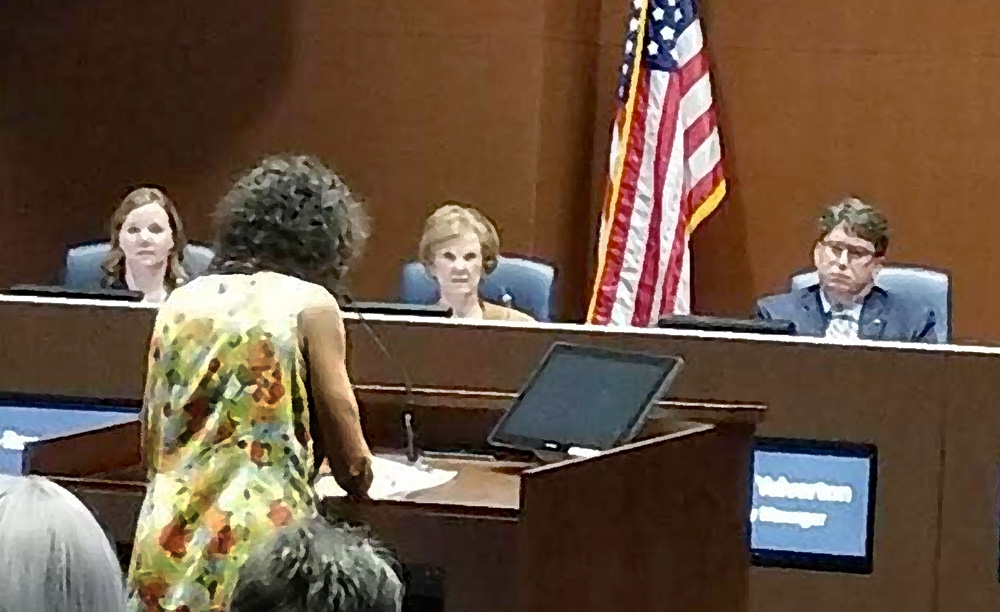
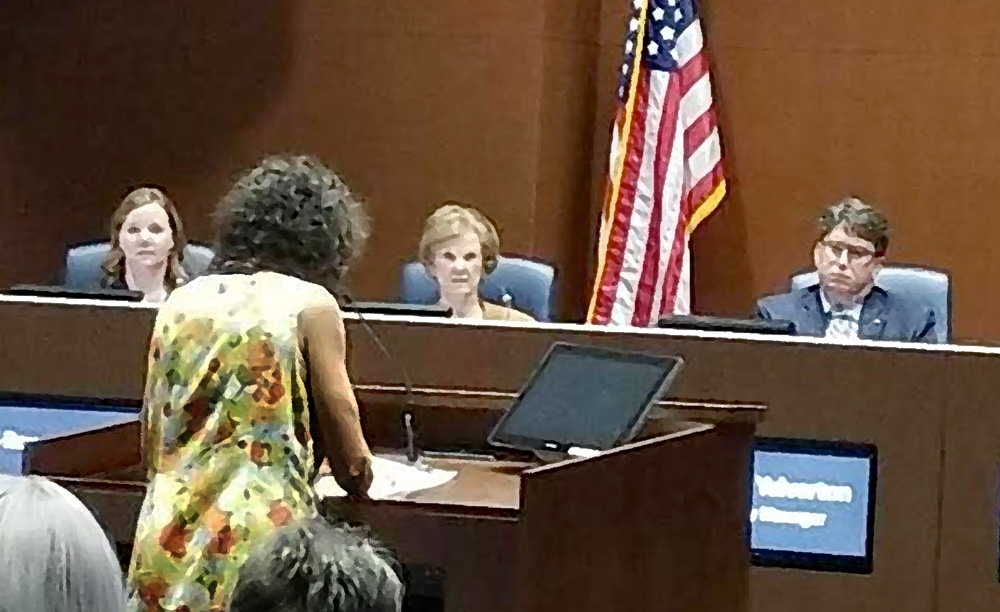
Strange for the Arlington, Texas, City Council to hold a meeting on a Sunday evening, much less one to “consider suspending the city charter.”

That is how the Fort Worth Star-Telegram reportedthe latest twist in the term limit controversy that has engulfed the city with a lawsuit and competing ballot proposals.”

Led by Zack Maxwell, citizens in this Fort Worth adjacent community of 400,000 gathered 11,000 voter signatures to place a term limits charter amendment on the November ballot. It would limit councilmembers to three two-year terms. It also figures in past service, so five of the eight current councilmembers would be blocked from seeking re-election in the coming two years.

With swift legislative prowess, the council responded, passing its own competing “term limits” measure, which incidentally allows them to stay 50 percent longer in office.

But there’s one problem: the council did not follow the law, which requires multiple readings, with one at a regular meeting. 

Actually, there’s a second problem: Mr. Maxwell challenged the council’s unlawful action in court. 

The court blocked the council’s measure. 

That left the council holding an unusual weekend meeting to suspend the rules and re-pass their fumbled alternative to the term limits voters really want. But news travels fast and city hall was “packed.” 

“You’re suspending the rules because your jobs are in jeopardy,” charged one man.

A woman told the council, “You guys should be absolutely embarrassed about this.”

“After hearing from dozens of angry residents,” the paper explained, “[t]he council voted unanimously to not suspend the rules, finally killing its own term limit proposal.”

Politicians doing the right thing . . . having exhausted every other possibility.

This is Common Sense. I’m Paul Jacob. 


PDF for printing


Photo from the Fort Worth Star-Telegram


Categories
Accountability incumbents initiative, referendum, and recall insider corruption local leaders political challengers term limits

Sneaky Lobbyists Prefer Sneakiness

The Arkansas Chamber of Commerce’s CEO and chief lobbyist, Randy Zook and Kenneth Wall, have formed Arkansans for Common-Sense Term Limits. 

The Chamber has a burning hatred for term limits — Common-Sense or otherwise — just like every other lobbyist and special interest. But Zook and Hall are fibbing in their name because they realize that voters love term limits. 

The ballot committee’s stated purpose? To “advocate for the disqualification or defeat” of the Arkansas Term Limits Amendment, which citizens just petitioned onto the ballot, collecting 129,000 signatures.

Defeating such a popular ballot measure isn’t likely. Instead, these politically-experienced lobbyists are preparing to sue, hoping to disqualify valid voters’ signatures on some ginned-up technicality, feigning confusion over the clear ballot language — anything that might keep democracy from coming this November.*

At issue? The difference between real term limits and ridiculous ones.

That is, between term limits set by citizens and those set by legislators themselves. 

Currently, legislators can serve for 16 years in a single seat under the state’s “limits.” And because two-year Senate terms aren’t counted at all, senators can stay as long as 22 years. 

Legislators snuck this past voters in 2014 with a ballot title claiming only to “establish” term limits . . . amidst other lies. Politicians thereby turned Arkansas’s toughest-in-the-nation term-limit law into the nation’s very weakest — a significant 50 percent longer than limits in any other state.**

Unfazed by all the corruption in the Arkansas Legislature, Chamber lobbyists are focused on putting politicians in their pocket for as long as possible. 

But those pesky Arkansas voters are once again in the way.

This is Common Sense. I’m Paul Jacob.


* After recently threatening to challenge the signatures of another initiative petition, Zook had to admit that he was not aware of a single problem or deficiency in the petition. But he quickly added, “It’s a very complicated process.”

** Arkansas’s term limits were the same as Michigan’s until 2014, three terms, six years in the House and two-terms, eight-years in the Senate.

PDF for printing

 

Original photo by Jeff Kubina

 

Categories
Accountability crime and punishment moral hazard property rights U.S. Constitution

Forfeiting Common Sense

Is it okay to steal if you can get away with it?

A full answer would require a treatise. But most of us common-sensibly understand that evil does not magically become good when perpetrators are not stopped or punished. Thrasymachus was wrong to contend, in Plato’s Republic, that justice is merely the “interest of the stronger.”

When it comes to crimes like bank robberies, muggings and car jackings, we have no doubts about this. In such blatant cases, we suffer nothing like the legitimate confusion to which we may be prone regarding the exact border between adjacent parcels of land or the niceties of intellectual property law.

Well, somebody tell the New Hampshire state police.

Some of them apparently believe it’s okay to steal if you can evade laws against the stealing.

New Hampshire’s recent reform of civil forfeiture laws requires criminal conviction of a person before there can be any forfeiture of his property. But a loophole enabled officers to grab $46,000 of Edward Phipps’s money — from his car, stopped on the road — even though he was never accused of a crime. 

How?

It seems that if state cops collaborate with the feds, safeguards established to prevent such abuse can be evaded.

To retrieve even a little of his money ($7,000), Mr. Phipps was forced to relinquish all claim to the balance ($39,000). Even if lawmakers close the loophole, as they should, the robber-cops will probably get away with this particular larceny. 

They shouldn’t.

That’s injustice, not common sense.  I’m Paul Jacob.


PDF for printing


Photo Credit: N.H. State Police