Categories
Accountability ballot access general freedom government transparency ideological culture initiative, referendum, and recall insider corruption local leaders national politics & policies property rights Regulating Protest responsibility too much government U.S. Constitution

The Great Faction

Politics isn’t a pretty business.

Frédéric Bastiat called the beast it serves “that great fiction” not because it doesn’t exist — intrusive state power sure persists — but rather because what it promises cannot really happen: “everyone living at the expense of everyone else.”

What can we do? How do we counteract a game that is rigged to increase the insanity, not reduce it?

Last week I indicated one thing a minor party with that goal in mind could do: use its power of spoiling elections to change major party behavior, and thus give citizens a fighting chance to restrain governmental metastasis.

Cancer.

I also suggested “blackmailing” the major parties into setting up a system of voting that . . . ends the power to blackmail! I believe that system — ranked choice voting — holds many positives, not the least of which is ending strategic voting, wherein voters are tempted to “falsify” their own preferences and support candidates they might dislike. This is as corrupting to the citizenry as the Great Fiction itself.

Let’s hope a savvy minor party leverages the major parties, gaining reforms to improve the system. Regardless, we can all — independently — push two other limits on political power:

  1. term limits at all levels, and
  2. initiative and referendum rights in all the states, not just the 26 that have it now.

Initiative and referendum rights would give ordinary citizens the leverage to possibly restrain the mad rush to live at each others’ expense. With the initiative, citizens can gain term limits, which produce more competitive legislative elections and lead to fewer legislators captured by the interests loitering in the capitol.

This is Common Sense. I’m Paul Jacob.


PDF for printing


Categories
Accountability free trade & free markets general freedom moral hazard nannyism responsibility too much government

Wabbit Season — or Duck Responsibility Season?

Venezuelans are starving. The country’s children are malnourished and — if something is not done soon — “it will be very difficult for these children ever to get back onto their nutritional growth curve.”

That is the testimony of the director of Caritas Venezuela.

Clearly, “Bolivarian” socialism has failed.

And yet, dictator Nicolas Maduro blames American “sanctions” for “exacerbating” the situation.

And offers up a “Rabbit Plan” to feed the people.

Yes, Maduro has called upon his countrymen to raise rabbits . . . and eat them.

But the source of the dark comedy isn’t just a dictator waxing eloquent on bunnies. “There is a cultural problem because we have been taught that rabbits are cute pets,” said the agriculture czar . . . whose first name is “Freddy.”

Holding a televised press conference with Maduro himself, last week, he insisted that “a rabbit is not a pet; it’s two-and-a-half kilos of meat that is high in protein, with no cholesterol.”

The funny part — the gallows humor, here — is this is what the grand planning of socialism has come to: not mass collaboration and an extended division of labor, but the people feeding themselves on small plots of land.

The Inca had developed a more effective mode of socialism.*

Just as humiliating for Bolivarians must be the trade embargo charge. Socialism is all about how superior government control is to the “anarchy in production” of market life. To blame their problems even a little on a capitalist country >not trading with them doesn’t merely admit defeat, it evades the last shred of responsibility.

I have a better “Rabbit Plan”: the tyrants should hop on down the bunny trail . . . freeing Venezuelans to recover.

This is Common Sense. I’m Paul Jacob.


* It depended upon radical inegalitarianism, subordination, drudgery, servility, and lack of any meaningful freedom.


PDF for printing


Categories
free trade & free markets general freedom moral hazard nannyism national politics & policies responsibility too much government

Free the Truck Drivers

Should our government liberate truck drivers from the country-wide prison in which they’re incarcerated?

You say I’m exaggerating. Being metaphorical.

Yes. Maybe metaphors and hyperbole are not to your taste, but suggesting an analogy, at least, is more than justified. The government does treat truck drivers like inmates . . . with no right to plan their own schedules.

In an article for The Federalist (“‘Overregulation’ Means Government Literally Deciding When I Work, Eat, Sleep”), Matthew Garnett attests to what the regulations mean in practice. He must obey five deadlines, only one — showing up on time — related to the objective requirements of the job. Also: He may work only so many hours before taking a break, only so many hours on the job and driving, only so many hours on the job and not driving, only so many hours per week.

“There’s no way I can decide for myself when I’m going to sleep or rest or drive,” Garnett “concedes.” “After all, I’m just a stupid truck driver. What would I know about such things?”

The mandatory pacing means that drivers often rush to meet a bureaucratic deadline even if they’d rather travel more slowly and safely. And rushing can be “a very, very bad thing to do when you’re operating an 80-foot, 80,000-pound vehicle that will go 70 miles an hour downhill,” Garnett observes.

What to do? Repeal it all.

Of course, hold the truck driver, like every other driver, responsible for conducting himself safely.

But don’t force him to obey continuous and arbitrary edicts about when to stop and go.

This is Common Sense. I’m Paul Jacob.


PDF for printing


Categories
Accountability crime and punishment government transparency moral hazard responsibility too much government

Half a Win Is Better than None

Jennifer Anderson criticized her local sheriff. Her family’s home was raided in 2016 by the sheriff as a result.

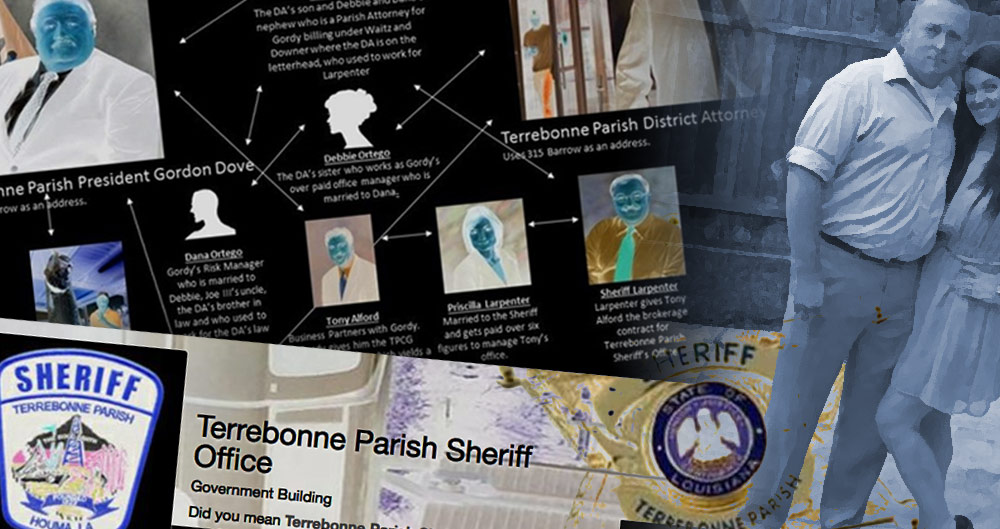
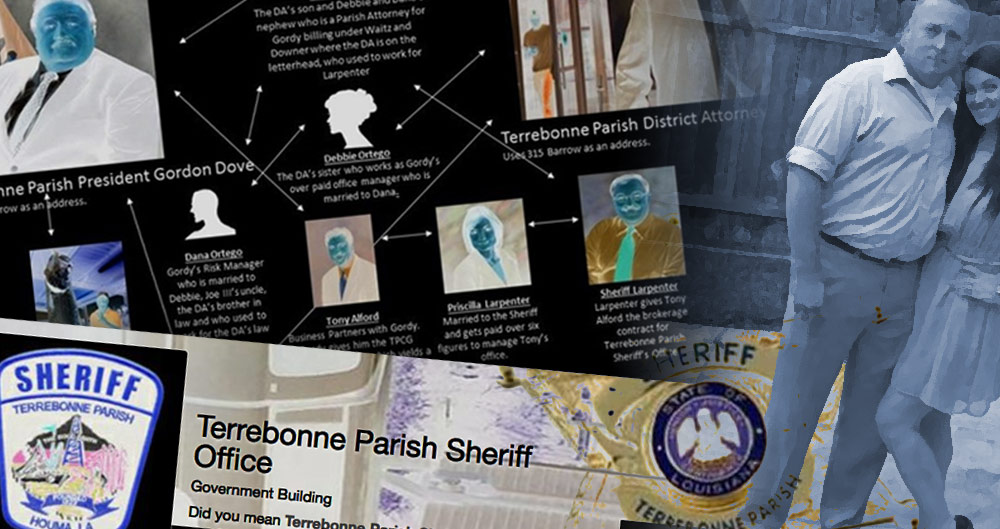
Terrebonne Parish Sheriff Jerry Larpenter’s reaction to criticism was ugly and unconscionable, but it hasn’t been allowed to stand. On the other hand, the sheriff hasn’t been adequately punished, either.

Jennifer Anderson’s pseudonymous blog ExposeDAT criticized various public figures in Terrebonne Parish, Louisiana, including with respect to the business relationships between Larpenter and others. Bridling at the criticism — which had to do with assessment of publicly available facts — the sheriff submitted warrants to Facebook and AT&T to track down the identity of the blogger. Then he sent men to raid the Andersons’ home and grab computers and cell phones.

The Andersons fought back, suing in federal court. They wanted the raid and seizure and search of their private stuff to be declared unconstitutional.

Finally, this September, the Andersons reached an undisclosed settlement with Larpenter out of court. According to its terms, the Andersons aren’t allowed to discuss it any detail. But their attorney says the settlement is “a victory for citizens’ right to be critical of their elected officials without fear of retribution.” U.S. District Court Judge Lance Africk has said that “Jennifer Anderson’s speech [in her blog] falls squarely within the four corners of the First Amendment.”

All that’s fine, but why hasn’t this sheriff also at least been kicked out of his job for his blatant abuse of power?

This is Common Sense. I’m Paul Jacob.


PDF for printing


Categories
Accountability general freedom national politics & policies responsibility too much government

It Didn’t Last

“September 11 is one of our worst days but it brought out the best in us,” proclaimed Tennessee Senator Lamar Alexander.

Today is the 16th anniversary of that terrible day . . . arriving as Hurricane Irma smashes into Florida and with fresh memories of so many acts of kindness and heroism by first responders and minuteman citizen volunteers alike rescuing folks from the recent flooding in Houston caused by Hurricane Harvey.

“These acts of mass murder were intended to frighten our nation into chaos and retreat,” then-President George W. Bush told the American people that frightful evening. “But they have failed. Our country is strong. A great people has been moved to defend a great nation.”

He was correct about the people of this country. All kinds of folks stepped up in a myriad of ways to help.

But what about the government?

Well, the “public’s trust in government,” according to Pew Research, “which was mired in the 30% range through much of the past decade, doubled in the wake of the attacks.”

That uptick wasn’t to last. Public disgust with the federal government reverted to form. By 2015, reports Pew, “Only 19% of Americans today say they can trust the government in Washington to do what is right ‘just about always’ (3%) or ‘most of the time’ (16%).”

What happened?

Well, have you met the Washington politicians?

And can our country really be “strong,” as Mr. Bush declared, if government cannot earn the trust of even one of every five Americans?

This is Common Sense. I’m Paul Jacob.


PDF for printing


Categories
Accountability general freedom government transparency media and media people nannyism national politics & policies responsibility too much government

Ad Budget Slashed

Republican politicians, who had been running since 2010 on killing ObamaCare, did not. Not when they had a chance. Despite dominating Congress, they failed, because

  1. they opted for a goofy way to do it (the House’s AHCA plan being a terrible mess, probably worse than the monster it was trying to replace) and
  2. partly because the libertarians — along with a few “liberal” Republicans — blocked it in the Senate.

But that’s the olds; here’s the news: the Trump Administration has cut back ObamaCare’s advertising budget.

Progress?

I’m not sure. Maybe. Probably not.

The facts: ObamaCare outreach has been cut by 90 percent, and outsourcing grants to groups engaging in sign-up efforts have been cut by 40 percent:

The Trump administration downplayed the impact of boosted ad spending, noting that during 2017 open enrollment there was a decline of 5 percent in overall sign-ups. It also saw a 42 percent decline in first-time enrollment and enrollment of people who pay their premiums decline by 500,000 people.

So, it seems natural to respond to a perceived decline in “demand” with a reduction in “supply” — or any attempt to drum up more “customers” for subsidized policies.

Also natural is the partisan fall-out, with Democrats crying “foul” over the decided lack of support for their program. As Peter Suderman noted over at Reason, ObamaCare became partisan because it started out partisan.

But it was always — from conception in the Heritage Foundation braintrust* to its current choking gasps — an unworkable monstrosity.

And folks of all parties — and none — should be able to understand that.

This is Common Sense. I’m Paul Jacob.


* Note: the Heritage folks not unreasonably distance themselves from their past association with some of ObamaCare’s core notions, and others are skeptical of the distancing.


PDF for printing


Categories
Accountability general freedom initiative, referendum, and recall local leaders political challengers Regulating Protest too much government

Know Your BS

“Help me get my B.S. in the voters pamphlet,” read the subject-line of Tim Eyman’s email

Eyman is a practitioner of the art of the voter initiative, foremost in his state, Washington, and one of the most effective nationwide.*

This particular call to action concerns the voter pamphlet statements about a tax increase placed on Washington State’s November ballot by the mayor and city council in Tim’s hometown of Mukilteo.

“In the pro statement,” Eyman explained, “they wrote that the need for the tax increase was ‘indisputable.’” Which his rebuttal countered with: “Politicians always say the need for higher taxes is ‘indisputable.’ We call B.S. on that.”

It is rather to the point.

But soon he received word from the city that, “The Auditor feels the language is inappropriate and would like you to choose different wording.” Rather than “We call B.S. on that,” it was suggested that he might use: “We call foul.”

Eyman objected. He pointed out that B.S. is used ubiquitously; he sent the city examples.

“I called the ACLU,” his email noted, and “they thought it was B.S. for the government to say you can’t say B.S.”

Eyman’s own attorney, Stephen Pidgeon, sent the city a detailed letter pointing out that this is exactly the speech protected under the First Amendment.**

The City of Mukilteo has yet to announce a final decision. Tim Eyman invites all of us to send an email to encourage the city to Let Eyman Keep his B.S. in the Voters Pamphlet.

This is Common Sense. I’m Paul Jacob.


* He was once even dubbed “America’s No. 1 freedom fighter” — by me.

** Pidgeon also offered, “While the pious may construe the inference of these two alphabetic avatars as meaning something crude, my client may very well have been referencing an ancient Latin phrase ‘Bubulum Stercus’ which no average voter would ever find inappropriate.”


PDF for printing


Categories
Accountability folly free trade & free markets general freedom ideological culture media and media people nannyism national politics & policies too much government

Political Regroupings

What’s true for hurricanes is true for the Democratic Party.

After a disaster, it takes a while to regroup, really get a handle on what went wrong. Men and women take some time to absorb new realities.

A few interesting think pieces have come out of the left and center-left, recently, trying to digest what is wrong with the Democrats that they lost so much ground last year — even to someone like Donald Trump. To serious people, the “Russians did it” and “the Deplorables!” are not exactly winners.

Hillary Clinton may be stuck in that mode, but the Democratic Party needn’t be.

The more radical response came from John B. Judis, whose name was big in lefty magazines when I was young. His article “The Socialism America Needs Now,” in his old stomping grounds, The New Republic, tried to make the case for a vague leftism that could be called socialism, if you stretch the term, emphasizing bigger government without seeming too . . . Marxist.

Meanwhile, Mark Lilla has a new book of a somewhat more perceptive nature. Interviewed in Salon, Lilla makes much of the fact that while “smack in the middle” of the GOP’s website “is a list of 11 principles” . . . the Democratic Party could sport “no such statement.” Just a bunch of interest groups.

Interesting. Because, today, I went to GOP.com and saw no such principles list. But I did find a lot of Trump stuff . . . and a bunch of links to “identity groups.”

Talk about regrouping!

This is Common Sense. I’m Paul Jacob.


PDF for printing


Categories
Accountability crime and punishment First Amendment rights general freedom media and media people moral hazard nannyism national politics & policies property rights responsibility too much government

Google: Disagreement

Once upon a time, Google penned a stern note to self: “Don’t be evil.”

What you regard as avoiding evil, though, depends on what you regard as doing good.

Does Google think it’s “good” to fire someone for offering reasoned objections to vapid pieties about why there are more men than women working as programmers, and about how to fix the problem? Assuming it is a problem.

If the answer is yes, then it’s up to more reasonable people to say, “No, Google, stomping on candid internal discussion of your (bad) politics and policies is not ‘doing good.’”

Alas, some Google critics push for a “remedy” worse than the problem: government force. They want government to impose new prohibitions and mandates on large private firms that help people to spread their opinions.

I don’t necessarily agree when a firm — Google, Twitter, PayPal or anybody else — stops providing services to persons expressing views that managers and HR departments disdain. Yet I may agree. No one is morally obligated — and no one should be legally compelled — to help spread the views of others.

I certainly refuse to distribute any installment of “Common Sense” guest-authored by The Anti-Paul-Jacob Club.

When market actors make bad decisions without violating anyone’s rights, others have many powerful and peaceful means of opposing those decisions. Criticism. Boycott. Competition.

But we shouldn’t seek to outlaw the decision-making.

The right to freedom includes no guarantee that one will always do the right thing as others see it.

This is Common Sense. I’m Paul Jacob.


PDF for printing


Categories
Common Sense ideological culture media and media people national politics & policies too much government

The Underground Amphibian

A new species of frog has been discovered, and I’m just happy it has nothing to do with online japes and jibes about Trump, social justice, or an ancient Egyptian deity. But before you can say “Praise Kek,” please note:

Sometimes a frog is just a frog.

But this frog is special, living most of its life underground. It is purple. And though this is not stressed in the reports, it’s markedly gelatinous.

In an article entitled “New Purple Pig-Nose Frog Found in Remote Mountains,” Jason Bittel explains that the frog comes above ground only when it rains — which in the Western Ghats mountain range in India is during monsoon season.

Named after the discovers’ late colleague, Dr. Subramaniam Bhupathy, it is dubbed Bhupathy’s purple frog (Nasikabatrachus bhupathi). I have to tip my hat to them, so to speak, for the herpetologist’s first name seems more fitting for a submerged-in-earth amphibian: “Subramaniam purple frog” would almost qualify as a pun. And, as readers of these Common Sense squibs will confirm, I am not always so valiant in resisting the art of the pun.

But you don’t read these commentaries for science news.

So, a moral.

Around the world, amphibians are disturbingly under threat. As Alex Jones hyperbolizes, “they’re turning the frogs gay!” But be that as it may (or, more likely, may not), even under greater threat is political common sense.

Let’s hope it, too, will emerge with the coming monsoon.

In India? Your neighborhood? Kekistan?

Probably not in Washington, D.C. But it’s Friday, we can at least hope.

This is Common Sense. I’m Paul Jacob.


Printable PDF