A wonderful thing about true laughter is that it just destroys any kind of system of dividing people.
John Cleese, from an interview with The A. V. Club (2008).
Categories
John Cleese
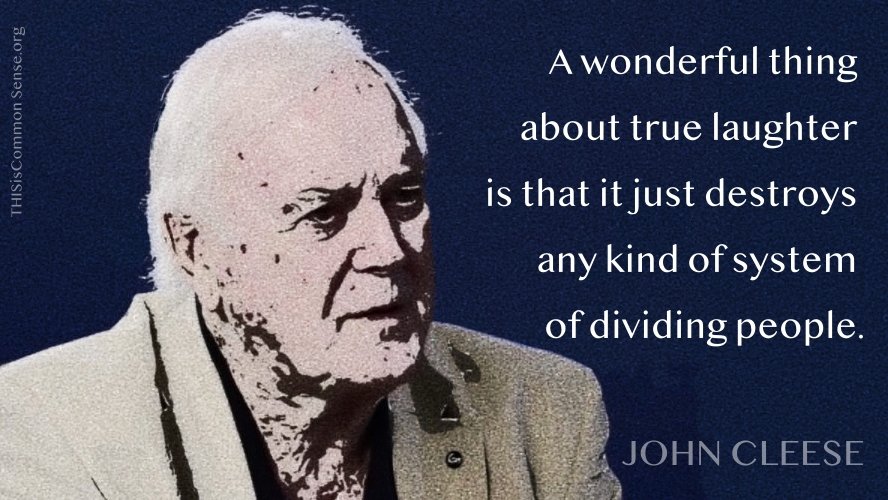
A wonderful thing about true laughter is that it just destroys any kind of system of dividing people.
John Cleese, from an interview with The A. V. Club (2008).

On May 2, 1989, the Hungarian government began dismantling its border fence with Austria, allowing a number of East Germans to defect.
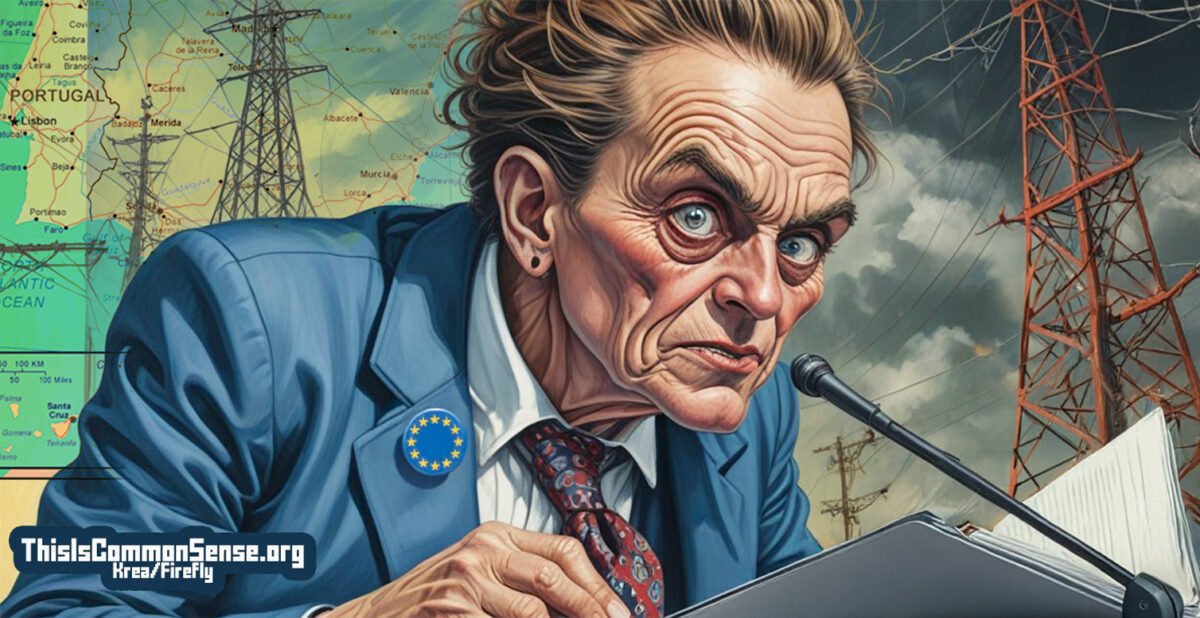
Not, I think, to make the power grids more reliable.
The power companies say they don’t know why almost all the power went out recently in Spain and Portugal and in other parts of Europe.
No indication so far of cyberattack or other sabotage.
Red Electrica, Spain’s state-run electricity network, points to a “very strong oscillation” in the network causing the Spanish system to disconnect from the European system. Portugal’s grid operator says that the oscillations had to do with extreme temperature variations.
Spain’s electrical network now relies almost entirely on “renewable” sources of energy, “green” energy, anything but fossil fuels. (Actually, no energy is renewable; in usable form it’s gone the instant you use it. And it all comes from nature, including gas and oil.)
On April 16, Red Electra, eager to “curb the climate crisis” (weather), reported meeting all electrical demand using “renewable” sources of energy, mostly solar (60 percent).
Some have pointed out that solar and wind power don’t provide the inertia generated by the massive turbines of “traditional generators, like coal and hydroelectric plants or gas turbines.” And so the power grid becomes much more vulnerable to disruptions and oscillations, no matter the cause.
My theory is that the more ways you hobble yourself, the more likely you are to become hobbled.
This is Common Sense. I’m Paul Jacob.
Illustration created with Krea and Firefly
See all recent commentary
(simplified and organized)
See recent popular posts
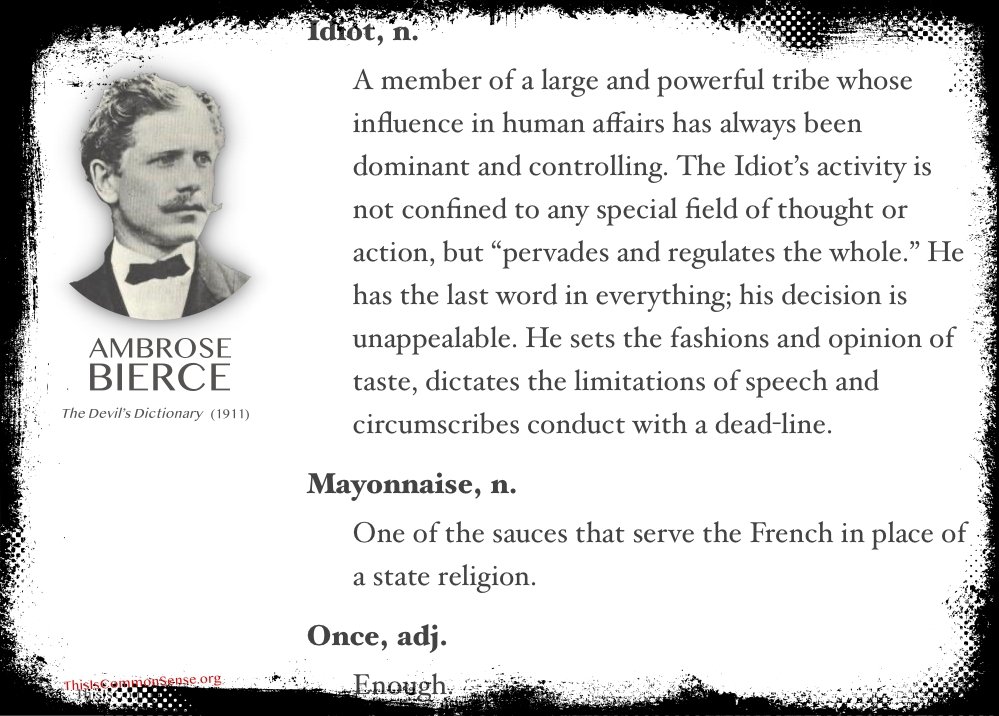
Ambrose Bierce, The Devil’s Dictionary (1911).

The Manifesto of the Anti-Fascist Intellectuals, written by philosopher Benedetto Croce in response to the Manifesto of the Fascist Intellectuals by Giovanni Gentile, declared the unreconcilable split between the philosopher and the Fascist government of Benito Mussolini, to which he had previously given a vote of confidence on October 31, 1922.
The manifesto was published by Il Mondo on May 1, 1925, which was Workers’ Day, symbolically responding to the publication of the Fascist manifesto on the Natale di Roma, the founding of Rome (traditionally celebrated on April 21). The Fascist press claimed that Croce’s manifesto was “more authoritarian” than its Fascist counterpart — a typical leftist dismissal of what used to be called “liberalism.”
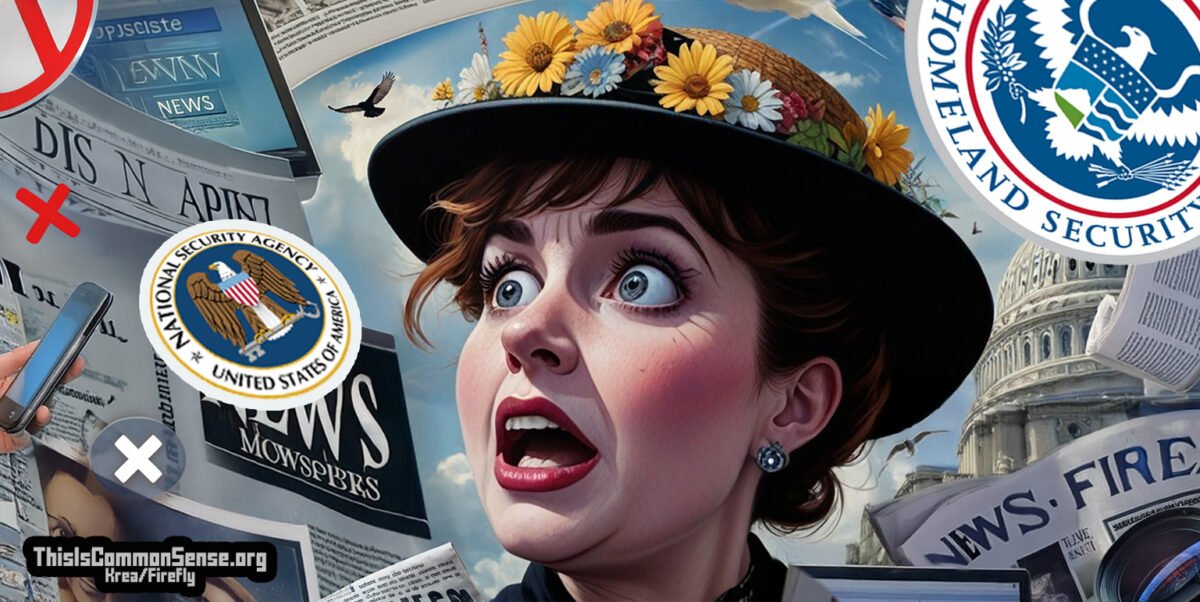
During the Biden administration, Jankowicz, scourge of “disinformation,” lost her perch as head of an incipient Disinformation Governance Board.
People learned that the Board existed; were aghast; got it closed.
If only government censorship were always so easy to kill.
Now this nag, with no prospect of getting a job muzzling people she disagrees with from the Trump administration, is making a nuisance of herself internationally.
She’s preaching to the European Union, which Jonathan Turley calls “the global hub for censorship efforts,”warning that the Trump administration wants “to force EU institutions to roll back regulation like the DSA [Digital Services Act],” which seeks to impose a regime of online censorship.
We want the right to say false things if we’re not trying to defraud anyone. Why? For several reasons, but we often inadvertently say untruths.
We also want the right to say true things.
When people disagree with each other, both can’t be 100 percent right, but they can both be trying to find the truth. And discourse is often crucial to finding it. Truth doesn’t arrive readymade in the form of secure and impenetrable revelation.
Neglecting all this, censors like Jankowicz and the EU’s mandarins prefer to enforce current government viewpoints and punish contradictions of them that exceed a certain threshold of annoyingness.
They seem unaware of the great fact that even governments (!) can be mistaken.
By the way, if you haven’t listened to Jankowicz warble her censorship rap to the tune of “Supercalifragilisticexpialidocious,” you really should do so in expiation of whatever sins you may have committed in this life.
This is Common Sense. I’m Paul Jacob.
Illustration created with Krea and Firefly
See all recent commentary
(simplified and organized)
See recent popular posts
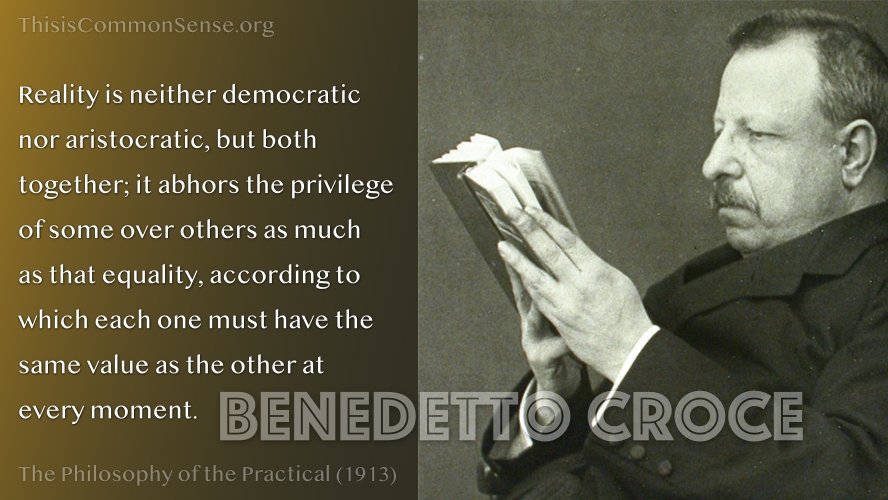
We must be severe, not only with ourselves, but with others also; exigent, not only with ourselves, but with others also; and so, on the contrary, benevolent not only towards others, but also toward ourselves; compassionate, not only toward others, but also towards this instrument of labour that we carry about with us and of which we sometimes demand too much; that is, our empirical individuality. Reality is neither democratic nor aristocratic, but both together; it abhors the privilege of some over others as much as that equality, according to which each one must have the same value as the other at every moment.
Benedetto Croce, The Philosophy of the Practical: Economic and Ethic, trans. Douglas Ainslie (1913, 1967), p. 429.
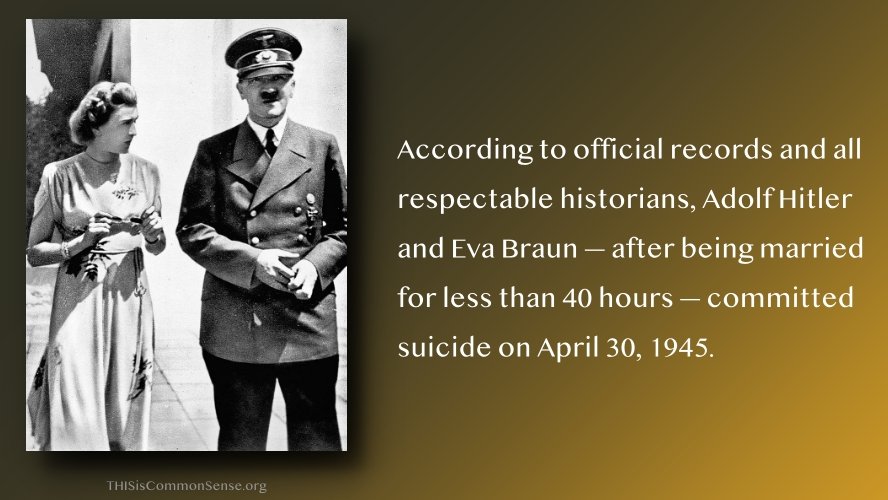
According to official records and all the respectable historians, Adolf Hitler and Eva Braun — after being married for less than 40 hours — committed suicide on April 30, 1945. Nevertheless, rumors about Hitler’s survival in South America, until the 1960s, continue.
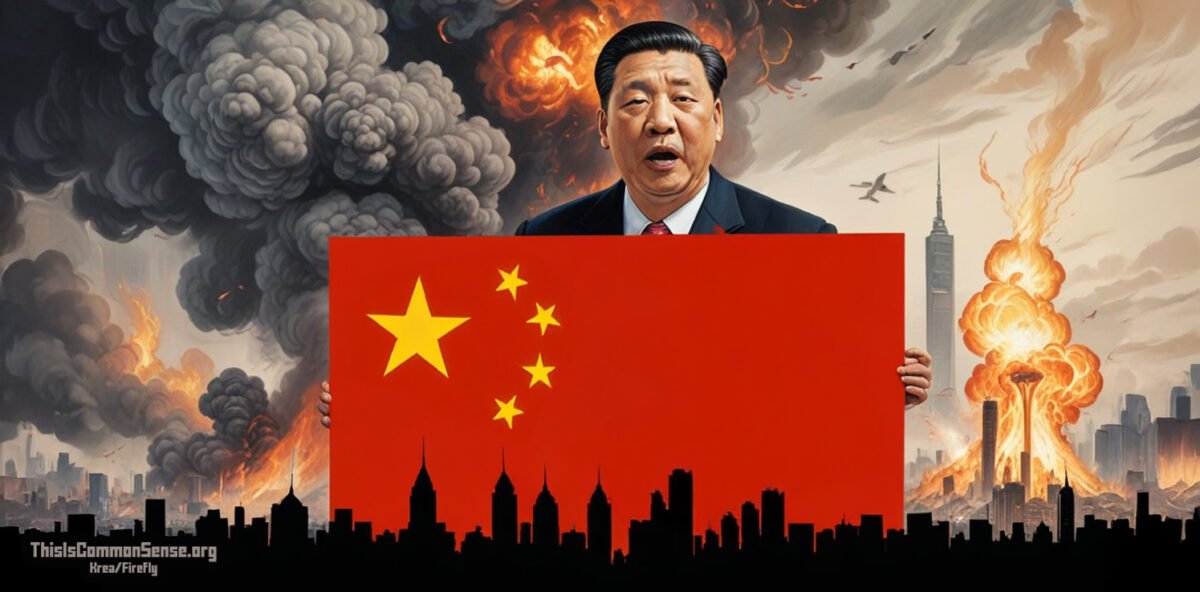
Ironic, considering that official U.S. policy is dubbed “strategic ambiguity,” meaning we don’t say one way or the other about our defensive intentions for helping the island nation against a regularly threatened and rehearsed-for Chinese invasion or naval blockade.
Four separate times during his term, however, former President Joe Biden publicly pledged American military help to counter a People’s Republic of China assault on Taiwan. As for the Trump 2.0 Pentagon, weeks ago it leaked (or suffered a leak of) a global defense strategy memo that said preventing a PRC takeover of Taiwan was the “sole pacing scenario” engaging our armed forces.
Surprising unanimity for the two parties in Washington. But has anyone asked what the American people think?
Well, Humanity for Freedom Foundation conducted a poll, released yesterday.*
Informed that “China claims Taiwan as its own territory,” 82 percent of respondents agreed that “Taiwan is an independent country.” Only 3 percent felt “Taiwan is part of China.”
A 58 percent majority favored full U.S. diplomatic recognition for Taiwan. When it comes to American military defense, a plurality of 39 percent wanted to continue the status quo of not saying (“strategic ambiguity”), while 32 percent of Americans preferred their government make a clear commitment to Taiwan. Only 2 percent supported ending arm sales and adopting a neutral stance.
The above results are thoroughly — and surprisingly — non-partisan, with arch conservatives and far-out progressives finding common ground to defend Asia’s freest society against the world’s most maniacal totalitarian state.
Could the specter of a future dictated by the Chinese Communist Party be bringing the world closer together?
This is Common Sense. I’m Paul Jacob.
* In full disclosure, I’m on HFF’s board of directors. As for the national poll, it had 800 respondents, giving the results a 3.5 percent margin of error with a 95 percent confidence level. Full results are here.
Illustration created with Krea and Firefly
See all recent commentary
(simplified and organized)
See recent popular posts

Cannon, n. An instrument employed in the rectification of national boundaries.
Ambrose Bierce, from The Devil’s Dictionary (1911).
Capital, n. The seat of misgovernment.