Categories
Thought

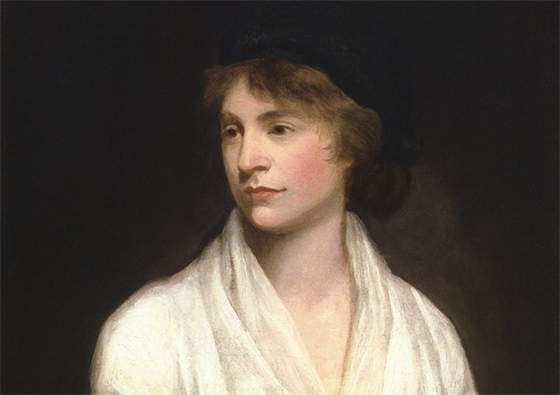
Mary Wollstonecraft

My own sex, I hope, will excuse me, if I treat them like rational creatures, instead of flattering their fascinating graces, and viewing them as if they were in a state of perpetual childhood, unable to stand alone. I earnestly wish to point out in what true dignity and human happiness consists — I wish to persuade women to endeavour to acquire strength, both mind and body, and to convince them that the soft phrases, susceptibility of heart, delicacy of sentiment, and refinement of taste, are almost synonymous with epithets of weakness, and that those beings who are only objects of pity and that kind of love, which has been termed its sister, will soon become objects of contempt.


Mary Wollstonecraft, A Vindication of the Rights of Woman (1792).

Categories
links

Townhall: Bailed. Out?

A serious blow to Obamacare?

Over at Townhall, the prospect of a major U.S. government program self-destroying in front of out eyes.

What will we make of it? Click on over. Then come back here. For a few more assays:

Categories
Today

Congress’s Library

On April 24, 1792, the French national anthem, “La Marseillaise,” was composed by Capt. Claude Joseph Rouget de Lisle.

Eight years later to the day, the United States Congress approved a bill establishing the Library of Congress.

Categories
Thought

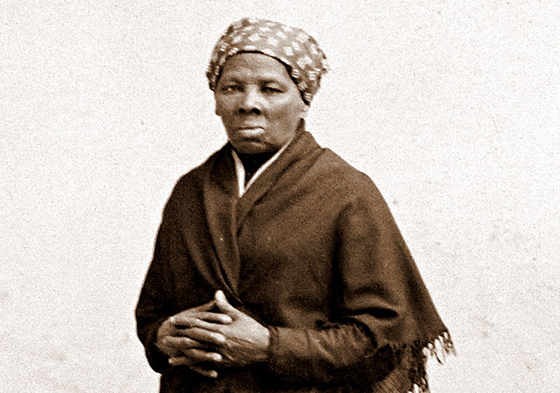
Harriet Tubman

I had crossed de line of which I had so long been dreaming. I was free; but dere was no one to welcome me to de land of freedom, I was a stranger in a strange land, and my home after all was down in de old cabin quarter, wid de ole folks, and my brudders and sisters. But to dis solemn resolution I came; I was free, and dey should be free also; I would make a home for dem in de North, and de Lord helping me, I would bring dem all dere.


Harriet Tubman, as quoted in Sarah H. Bradford, The Moses of Her People (1886).

Categories
video

Video: Repeat the Failures of Somalia?

Not all talks need visual aids or a declamatory style. Here a scholar calmly looks at Somalia and sees repeated failure and cluelessness … on the part of our government, especially.

And now our foreign policy geniuses want to export from Somalia the very same policies that worked so poorly there!

CAUTION: The speaker here appeals to the facts and to reason. There is none of that excitement of the denunciatory spirit, so common on YouTube. No cheap thrills. This is for reasonable people.

Categories
Today

A Student Protest

On April 23, 1968, students at New York City’s Columbia University held a demonstration to protest military research and the condemnation of part of the neighboring Morningside Heights section of Harlem to make way for a new student gymnasium. The protest escalated into a week-long occupation of five campus buildings before police moved in. Some 712 students were arrested, and over 100 injured during the forcible eviction. After the university-ordered police response, a student strike shut down the campus for the rest of the semester.

Categories
Today

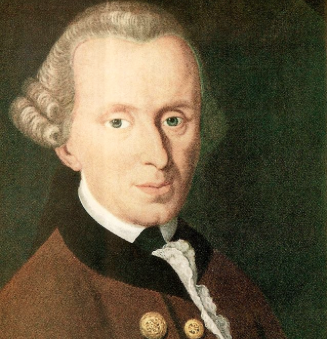
Immanuel Kant

On April 22, 1724, philosopher Immanuel Kant was born.

Aside from being the pre-eminent modern philosopher and originator of transcendental idealism, Kant was also a major figure of Enlightenment thought, a classical liberal, and the originator of the notion of the Categorial Imperative. He was an early and important astronomical theorist in his early career, but produced his greatest works towards the end of his life, including The Critique of Pure Reason and The Groundwork for the Metaphysics of Morals. He was also author of the 1795 essay “Perpetual Peace: A Philosophical Sketch.”

Arthur Schopenhauer is widely known as an admiring and astute critic of Kant’s thought, while philosophical opponents include Friedrich Nietzsche and Ayn Rand. Kant’s approach to ethics continues to excite interest today, with some of the revival a result of the work of John Rawls.

Kant died on February 12, 1804, in Königsberg, Prussia (now Kaliningrad, Russia), where he had lived the bulk of his life.

Categories
Thought

Harriet Tubman

I was the conductor of the Underground Railroad for eight years, and I can say what most conductors can’t say — I never ran my train off the track and I never lost a passenger.


Harriet Tubman, as quoted in Mary Biggs, Women’s Words: The Columbia Book of Quotations by Women (1996), p. 2.

Categories
Thought

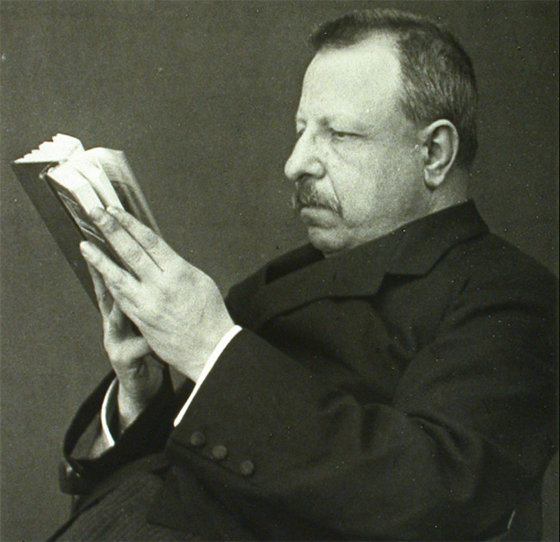
Benedetto Croce

Morality, and the ideal of freedom which is the political expression of morality, are not the property of a given party or group, but a value that is fundamentally and universally human. . . . No people will be truly free till all are free.

Benedetto Croce was an Italian philosopher and outspoken anti-fascist.
Categories
Today

F-Word Defined

The Manifesto of Fascist Intellectuals was first published in Il Mondo, then by most Italian newspapers on April 21, 1925 — the national, anniversary-day celebration of the Founding of Rome (ca.  April 21, 753 BC).

Nowadays, all sorts of people call their political opponents “fascist,” often on the shakiest of rationales. It might be a good idea to look up this original document, for a good idea what politics’ “f-word” originally meant. Here is an excerpt:

Fascism was . . . a political and moral movement at its origins. It understood and championed politics as a training ground for self-denial and self-sacrifice in the name of an idea, one which would provide the individual with his reason for being, his freedom, and all his rights. The idea in question is that of the fatherland. It is an ideal that is a continuous and inexhaustible process of historical actualization. It represents a distinct and singular embodiment of a civilization’s traditions which, far from withering as a dead memory of the past, assumes the form of a personality focussed on the end towards which it strives. The fatherland is, thus, a mission.

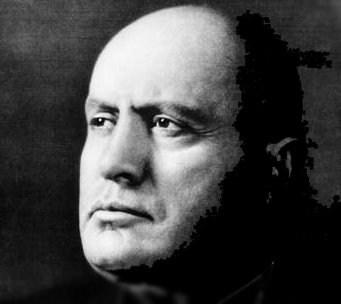
The manifesto was written by Giovanni Gentile, in support of the regime of Benito Mussolini (pictured above).