Categories
Thought

Destutt de Tracy

“Whenever I make an exchange freely, and without constraint, it is because I desire the thing I receive more than that I give; and, on the contrary, he with whom I bargain desires what I offer more than that which he renders me.”


Antoine Louis Claude Destutt, comte de Tracy, A Treatise on Political Economy (Georgetown, D.C.: Joseph Mulligan, publisher; W. A. Rind & Co., printer, 1817) Thomas Jefferson, ed. of translation, from the section entitled “The First Part of the Treatise on the Will and Its Effects: Of Our Action,” p. 8.

Categories
Thought

Vilfredo Pareto

“We can group socialists and protectionists under the name of restrictionists, whilst those who want to base the distribution of wealth solely on free competition can be called liberationists…

“Thus restrictionists are divided into two types: socialists, who through the intervention of the state, wish to change the distribution of wealth in favour of the less rich; and the others, who, even if they are sometimes not completely conscious of what they are doing, favour the rich — these are the supporters of commercial protectionism and social organisation of a military type.”


Vilfredo Pareto, “Socialism and Freedom,” 1891.

Categories
Thought

James H. Boren

“Bureaucracy is the epoxy that greases the wheels of progress.”


James H. Boren, in When in Doubt, Mumble: A Bureaucrat’s Handbook (1972).

Categories
Thought

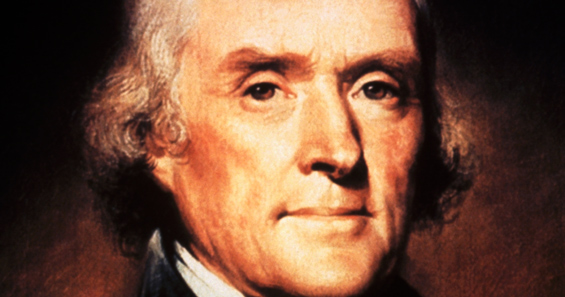
Thomas Jefferson

“The basis of our government being the opinion of the people, the very first object should be to keep that right; and were it left to me to decide whether we should have a government without newspapers, or newspapers without a government, I should not hesitate a moment to prefer the latter. But I should mean that every man should receive those papers and be capable of reading them.”


Thomas Jefferson, Letter to Colonel Edward Carrington (16 January 1787).

Categories
links

Townhall: The Cynics and the Minimum Wage

This weekend at Townhall, a recurring subject, but with a British twist: why support a minimum wage if it doesn’t do the good claimed for it? Maybe the backers don’t uniformly want the good. Could they want the bad?

Which brings up the question of cynicism. We who aim to help the poor, as opposed to those who advocate policy just make themselves feel good, should be immune from the charge of “cynicism.”

Even if we are often very skeptical of the politics and rhetoric surrounding “the minimum wage.”

Click on over, then back here for more reading:

  • Minimum Wage, Maximum Damage, by Jim Cox
  • Reich is Wrong on the Minimum Wage,” by Donald Boudreaux
  • A Simple Question for Minimum Wage Advocates,” by Donald Boudreaux
  • Last week’s Common Sense, “A British Puzzle,” that gave the short version of this weekend’s Townhall lesson.
  • For an overview of the main economic theories of wage-rate determination over the last 300 years, an economicconcepts.com article goes into some detail. It is better than Britannica’s account, for example, in that it does not give any credence to “the bargaining theory,” which, too often, assumes that prices do not really matter, are infinitely malleable by powerful negotiators. That just cannot be true. Prices have consequences. Wage rates do, too. They should reflect real supplies and real demands, so we can adapt ourselves to real human needs and not phantom wishes and hopes and dreams that can come to nothing.
Categories
Thought

Thomas Jefferson

“…he [King George III] has waged cruel war against human nature itself, violating its most sacred rights of life & liberty in the persons of a distant people who never offended him, captivating & carrying them into slavery in another hemisphere, or to incur miserable death in their transportation thither. This piratical warfare, the opprobrium of infidel powers; is the warfare of the Christian king of Great Britain. determined to keep open a market where MEN should be bought & sold he has prostituted his negative for suppressing every legislative attempt to prohibit or to restrain this execrable commerce: and that this assemblage of horrors might want no fact of distinguished die, he is now exciting those very people to rise in arms among us, and to purchase that liberty of which he has deprived them, by murdering the people upon whom he also obtruded them: thus paying off former crimes committed against the liberties of one people, with crimes which he urges them to commit against the lives of another.”


Thomas Jefferson, from the original draft of the Declaration of Independence (July 3, 1776), known as the ‘anti-slavery clause,’ this section was removed from the Declaration at the behest of representatives of South Carolina.

Categories
video

VIdeo: Rand Paul and Federal Bayonets on Local Police Rifles

Fascinating confrontation:

Categories
Thought

Thomas Jefferson

“Our liberty depends on the freedom of the press, and that cannot be limited without being lost.”


Thomas Jefferson, Letter to Dr. James Currie (28 January 1786).

Categories
Thought

Thomas Jefferson

“It is an axiom in my mind, that our liberty can never be safe but in the hands of the people themselves. . . .”


Thomas Jefferson, Letter to George Washington (January 4, 1786).

Categories
Thought

Dietrich Bonhoeffer

“Fanatics think that their single-minded principles qualify them to do battle with the powers of evil; but like a bull they rush at the red cloak instead of the person who is holding it; they exhaust themselves and are beaten. They get entangled in non-essentials and fall into the trap set by cleverer people.”


Dietrich Bonhoeffer, Letters and Papers from Prison (1967; 1997), p. 4.