Categories
Today

George Stigler

On January 17, 1937, Chicago School economist George Stigler was born. Stigler won a Nobel Memorial Prize for his work. His autobiography is entitled Memoirs of an Unregulated Economist.

Categories
Thought

Destutt de Tracy

[W]ith respect to economy . . . [u]nder this relation society consists only in a continual succession of E X C H A N G E S, and exchange is a transaction of such a nature that both contracting parties both gain by it. . . .

We cannot cast our eyes on a civilized country without seeing with astongishment how much this continual succession of small advantages, unperceived but incessantly repeated, adds to the primitive power of man.

It is because this succession of changes, which constitutes society, has three remarkable properties. It produces concurrence of force, increase and preservation of intelligence and division of labour.

The utility of these three effects is continually augmenting.


M. Destutt Tracy, Traité de la volonté, English translation titled A Treatise on Political Economy (Georgetown, D.C.: Joseph Milligan; W. A. Rind & Co. Printers, 1817), pp. xvi-xvii.

Categories
Today

Religious Freedom

On January 16, 1786, Virginia enacted the Statute for Religious Freedom authored by Thomas Jefferson.

Categories
links

Townhall: Term Limits vs. Corruption

Fighting corruption in government is a never-ending task. But it looks like there are certain institutional practices that can help us, year in, year out.

Click on over to Townhall for the latest lesson in this ancient wisdom, pried from newspaper headlines. Then come back here for those headlines:

Categories
Thought

Thomas Jefferson

[T]he horrors of neologism, which startle the purist, have given no alarm to the translator; where brevity, perspicuity, and even euphonium can be promoted by the introduction of a new word, it is an improvement of language. It is thus the English language has been brought to what it is; one half of it having been innovations, made at different times, from the Greek, Latin, French, and other languages — and is it the worse for these? Had the preposterous idea of fixing the language been adopted in the time of our Saxon ancestors, Pierce, Plowman, of Chaucer, of Spencer, the progress of ideas must have stopped with that of the progress of the language. On the contrary, nothing is more evident than that, as we advance in the knowledge of new things, and of new combinations of old ones, we must have new words to express them.


From the Prospectus to the English language translation of
Destutt de Tracy’s A Treatise on Political Economy, authored presumably by former President Thomas Jefferson (Georgetown, D.C.: Joseph Milligan; W. A. Rind & Co. Printers 1817).

Categories
by Paul Jacob video

Liberty Under Trump

Here is a fairly long interview with This Is Common Sense’s Paul Jacob, from a recent radio show:

The first 33 minutes give a pretty coherent picture of the politics of common sense today. If you stop there, no one would think ill of you.

Categories
Thought

Herbert Spencer

The current opinion that science and poetry are opposed is a delusion. . . . Think you that a drop of water, which to the vulgar eye is but a drop of water, loses any thing in the eye of the physicist who knows that its elements are held together by a force which, if suddenly liberated, would produce a flash of lightning? Think you that what is carelessly looked upon by the uninitiated as a mere snow-flake does not suggest higher associations to one who has seen through a microscope the wondrously varied and elegant forms of snow-crystals? Think you that the rounded rock marked with parallel scratches calls up as much poetry in an ignorant mind as in the mind of a geologist, who knows that over this rock a glacier slid a million years ago? The truth is, that those who have never entered upon scientific pursuits know not a tithe of the poetry by which they are surrounded.


Herbert Spencer, “What Knowledge is of Most Worth,” The Westminster Review (July 1859) volume CXL

Categories
Today

Against Slavery

On January 14, 1514, Pope Leo X issued a papal bull against slavery. On the same date in 1639, the first written constitution to create a government, the “Fundamental Orders,” was adopted in Connecticut.

Categories
Common Sense

Thomas E. Woods, Jr.

Nullification begins with the axiomatic point that a federal law that violates the Constitution is no law at all. It is void and of no effect. Nullification simply pushes this uncontroversial point a step further: if a law is unconstitutional and therefore void and of no effect, it is up to the states, the parties to the federal compact, to declare it so and refuse to enforce it. It would be foolish and vain to wait for the federal government or a branch thereof to condemn its own laws. Nullification provides a shield between the people of a state and an unconstitutional law from the federal government.


Thomas E. Woods, Jr., Nullification: How to Resist Federal Tyranny in the 21st Century (Regnery, 2010), p. 3.

Categories
Today

Nullification?

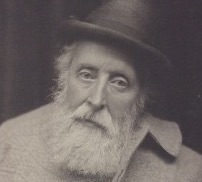
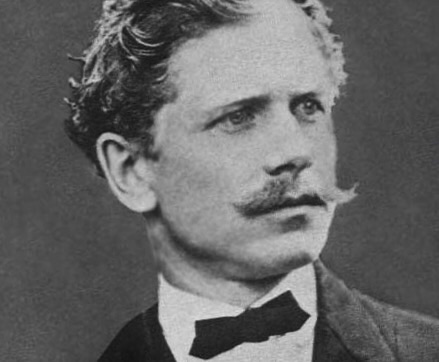
On January 13, 1833, United States President Andrew Jackson (pictured, top left) wrote to Vice President Martin Van Buren (pictured, top right) expressing his opposition to South Carolina’s defiance of federal authority in the Nullification Crisis. Jackson insisted that “the crisis must be now met with firmness” and “the modern doctrine of nullification & succession put down forever.”

South Carolina had blamed protectionist high tariffs for the severity of the economic slump of the time, and Andrew Jackson’s compromise Tariff of 1832 was still too much special-interest “protectionism” for South Carolina, which threatened to nullify the law as unconstitutional. Jackson, a nationalist at heart, had no sympathy for dissidents in the southern states. (The tariffs were designed by northern politicians to encourage the growth of industry. The belief among most economists of that time was that such high “protective” tariffs favored certain businesses at the expense of the general consumer, particularly farmers and agricultural producers.) After the crisis subsided, tariffs were further reduced from the 1832 level, much lower than of 1828’s “Tariff of Abominations,” which had been signed into law by President John Quincy Adams — and written mainly by Martin Van Buren as a way to precipitate the election of Jackson.

Since the somewhat ambiguous end to the Nullification Crisis, the doctrine of state prerogatives — “states’ rights” — has been asserted by opponents of the Fugitive Slave Act of 1850, proponents of California’s Specific Contract Act of 1863 (which nullified the Legal Tender Act of 1862), opponents of Federal acts prohibiting the sale and possession of marijuana in the first decade of the 21st century, and opponents of implementation of laws and regulations pertaining to firearms from the late 1900s up to 2013. State opposition to ObamaCare has also recently conjured up the issue.


On January 13, 1898, Émile Zola’s J’accuse exposed the Dreyfus affair.