Oh, Elizabeth!
Categories
Parodying the Self-Parodic

Oh, Elizabeth!

For all the talk of the evils of the American system of health care, at least we promote freedom of choice, and give as many options to people for their care as they can afford. As the doctor who offered experimental treatment [to Charlie Gard] said, in court, ‘if Charlie had been ill at any institution in the United States, they would have immediately begun the treatment.’ But in the U.K., a socialized medicine country, where individual needs come second to the preservation of the system, there’s less concern with parental rights. In the U.S., we are so interested in the freedom to obtain care that we insist on releasing a legally brain-dead girl to her mother so long as her mother wishes to keep her hooked up to a ventilator. In the U.K., they are insistent on withdrawing the opportunity for life-saving care because it is better to kill the child than keep it alive. While this case became a court proceeding, every single day the National Health Service (the NHS) makes decisions about how to ration care. Bernie Sanders tweets about how nobody should be denied care because they can’t afford it? But that’s what happens all the time under socialized medicine — the difference being, it’s not about you not being able to afford it, it is about the government not being able to afford it.
Ben Shapiro, on The Ben Shapiro Show, June 29, 2017, discussing the case of Charlie Gard, whom the government would not release to his parents to take him to America for an innovative treatment that might have saved his life — for which they had privately raised a small fortune.

On June 30, 1801, Frédéric Bastiat was born. Bastiat became one of the most important French Liberal School economists, following Condilliac and Jean-Baptiste Say, best known for his books Economic Harmonies and Economic Sophisms and two monographs, “The Seen and the Unseen,” and “The Law.” He was a brilliant stylist and perceptive critic of state-managed trade. His influence on conservative, libertarian and “limited-government thought” has been vast.
The emergency number of “999” was introduced in London, June 30, 1937, the first of its kind — arguably the best innovation in better government service in modern times.
Tolerance only extends as far as the Left wants it to extend, which is not to say ‘very far.’
Ben Shapiro, on The Ben Shapiro Show, June 26, 2017, summarizing an LGBT march organizers’ attitudes towards “the Juden,” upon the occasion of their disallowing gay and lesbian Jews from parading with a rainbow flag featuring a Star of David on it.
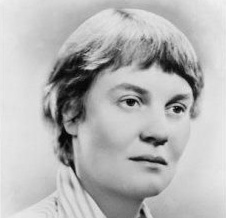
Iris Murdoch, Sartre: Romantic Rationalist (1953), Ch. 9, p. 137.
The role of philosophy might be said to be to extend and deepen the self-awareness of mankind.
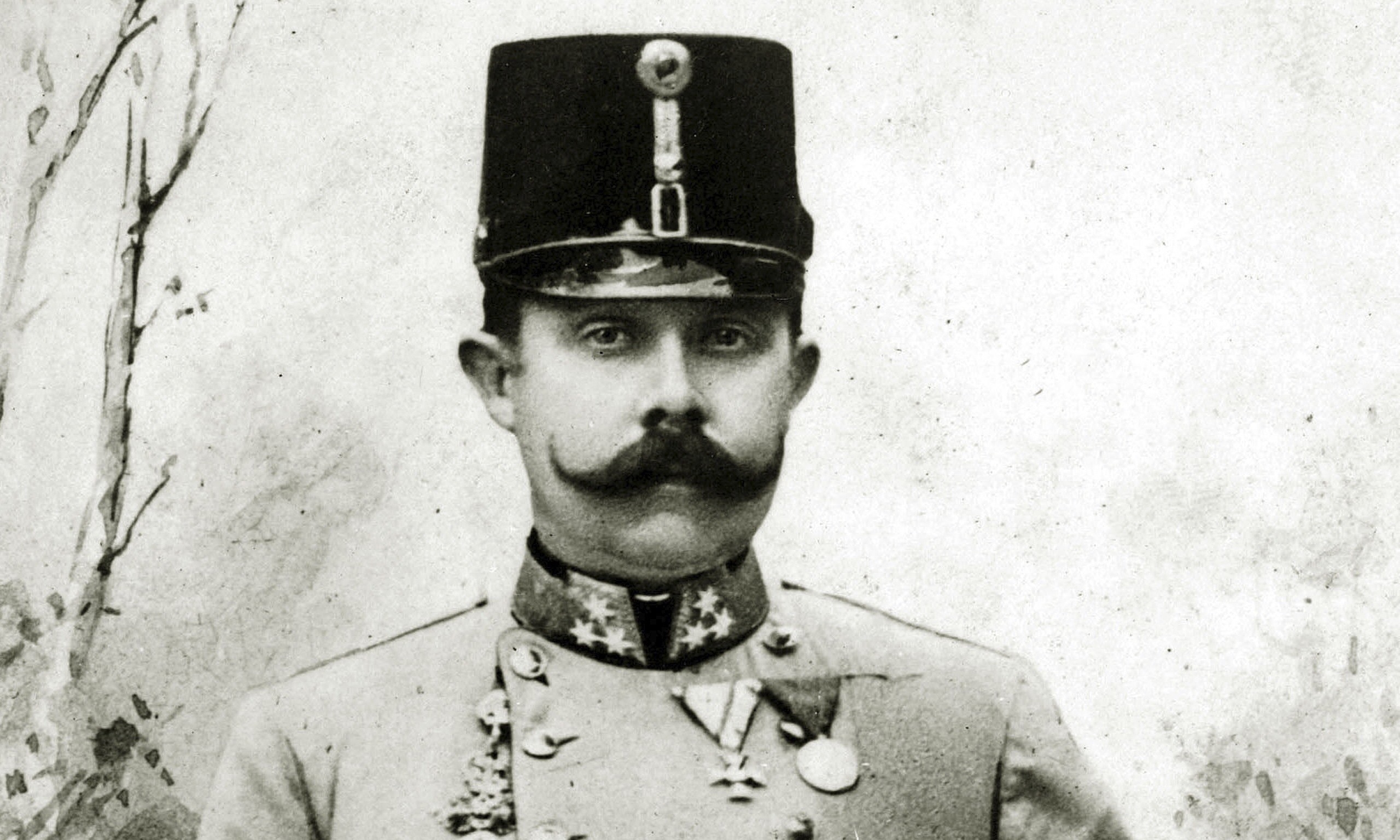
On June 29, 1914, the day after the shooting of the Archduke Ferdinand and his wife, Austrian interrogations confirmed that the Serbian government was behind the assassination. Serbia denied involvement.
Thus continued the series of events that led to “The Great War,” now known as “World War I.”
“Is the majority morally supreme, or are there moral rights and moral laws, independent of both majority and minority, to which, if the world is to be restful and happy, majority and minority must alike bow?”
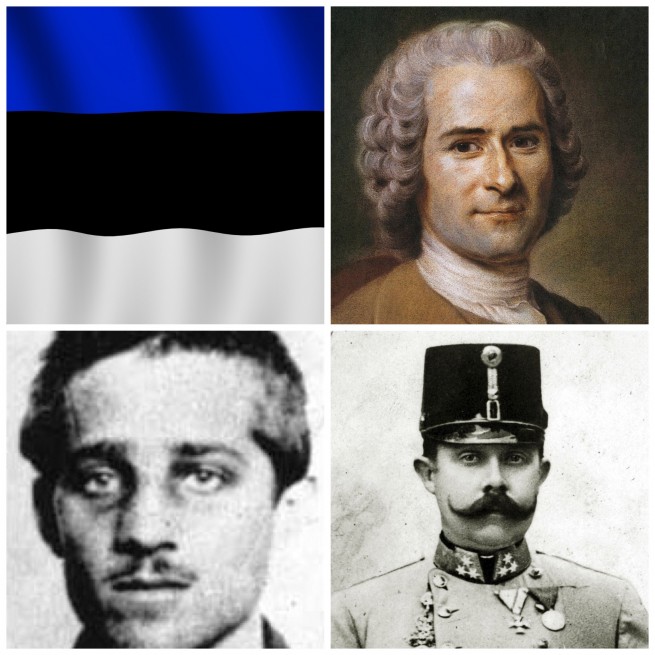
June 28 birthdays include that of Jean-Jacques Rousseau, philosopher, in 1712.
On this date in 1914, 19-year-old Gavril Princip assassinated Archduke Franz Ferdinand, heir to the Austrian throne, and the Archduke’s wife Sophie. The Archduke had earlier missed a bomb thrown at his car, which necessitated a change in the motorcade route, which the driver forgot, which is why the car paused at the precise intersection in which Princip fired his fatal shots.
The shooting began a series of events that led to “The Great War,” now known as “World War I.”
On June 28, 1992, the Constitution of Estonia was signed into law.
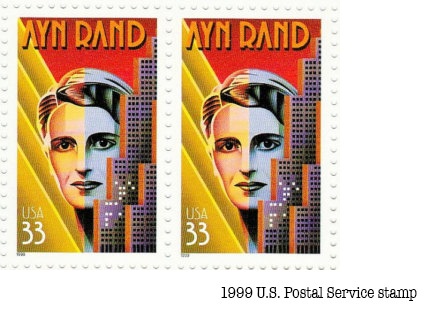
An individualist is a man who says: ‘I’ll not run anyone’s life — nor let anyone run mine. I will not rule nor be ruled. I will not be a master nor a slave. I will not sacrifice myself to anyone — nor sacrifice anyone to myself.
Ayn Rand, Textbook of Americanism
(1946)
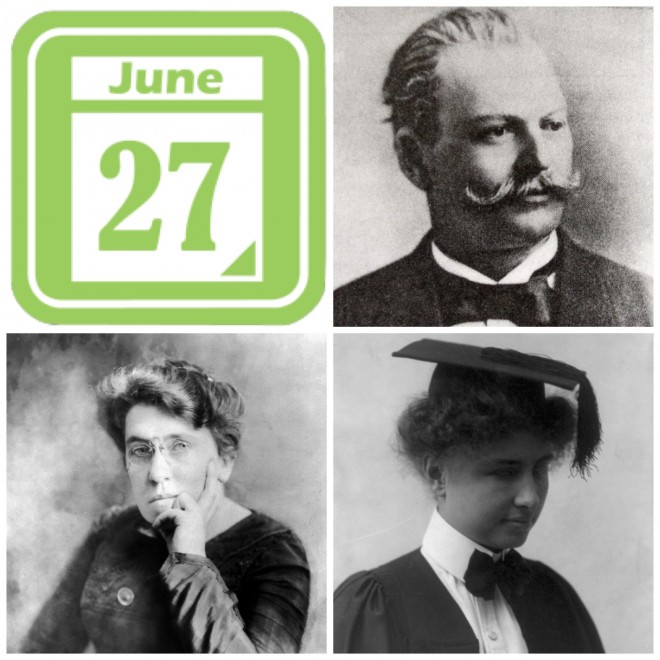
Paul von Mauser was born on June 27, 1838, and would go on to become a weapons designer. In 1869, Emma Goldman was born, to later become known as a feminist, anarchist, and early leftist opponent of Soviet Communism. In 1880, Helen Keller was born on this date.