Categories
Common Sense

Townhall: Taking the Crime Out of Crime

Turnstile-hopping just went legit — or nearly so — in DC Metro. For reasons, we kid you not, of race. Read this weekend’s column for details and perspective. Then come back here for more bizarre details from the nation’s bizarro capital.

This column is an expansion of Friday’s Common Sense.

Image courtesy of Adam , Creative Commons license.

Categories
Today

Mutual Aid & the Areopagitica

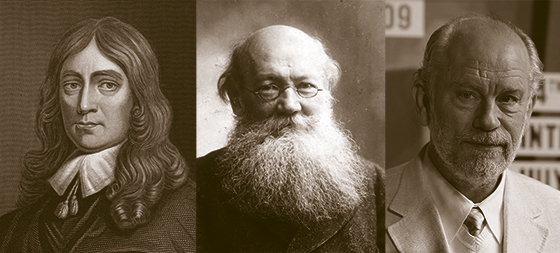
On December 9, 1958, the John Birch Society was founded in the United States. December 9 also marks the birthdays of

  • Poet and anti-censorship advocate John Milton (1608), author of the masterpiece of blank verse narrative, Paradise Lost (1667) and a classic prose defense of free speech and the press, Areopagitica (1644).
  • Russian prince and anarchist theoretician Peter Kropotkin (1842), author of Mutual Aid and other books and pamphlets.
  • John Malkovich (1953), who directed The Dancer Upstairs (2002) and starred in the odd eponymous film Being John Malkovich (1999) . . . and many other movies.
Categories
video

The Government v. Apple — and possible consequences

A tech video that, 4:50 in, discusses an antitrust case against Apple, Inc., and its possible consequences not only for Apple, but also for its customers, and even for (!?!?) Android users.

Categories
Thought

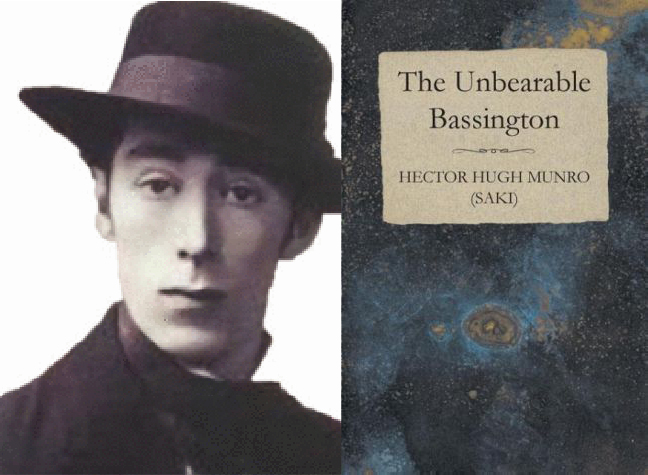
Saki

We all know that Prime Ministers are wedded to the truth, but like other wedded couples they sometimes live apart.


Saki, The Unbearable Bassington, ch. 13 (1912).

Categories
Today

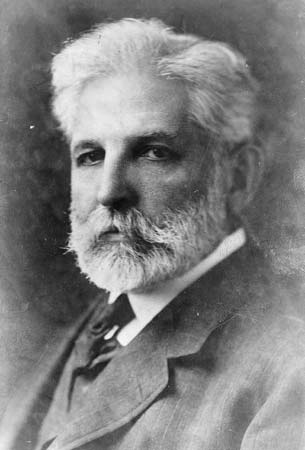
The Brookings

On December 8, 1927, one of the United States’ oldest think tanks was founded through the merger of three organizations that had been created by philanthropist Robert S. Brookings. Called the Brookings Institution, it would provide a blueprint for future work by research and advocacy organizations in the modern era.

On this date in 1974, a plebiscite abolished the monarchy in Greece.

Categories
crime and punishment moral hazard responsibility

Reforming Crime, Not Criminals?

“The D.C. Council gave final approval this week to a measure decriminalizing Metro fare evasion,” The Washington Post reports, “paving the way for fare-jumping to become a civil offense punishable by a $50 fine in the District.”

Talk about stopping crime “in its tracks.” Jumping the turnstile won’t be classified a “crime.” Problem solved.

Nassim Moshiree, policy director for the local ACLU, declared it “a significant victory for criminal justice reform here in the District.”

Jack Evans argued, unsuccessfully, that scofflaws will quickly figure out the “civil citation . . . is largely unenforceable.” He added, “We have a big problem with fare evasion at Metro.”

Non-paying riders cost the bus and subway system in the nation’s capital $25 million annually. The worst bus route “has had 560,000 incidents of fare evasion since January, nearly 37 percent of its 1.5 million trips,” informs the Post.

Metro officials complained “that lessening the penalties would only exacerbate the problem and lead to more crime,” but supporters of the change posited that “decriminalization was an important step toward addressing disproportionate policing of African Americans who use the transit system.”

In recent years, according to a Washington Lawyers’ Committee for Civil Rights and Urban Affairs report, “91 percent of Metro Transit Police citations and summons for fare evasion were issued to African Americans.”

“I’m sad that’s Metro’s losing money,” offered Councilmember Robert White Jr., “but I’m more sad about what’s happening to black people.”*

Penalties can be too severe or too severely applied. And enforcement can be racially biased. But stealing transportation services is a crime. Pretending otherwise is not a victory.

This is Common Sense. I’m Paul Jacob.


* Is “that’s” a typo? Did the councilmember say, “that”? All I know is the quotation as I have it here is exactly as it appears online, in both text and headline, and also as it appeared in the dead-tree edition delivered to my home.

PDF for printing



» See popular posts from Common Sense with Paul Jacob HERE.

 

Categories
Thought

Destutt de Tracy

We can scarcely conceive at first that the great effects . . . have no other cause than the sole reciprocity of services and the multiplicity of exchanges. However this continual succession of exchanges has three very remarkable advantages.
First, the labour of several men united is more productive, than that of the same men acting separately. . . .
Secondly, our knowledge is our most precious acquisition, since it is this that directs the employment of our force, and renders it more fruitful, in proportion to its greater soundness and extent. . . .
Thirdly, and this still merits attention: when several men labour reciprocally for one another every one can devote himself exclusively to the occupation for which is fittest, whether from his natural dispositions or from fortuitous circumstances; and thus he will succeed better. . . .
Concurrence of force, increase and preservation of knowledge, and division of labour, — these are the three great benefits of society. They cause themselves to be felt from the first by men the most rude; but they augment in an incalculable ratio, in proportion as they are perfected, — and every degree of amelioration, in the social order, adds still to the possibility of increasing and better using them.

Antoine Louis Claude Destutt, comte de Tracy, A Treatise on Political Economy (Georgetown, D.C.: Joseph Mulligan, publisher; W. A. Rind & Co., printer, 1817) Thomas Jefferson, ed. of translation, from the section entitled “The First Part of the Treatise on the Will and Its Effects: Of Our Action,” chapter one, “Of Society.”
Categories
Today

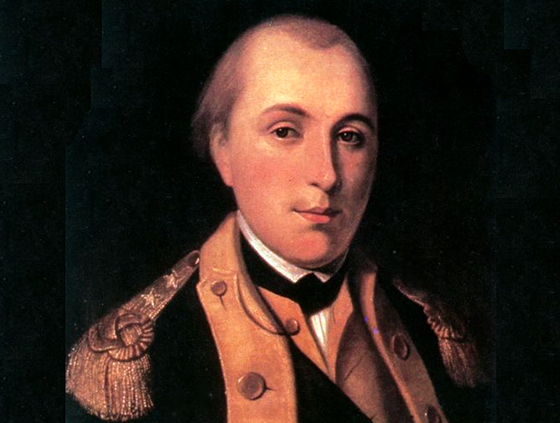
Maj. Gen. Lafayette

On December 7, 1776, the Marquis de Lafayette arranged to enter the American military as a major general. On the same date in 1787, Delaware became the first state to ratify the United States Constitution.

The 1941 date marks, of course, “the day that will live in infamy,” when Japan bombed Pearl Harbor.

Categories
free trade & free markets ideological culture Popular

Creeping Bernie-ism

If you have been watching Tucker Carlson, recently, on Fox or in his bizarre interview with Ben Shapiro, you might have noticed something peculiar: the conservative newsman-commentator sometimes sounds awfully similar to Bernie Sanders.

Both think that if some of Amazon’s and Walmart’s employees are not paid “enough” to live without government assistance, that means the companies are being subsidized by taxpayers. 

Ryan Bourne finds this odd, too, judging it “peculiar” to suggest that, “when setting wages, a company employing low-skilled workers should ignore the value of the tasks the employee actually undertakes for them.”

It’s almost as if these guys haven’t thought it through.

“If Sanders is right that programs such as food stamps modestly subsidize employers who pay low wages,” Bourne argues, “then his hugely expensive Medicare-for-all and free-college-tuition proposals would constitute a massive subsidy to low-wage employers.”

Similarly, when Donald Trump and his allied Republicans push for what we used to call “workfare” requirements, that would mean that the jobs the recipients get also constitute subsidies.

Both Carlson and Sanders apparently assume that companies pay workers according to the needs of the workers determined by subsistence levels — presumably by the old Marxian Iron Law of Wages — and not according to their competitive productivity. That is, what they are worth.

As is common with demagogues, Sanders and Carlson both blame the only companies that are at least paying low-skilled workers something, rather than all those other companies and potential benefactors who aren’t paying them at all.

This is Common Sense. I’m Paul Jacob.


PDF for printing


» See popular posts from Common Sense with Paul Jacob HERE.
 

Categories
Today

Slavery, Finland, Lolita

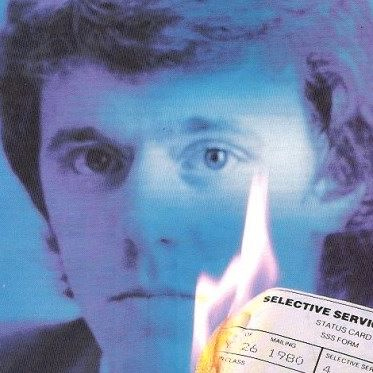
On December 6, 1865, the Thirteenth Amendment to the United States Constitution was ratified, banning slavery in all states and territories. One-hundred-and-nineteen years later, to the day, in 1984, Paul Jacob (of ThisIsCommonSense.com, LibertyiFund.org, and the Citizens in Charge Foundation) was arrested by the FBI for his refusal to register with Selective Service System (the draft people). The Government was probably not attempting to make a commemorative point about involuntary servitude.

In 1917 on this date, Finland declared independence from Russia.

Vladimir Nabokov completed his controversial novel Lolita on the Sixth of December in 1953, and would soon find himself embroiled in censorship and related publishing difficulties, though with no trouble in the United States when it was eventually published by G. P. Putnam’s Sons in 1958.