Categories
Thought

Clausewitz

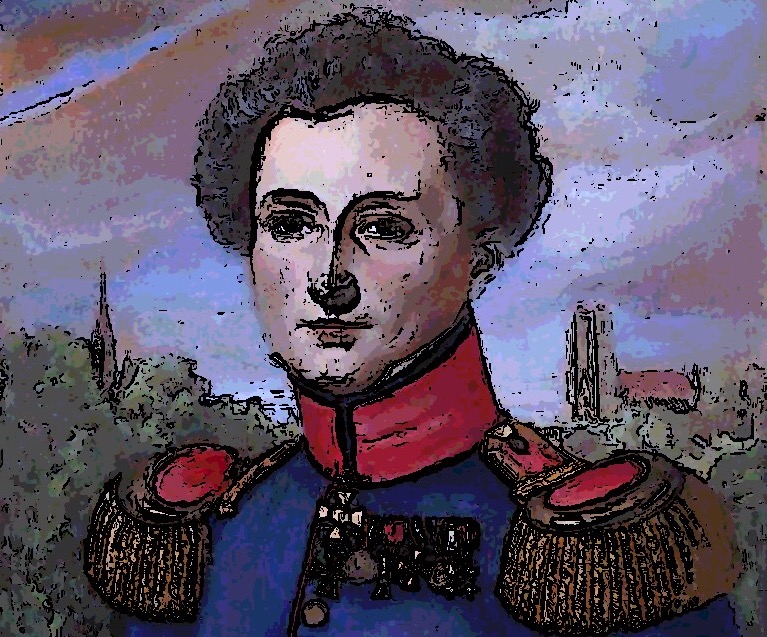
[S]trength of character does not consist solely in having powerful feelings, but in maintaining one’s balance in spite of them. Even with the violence of emotion, judgment and principle must still function like a ship’s compass, which records the slightest variations however rough the sea.


Carl von Clausewitz, On War (1832), Book I, Chapter Three.

Categories
ideological culture tax policy

Class War in France

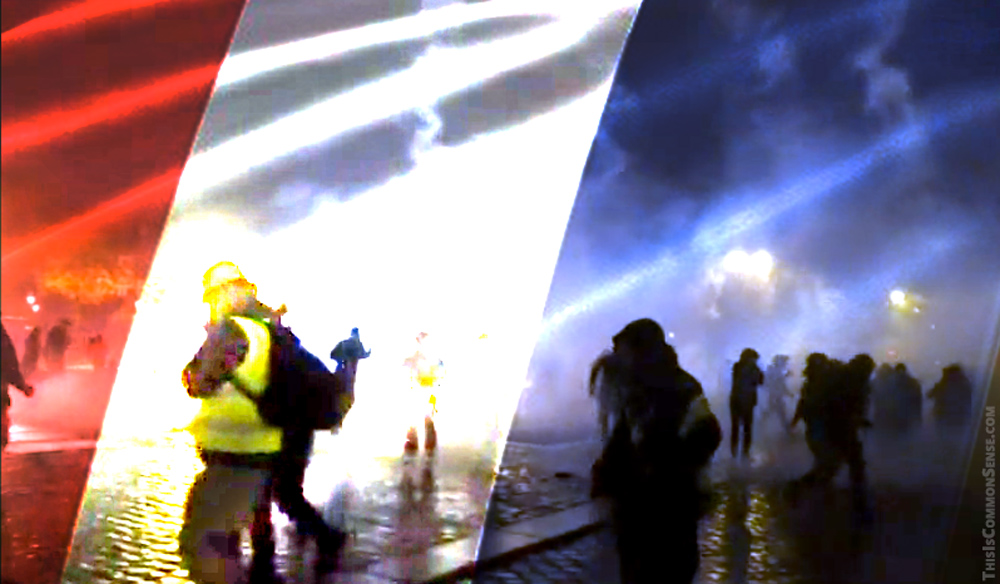
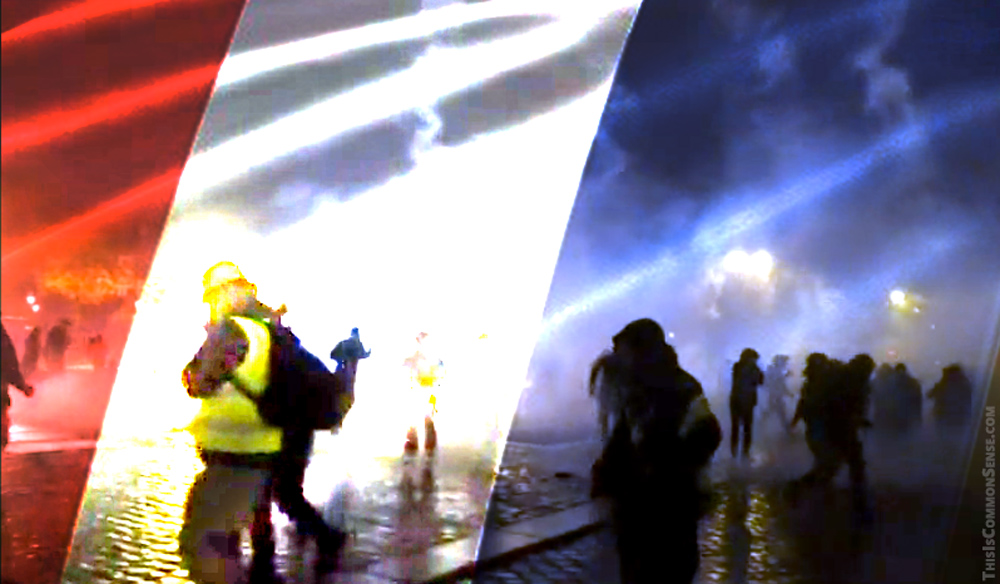
The French have a talent for riot, public protest, and street-based insurrection.* The current mayhem in Paris has been escalating every weekend since starting in mid-November.

Why weekends? This is a working-person revolt.

“Rioters ran amok across central Paris on Saturday, torching cars and buildings, looting shops, smashing windows and clashing with police in the worst unrest in more than a decade, posing a dire challenge to Emmanuel Macron’s presidency,” Yahoo News informs us. “The authorities were caught off guard by the escalation in violence after two weeks of nationwide protests against fuel taxes and living costs…”

Yes, this is a tax revolt.

You see, the taxes are part of a carbon emissions reduction program — the kind of taxes that Democrats are eager to put into place in America. Leftists and environmentalists worldwide should pay special attention.

The gambit, of course, is this: cityfolk tend not to mind such taxes less because they do not take the hit immediately. People outside cities, on the other hand, drive everywhere, often for their jobs. In Paris, well, not so much. The city has even enacted an ordinance to outlaw all but electric automobiles by 2030.

It’s called the “yellow vests [jackets] movement” to symbolize the government’s anti-driver mindset: “all motorists had been required by law — since 2008 — to have high-visibility vests in their vehicles when driving.”

Sure, push around ordinary motorists.

The protest movement has been largely made up of these people, since many businesses and professionals get exemptions from the taxes.

It’s a class war thing. You might think Macron and other elitists in government would understand their own country.

But no.

So, why?

It’s a big government thing.

This is Common Sense. I’m Paul Jacob.


* Maybe that is why the street violence of “refugees” and children of Middle-Eastern and North African migrants have been taken with as much tolerance as it has been: the rioters have seemed so very French.

PDF for printing


» See popular posts from Common Sense with Paul Jacob HERE.
 

Categories
Thought

Saki

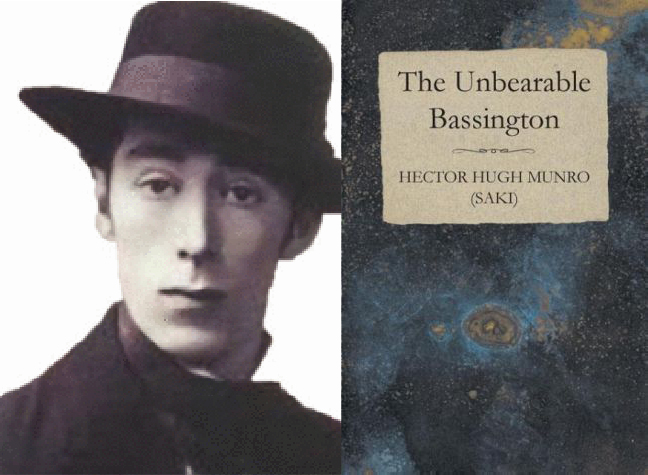
When one’s friends and enemies agree on any particular point they are usually wrong.


Saki, The Unbearable Bassington, first page (1912).

Categories
Today

Prohibition Ends

On December 5, 1933, nationwide alcohol Prohibition in the United States ended after Utah became the 36th U.S. state to ratify the 21st Amendment to the United States Constitution, thus establishing the required 75 percent of states needed to enact the amendment that overturned the 18th.

Categories
free trade & free markets national politics & policies Popular too much government

Christmas Is Coming

When I was a kid, every December day was like a rocket-launch countdown ’til Christmas.

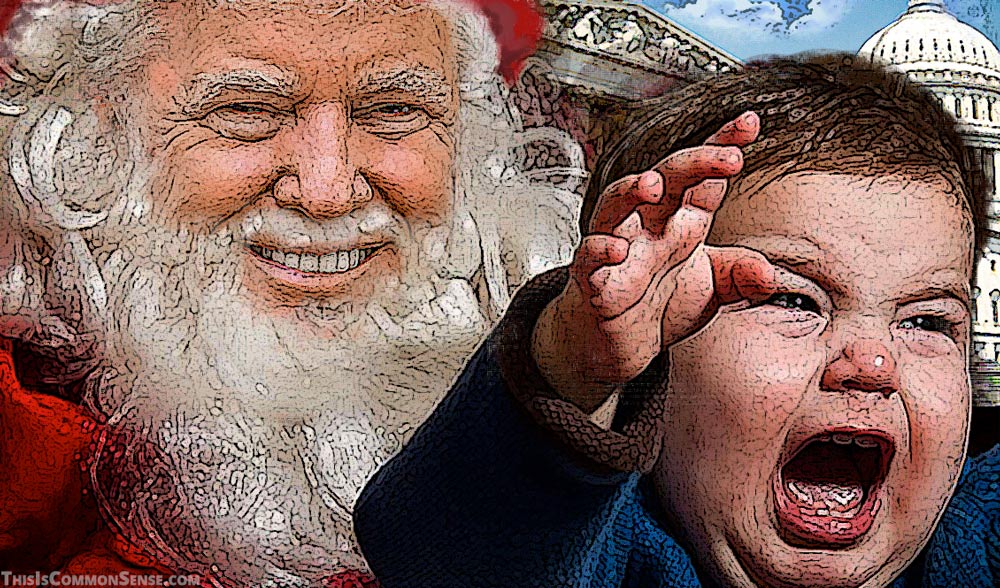
Republicans in the House of Representatives have fewer days to tick off: the days remaining to do something before Democrats take over. Days left in session? Eight.

We know what Trump wants them to do: pass his negotiated replacement for the North American Free Trade Agreement (NAFTA).

Last week, “Trump held a high-profile signing ceremony with Canadian Prime Minister Justin Trudeau and Mexican President Enrique Peña Nieto at the G-20 summit in Argentina,” Eric Boehm writes at Reason. “The leaders of the three countries put their signatures to the final version of the United States–Mexico–Canada Agreement (USMCA), but the deal must still be ratified by each domestic government.”

And some in the Republican House are uneasy, because they “disagree with the Trump administration on trade issues and correctly see the USMCA as moving North America further from free trade.”

Though Donald Trump has given us some reason to think he might have multilateral free trade in mind as his real goal, the current state of the USMCA does not bolster that.

But it could be worse — the Democrats could scuttle the rewrite, just to spite Trump. This would allow Trump to go “nuclear” and withdraw from NAFTA unilaterally without a replacement.

“This would be disastrous for the American economy,” Senator Pat Toomey (R-Pa.) says, “and would kick off a constitutional battle between the branches over trade power.”

That sounds like a lump of coal for Christmas. But I wonder: can a constitutional battle be all bad if it raises awareness of . . . the Constitution?

This is Common Sense. I’m Paul Jacob.


PDF for printing


» See popular posts from Common Sense with Paul Jacob HERE.
Categories
Thought

Jack McDevitt

Most government and corporate leaders would have trouble getting people to follow them out of a burning building. One way you can tell the worst of them is that they talk about leadership a lot. I doubt Winston Churchill ever used the word. Or, for that matter, Attila the Hun.


Jack McDevitt, Odyssey (2006), Chapter 5.

Categories
Today

A Farewell to Arms

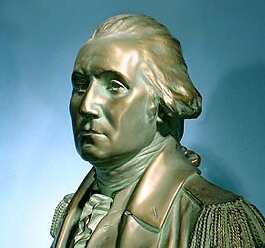
On December 4, 1783, at Fraunces Tavern in New York City, General George Washington formally bade his officers farewell.

Categories
ballot access government transparency Popular

The Rank Reality of Math

U.S. Rep. Bruce Poliquin (R-Maine) doesn’t like Ranked Choice Voting.

Last week, I suggested that’s because he lost his re-election to Congress in his state’s first use of Ranked Choice Voting (RCV). Perhaps I spoke too quickly? Congressman Poliquin argues that RCV is a “black-box voting system.”

“We heard from countless Maine voters who were confused and even frightened their votes did not count due to computer-engineered rank voting,” read a campaign statement.

Who wants frightened voters?

The “voting system utilized by the Secretary of State is secret,” Poliquin’s campaign spokesman further complained. “No one is able to review the software or computer algorithm used by a computer to determine elections. This artificial intelligence is not transparent.”

Computer-engineered elections? Artificial intelligence? Oh, my!

“I think it’s time that we have real ballots, counted by real people,” the congressman told reporters. “. . . instead of this black box that computes who wins and who loses.”

By all means, yes.

Nathan Tefft is a professor at Bates College in Lewiston, Maine, and claims to be “a real person.” With a PhD in economics. He got all the election data and replicated the ranked -choice process used by the Maine Secretary of State in conducting the count, confirming the state’s results.

“The Maine secretary of state’s office has published all the election results on its website — every ballot, every ranking in every town,” the Bangor Daily News informed. “It’s all there in massive data files that can be inspected and downloaded.”

Wait a second . . . what about the black-box, the secrecy, the dreaded use of AI?

All a fable.

“Yeah,” Dr. Tefft noted, “it’s just math.”

This is Common Sense. I’m Paul Jacob.


PDF for printing


» See popular posts from Common Sense with Paul Jacob HERE.
 

Categories
Thought

Mary Wollstonecraft

Society . . . as it becomes more enlightened, should be very careful not to establish bodies of men who must necessarily be made foolish or vicious by the very constitution of their profession.


Mary Wollstonecraft, A Vindication of the Rights of Woman (1792), chapter one.

Categories
Today

Cold War Ends

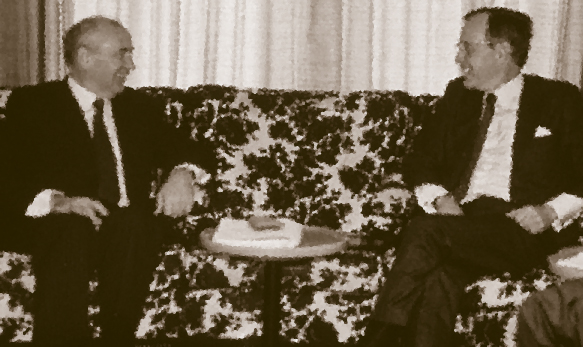
On December 3, 1989, the leaders of the two world superpowers, the United States of America and the Union of Soviet Socialist Republics, declared an end to the Cold War, at a summit in Malta. A little over two years later not only had the Cold War ended, the Soviet Union was itself dissolved.