Categories
links

Townhall: What’s Right About Starbucks?

The controversial coffee house has its merits. How many do you see? Compare with its demerits. Click over to Townhall for hints. Come back for the full menu:

An archive of this column will appear on this site mid-week. Thanks for reading and sharing!

Categories
Today

Monroe Doctrine

On December 2, 1823, U.S. President James Monroe delivered a speech establishing American neutrality in future European conflicts. The policy became known as the Monroe Doctrine.

Though a much-discussed principle of American foreign policy, it was undermined by the Spanish-American War, and proved a dead letter as the U. S. entered World War I.

Categories
video

Untrustworthy Allies?

The mystery of the Mid-East deepens when you realize how duplicitous are U.S. allies. Here is a scholar at Cato making a good case for how unreliable Qatar and the Sauds are.

Categories
Thought

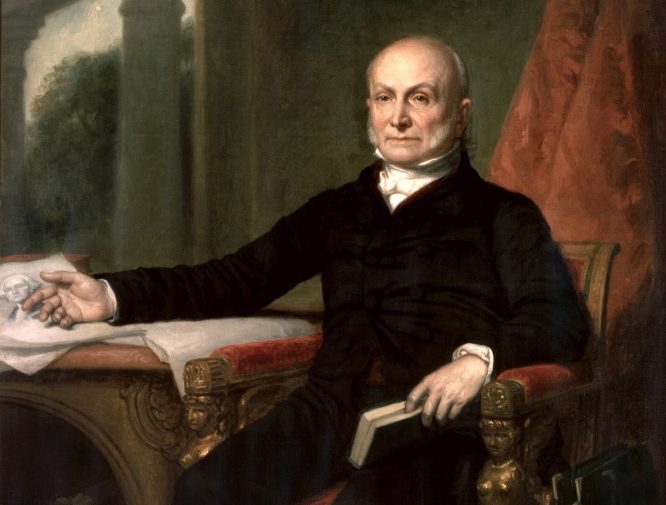
John Quincy Adams

All the public business in Congress now connects itself with intrigues, and there is great danger that the whole government will degenerate into a struggle of cabals.

Categories
Today

The “Stolen Election”

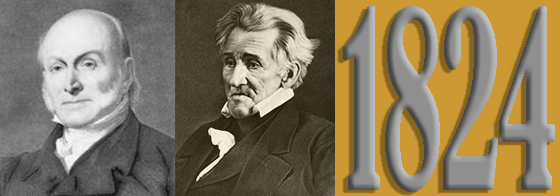
On December 1, 1824, with neither John Quincy Adams nor Andrew Jackson receiving a majority of the total electoral college votes in the election, the United States House of Representatives was given the task of deciding the winner in accordance with the Twelfth Amendment to the United States Constitution.

The House selected Adams. Jackson and his supporters felt deeply aggrieved, and immediately set about preparing for the next election, which Jackson won handily. Jacksonian supporters referred to the election of 1824 as “the Stolen Election,” in no small part because Jackson had received more popular votes.

Categories
free trade & free markets judiciary

The Cheese Stands “Unprotected”

Governments tempt us — with special privileges and advantages. 

You know what also tempts us?

Cheese.

Cheese? Yes. In the Netherlands, cheese is a big deal, as Baylen Linnekin relates in “Cheese Fight Ends With Court Declaring Producers Can’t Copyright Taste,” over at Reason — where I go for all my cheese-related coverage. (Don’t you?)

The tale is about two cheese companies and the European Union’s “Directive 2001/29/EC,” which tries to reconcile copyrights among member states. Specifically, it involves the legal fight between “two Dutch herbed cream cheese spread makers,” as Mr. Linnekin relates, “Heksenkaas (‘witches’ cheese’) and Witte Wievenkaas (‘wise women’s cheese’).” The former sued the latter for infringing on “its copyright on the taste of Heksenkaas.”

The case went from a Dutch court to the European Court of Justice, where the Court (Grand Chamber) ruled against Heksenkaas. There can be no copyright on “taste.”

This is of no great significance, I suppose, but in a world where the government gets involved in everything, it’s worth noticing when the government resists its temptation to tempt us.

The rationale for non-involvement, in this case, was not a move against intellectual property as such, but against the idea of property involved in subjective taste. “The taste of a food product cannot,” the Court determined, “be pinned down with precision and objectivity. . . .”

Well, sure. But what was really going on here was one company not wanting competition from another company. 

A temptation, for sure. But some temptations (like some cheeses?) must be resisted.

This is Common Sense. I’m Paul Jacob.


PDF for printing


» See popular posts from Common Sense with Paul Jacob HERE.


Categories
Today

Chase and Clemens

On November 30, 1804, the United States House of Representatives began impeachment hearings against Supreme Court Justice Samuel Chase. The House thought he was too partisan, too “Federalist.”

The Senate later acquitted Chase.

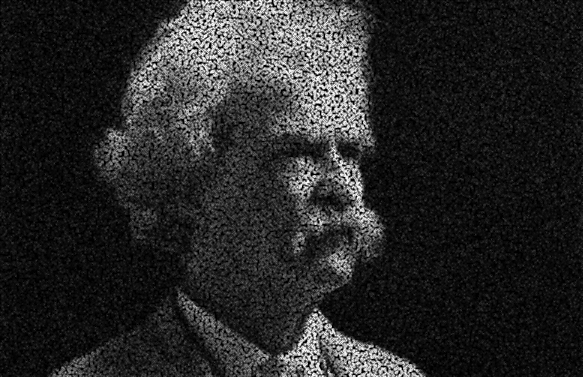
On 1835 on this date, Samuel Clemens was born, later to achieve world fame as author and humorist Mark Twain (pictured above). His most beloved books include The Adventures of Tom Sawyer (1876) and his masterpiece, Adventures of Huckleberry Finn (1885). He died in 1910.

Categories
Thought

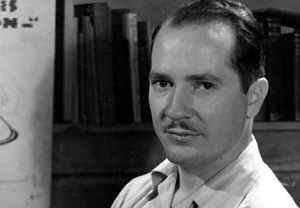
Robert A. Heinlein

Criminals are never materially handicapped by such rules; the only effect is to disarm the peaceful citizen and put him fully at the mercy of the lawless. Such rules look very pretty on paper; in practice they are as foolish and footless as the attempt of the mice to bell the cat. Such is my thesis, that the licensing of weapons is subversive of liberty and self-defeating in its pious purpose.


Robert A. Heinlein, Letter to Alice Dalgliesh, the editor who was censoring his manuscript for Red Planet, regarding firearm registration and control.

Categories
incumbents political challengers

Winning Reform

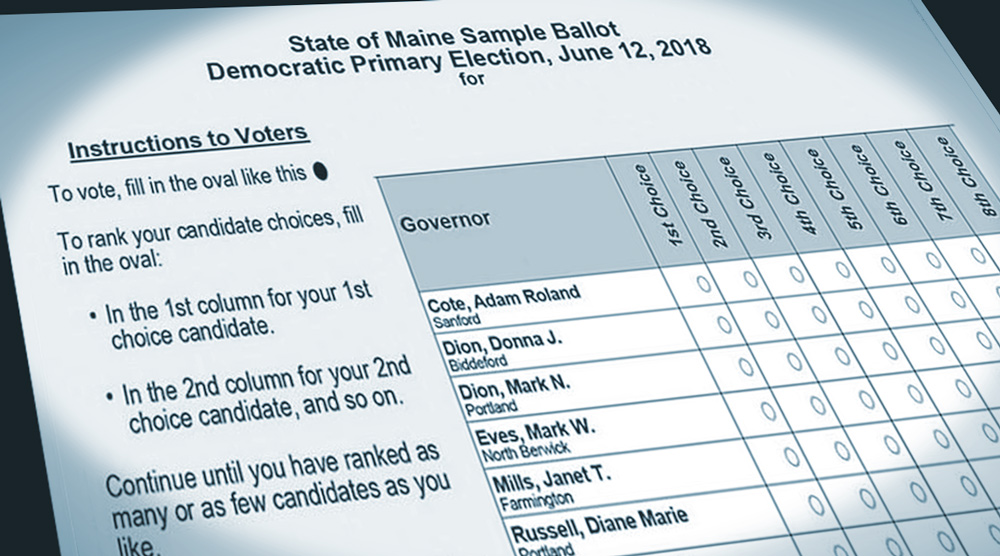
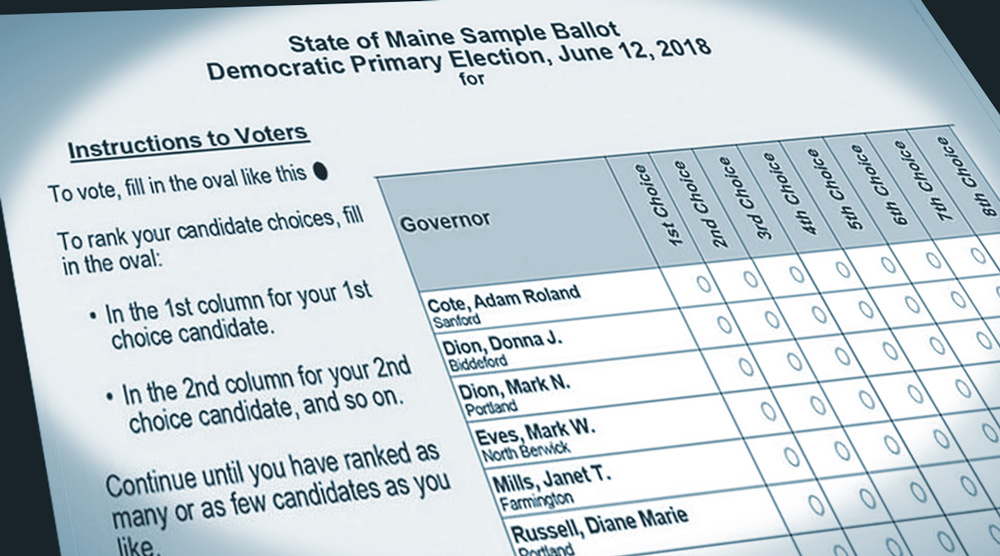
Bruce Poliquin, Maine’s incumbent second-district U.S. Representative, knows what to blame for his loss this last election: the preferences of Maine voters.

Well, he blames Ranked Choice Voting (RCV) . . . in which voters rank the candidates by preference, and whose votes are counted so to better tally second- and even third-favored options.*

The Republican Representative enjoyed a slight lead on election night, but fell short of a majority. When two independent candidates were eliminated, their second-choice votes put Democrat challenger Jared Golden over the 50-percent mark.

Maine Republicans are upset. It turns out that losing isn’t as much fun as winning.

Shocking, I know.

So Poliquin sued, arguing that RCV is unconstitutional. He asked a federal judge to stop the ballot tabulation.

Judge Lance Walker, a Trump appointee, was “not persuaded.” He additionally noted that “the citizens of Maine have rejected the policy arguments plaintiffs advance against RCV.”

Twice.

In 2016, Mainers passed RCV by ballot initiative and then, in a 2017 referendum, vetoed the legislature’s arrogant repeal of the voter-enacted reform.

“While Mr. Poliquin publicly works through the five stages of grief over his election loss,” remarked RCV advocate Kyle Bailey, “the real story is that the implementation of Maine’s Ranked Choice Voting law was smooth, transparent, and in accordance with the will of the Maine voters,”

Meanwhile, Chuck Slocum, past chair of the Republican Party of Minnesota, urges fellow Republicans to “consider” this non-partisan reform.

Yes, a process that better counts voter preferences ought to help your political party.

This is Common Sense. I’m Paul Jacob.


* In cases where no candidate gains a majority of first-choice votes, the last place candidate is eliminated and his or her votes re-allocated to those voters’ second choice, and this process continues until a candidate reaches a majority.

PDF for printing


» See popular posts from Common Sense with Paul Jacob HERE.

 

Categories
Thought

J. R. R. Tolkien

It is not our part to master all the tides of the world, but to do what is in us for the succour of those years wherein we are set, uprooting the evil in the fields that we know, so that those who live after may have clean earth to till. What weather they shall have is not ours to rule.


J. R. R. Tolkien, The Return of the King (1955), the final volume of the fantasy classic The Lord of the Rings.