Categories
Thought

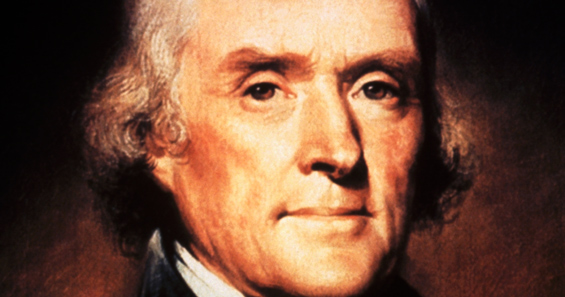
Thomas Jefferson

The taxes with which we are familiar class themselves readily according to the basis on which they rest. 1. Capital. 2. Income. 3. Consumption. These may be considered as commensurate; Consumption being generally equal to Income, and Income the annual profit of Capital. A government may select either of these bases for the establishment of its system of taxation, and so frame it as to reach the faculties of every member of the society, and to draw from him his equal proportion of the public contributions; and, if this be correctly obtained, it is the perfection of the function of taxation. But when once a government has assumed its basis, to select and tax special articles from either of the other classes, is double taxation. For example, if the system be established on the basis of Income, and his just proportion on that scale has been already drawn from every one, to step into the field of Consumption and tax special articles in that, as broadcloth or homespun, wine or whiskey, a coach or a wagon, is doubly taxing the same article. For that portion of Income with which these articles are purchased, having already paid its tax as Income, to pay another tax on the thing it purchased, is paying twice for the same thing; it is an aggrievance on the citizens who use these articles in exoneration of those who do not, contrary to the most sacred of the duties of a government, to do equal and impartial justice to all its citizens.


Thomas Jefferson, note to Destutt de Tracy’s Treatise on Political Economy.

Categories
ideological culture too much government

Fields of Schemes

Hopes, wishes and cinematic sentiment are not a business plan.

A baseball stadium in Camden, New Jersey is being shut down three years after the team for which it was built has left town.

At the groundbreaking in 2000, then-Governor Christine Todd Whitman said she’d “heard the message from the movie Field of Dreams: ‘If you build it, they will come.’ Well, soon we will see a field of dreams right here in Camden, and my prediction is ‘they will come.’”

So it’s the movie’s fault?

Officials had hoped that crowds would steadily come to see the Camden Riversharks play ball, boosting the local economy and enabling repayment of the taxpayers’ “investment” of $18 million.

Didn’t work out.

The minor-league team threw in the towel in 2015 after missing several lease payments. The Camden government bought the property. They couldn’t find a successor team, so now the stadium is going. It will cost another million in taxpayer dollars just to tear it down.

Lesson learned? Er, no. Another taxpayer-funded development will replace the stadium.

Of course, private investors can also err when spending their own money. But they’re less likely to throw millions at projects with little prospect of profit. When their investments do fail, companies tend to cut their losses much faster than government officials who are ladling out other people’s money.

Unlike many government planners, private investors of private capital are also not eager to keep repeating their worst blunders.

Meanwhile, perhaps best of all, when private investors misjudge a project, non-investors lose nothing.

This is Common Sense. I’m Paul Jacob.


PDF for printing


» See popular posts from Common Sense with Paul Jacob HERE.


Categories
Today

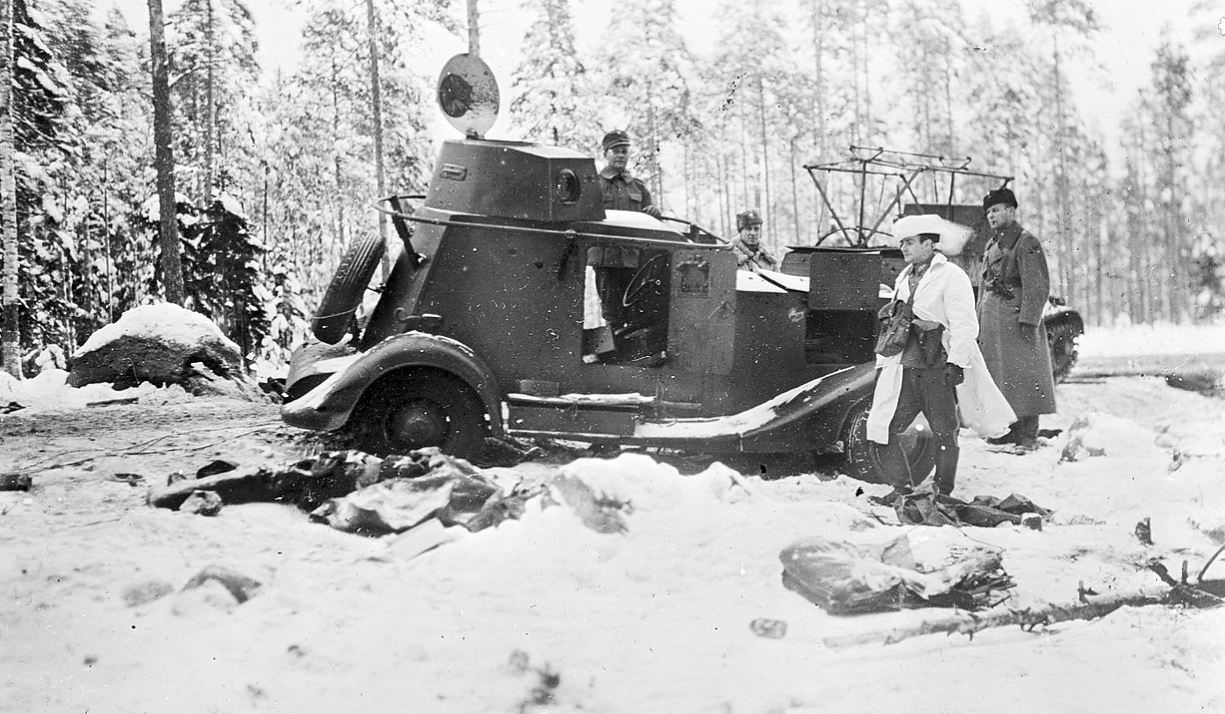
Tolvajärvi Victory

On December 12, 1939, Finnish forces defeated those of the Soviet Union in the first major victory of what became known as the Winter War, in the Battle of Tolvajärvi.

Categories
Thought

G. Poulett Scrope

Interference of any kind . . . in the spontaneous direction of industry, and the free employment by their owners of the great agents in production, labour, land, and capital, has the certain effect of benumbing their power and lessening the sum of production, and consequently the shares, of the producing parties; as well as of needlessly, and therefore unjustly, curtailing their freedom of action.


G. Poulett Scrope, M.P., Principles of Political Economy, Deduced from the Natural Laws of Social Welfare, and Applied to the Present State of Britain (1833), p. 231.

Categories
crime and punishment general freedom judiciary property rights

Property Rights vs. Absentee Frogs

When an assault on individual rights achieves a certain depth of irrationality, the Supreme Court is capable of common sense. Even unanimous common sense.

The 8-0 ruling in Weyerhaeuser v. U.S. Fish and Wildlife Service pertains to the desire of the U.S. Fish and Wildlife Service to designate over 1500 acres of Louisiana land a “critical habitat” of the dusky gopher frog. The designation means that owners may not develop the land that they own in even the simplest ways without consulting with/begging permission from bureaucrats.

If a property owner has an actual right to his own property, the government cannot properly commandeer even one square inch of it to appease Lithobates sevosus. Give the creature a YouTube video and leave it at that.

But sevosus doesn’t even inhabit the so-called “critical habitat.”

The frog is not on the property!

This fact enabled Chief Justice John Roberts (not always clear on the meaning of words) the chance to emphasize that words have meaning. “According to the ordinary understanding of how adjectives work, ‘critical habitat’ must also be ‘habitat,’” Roberts clarified. “Only the ‘habitat’ of the endangered species is eligible for designation as critical habitat.”

Concurring, pundit George Will says that the decision represents “a recuperative moment for the court” and delivers “a chastisement of the administrative state, the government’s fourth branch, which is one too many.”

Is this ruling as thoroughgoing as it should be? No. Nevertheless, the decision is surely a victory for minimal common sense. Of which we could use more.

And more, also, of maximal common sense.

I’m Paul Jacob.


PDF for printing


Photo credit: US Department of Agriculture


» See popular posts from Common Sense with Paul Jacob HERE.


Categories
Today

Bagge It

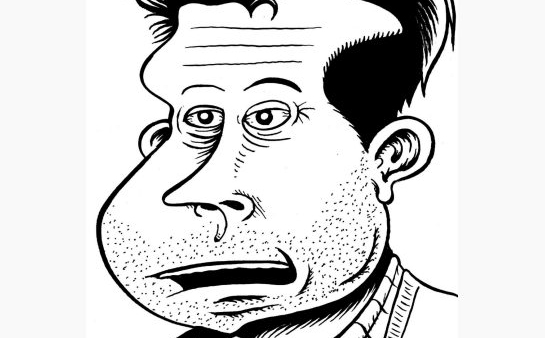
On December 11, 1957, American cartoonist and Reason magazine contributor Peter Bagge was born.

Categories
Thought

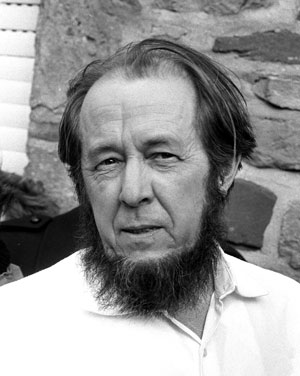
Aleksandr Solzhenitsyn

In different places over the years I have had to prove that socialism, which to many western thinkers is a sort of kingdom of justice, was in fact full of coercion, of bureaucratic greed and corruption and avarice, and consistent within itself that socialism cannot be implemented without the aid of coercion. Communist propaganda would sometimes include statements such as ‘we include almost all the commandments of the Gospel in our ideology.’ The difference is that the Gospel asks all this to be achieved through love, through self-limitation, but socialism only uses coercion.


Aleksandr Solzhenitsyn, in Joseph Pearce, “An Interview with Alexander Solzhenitsyn,” St. Austin Review 2 no. 2 (February, 2003).

Categories
ideological culture term limits

Hating the Senate

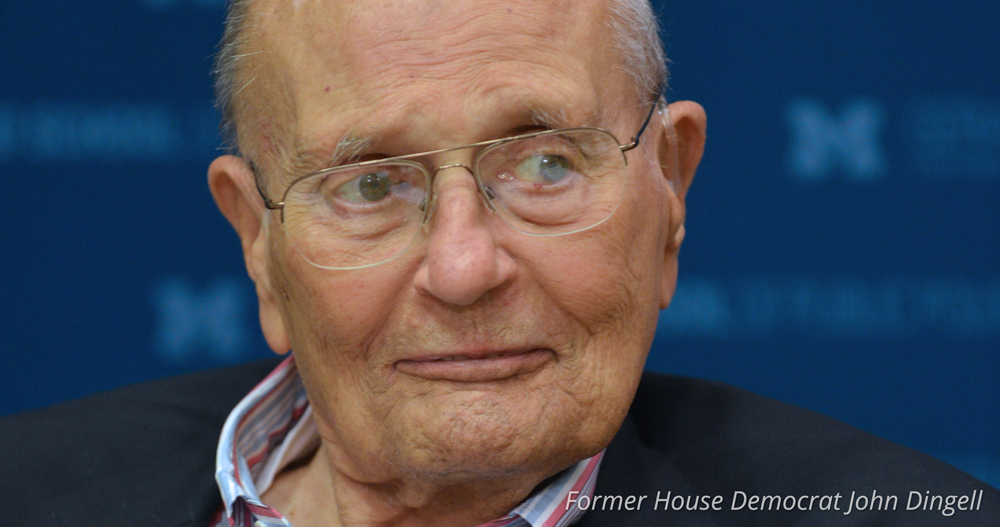
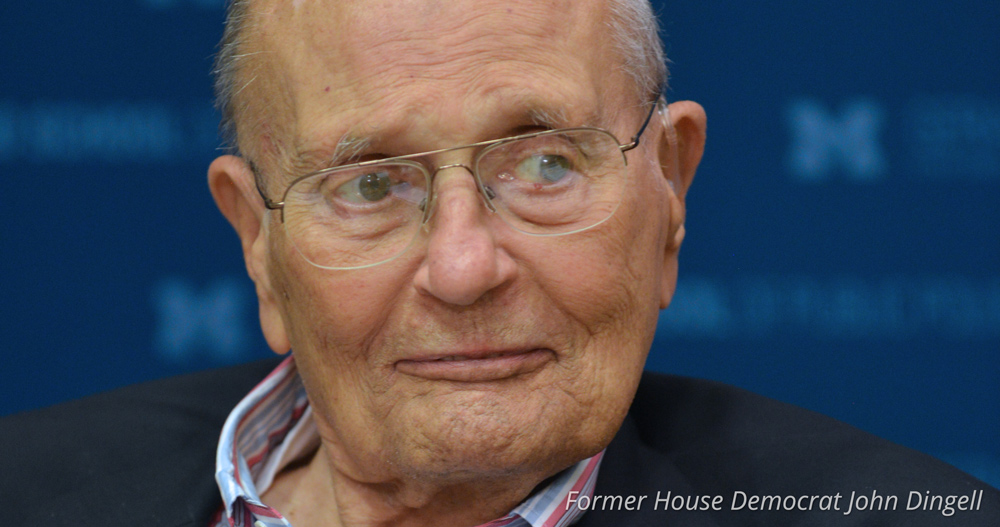
The longest-serving politician in Congress — ever — thinks he has the perfect reform to put American government back on track.

Former House Democrat John Dingell wants to abolish the Senate.

According to him, the United States should go unicameral.

The ancient bicameral tradition — which goes back to Sumer — is so old hat. He thinks that, these days, “in a nation of more than 325 million and 37 additional states, not only is that structure antiquated, it’s downright dangerous.”

Dangerous? Well, he has always hated the Senate. He sees it as a place where “good bills go to die.”

His new book explains this at length, but I confess: it would go against my principles to put any money into that man’s pocket by buying The Dean: The Best Seat in the House (2018). He almost personifies everything I’m against. His very career is an atrocity. In 1955, John Jr. took over the House seat from his father, a 22-year incumbent, and then six decades later, in 2015, basically bestowed it on his wife.

That’s 86 years and counting.

How many times did he swear to uphold the Constitution? And yet he doesn’t seem to understand that Article V, governing the amendment process, establishes one specific limitation: “no state, without its consent, shall be deprived of its equal suffrage in the Senate.”

Jettisoning the U.S. Senate would seem to be such a deprivation.

The opposite of this Dingelldorf reform would be more in keeping with the spirit of our system: term limits.

To keep anything like a John Dingell Sixty-year Stretch from ever occurring again.

This is Common Sense. I’m Paul Jacob.


PDF for printing


Photo credit: University of Michigan


» See popular posts from Common Sense with Paul Jacob HERE.


Categories
Today

Passy, Dunant and Huck

On December 10, 1884, Mark Twain’s Adventures of Huckleberry Finn was first published. This novel, narrated in the first person by the title character, is a dark comedy of the antebellum South and slavery, and has been considered by many American critics and writers to qualify as the “Great American Novel.”

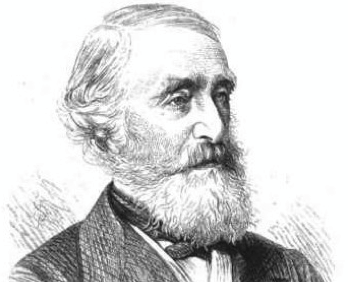
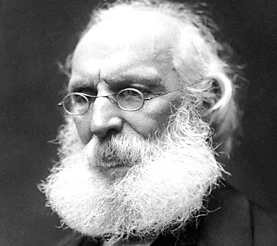
On this date in 1901, the first Nobel Peace Prizes were awarded — to economist Frédéric Passy (pictured above), co-founder of the Inter-Parliamentary Union; and to Henry Dunant the founder of the International Committee of the Red Cross.

Passy was an admirer of Richard Cobden and an active member in the French Liberal School of Political Economy that developed in the tradition of J.B. Say, Destutt de Tracy, and Frédéric Bastiat. His published works include Leçons d’économie politique (1860-61); La Démocratie et l’Instruction (1864); L’Histoire du Travail (1873); Malthus et sa Doctrine (1868); and La Solidarité du Travail et du Capital (1875).

Categories
Thought

Destutt de Tracy

It is manifest that, to banish bad sentiments born of oppression and insolence, it is necessary that laws be equal for everyone, and even for everyplace.


Destutt de Tracy, as quoted by Mme. Victor de Tracy, Death Notice on Destutt de Tracy (translated by Iris Hartman, 1852)