On July 19, 1848, a two-day Women’s Rights Convention opened in Seneca Falls, New York.
Categories
Seneca Falls
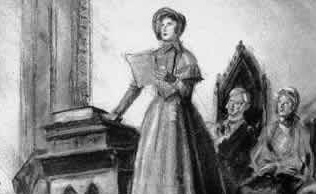
On July 19, 1848, a two-day Women’s Rights Convention opened in Seneca Falls, New York.

“Social justice” is something else again — a daring, socialistic attempt to correct for all the ills “of society” or, more widely, “the cosmos.” That’s a huge agenda to stuff into the old practice, which, while never perfect, did serve, in its way, a noble social goal: curbing crime.
But when the social justice crowd infiltrated the old system in places like California, crime flourished. In early June, San Franciscans recalled their radical District Attorney and sent woke politics into a tailspin.
I’ve reported on this, but the story continues. As explained by Jack Phillips in The Epoch Times, the newly appointed replacement “district attorney in San Francisco fired at least 15 employees from the prosecutor’s office after her left-wing predecessor Chesa Boudin was recalled last month.”
Heads rolled. And heads weren’t pleased.
“I was unceremoniously fired without cause via phone by the Mayor’s appointed DA,” one prominent civil servant tweeted. “I am the highest-ranking Latina/LGBTQ member of the management team at that office. I will continue the fight 4justice.”
But what is that justice?
It’s a “fairer system,” said Chesa Boudin, the ousted DA, who objects to having been “scapegoated” for rising crime — but it’s sure hard to believe his pro-criminal policies did not contribute to the crime wave.
Boudin’s brand of justice has been rumored to benefit from extensive promotion by billionaire George Soros. Soros’s office has denied supporting Boudin, yet The Epoch Times notes that Mr. Soros’s PAC funded, through an intermediary, Boudin’s recall defense campaign.
Most Americans want reforms to our justice system but do not agree with George Soros.
This is Common Sense. I’m Paul Jacob.
See all recent commentary
(simplified and organized)
See recent popular posts
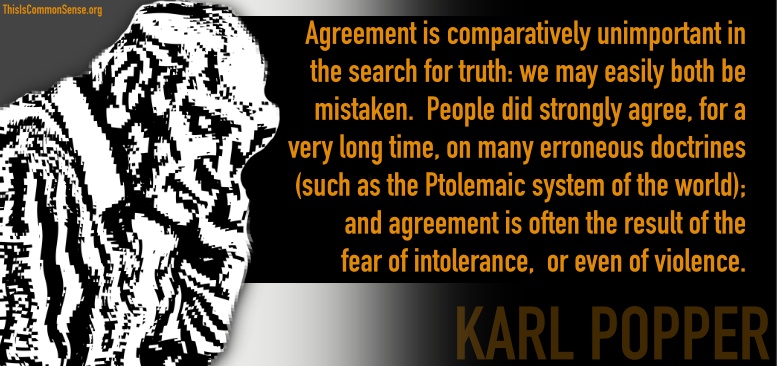
Agreement is comparatively unimportant in the search for truth: we may easily both be mistaken. People did strongly agree, for a very long time, on many erroneous doctrines (such as the Ptolemaic system of the world); and agreement is often the result of the fear of intolerance, or even of violence.
Karl Popper, “Toleration and Intellectual Responsibility,” in Susan Mendus and David Edwards (editors), On Toleration, Clarendon Press, Oxford, 1987, pp. 17–34.
Echoes of political events past:
Second Declaration of Independence, Or Grand Loco Foco Federal Glorification! To Come Off at the Court House, in the Village of Syracuse, on Saturday, the 18th Day of July, A.D. 1840.
A “Loco Foco” event in New York, five years after an advertisement for a new form of matchstick, the “Loco Foco” (see image above).
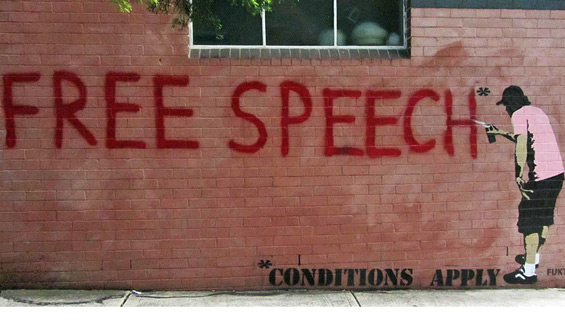
Paul Jacob concentrates on the First Amendment issue in the social media landscape.
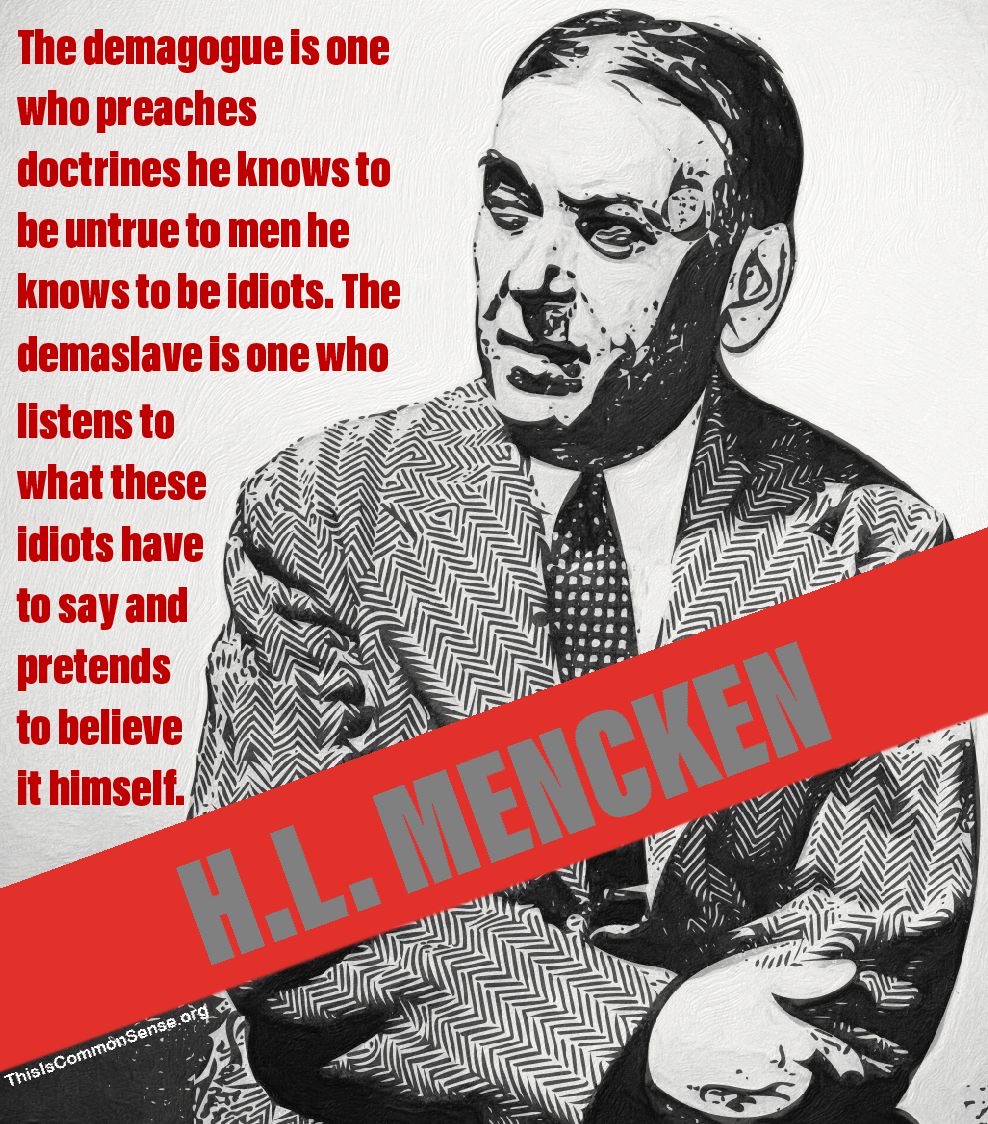
There is the art of the demagogue, and there is the art of what may be called, by a shot-gun marriage of Latin and Greek, the demaslave. They are complementary, and both of them are degrading to their practitioners. The demagogue is one who preaches doctrines he knows to be untrue to men he knows to be idiots. The demaslave is one who listens to what these idiots have to say and then pretends that he believes it himself.
H.L. Mencken, Notes on Democracy (Knopf, 1926).
Good news on the Free Speech front. In this episode of This Week in Common Sense, Paul Jacob lays it out on the line:

The most incomprehensible thing about the world is that it is comprehensible.
Albert Einstein, as cited in Einstein: A Biography (1954), by Antonina Vallentin, p. 24.

On July 16, 1931, Ethiopia’s Emperor Haille Selassie I signed a new Constitution. Not exactly a model of limited government, the new document proved that the emperor was in keeping with the time, which was a period of weakening constitutional limits in America, Europe, and Britain. A flavor of the document can be gained by its most “rights-oriented” measures:
Art. 22. Within the limits laid down by the law, Ethiopian subjects have the right to pass freely from one place to the other.
Art. 23. No Ethiopian subject may be arrested, sentenced, or imprisoned except in pursuance of the law.
Art. 24. No Ethiopian subject may, against his will, be deprived of his right to be tried by a legally established court.
Art. 25. Except in cases provided for by law, no domiciliary searches may be made.
Art. 26. Except in cases provided by the law, no one shall have the right to violate the secrecy of the correspondence of Ethiopian subjects.
Art. 27. Except in cases of public necessity determined by the law, no one shall have the right to deprive an Ethiopian subject of any movable or landed property which he owns.
Art. 28. All Ethiopian subjects have the right to present to the Government petitions in legal form.
Art. 29. The provisions of the present chapter shall in no way limit the measures which the Emperor, by virtue of his supreme power, may take in the event of war or public misfortunes menacing the interests of the nation.
Unfortunately, most of these suits have been dismissed.
Journalist Alex Berenson did obtain some satisfaction after suing Twitter for suspending his account last year because he questioned the efficacy of COVID-19 vaccines.
The suit accused Twitter of acting “on behalf of the federal government in censoring and barring him.” Berenson’s account was finally reinstated as part of the settlement. But only Twitter was required to take any remedial action; the government was required to do nothing.
Still ongoing is a lawsuit launched by the attorney generals of Missouri and Louisiana against the Biden administration for urging social media giants to suppress speech about things like COVID-19 and elections “under the guise of combating ‘misinformation.’ ”
Now a judge has granted the states’ motion for discovery, enabling the attorneys general to make document requests and issue subpoenas to social media platforms. The AGs hope to learn which federal officials have been urging censorship and what exactly they said.
In a certain respect, these actions seem almost superfluous, since administration officials, including Biden, have repeatedly and publicly called on social media to censor harder.
But the more evidence we can get on how the federal government has been urging firms to censor on its behalf and in violation of the First Amendment, the better.
That brings us closer to getting it to stop.
This is Common Sense. I’m Paul Jacob.
See all recent commentary
(simplified and organized)
See recent popular posts