Categories
Today

Prohibition Begins to End

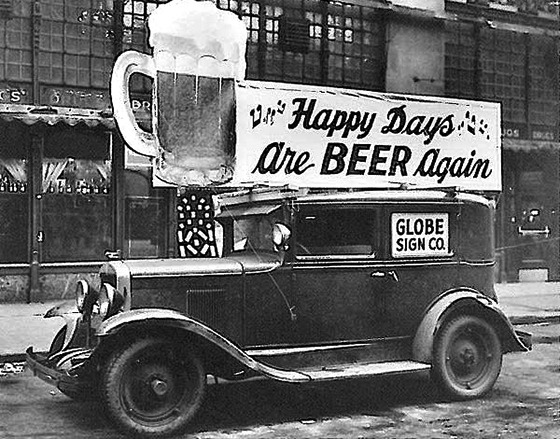
On April 7, 1933, Prohibition in the United States was repealed for beer of no more than 3.2 percent alcohol by weight — eight months before the ratification of the XXI amendment, which repealed the 18th (or Prohibition) Amendment.

The enabling legislation was the Cullen-Harrison Act, which figured the low alcohol content as the excuse to get around the 18th Amendment’s prohibition of intoxicating beverages. The act passed Congress on March 21, 1933, and was signed into law by Franklin Delano Roosevelt the next day.

Categories
Update

Else, Nearly Anybody

Using pseudonyms, or even legally changing your name, to run for office, is not unheard-of. The classic case came from the 2015-2016, when a likely lad ran for the U.S. Presidency under the name “Deez Nuts”:

EXCLUSIVE

The candidate polling at 9 percent in North Carolina against Trump and Clinton isn’t a real person. But 15-year-old Brady Olson, who lives on a farm in Iowa and gamed the FEC filing system, certainly is.

Ben Collins & Emily Shire, “Presidential Sensation Deez Nuts Is a 15-Year-Old Iowa Farm Boy,” Daily Beast, August 19, 2015.

For years, a man named Jim Burns ran for office using his altered middle name, “Libertarian,” to help make his statement in lieu of the shifting ballot status of his party of choice.

But has anyone done it better than Dustin Ebey?

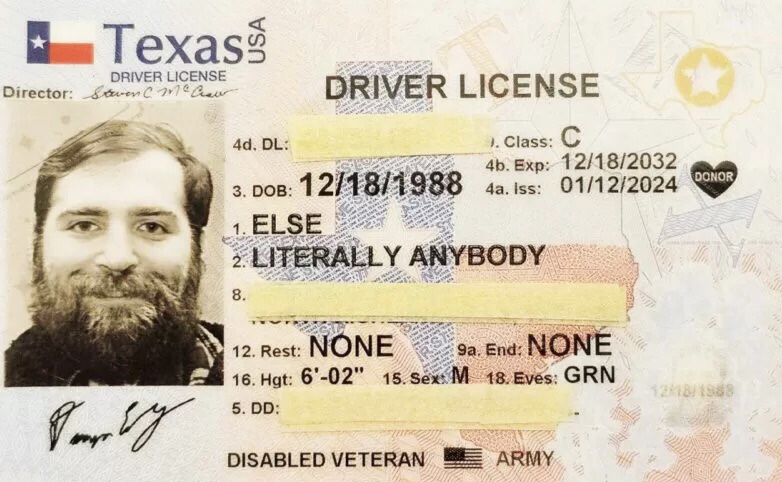
The 35-year-old Texan became a viral sensation this week after legally changing his name to Literally Anybody Else and declaring his candidacy for the White House. The goal, he told Reason on Thursday, is “giving a unified voice to the idea that we deserve better.”

Eric Boehm, “Meet ‘Literally Anybody Else,’ the Presidential Candidate That 2024 Demands,” Reason, April 5, 2024.

The case he makes on his website is not very radical, though:

The call to action is clear: stand up to Washington and reclaim the voice of the American people. We refuse to accept the status quo, where the interests of the privileged few outweigh the needs of the many. It’s time to disrupt the entrenched power structures and demand accountability from all of our elected officials on both sides.

Let this rallying cry echo across the nation: “The American people want literally anybody else.” It’s a declaration of our collective desire for change, for leadership that prioritizes integrity, self-awareness, and a commitment to the common good.

“A New Way of Thinking about Politics,” LiterallyAnybodyElse.com.
Categories
Thought

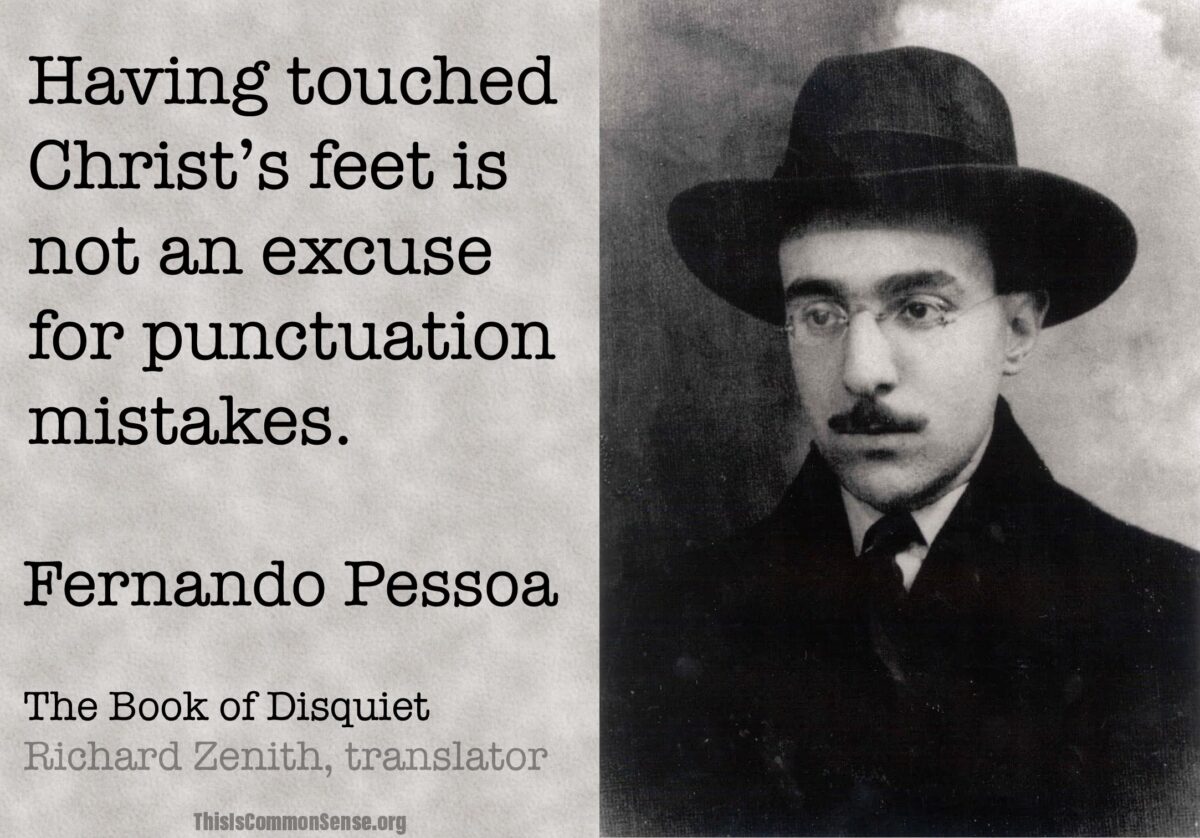
Fernando Pessoa

Having touched Christ’s feet is no excuse for punctuation mistakes.

Fernando Pessoa, The Book of Disquiet, Richard Zenith, translator.
Categories
Today

Salt Rebel

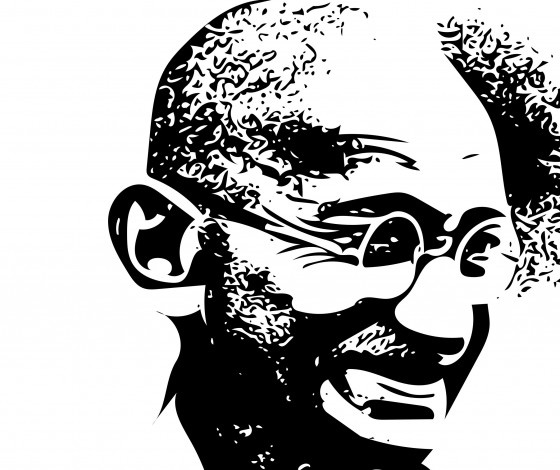
On April 6, 1930, Mohandas K. Gandhi raised a lump of mud and salt, declaring, “With this, I am shaking the foundations of the British Empire.”

Thus began the Salt Satyagraha.

Categories
ballot access insider corruption partisanship

Words for Jersey Insiders

Effrontery. Chutzpah. Impudence.

I’m of course talking about partisan politics.

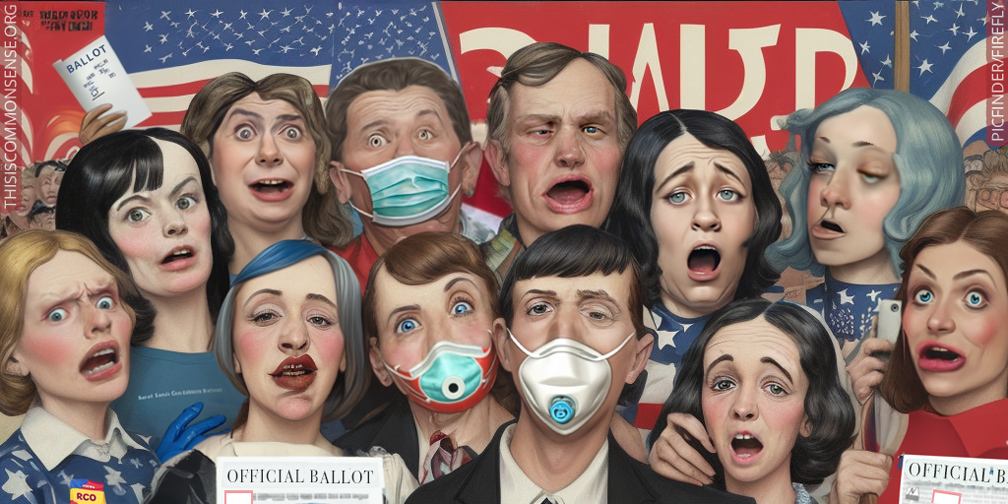
The case at hand is covered by Matthew Petti at Reason, “Are New Jersey Voters Too Dumb for Normal Ballots?” In this April 3rd report, Petti explains that a “federal judge has ordered Democrats in New Jersey to draw up ballots fairly instead of putting their favorite candidates at the front. But state Democratic bosses think that voters can’t be trusted to figure out how to think for themselves.”

This is a dispute about ballot design. Remember the notorious “butterfly” ballots that so confused Palm Beach County, Florida voters in 2000? You know, even Pat Buchanan acknowledged that thousands in the liberal county voted for him by mistake. 

Well, this is similar, though here the case is not so much a confusing ballot but a simple ballot with favored candidates getting the easiest-to-spot slots. “All but two of the state’s counties endorse candidates for the primary and then place their endorsed candidates all in one line,” explains NPR’s Nancy Solomon. “It’s called the ‘county line’ or ‘the party line’ and it includes candidates for various positions. . . . The other candidates for the same seat are placed in what’s known as ballot Siberia – way off to the right on the ballot and all alone.”

But when the party machine tried to replace the serially indicted Senator Bob Menendez with the governor’s wife, a challenger complained. And sued. And won.

County clerks are appealing the decision — but the court still requires them to design a new ballot.

“New” . . . meaning like ballots nearly everywhere.

This is Common Sense. I’m Paul Jacob.


PDF for printing

Illustration created with PicFinder and Firefly

See all recent commentary
(simplified and organized)
See recent popular posts
Categories
Thought

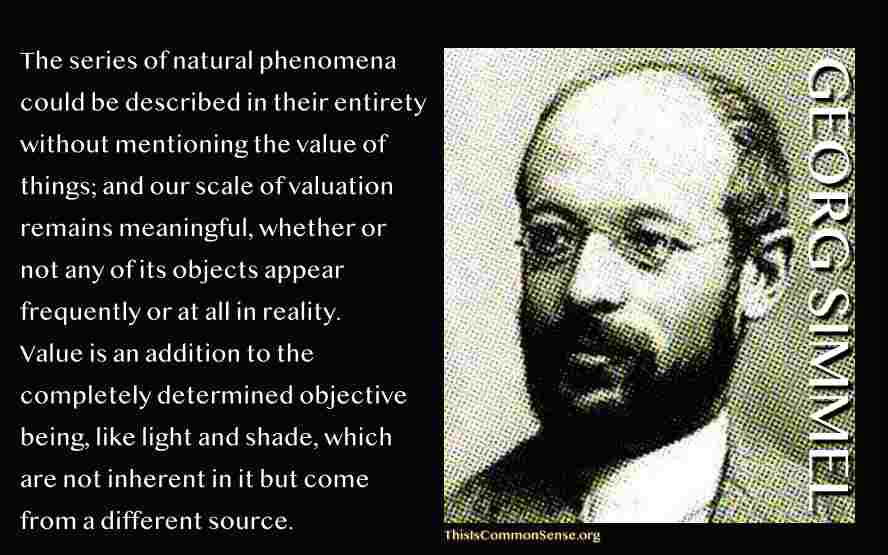
Georg Simmel

The series of natural phenomena could be described in their entirety without mentioning the value of things; and our scale of valuation remains meaningful, whether or not any of its objects appear frequently or at all in reality. Value is an addition to the completely determined objective being, like light and shade, which are not inherent in it but come from a different source.

Georg Simmel, this passage translated by David Frisby, The Philosophy of Money (1978), § ““Freedom as the articulation of the self in the medium of things” from the chapter “Synthetic Part: Individual Freedom.”
Categories
Today

Two Washingtons

On April 5, 1792, George Washington exercised the first presidential veto of a congressional bill, a new plan for dividing seats in the House of Representatives, which would have increased the number of seats for northern states. Washington vetoed only one other bill during his two terms in office, an act that would have reduced the number of cavalry units in the army.

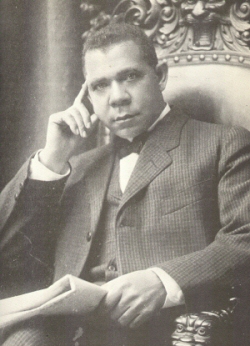
On April 5, 1856, Booker T. Washington (pictured above), American educator, first leader of the Tuskegee Institute in Alabama, author of 14 books, including his autobiography, Up From Slavery, was born a slave in southwestern Virginia. Though Washington faced criticism from leaders of the new NAACP, especially W.E.B. Du Bois, for not protesting the lack of civil rights more strongly, he secretly funded litigation for civil rights cases, such as challenges to southern constitutions and laws that disfranchised blacks.

Categories
free trade & free markets regulation

Dining Out on Cause and Effect

Could a barren, charred, devastated landscape be the actual intended goal?

In California as in Washington, lawmakers and chief executives apparently have a long list of nice things to destroy and are crossing them off one by one, as if on the payroll of aliens from outer space wanting to conquer earth without doing very much conquest-work themselves.

Part 99-C of the plan is to price entry-level labor and entry-level restaurant dining out of the market by hiking the minimum wage of fast-food workers even further beyond the market rate for the labor and its actual productive value to employers: now to $20 an hour.

Already, prices for restaurant meals are going up, and restaurant workers are being laid off.

The $20 minimum is a compromise that restaurant owners accepted in lieu of probably paying a $22 per hour minimum. Like letting burglars take only most of the silverware and letting them return at will.

Even more looting of employers is to come, if employee and activist Angelica Hernandez has her way. “We’re going to have to keep speaking up and striking to make sure we are heard.” She wants her dough and doesn’t care about the consequences for others. Policymakers rush to appease her and those like her.

So is omni-destruction the actual intended goal?

Or is it that the mental powers of the crusaders and politicians and too many voters don’t extend so far as the relationship between cause and effect?

This is Common Sense. I’m Paul Jacob.


PDF for printing

Illustration created with PicFinder and Firefly

See all recent commentary
(simplified and organized)
See recent popular posts
Categories
Thought

James Howard Kunstler

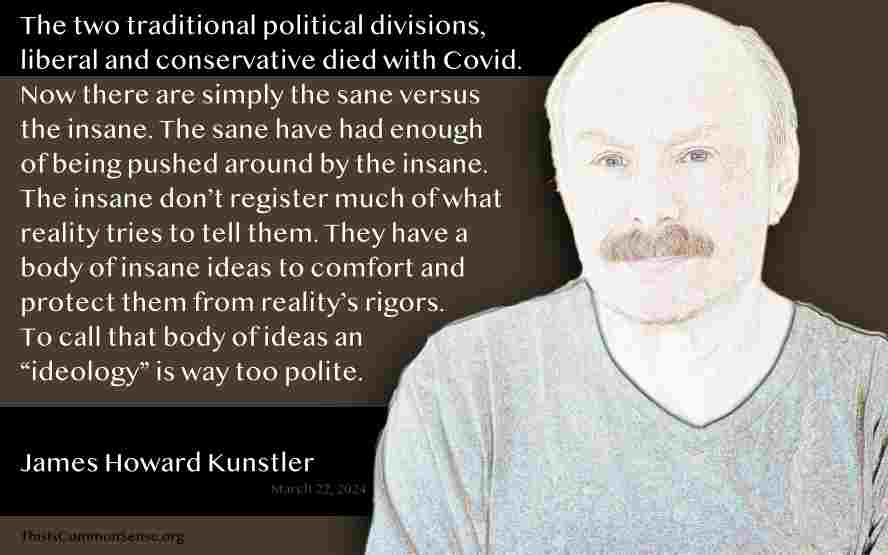
The two traditional political divisions, liberal and conservative died with Covid. Now there are simply the sane versus the insane. The sane have had enough of being pushed around by the insane. The insane don’t register much of what reality tries to tell them. They have a body of insane ideas to comfort and protect them from reality’s rigors. To call that body of ideas an “ideology” is way too polite.

James Howard Kunstler, “Wake-up Call,” March 22, 2024.
Categories
Today

Tippecanoe (and, sadly, MLK, too)

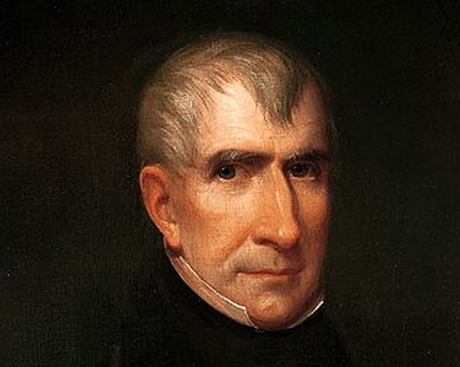
On April 4, 1841, William Henry Harrison died of pneumonia, becoming the first President of the United States to die in office and the one with the shortest term served (he died on his 32nd day as president). A renowned Indian killer (having risen to fame for his part in 1811’s Battle of Tippecanoe), a proponent of the expansion of slavery into Northwest Territories, and a Whig, Harrison won the presidency in part by turning the Democrats’ “log cabin and hard cider” aspersions on his character as the basic symbols of the campaign.

Though hardly a “limited government man,” some limited government history buffs proclaim him the Greatest President, on the ostensibly droll and possibly cynical grounds that he spent so little time in office.


On a much sadder note, Martin Luther King, Jr., was assassinated on this day in 1968.