 A claim for equality of material position can be met only by a government with totalitarian powers.
Categories
A claim for equality of material position can be met only by a government with totalitarian powers.
 If one rejects laissez faire on account of man’s fallibility and moral weakness, one must for the same reason also reject every kind of government action.
More people view Mitt Romney unfavorably (49 percent) than view Barack Obama unfavorably (45 percent), according to the most recent Reason-Rupe Poll. This, despite Romney being the challenger, while President Obama must live down his sorry record.
By this measure, and others in the poll, Obama’s re-election seems ever more likely. And if you think that’s depressing, wait till you read about the general views of taxing the rich more. The “soak the rich” mentality remains quite strong. But some of this “the rich don’t pay their fair share” notion is based on misinformation. Get a load of this:
Last year, the government collected about $1.8 trillion dollars in income tax revenue. If you were to estimate, about what PERCENTAGE of this total tax revenue do you think the top 5 percent of households probably contributed? Would you say…
<1% . . . . . . . . . . . . . . . . . . . 3%
1% to less than 20% . . . . . . . 29%
20% to less than 40% . . . . . . 19%
40% to less than 60% . . . . . . 15%
60% to less than 80% . . . . . . 11%
80% or more . . . . . . . . . . . . . 8%
Don’t Know/Refused . . . . . . . 16%
The truth is that America’s Top 5 percenters pay more than 60 percent of income taxes collected. The vast majority of those polled (66 percent) thought the Top 5 should pay less than they currently do.
I’m not going out on a limb, here, to infer a lesson: Were Americans to learn a few more truths about their government, about taxes, and (hey, why not?) real life, they might change their minds on a few crucial political notions.
Education — and by this I don’t mean schooling — is obviously important to political betterment.
This is Common Sense. I’m Paul Jacob.
“We cannot be complacent,” Federal Reserve Bank President Charles Evans said yesterday. He was most distressed by any lingering notion that the economy would remain undamaged were “no action” taken.
He wants more money flushed into the system. “If we continue to take only modest, cautious, safe policy actions,” he argued, “we risk suffering a lost decade similar to that which Japan experienced in the 1990s.”
Ah, and I was going to use the long Japanese recession as an example of what can happen when too much monetary and bailout hanky-panky is allowed.
Evans apparently thinks that mid-September’s unleashing of quantitative easing — or QE, the currently fashionable banker’s version of crony capitalism — with the Fed promising monthly $40 billion purchases of mortgage-backed securities, is tantamount to “no action” and “doing nothing.”
Or else he’s worried that Bernanke’s critics might have some sway.
Relying on the old (by-the-textbook but long-discredited) Phillips Curve story of inflationary money leading inexorably to increased employment, cheap money maven Evans told reporters that “the economy” would “need 200,000 to 250,000 job gains per month” before the Fed could dare rethink its current policy.
He’s apparently forgotten that stagflation is possible. I don’t know why: He’s just a few years older than me, and I remember when the Phillips Curve’s simple trade-off between inflationary monetary policy and unemployment rates hit the trash bin of history, as both inflation and unemployment soared in the 1970s.
When our leaders forget history, are we doomed to repeat it?
Stagflation may be the best we can hope for from current QE.
This is Common Sense. I’m Paul Jacob.

Voyager upon life’s sea:—
To yourself be true,
And whate’er your lot may be,
Paddle your own canoe.
Outside the U.N. General Assembly, Iranian President Mahmoud Ahmadinejad was asked if Salmon Rushdie remained under a death sentence. Iran’s Supreme Leader, Ayatollah Ruhollah Khomeini, had issued a fatwā for the author’s fourth novel, The Satanic Verses, in 1989. Though that specific death sentence was rescinded a decade later, others have renewed the call for Mr. Rushdie to be killed.
Ahmadinejad responded jokingly, “Is he here in the United States? . . . If he is . . . you shouldn’t broadcast it for his own safety.”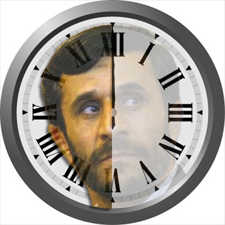
Clearly, Mahmoud never completed a Dale Carnegie course.
On the bright side, nothing so clearly articulates the superiority of our system of government over Iran’s as does our embrace of free speech and their rejection of it.
Tragically, political leaders in the West often fail to stand up for this freedom. The Iranian leader cited a German law to claim the West has a double standard. He argued that Germany’s prohibition on publicly denying that the Nazi Holocaust ever happened makes it a criminal offense to “embark on historical research.”
Now, Mr. Ahmadinejad is a Holocaust denier, his point about historical research is moronic, and the tyrannical government he figure-heads would really, really like nuclear weapons, making him extremely dangerous, to boot. But, more tragically, he has a point here.
He’s half as good as a stopped clock.
Germany’s abridgment of freedom in this instance doesn’t help battle Nazism, much less Islamofascism; it hurts by undercutting a key value. We have nothing to fear from free speech. Indeed, it’s important to hear fully what both our friends and our enemies are thinking.
This is Common Sense. I’m Paul Jacob.

Happily for the busy lunatics who rule over us, we are permanently the United States of Amnesia. We learn nothing because we remember nothing.
“It’s time to retire the American Dream,” writes The Washington Post’s Robert J. Samuelson, “. . . to drop it from our national conversation.”
Not so fast. The ability to stand on one’s own two feet, to make a living and a life for oneself and one’s family, to be financially and otherwise independent — that dream is still absolutely relevant.
And should be achievable beginning from any station in adulthood.
Samuelson is correct, though, to worry that the dream is becoming “an informal entitlement.” The “pathways to the Dream” constructed by government “often led to dead ends.”
“True, homeownership is a laudable goal; it stabilizes neighborhoods, for example,” he writes. “But the promotion went overboard. Lax lending standards lured people into buying homes they could not afford, contributing to the 2007-09 financial crisis.”
Samuelson also thinks that “it made sense to subsidize loans allowing more students to go to college” because a college degree “meant better jobs,” but recognizes that the cost of college shot higher and many students ended up “with heavy debts and no degree.”
So you see where the problem really lies. As Henry David Thoreau wrote a century and a half ago, “The character inherent in the American people has done all that has been accomplished; and it would have done somewhat more, if the government had not sometimes got in its way.”
The American Dream isn’t to have government fulfill all our dreams. It has a more modest role.
Making our dreams come true is our job.
This is Common Sense. I’m Paul Jacob.
 It does me no injury for my neighbor to say there are 20 gods, or no god. It neither picks my pocket nor breaks my leg.
As the president yammers on about making the rich “pay their fair share,” behind the scenes his administration has suggested reducing corporate tax rates by seven points. Meanwhile, Obama’s main challenger, Mitt Romney, promised a full ten point rate cut, if elected.
Why? By international standards, American corporate taxes are obviously way too high.
The U.S. effective tax rate on new corporate investment sits at 35.6 percent today, which, write Duanjie Chen and Jack Mintz for the Cato Institute, “is almost twice the average rate for the 90 countries” the duo studied, in “Corporate Tax Competitiveness Rankings for 2012.”
The U.S. has higher corporate tax rates than France.
And India, Colombia, Brazil, Japan, Venezuela, Korea, Russia, Costa Rica, you name it. This is not something we want to be No. 1 at.
Well, at least Argentina, Chad and Uzbekistan tax at even higher rates.
There’s no consolation in others’ folly, though.
The authors look northward, to Canada, which, since 2000, made some huge adjustments downward on tax rates affecting businesses: 15 percent cuts in federal statutory tax rates, eliminating most capital taxes, removing sales taxes on capital goods, and scaling back on special preferences that tend to make taxation such a mess there as well as here. And all the while revenues from these taxes have remained stable per GDP.
Could we get lower corporate taxes, here? Well, this is not an area where those on the left can enviously eye their beloved European social democracies to make their usual, tedious case for higher taxes. Norway’s rates are ten percent lower than ours, and Sweden’s, Denmark’s and Finland’s are lower yet.
This is Common Sense. I’m Paul Jacob.