Wolves are not killed because they are gray, but because they eat sheep.
Categories
Wolves are not killed because they are gray, but because they eat sheep.
How did our founders manage to establish a republic committed to free speech and the rights of the individual without a Federal Election Commission?
Not only did the Sons of Liberty and other patriots lack a functioning FEC to protect them from “big-money interests,” many of the political communications of the founding era, including works as consequential as The Federalist Papers, were put forth anonymously. Horrors!
Consider organizing like-minded people during colonial times: No TV, radio, the Internet, smart phones . . . and sans, too, the Internal Revenue Service, strategically blocking them from creating non-profit groups that “criticize how the country is run.”
Which brings up the sorry case of Lois G. Lerner, head of the IRS’s exempt organizations division, now mired in the muck of controversy over unequal treatment of non-profit organizations. She expressed her innocence in the whole affair, but then took the Fifth, refusing to testify.
Ms. Lerner’s now on paid leave. That’ll learn ’er.
I bumped into her back in the 1990s, while I headed U.S. Term Limits and she led the FEC’s enforcement division, which was targeting conservative and libertarian groups. The FEC was never able to prove we did anything wrong, but did cost us plenty of time and money defending against their assault.
What sparked the FEC’s action, then, was incumbent Congressman Mike Synar’s complaint after we informed the people of Oklahoma that Synar opposed term limits. He lost in the Democratic Party primary . . . to a guy who spent less than $3,000.
Yes, that’s the sort of speech the folks in Washington want to regulate.
This is Common Sense. I’m Paul Jacob.
The going rate for saving a child’s life in Washington, D.C., is $1000. That’s not what somebody pays you for doing so; that’s what you pay.
Considering the punishment he could have suffered, though, Benjamin Srigley got off easy.
A few years ago, a Supreme Court decision forced a little liberalization in D.C.’s gun laws. Even so, city officials always seek new ways to make bearing arms onerous. So some exercisers of their Second Amendment rights simply ignore the mandatory hurdles.
On January 11, Srigley used one of three firearms not registered in DC to shoot a pit pull attacking 11-year-old Jayeon Simon. In May, authorities agreed not to pursue criminal charges. So Srigley won’t be sent to prison. He must merely turn over $1,000 of his wealth, plus his guns. Police say he’ll get the weapons back after he registers them in Maryland, to which he is moving soon.
“We took it into account that he saved this boy’s life,” says Ted Gest, a spokesman for the attorney general.
A cousin who helps care for the boy thinks the deed should be taken even more into account. “I don’t think he should be charged at all, because it’s an act of heroism,” he says.
Oh sure. The people who value the boy’s life would be prejudiced in favor of letting his savior off the hook entirely for doing everything right and nothing wrong, wouldn’t they? That shows you where their priorities lie.
This is Common Sense. I’m Paul Jacob.
It is pointless to do with more what can be done with fewer.
Plurality is never to be posited without necessity.
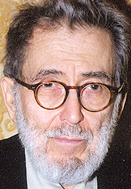 Those who created this country chose freedom. With all of its dangers.
Nat Hentoff is very clear about this, as is Justice Clarence Thomas:
It was no fun to watch Acting IRS head Steve Miller testify before the House Ways and Means Committee last week. Miller simply had no real explanation for the troubling actions at IRS.
Even his terminology induced cringes. Miller’s mea culpa was for “horrific customer service.”
Customer service? That’s a stretch.
A customer holds a position of honor in a free society. Businesses spend billions on advertising — just to gain our favor. We have the power to make a business succeed or fail according to our decisions.
We don’t have to be well connected or part of the political or social elite to share this power. The most ordinary of customers can have a powerful impact. When I was a kid, customers in my state helped build a small business, Wal-Mart, into the envy of the retail world. In 1956, ordinary bus riders in Montgomery, Alabama, used their “buying power” to help change the world.
As customers, we make demands. We make sure we’re satisfied. Sometimes we negotiate price; when no negotiation is possible and we don’t like the deal, we walk away. We have a choice. We decide.
Does this same type of empowerment exist when dealing with folks at the IRS?
Not so much. They tell us the price. We submit or go to jail. That’s no customer.
Cowering serf might sadly serve as the more apt moniker.
As the IRS grows bigger and more intrusive each year, and as its agents shake us down for ever larger sums, we should at least be able to keep the word “customer” away from them.
This is Common Sense. I’m Paul Jacob.
Means and ends are central. If your means are corroded, your ends will be corroded. And if you’re fighting to preserve liberty and you use means that eviscerate our liberties, the end will be corroded, too.
Since 1990, the federal government has placed a stranglehold on the forest industry in Oregon and Washington and California in order to save a species of bird, Strix occidentalis caurina, better known as the Northern spotted owl.
The program has not been successful, experts tell us, with spotted owls declining 40 percent over the last 25 years. Meanwhile, the common striped barred owl, Strix varia, has horned in on the spotted owl territory. It’s a more aggressive bird.
What to do?
Why, call the barred owl an “invasive species” and shoot the interlopers, of course!
The slaughter, approved over a year ago, is now going forward, at the cost of a million dollars per year.
Though the government and reporters like to call the two species of owl “distant cousins,” they apparently interbreed, and their offspring — called “sparred owls” — look just like spotted owls. You might think that this is a problem that takes care of itself, but no. On with the slaughter!
Meanwhile, as Teresa Platts of the Property and Environment Research Center notes, vast sectors of national forest remain unlogged and unmanaged, while wildfire suppression continues . . . which leads, of course, to mega-fires. Coming soon.
The ways of animal flourishing, in the wild, are not the ways of the governments that aim to protect the wild. Both are cruel, but at least one can understand the processes of nature.
This is Common Sense. I’m Paul Jacob.