Insiders sew up elections by stitching up bizarre voting districts. What can be done?
Author: Redactor
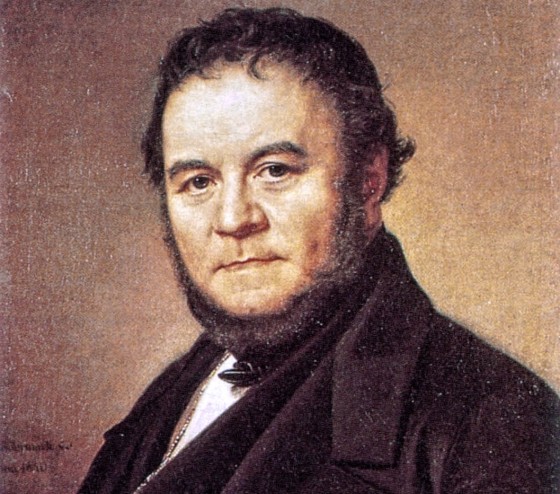
William Leggett
This power of regulating—of increasing or diminishing the profits of labour and the value of property of all kinds and degrees, by direct legislation, in a great measure destroys the essential object of all civil compacts, which, as we said before, is to make the social a counterpoise to the selfish feeling. By thus operating directly on the latter, by offering one class a bounty and another a discouragement, they involve the selfish feeling in every struggle of party for the ascendancy, and give to the force of political rivalry all the bitterest excitement of personal interests conflicting with each other. Why is it that parties now exhibit excitement aggravated to a degree dangerous to the existence of the Union and to the peace of society? Is it not that by frequent exercises of partial legislation, almost every man’s personal interests have become deeply involved in the result of the contest? In common times, the strife of parties is the mere struggle of ambitious leaders for power; now they are deadly contests of the whole mass of the people, whose pecuniary interests are implicated in the event, because the Government has usurped and exercised the power of legislating on their private affairs.
On July 27, 1694, the Bank of England received a royal charter, beginning a long history of central banking in England. Subsequent inflationary booms and deflationary busts are subsequently considered “mysterious” by people connected with the bank.
John Steinbeck’s Travels with Charley in Search of America, was published on July 27, 1962, quickly becoming a bestseller. Recent investigation by Bill Steigerwald, in Reason magazine, showed that Steinbeck’s editors heavily edited the pro-New Deal ms. prior to publication, utterly changing its character.
On this day in 1974, the U.S. House of Representatives Judiciary Committee voted 27 to 11 to recommend the first article of impeachment (for obstruction of justice) against President Richard Nixon.
July 27 births include that of Samuel Smith (1872; pictured), an American who served as a captain, major, and lieutenant colonel in the Continental Army, and later as a politician in several capacities in the state of Maryland; Hillaire Belloc (1870), author of a classic analysis of modern political governance, The Servile State; and American singer and songwriter Bobbie Gentry (1944).
A Very American Turn
Is there a wisdom emanating from the great mass of Americans — a common sense?
A new USA Today/Bipartisan Policy Center poll found that Americans still possess a strong civic-mindedness, but are souring on government and politics: “Americans by more than 2-1 say the best way to make positive changes in society is through volunteer organizations and charities, not by being active in government.” This is even more true of younger people than older folks, like me.
And yet, despite the distaste increasing numbers of Americans have towards their governments, they aren’t turning against service. They’re just switching from the realm of the State to the realm of communities and non-profits.
This seems entirely rational, a welcome development. Rational, in that, yes, of course today’s big government politics is poisonous. And government doesn’t work the way people dream it might. It’s not magic. And there are sharp diminishing returns. That’s why the political realm works best when distinctly constrained.
That is, the best governments govern least, when limitations — constitutional checks and balances, a rule of law, term limits, etc. — are placed upon its operations.
Now, there’s no real magic in the non-profit sector, either. It’s not as easy to give effectively as it is garner donations from the sympathetic. But, more good news, the charitable sector may be on the brink of a major revolution, too.
While hordes of well-meaning folks turning off of politics may cede ground to the politically unsound, better, younger, and more enthusiastic (and even ambitious) folks entering the voluntary sector has to be a good thing.
This is Common Sense. I’m Paul Jacob.
William Leggett
The fundamental principle of all governments is the protection of person and property from domestic and foreign enemies; in other words, to defend the weak against the strong. By establishing the social feeling in a community, it was intended to counteract that selfish feeling, which, in its proper exercise, is the parent of all worldly good, and, in its excesses, the root of all evil. The functions of Government, when confined to their proper sphere of action, are therefore restricted to the making of general laws, uniform and universal in their operation, for these purposes, and for no other.
William Leggett
In the exercise of this power of intermeddling with the private pursuits and individual occupations of the citizen, a Government may at pleasure elevate one class and depress another; it may one day legislate exclusively for the farmer, the next for the mechanic, and the third for the manufacturer, who all thus become the mere puppets of legislative cobbling and tinkering, instead of independent citizens, relying on their own resources for their prosperity. It assumes the functions which belong alone to an overruling Providence, and affects to become the universal dispenser of good and evil.
The temptation to cover up a bit of ugliness with the proverbial fig leaf will always be with us.
According to Rep. Zoe Lofgren (D-Calif.), that is just what the U.S. House did when it squashed Justin Amash’s amendment to the 2014 defense bill, replacing it with a weaker measure dredged up from the abyss known as Business As Usual by Rep. Mike Pompeo (R-Kansas). Though 94 Republicans and 111 Democrats supported the Justin Amash (R-Mich.) position, the measure went down by twelve votes.
Business As Usual continues its reign in Washington; there will be no reining in of the NSA.
Or, as Amash said before the vote, “We are here to answer one question. Do we oppose the suspicion-less collection of every American’s phone records? When you had the chance to stand up for Americans’ privacy, did you?”
Amash’s amendment would have de-funded NSA’s collection of data of individuals not under investigation. Pompeo’s amendment merely reiterated current law about not targeting Americans in their surveillance — assurances that have as much efficacy as the rules limiting partisanship in IRS activities.
Behind Pompeo, and working against Americans’ privacy, was the Obama Administration, which went to great lengths Tuesday to make sure Amash’s attack on NSA surveillance wouldn’t “hastily” be put into action.
Administration spokespeople continued to press the figgy and leafy line about “welcoming debate” and “continuing to discuss” the issue of homeland surveillance.
Blah, blah, blah. No wonder Lofgren used the term “fig leaf.” The ugliness of Big Government surveillance remains. Congress has done nothing to curtail it.
This is Common Sense. I’m Paul Jacob.
Want to understand a political movement? Distinguish between its early proponents and its later followers. The thinking and rhetoric change over time.
Take Progressivism. It started out as an intellectual movement. Its leading lights were Americans who had studied in foreign colleges and universities. They brought back European ideas of an aggrandized state to counteract American notions of limited government.
Though I disagree with their notions almost totally (with interesting exceptions), it’s worth noting that they thought they were “scientific,” and would sometimes even encourage an experimental attitude towards public policy: Devise new programs, test them, chuck them when they don’t work.
Modern “progressives” don’t seem to sport that “testing” idea any longer.
I just received an email from BarackObama.com, which was complaining about the Speaker of the House, who — on TV, of all things! — said that “Congress ‘should not be judged on how many new laws we create,’ but rather on ‘how many laws . . . we repeal.’” My BO correspondent found this “embarrassing”:
We elected our members of Congress to work on the issues we care about: creating jobs, fixing our immigration system, fighting climate change, and passing laws to reduce gun violence.
We didn’t put them in office to sit there and wind back the clock.
Notice the assumption here: All the laws on the books are good, serving the common good; none are worthy of repeal.
Doesn’t seem like an assumption an early Progressive thinker would have made. But for too many of today’s progressives, progress apparently consists in accumulating regulations, rules, prohibitions, and tax programs as if each one were a pearl of great price.
Progress is government growth? That defies common sense.
This is Common Sense. I’m Paul Jacob.
William Leggett
Whenever a Government assumes the power of discriminating between the different classes of the community, it becomes, in effect, the arbiter of their prosperity, and exercises a power not contemplated by any intelligent people in delegating their sovereignty to their rulers. It then becomes the great regulator of the profits of every species of industry, and reduces men from a dependence on their own exertions, to a dependence on the caprices of their Government. Governments possess no delegated right to tamper with individual industry a single hair’s-breadth beyond what is essential to protect the rights of person and property.
There’s a basic rule that folks who seek power tend to forget and those in power flout outright: the principles we foist on others must apply also to ourselves.
Notoriously, Congress piles regulation over regulation upon the American people, but absolves itself from those very same laws. This became an issue, recently, when our moral exemplars on Capitol Hill began to speak loftily for a higher minimum wage and against modern internship programs.
“A new study,” Bill McMorris wrote last month, “found that 97 percent of lawmakers backing the minimum wage are relying on unpaid interns to help get the bill passed.” McMorris used the H-word in his title, as have many similar reports before him: hypocrites.
The program requirements of the Democrats’ “ObamaCare” have proven to be more burdensome than Nancy Pelosi promised. So President Obama now declares, unilaterally, to postpone applying the employer mandate in the law. Consider, too, the many waivers granted to other groups for various rules and regulations rules. None of this was done to better implement a carefully thought-out policy, but not to aggrieve certain influential groups.
And here we get to the heart of today’s weakness on principles.
You see, it’s not individuals who matter to our leaders, it’s powerful groups . . . groups that fund or swing re-elections.
And that’s the principal reason government policy works at cross-purposes, to our general detriment. Instead of insisting on broad rules that apply to all, our leaders pit group against group, favoring one, then another, then later still another.
Madness for us; method for them.
This is Common Sense. I’m Paul Jacob.