Categories
general freedom international affairs media and media people

Europe, Land of the Free?

The Economist has declared Europe the Land of the Free.

One proof is that in Europe, no tech oligarchs are “spending their weekends feeding bits of the state ‘into the wood chipper.’”

This is an ill-considered allusion to the efforts of Elon Musk and the Department of Government Efficiency to reduce the bloat and fraud in U.S. government spending. And the trillions in U.S. federal debt. Which are unsustainable. Because magic doesn’t work.

“Europeans can say almost anything they want, both in theory and in practice.” 

In Britain you can be arrested or jailed for praying, tweeting a wrong-thinking tweet, reading from the Bible, holding up street signs.

Nor is freedom of speech safe in Germany. To prove the continent’s theoretical and practical freedom of speech, The Economist piles up carefully unelucidated half-truths but declines to cite, for example, the conviction of German journalist David Bendels.

In February, Bendels, the editor in chief of Deutschland-Kurier, published a satirical post slamming a German minister, Nancy Faeser, for opposing freedom of speech. An obviously doctored photo showed Faeser with a sign saying “I hate freedom of speech.” Faeser, who loves freedom of speech, filed a criminal complaint after being alerted by German police, who also love freedom of speech.

Bendels has been fined 1,500 pounds, given a suspended prison sentence of seven months, and ordered to apologize. 

He is appealing the verdict, and others are fighting the law under which he was prosecuted.

This is Common Sense. I’m Paul Jacob.


PDF for printing

Illustration created with Krea and Firefly

See all recent commentary
(simplified and organized)
See recent popular posts

Categories
Thought

Rudyard Kipling

Everyone is more or less mad on one point.

Rudyard Kipling, “On the Strength of a Likeness” in Plain Tales from the Hills (1889).
Categories
Today

Bergen-Belsen Liberated

On April 15, 1945, the Bergen-Belsen concentration camp was liberated.

Categories
free trade & free markets international affairs

Sabotage or Neglect?

“It might not be sabotage,” says Member of Parliament Jonathan Reynolds. “It might be neglect.”

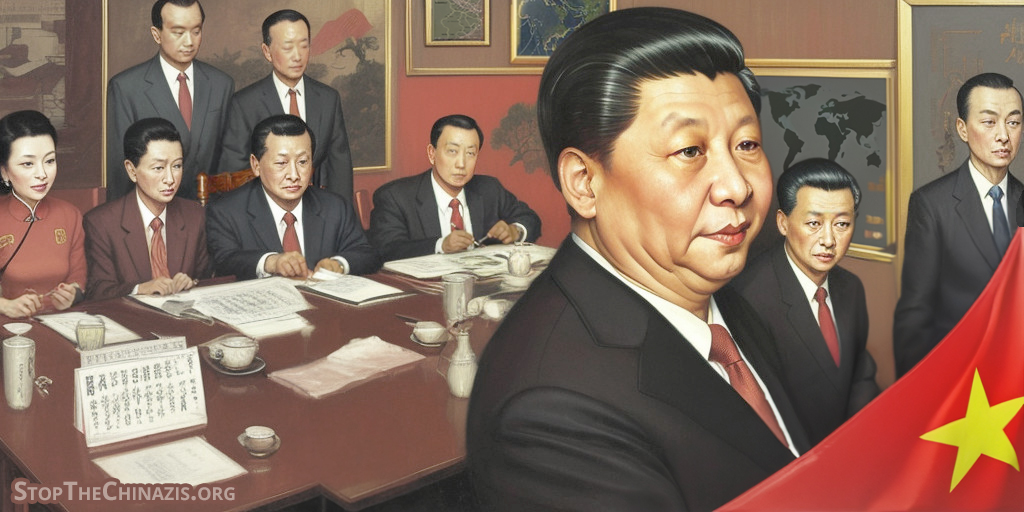
Reynolds serves as the United Kingdom’s Business Secretary. He’s talking about the behavior of Jungye, the Chinese owner of troubled British Steel. 

“The conscious decision not just to not order raw materials but to sell existing supplies of raw materials . . .” Reynolds fulminated, leading him to tell the BBC that “he doesn’t want any future Chinese involvement in British steel making.”

Over the weekend, the UK Government seized British Steel, with Reynolds explaining that “he was forced to seek emergency powers to prevent owners Jingye” from “shutting down its two blast furnaces, which would have ended primary steel production in the UK.”

“They wanted to close down steel production in Britain,” argues Nigel Farage, an MP and leader of Reform UK, “This is a big strategic decision by the CCP.”

Asked if he was accusing the Chinese owners of “lying about the numbers,” the fiery Farage replied, “Yes, absolutely,” adding, “Lying about everything.”

In a single day, Saturday, Parliament passed emergency legislation to facilitate the Business Secretary’s request. 

One opposition MP called it a “botched nationalization,” as the company is still in Chinese hands. It seems more a rescue attempt for Chinese owners who don’t want to be rescued. 

Takeaway? Maybe China isn’t such a great economic partner after all. 

Free countries are reluctantly rediscovering that we still live in a dangerous world, in which we better be able to protect ourselves and not depend on the sworn enemies of freedom. 

This is Common Sense. I’m Paul Jacob. 


PDF for printing

Illustration created with Krea and Firefly

See all recent commentary
(simplified and organized)
See recent popular posts

Categories
Thought

Herman Melville

It is better to fail in originality, than to succeed in imitation. He who has never failed somewhere, that man can not be great. Failure is the true test of greatness.

Herman Melville, “Hawthorne and His Mosses,” in The Literary World (August 17 & 24, 1850).
Categories
Today

First Abolitionists

On April 14, 1775, the Society for the Relief of Free Negroes Unlawfully Held in Bondage, the first American organization committed to the abolition of slavery, was formed in Philadelphia.


On April 14, 1818, Noah Webster published his American Dictionary of the English Language, one of the first lexicons to include distinctly American words. The dictionary, which took him more than two decades to compile, introduced more than 10,000 “Americanisms.”

On April 14, 1988, representatives of the Soviet Union, Afghanistan, the United States, and Pakistan signed an agreement calling for the withdrawal of Soviet forces from Afghanistan. In exchange for an end to the disputed Soviet occupation, the United States agreed to end its arms support for the Afghan anti-Soviet factions, and Afghanistan and Pakistan agreed not to interfere in each other’s affairs.

Categories
Update

Free Trader Manqué

In the pages of The Independent a week ago, Michael Sheridan contemplates an irony of ironies, the “Chinese Communist Party, apostle of free trade.”

What?

If people start saying seemingly crazy things, the subject is usually Trump.

In this case, the Trump tariffs. “In a strange new world, that was the strangest thing, as shares crashed in reaction to President Donald Trump’s opening salvo of tariffs in a global trade war.

“The market has spoken,” said the foreign ministry spokesperson, Guo Jiakun, writing in English on Facebook — which is, by the way, banned in China. No double standards there, then. Beijing can always keep a straight face when it matters.

Politically, the Chinese government can scarcely believe its luck. It has stepped forward as a voice of reason and stability in a chorus of discord to promote the false narrative that it has been a model of good behaviour since it joined the World Trade Organisation (WTO) on 11 December 2001, a date that seems destined to live in the textbooks as the peak of globalisation.

The Trump tariffs “are a typical act of unilateral bullying,” complained a spokesperson for China’s Commerce Ministry.

Of course, that is not how Trump and his supporters see it. The tariffs are a reaction (so the story goes) to China’s bad business practices. Consider the words of Kevin O’Leary: “One hundred and four percent tariffs on China are not enough. I’m advocating 400 percent. I do business in China. They don’t play by the rules. . . They cheat; they steal; they steal IP; I can’t litigate in their courts. . . .”

The tariffs are retaliatory and regulative — can that be true?

Many believe it.

What is not believable, though, is China’s free trade stance. “Here’s the new thing in China’s post-latest-Trump-tariff propaganda: nothing,” writes Scribbler at StoptheCCP.org.

Whenever anybody objects to or seeks to counter CCP bullying, the Party is apt to complain about being bullied and to sternly lecture its victims about the importance of peace and good will among men. So what? We know what the propaganda is. Yes, the regime is serious, very serious. And the Party’s propaganda should be answered. But the flow of it will never cease no matter what the U.S. or anybody else does.

If you are looking for how China will weather the trade barrier, consider the words of the videographer linked to, above, for the O’Leary quote. China, he says, is “a dying autocratic regime that is trying (and failing) to imperialize the world.”

The China tariff is likely primarily political, intended to de-stabilize the Xi regime. Trump has been complaining about China taking advantage of trade with the west. He appears to be sticking to his guns.

Categories
Thought

Samuel Adams

Among the natural rights of the colonists are these: First a right to life, secondly to liberty, thirdly to property; together with the right to defend them in the best manner they can.

Samuel Adams, The Rights of the Colonists: The Report of the Committee of Correspondence to the Boston Town Meeting, Nov. 20, 1772.
Categories
Thought

Houston . . . a Problem

On April 13, 1970, an oxygen tank aboard the Apollo 13 Service Module exploded, putting the crew in great danger and causing major damage to Odyssey, the Apollo command and service module, while en route to the Moon.

Categories
Update

What Happened at the CDC?

The coronavirus pandemic panic — called by Michael Knowles the “Dem panic” for the Democrats’ opportunistic obsession on the subject, using it to unseat Trump from power in 2020 — has been covered extensively by Paul Jacob on this site. But it’s not Paul’s main focus, so most stories just have to be left unnoticed.

But every now and then it’s good to check in on the developing story. Here is an interesting update: Ryan King, at the New York Post, offered us “CDC doctor monitoring bad COVID vaccine reactions may have deleted files, alleges Sen. Ron Johnson,” yesterday.

“Officials at the Department of Health and Human Services (HHS) struggled to find records belonging to Dr. Tom Shimabukuro, the director of the CDC’s Immunization Safety Office,” writes Mr. King, “while trying to comply with a subpoena from Sen. Ron Johnson (R-Wis.) for vaccine safety data.

In January, after becoming chair of the Senate’s Permanent Subcommittee on Investigations, Johnson blasted out a subpoena for records on internal COVID-19 vaccine safety communications, which led to HHS discovering the potential discrepancies with Shimabukuro’s emails. 

“Any attempt to obstruct or interfere with my investigatory efforts would be grounds for contempt of Congress,” Johnson wrote Wednesday. 

Contempt of Congress is punishable by up to a six-figure fine and 12 months in prison.

The deleting of files is a common accusation, as has crossed the mind of anyone contemplating the JFK assassination or the weird world of UFOs. As the pandemic panic moves from news to history, we can expect many such accusations.