Categories
Accountability free trade & free markets

The Fed Feeds a Scam

Real and effective “anti-establishment” ideas come from unexpected places. That is, they are unexpected if you read only the dominant media and its insider sources, or follow politics only during the quadrennial presidential farce.

Quite a few news junkies would be surprised at David Stockman’s critique of current Federal Reserve behavior and policy, for example. In “Why Ronald Reagan Is Rolling In His Grave: The Keynesian Putsch At The Fed,” he charges the central bank with having managed “an economic coup d’etat” by engaging in an ongoing wealth redistribution scam — shoveling wealth to the rich.

Stockman sees the confidence of Fed Chair Yellen’s macro-policy micromanagement agenda as a scary case of hubris, of self-appointed effrontery. “Yellen & Co believe they are in charge of virtually everything on the main street economy . . . based on nothing more than their own subjective and unexplained wisdom.”

Stockman is in high form, here. Yellen’s latest pronouncement, he says, is “unaltered Keynesian claptrap. It is the arrogant over-reach of a model-obsessed academic zealot who has no respect whatsoever for the real main street economy and for the historically proven truth that free markets are the best route to prosperity and higher living standards for the people. . . .”

Her policies, he claims, amount to “‘trickle down’ economics with malice of forethought.”

Does that sound Bernie Sanderish to you? It shouldn’t.

The case for limited government and against the Fed (and federal government management in general) are that it is modern unlimited government that serves the few at the expense of the many. Stockman is just restating very old wisdom.

Remind your Occupier friends of this. They are on the wrong team.

This is Common Sense. I’m Paul Jacob.


Printable PDF

D. Stockman


Categories
folly free trade & free markets

Prophecy Failed

In the first week of June we were told to expect egg shortages. The avian flu had infected millions of hens: egg production would plummet.

This was news, reported as “Egg Rationing in America Has Officially Begun.” The Washington Post cited a few signs in Texan retail groceries warning customers that the stores were not in the wholesale biz, supplying eggs for restaurants and the like.

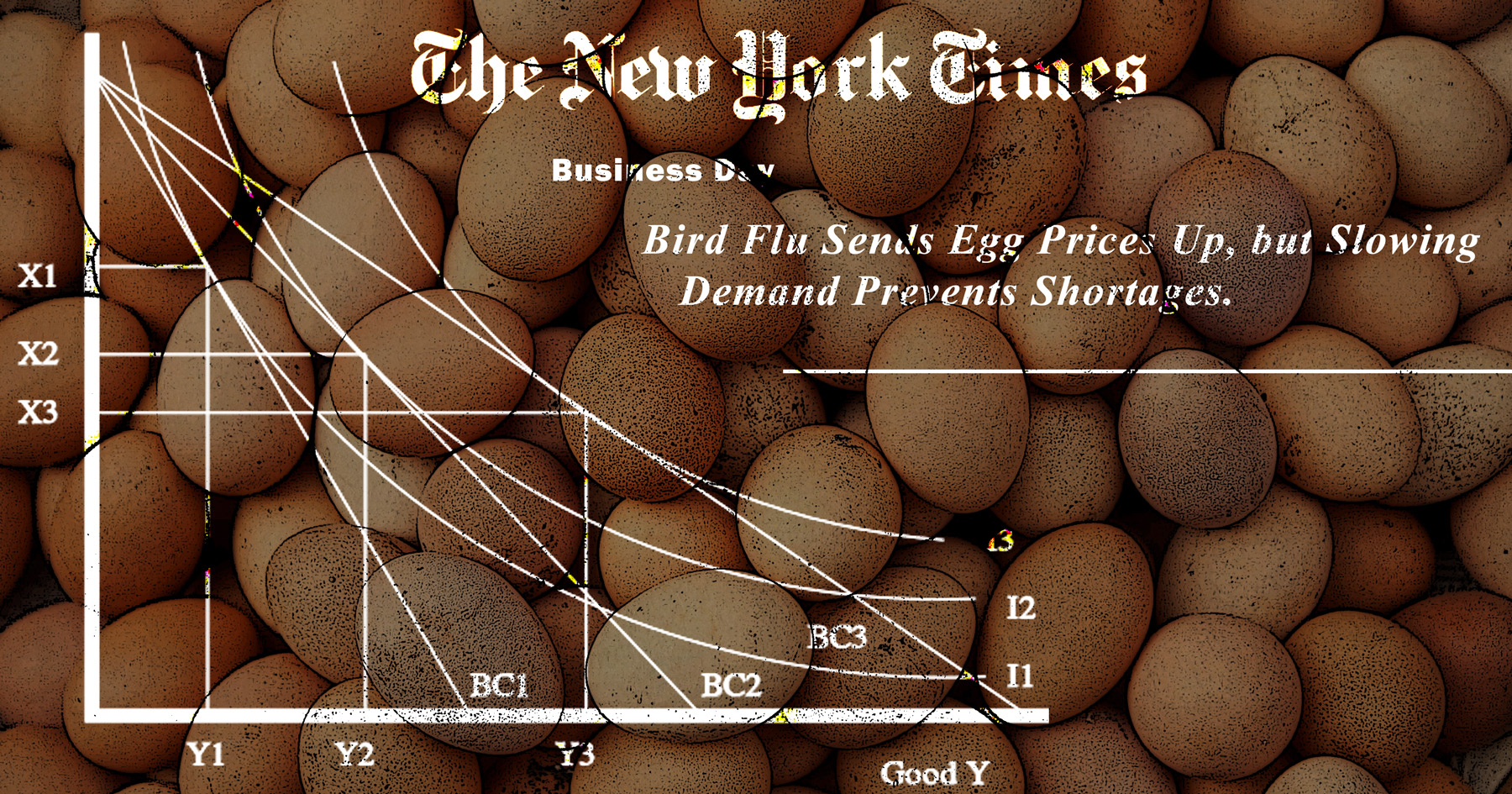
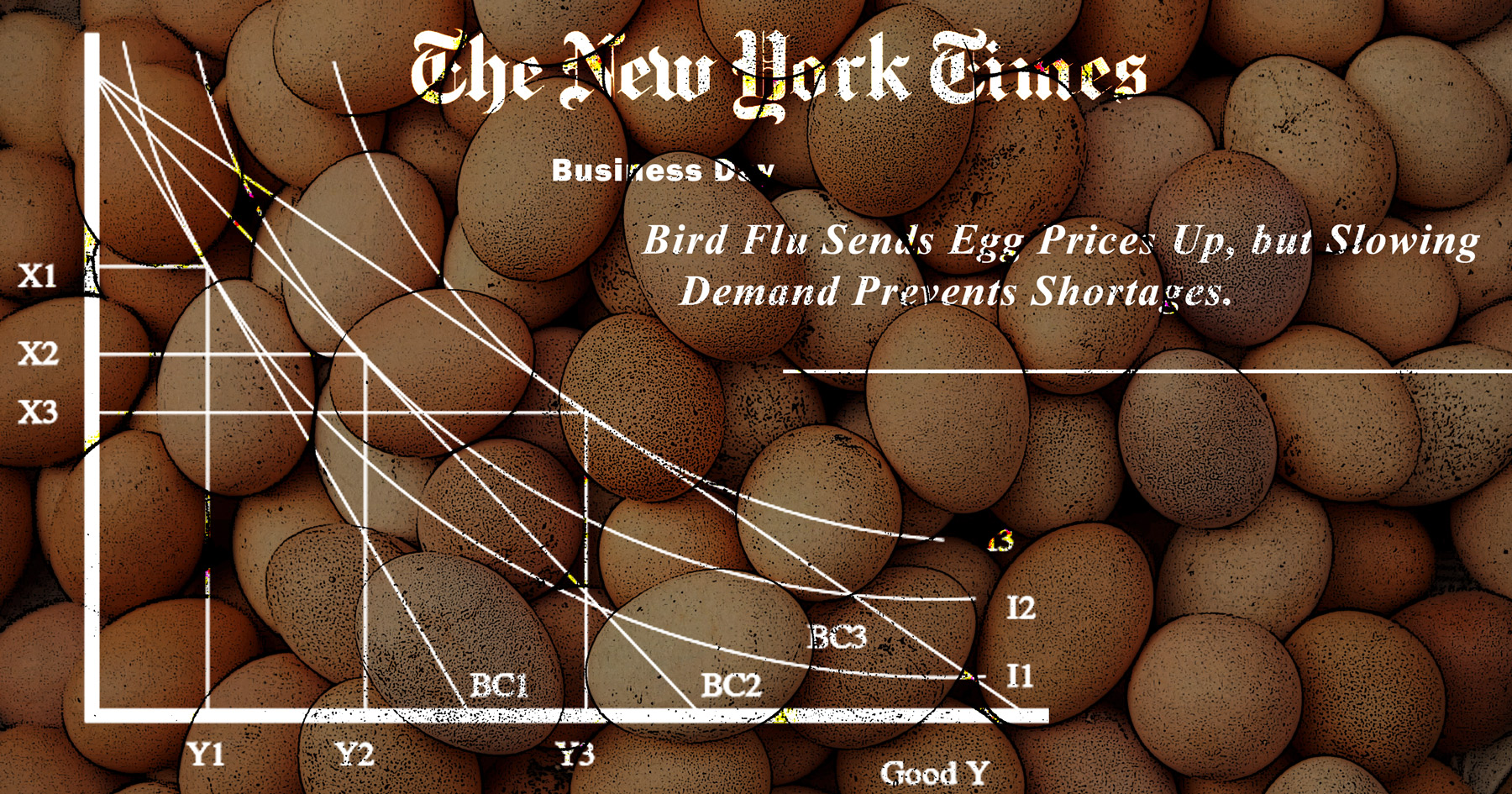
And then the follow-up: On Tuesday the New York Times reported, “Bird Flu Sends Egg Prices Up, but Slowing Demand Prevents Shortages.”

Author Stephanie Strom is probably not responsible for the title. Her copy was not horrible.

It’s hard to get over the title, though. Economist Mike Munger offered his reaction headline: “NY Times Causes Head of Mungowitz to Explode.”

Why?

One word: “but.”

The title should have read, “Bird Flu Sends Egg Prices Up, So Naturally Slowing Demand Prevents Shortages.”

Why that “slowing demand”?

I’ll let Munger explain it:

There can never, NEVER be a shortage if prices are free to adjust. Because a shortage is insufficient supply at current prices. Lagniappe: This was in the “Science” section. Yes, it was.

People buy less when prices rise. So those who value eggs less cede those humpy dumpties to folks who want them more. Fitting. Harmonious!

So the title was witless, Munger insists, “on the order of ‘Water:  Still Wet!’ or ‘That Crazy Sun:  Rising in the East Again This Morning.’”

I like “good news” stories. Too bad the Times wasn’t quite up to delivering the good news that was clearly fit to print.

This is Common Sense. I’m Paul Jacob.

Printable PDF

Eggs


Categories
folly general freedom too much government

Under the Law, Not Beneath It

Celebrating the 800th anniversary of the Magna Carta Libertatum this week, I noted how a document intended to serve the very upper classes, by limiting each others’ powers, led to liberty for all.

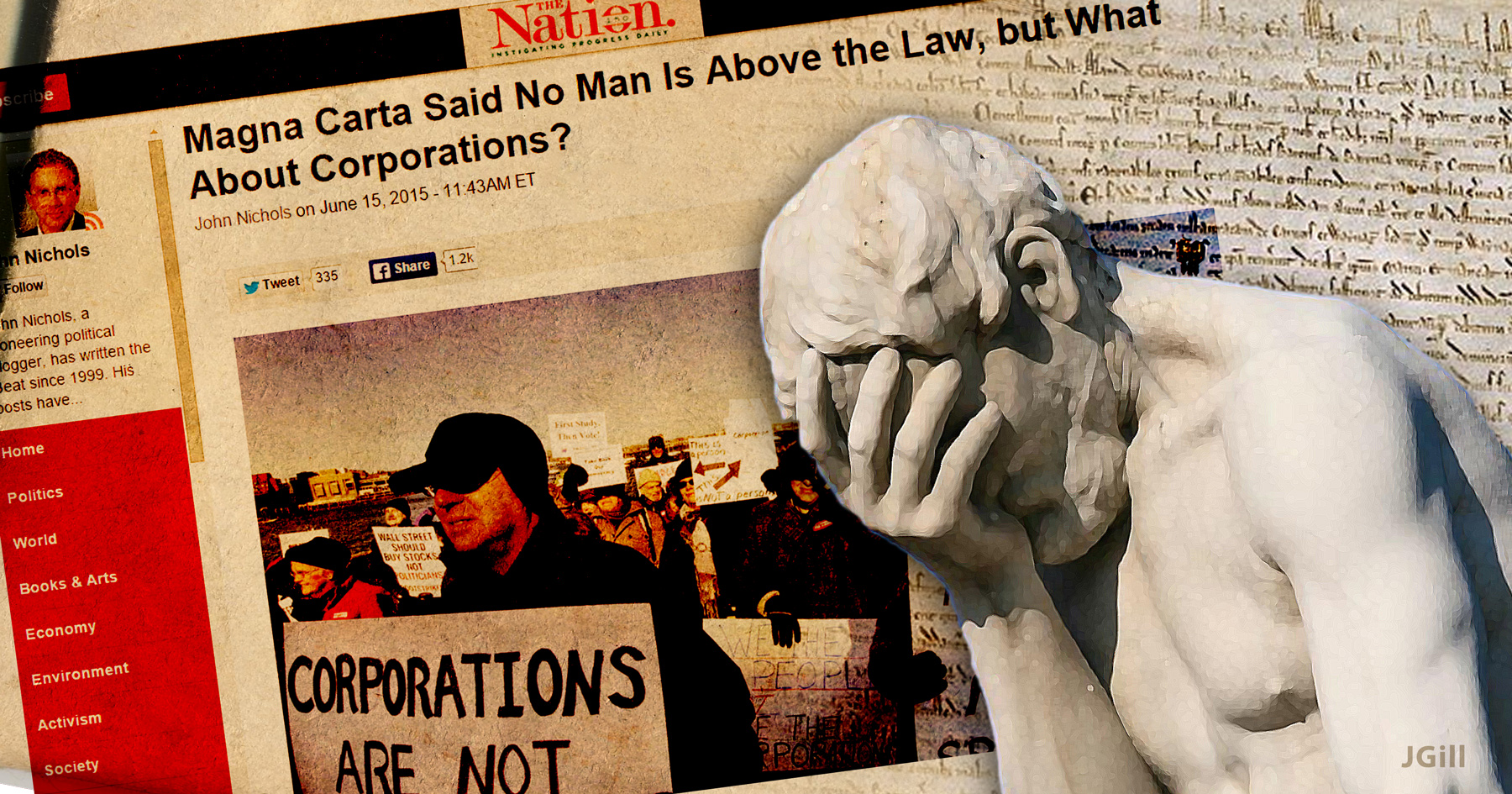
The Nation, on the other hand, used it to excoriate the Citizens United ruling.

“Magna Carta reminds us that no man is above the law,” wrote John Nichols on Monday. “But it should not be imagined that Magna Carta established democracy, or anything akin to it.”

Of course the Magna Carta did not establish democracy. No one said it did. And neither Britain nor America has pure democracy, if you define it . . . in Nichols fashion. What is he driving at?

If we respect the notion that the rule of law must apply to all . . . then surely it must apply to corporations.

And, surely, the best celebration of those premises in the United States must be the extension of the movement to amend the US Constitution to declare that corporations are not people, money is not speech, and citizens and their elected representatives have the authority to organize elections — and systems of governance — where our votes matter more than their dollars.

Sure, Mr. Nichols, corporations shouldn’t be above the law. But they shouldn’t be below it, either. And in America we have rights to free speech and press. Those rights “surely . . . must apply to corporations.”

Let’s increase the liberating powers of democracy: open up ballot access, de-privilege incumbents, count votes in a non-mere-plurality-wins fashion.

But let’s not throw out equal rights under the law, even in the name of democracy.

This is Common Sense. I’m Paul Jacob.

Printable PDF

Magna Carta Nation


Categories
general freedom U.S. Constitution

An 800th “Birthday”

Something happened 800 years ago yesterday, something of note.

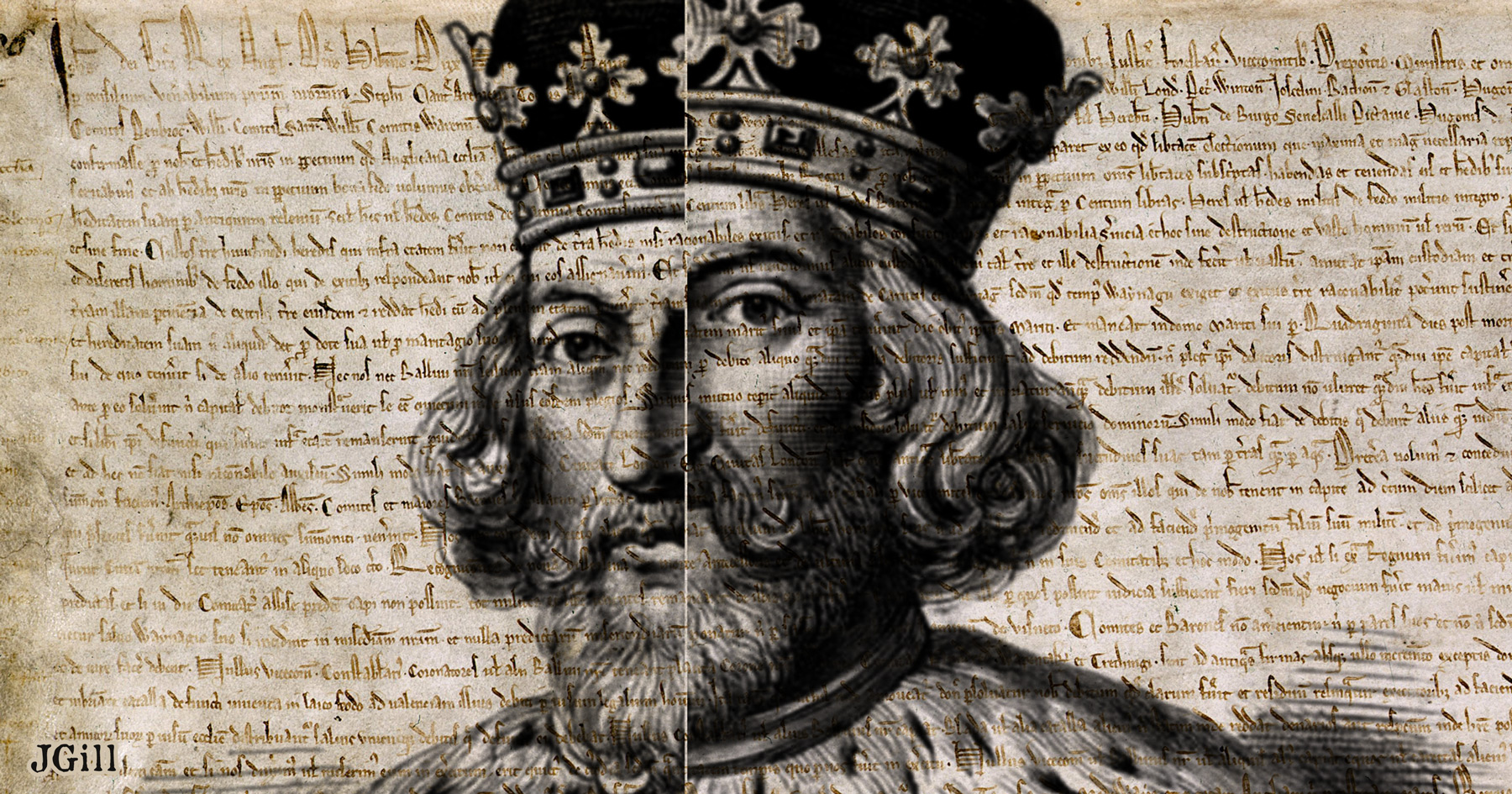
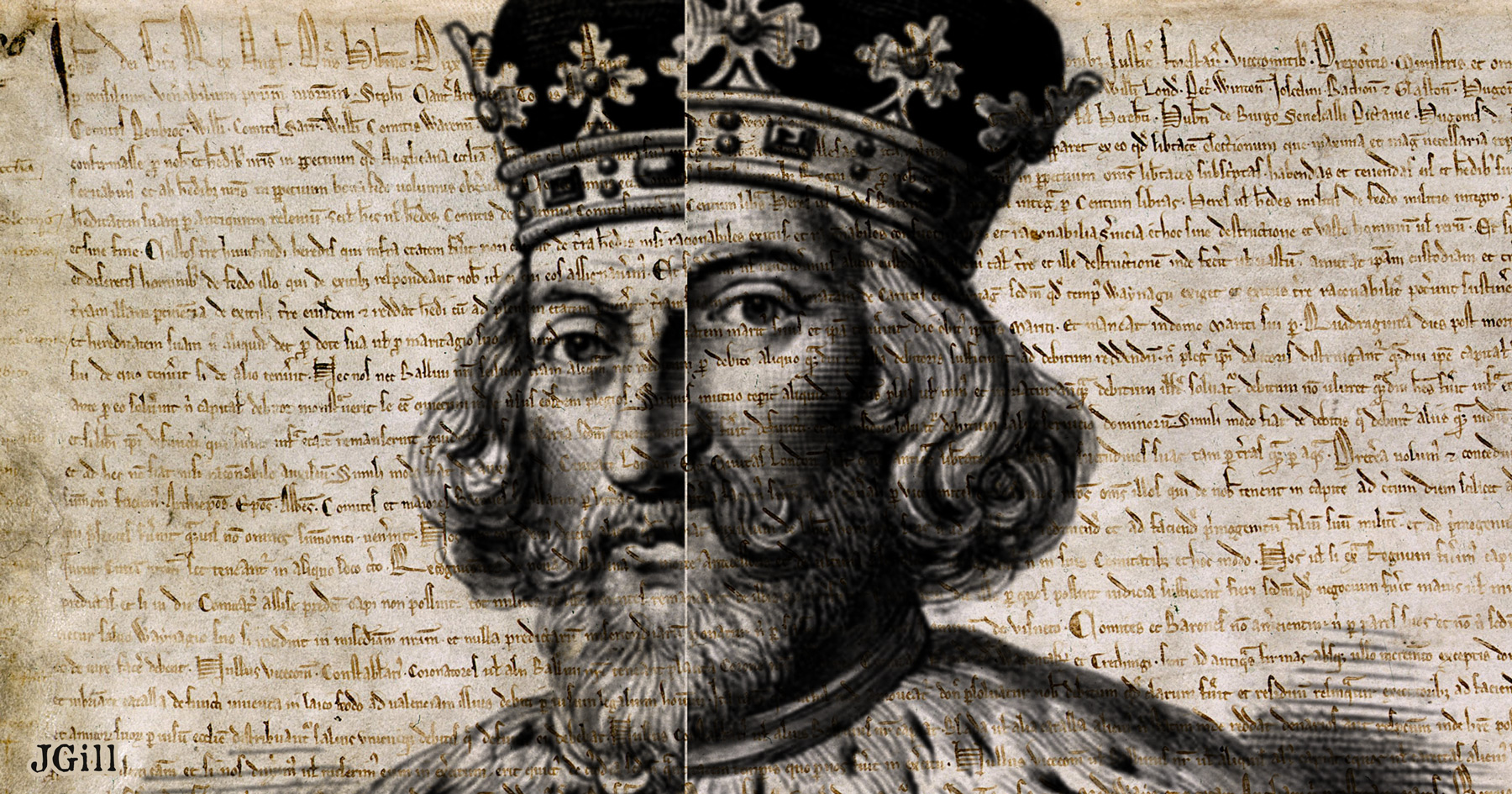
The much-loathed and legendary — but real-life — King John signed a document with his barons that limited his power. It was later called the “Magna Carta,” the great charter.

Strange history. It was signed, made a big deal of, and then quickly repudiated. But it was never completely dead, possessing a zombie afterlife, and eventually helping give birth to the Enlightenment idea of limited government, as well as to the United States Constitution.

Most of the document is concerned with the king’s relationship with his subordinate (and insubordinate) barons. There’s a lot of power-wrangling in it, it’s all about divvying up prerogatives and responsibilities and taxes and fees. But it does contain a few passages of note (I’ve listed them on my “Today in Freedom” feature, in the past, and revive one for today’s).

My friend Sheldon Richman quotes scholar John Millar (1735-1801), one of Adam Smith’s most illustrious students, to put the document in its best perspective: “A great tyrant on the one side, and a set of petty tyrants on the other, seem to have divided the kingdom . . . who, by limiting the authority of each other over their dependents, produced a reciprocal diminution of their power.”

They were selfish men, Millar notes, not much concerned with ordinary folk, “But though the freedom of the common people was not intended in those charters, it was eventually secured to them. . . .”

Britain and then America stumbled onto liberty — a general and shared freedom — by the jealousy of competing powers.

We, the people, win when our “rulers” are divided, not united.

This is Common Sense. I’m Paul Jacob.

Printable PDF

Magna Carta


Categories
folly general freedom nannyism

A Spring in Their Step?

The “Free State” — Maryland — just got a little freer.

Deborah Ramelmeier, Social Services Administration head honcho, has laid forth from her mighty public perch in Maryland’s Department of Human Resources an official directive to the state’s Child Protective Services (CPS).

She finally addressed the issues in the Meitiv case.

You’ll recall that Danielle and Alexander Meitiv allowed their 10-year old son and 6-year old daughter to walk home together, without a parent or guardian or attorney present, from a public park a mile away. Silver Spring police snatched the two children off the street last December and so began a Maryland CPS investigation for neglect.

In April, the Meitiv kids were again caught flagrantly walking home from a park. This time they were held for more than five hours by police, then CPS, before their frantic parents were informed and the family reunited.

In the midst of threats, accusations, and fears, the CPS neglected to do the one sensible thing you’d expect: articulate a policy position defining just when or how or even if ever children are allowed out in public without constant and direct adult supervision.

That smidgen of sanity came last week, in Ms. Ramelmeier’s otherwise boring, bureaucratic 23-page directive. “Children playing outside or walking unsupervised does not meet the criteria for a CPS response absent specific information supporting the conclusion that the child has been harmed or is at substantial risk of harm if they continue to be unsupervised.”

Shazam! Just like that, “playing outside” and “walking unsupervised” are once again legal.

The children won’t be arrested! And their parents won’t be investigated or threatened with losing their little ones!

This is Common Sense. I’m Paul Jacob.

Printable PDF

Free State


Categories
general freedom

Free Brazil

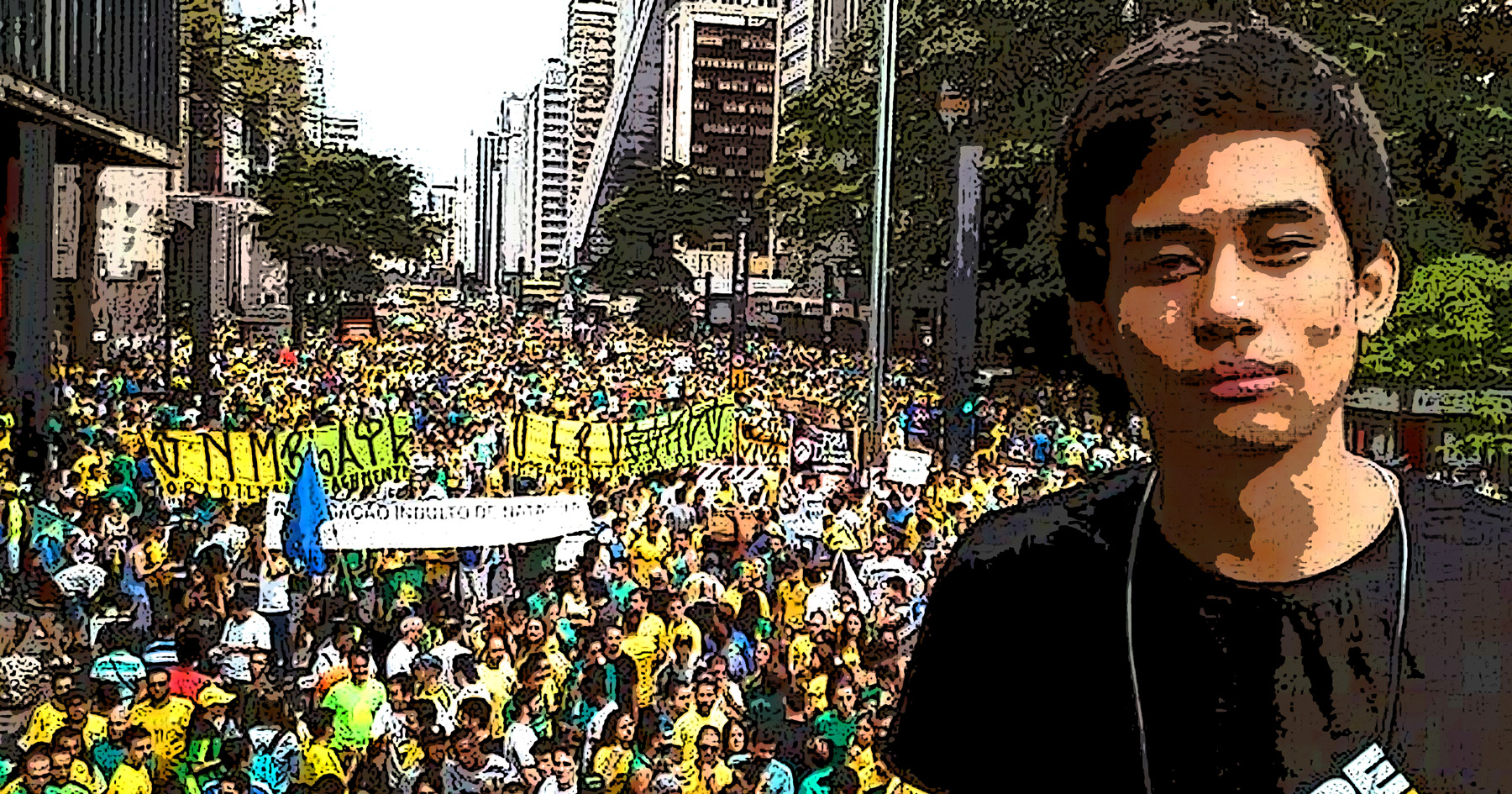
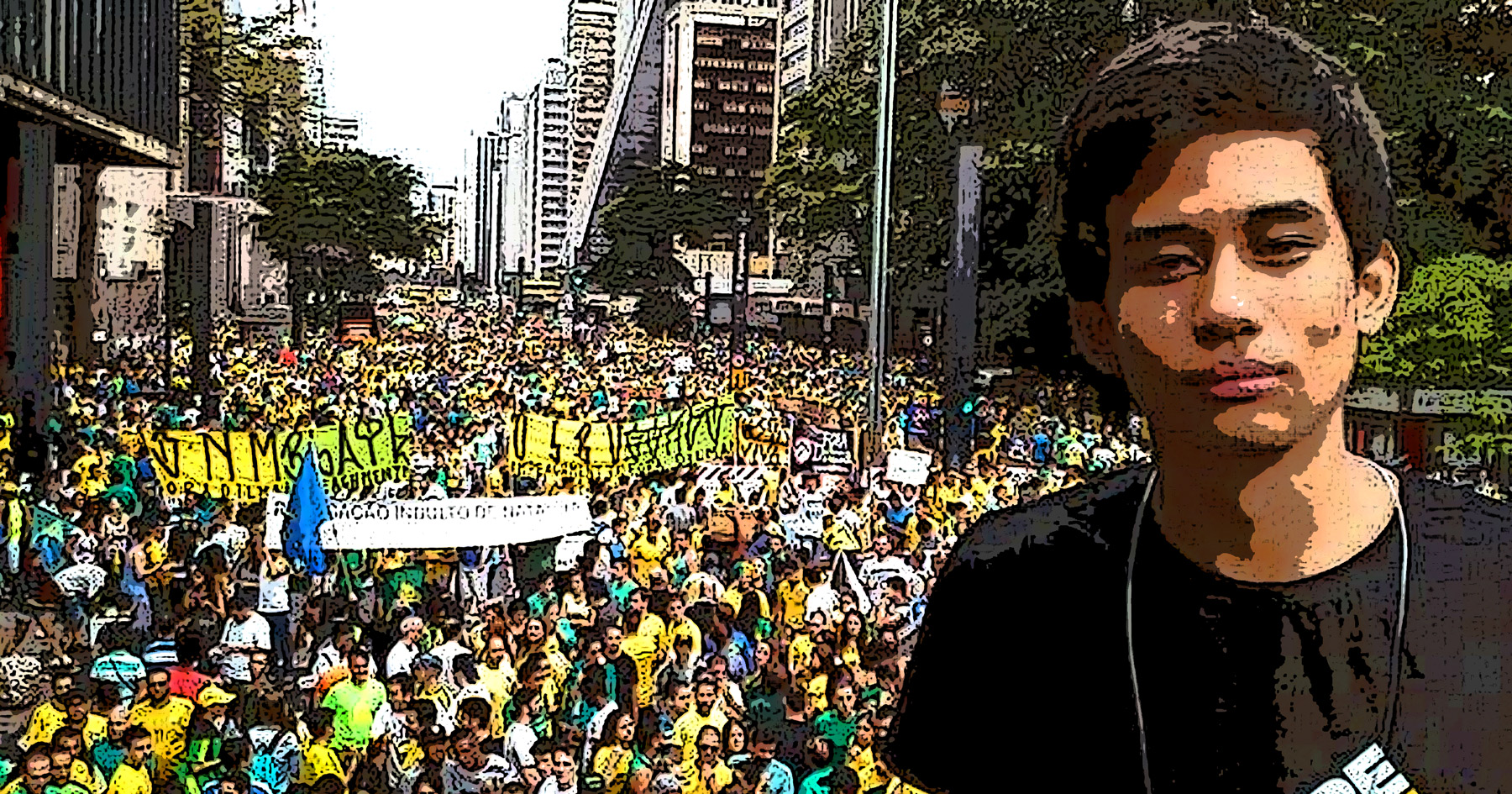
Kim Kataguiri — a founder and the most prominent public face of the Free Brazil Movement, which recently led millions in protest against high inflation, high taxes, and economy-crippling cronyism — is an unusual man.

First, there’s his age: 19.

Second, there’s his background — atypical but hardly unique, given the country’s substantial Japanese-Brazilian minority.

Third and most important, there’s the fact that he’s influenced by the ideas of free-market thinkers like Ludwig von Mises and Milton Friedman, ideas communicated online by Brazilian and American think tanks. In consequence, Kataguiri’s popular, social-media-conveyed critique of Dilma Rousseff’s tax-happy socialist government is openly liberal in perspective.

“Liberal,” of course, as in “having something to do with freedom and responsibility.” Classical liberal. Libertarian. Not warmed-over socialist-leaning liberal, as in America’s Elizabeth Warren and Bernie Sanders.

Do his free-market ideas and those of other young Free Brazil leaders mean that most Brazilians inspired by the Free Brazil Movement are just as principled? No; they may just be angry at the destruction wrought by an openly socialist government. Consistency may be the furthest thing from their minds.

But they do seem open to a new, positive alternative.

Kataguiri is perhaps overly optimistic, predicting that “in the next decade or two, most of our society will not only understand classical liberalism, but defend it too.”

But I like optimism. Especially since, whether you call it “classical liberalism,” libertarianism, or “small-government conservatism,” freedom isn’t exactly winning here on our fertile soil.

Still, I invite Kataguiri to drop by the United States when he has a chance . . . and do what he can to convert us to classical liberalism as well.

This is Common Sense. I’m Paul Jacob.

Printable PDF

Kim Kataguiri


Categories
education and schooling national politics & policies

The Bloomberg Limit

Afraid that scandal-alluring Hillary Clinton may prove too flawed a presidential candidate, some Democrats are talking to billionaire and former three-term New York City Mayor Michael Bloomberg about a 2016 presidential run.

Mrs. Clinton’s “slide is accelerating,” writes New York Post columnist Michael Goodwin. “A damaging new poll goes to the Achilles’ heel of her candidacy: People simply don’t trust her.”

Goodwin gushes, instead, at the “intriguing” possibility of Mr. Bloomberg.

“Wall Street wants Michael Bloomberg to run for president,” reports Business Insider, “but the billionaire isn’t budging.”

And for good reason. He can’t win.

It’s not just me saying so; it’s Michael Bloomberg himself. Last year, he told CBS Face the Nation that he’d consider running . . . “If I thought I could win.”

His honor should know, having spent more of his own money chasing public office than any person in American history.

Why did incumbent Mayor Bloomberg have to spend so much dough? He double-crossed voters on term limits. Bloomberg promised to oppose city council attempts to weaken the limits, but flipped to grab a third mayoral term for himself.

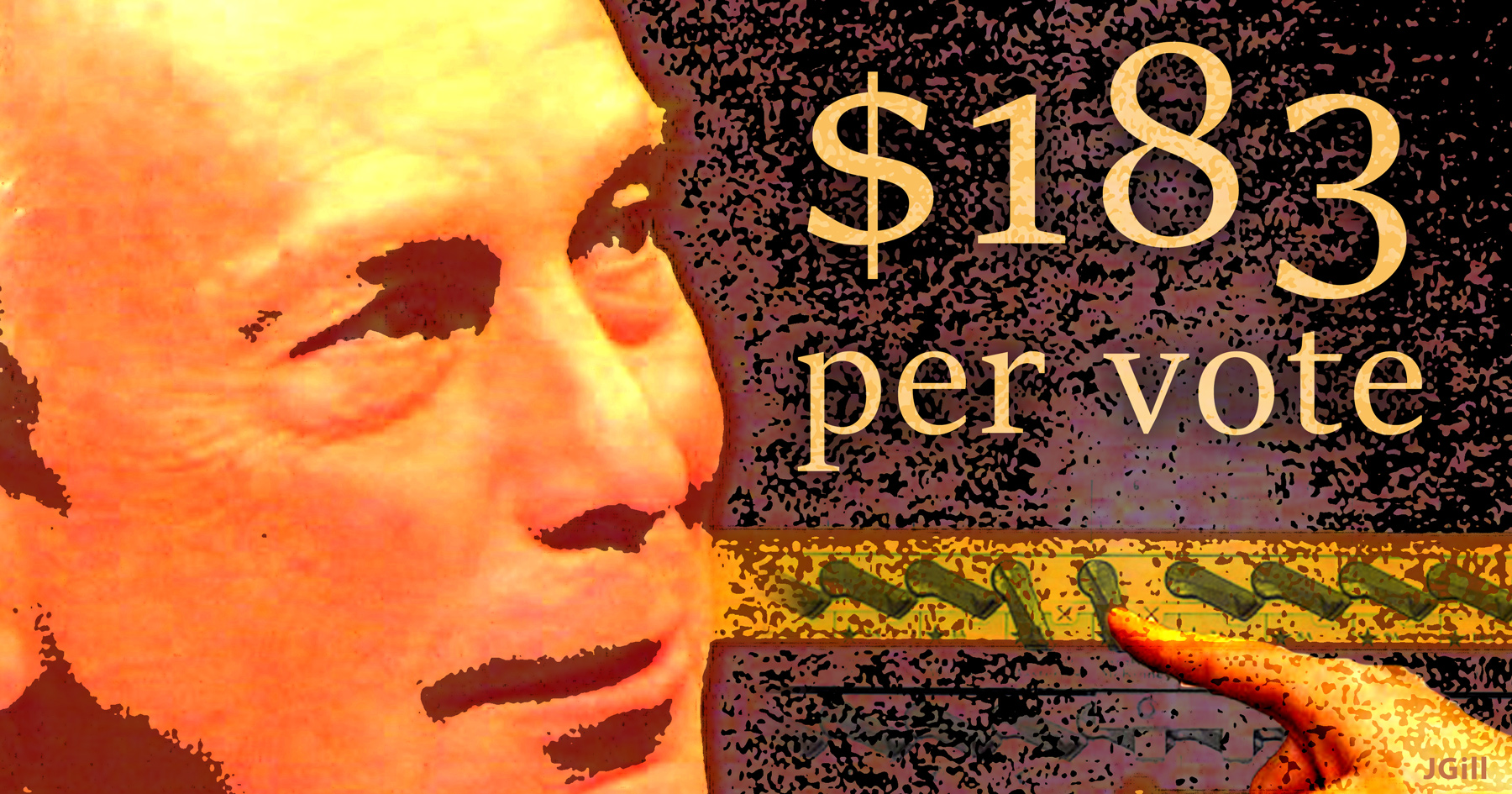
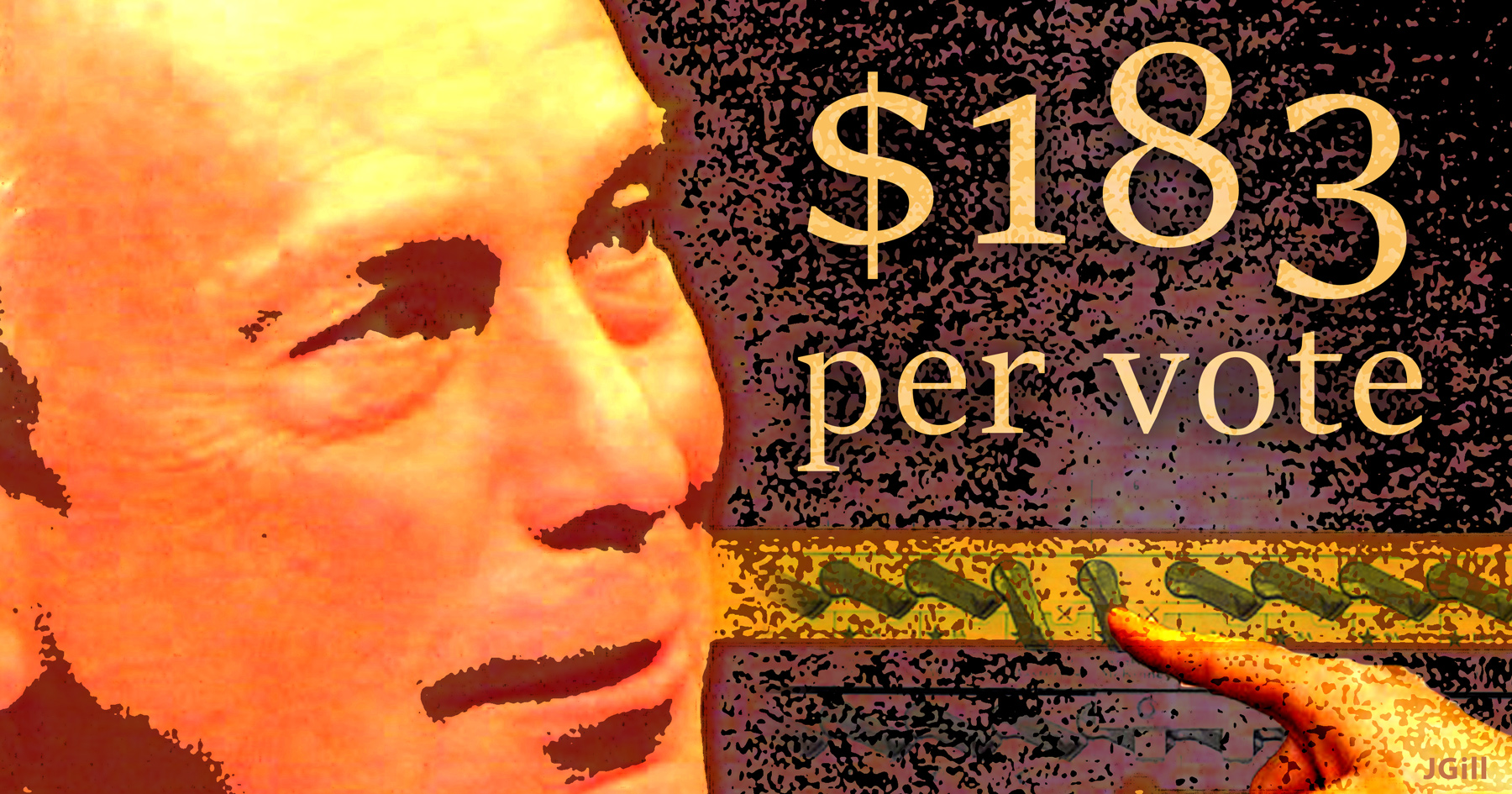
Voter anger “over his maneuver to undo the city’s term limits law,” reported The Times, became . . . well, a big problem. “To eke out a narrow re-election victory over the city’s understated comptroller, Mayor Michael R. Bloomberg spent $102 million of his own money, or about $183 per vote,” explained the New York Times in 2009, “. . . making his bid for a third term the most expensive campaign in municipal history.”

A similar price tag in a presidential race stands at roughly $23 billion. That’s a lot for anyone.

This is Common Sense. I’m Paul Jacob.

Printable PDF

Bloomberg Votes


Categories
education and schooling folly

Learning Zone or War Zone

Given the stated purposes of the university — discovering, learning, teaching, engaging in open intellectual discourse — you might suppose that the pitched battles on campus would be primarily intellectual in nature. Persons set forth a view, others criticize it or elaborate a positive alternative, etc.

Open intellectual change, however heated, is indeed often what transpires.

But on many campuses, we also witness efforts to muzzle opponents of ideas or policies. The censors contend that disagreement as such constitutes a kind of assault on them, one from which their delicate selves must be forcibly and un-delicately protected.

Thus, campus activists at Northwestern University have reported Professor Laura Kipnis for “sexual harassment” for arguing, in The Chronicle of Higher Education, that “Sexual Paranoia [Is Striking] Academe,” as exemplified by prissy new rules about dating, jokes, the simplest of standard human interactions. According to her accusers, her article somehow creates a “hostile environment” for students eager to impose not only a Victorian screen on dating and talking, but also a screen, or lid, on any discussion of the Victorian screen. It’s just one example of a syndrome that could be multiplied ad infinitum.

What to do?

One thing, if you’re applying to college: omit as a prospect any school rife with the politics of repression. Boycott the anti-academic academy.

The second, larger solution: bypass the modern university altogether.

Modern technology can help with that. There are more and more ways to learn, and teach, with every day that passes.

This is Common Sense. I’m Paul Jacob.


Printable PDF

College Safe Zones


Categories
ballot access general freedom national politics & policies

The Duopoly Rules

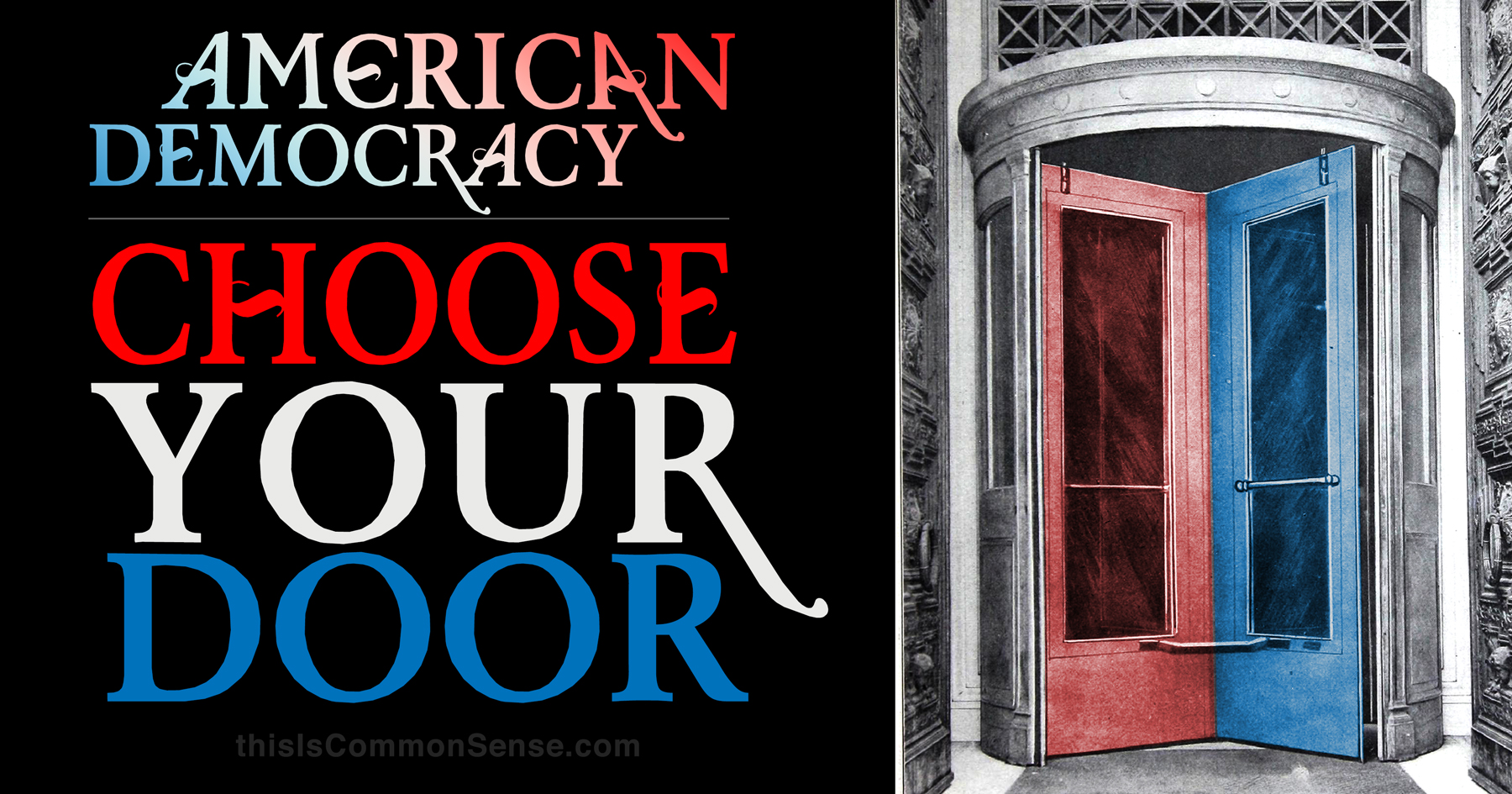
As Americans brace themselves for another presidential campaign, USA Today’s editors hazard that the “configuration” of the Commission on Presidential Debates (CPD) “certainly creates an appearance of a political duopoly designed to limit independent voices.”

In 1987, after the League of Women Voters displeased the two major parties, the duopoly’s respective chairmen cooked up the CPD. Both men indicated that including non-R-or-D candidates was not part of the plan.

Thirteen years later, to keep the CPD’s tax-exempt status, the CPD established a “non-partisan” rule to “fix” an opportunity for minor parties: candidates must garner 15 percent support in the polls for inclusion in the debates.

Fast forward to today, and we witness a new group pushing the CPD to drop that requirement. Change the Rule wants one third-party nominee to be included, provided that candidate is on enough state ballots to mathematically have a chance to win the presidency.

“A third person in the general-election debates would make it harder for the major-party candidates to stick to talking points and platitudes,” agrees USA Today. But the newspaper worries about “unintended consequences,” that rather than the “centrist” they want in the debates, a new system might produce someone “on the far left or far right.”

Dear Editors, the election process ought not be designed to produce a certain pre-arranged ideological outcome.

Establishing a fair system entails not limiting voter choice ahead of time. Voters should get to hear from every candidate on enough ballots to be elected president.

This is Common Sense. I’m Paul Jacob.


Printable PDF

Duopoly


Categories
crime and punishment

Cops as Robbers

If there’s anything that cops should not be, it’s robbers.

By “cops” I mean anyone, including prosecutors, charged with protecting us against criminals. The guardians should not become predators themselves.

Thankfully, these two presumptively opposite categories of men have not become wholly indistinguishable — yet. But every day brings more evidence that we’re skating closer to that abyss.

Consider the police raid on the Michigan home of Ginnifer Hency, whose alleged crime was possession of marijuana with “intent to deliver,” i.e., to use it to assuage her own disease-caused pain, as well as that of others for whom she is a registered caregiver. Hency is fully compliant with all state law. A judge has therefore dismissed the charges wrongly brought against her.

At least one official involved in the case, then, has exhibited the respect for rights and justice that all should be exhibiting.

Good.

But questions remain.

Why was her home raided to begin with? Why was she charged? Why did police use the raid to grab loot, everything from TV sets to her kids’ cell phones and iPads?

And why, after the charges were dismissed, did a prosecutor gloat that he didn’t have to return Hency’s belongings, that “I can still beat you in civil court”?

Actually, we don’t need to know the motives of such thugs to know that they must be stopped.

The Michigan House is considering bills that would make this type of legalized robbery harder.

It should also be punishable.

This is Common Sense. I’m Paul Jacob.

Printable PDF

Police Crooks