Categories
free trade & free markets general freedom individual achievement

Falcon 9 Delivers Eleven

Earlier this week, SpaceX made history. Again.

Back in 2008, the company had launched the Falcon 1 into orbit —a big deal in the Space Age, previously dominated by governments.

Blue Origin, which is the baby of Amazon’s Jeff Bezos, has been providing Elon Musk’s SpaceX some stiff competition. A few weeks ago, Blue Origin sent up the New Shepard rocket — and returned it to earth vertically.

This week, SpaceX pulled ahead, sending its Falcon 9 up beyond New Shepard’s suborbital heights, putting eleven (count ’em: 11) satellites into orbit . . . and returning to touch down safely onto dry land — on the launch pad — vertically.

Just like we imagined when we (well, some of us oldsters) were young, before we witnessed Mercury and Apollo splashdowns.

Back in 2012, when I wrote about SpaceX — and NASA’s outsourcing of launches — I called it progress. One reader worried about the whole thing, though: “A spy satellite is still a spy satellite even if some telecom conglomerate puts it in space.” He was afraid of privatizing tyranny. That would be bad, but it doesn’t seem to apply to this week’s new satellites . . . unless M2M (machine-to-machine) Internet devices mean something different than what I understand them to be.

In any case, costs have been contained: while NASA’s Space Shuttle was also reusable, it cost about half a billion bucks per launch, which, we’re told, is “about eight times the current cost of a Falcon 9.”

Free enterprise: delivering the goods at a fraction of the cost.

This is Common Sense. I’m Paul Jacob.

Printable PDF

SpaceX, Falcon 9, Jeff Bezos, Elon Musk, Space, NASA, Common Sense, illustration


Categories
folly ideological culture national politics & policies

This Is Not Politics

First, Hillary lied. She said that ISIS was using Trump in terrorism recruitment videos. The Donald responded with contemptuous ridicule, using a vulgar word for her 2008 defeat by Barack Obama.

Then, the Democratic Party presidential contender got all teary-eyed and said we had to treat each other with more respect, be nicer.

This is presidential politics?

Mrs. Hillary Clinton and Mr. Donald Trump are both addicted to telling whoppers. Their “stretchers” are now the everyday stuff of our nightly news.

Mrs. Clinton’s fact-less charge that Trump was being used in recruitment videos is all the more ridiculous considering that Mr. Clinton does star in such a video. Maybe she meant merely that Mr. Trump’s call for barring Muslim immigration will help ISIS paint America as anti-Muslim, telling the tall tale because, well, it “ seems true.” Even if it isn’t.

In this, she differs not a whit from Mr. Trump, who not too long ago “remembered” “seeing” “thousands” of “Muslims” in “New Jersey” celebrating the fall of the World Trade Center on 9/11/2001 — a video he cannot produce, either.

Politicians hyperbolize from bigotry to factoid all the time. What’s new is Trump’s foul calumny, in response, and Clinton’s painting of Trump as a bully for belittling her. That’s not how I remember politics. It seems new to adult debate.

But it isn’t new to our experience. It’s children bickering on the playground, then whining and lying all the way to Teacher. Or even Home.

Responsible adults don’t believe every charge lodged by little boys and little girls.

Like Donny and Hillary.

This is Common Sense. I’m Paul Jacob.

Printable PDF

Hillary Clinton, Donald Trump, politics, children, illustration, Common Sense


Categories
education and schooling folly free trade & free markets national politics & policies too much government

The Truth About Tuition

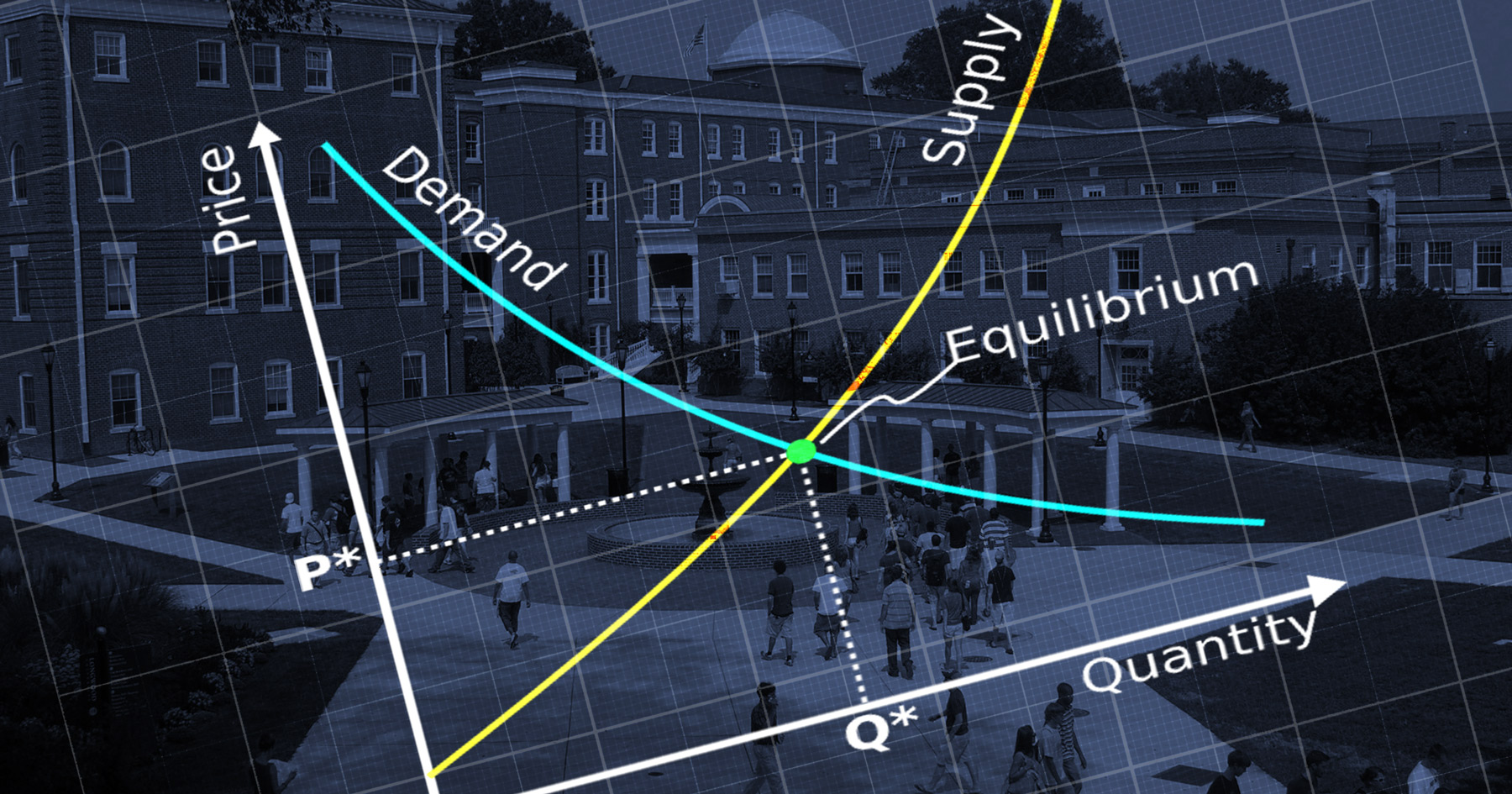
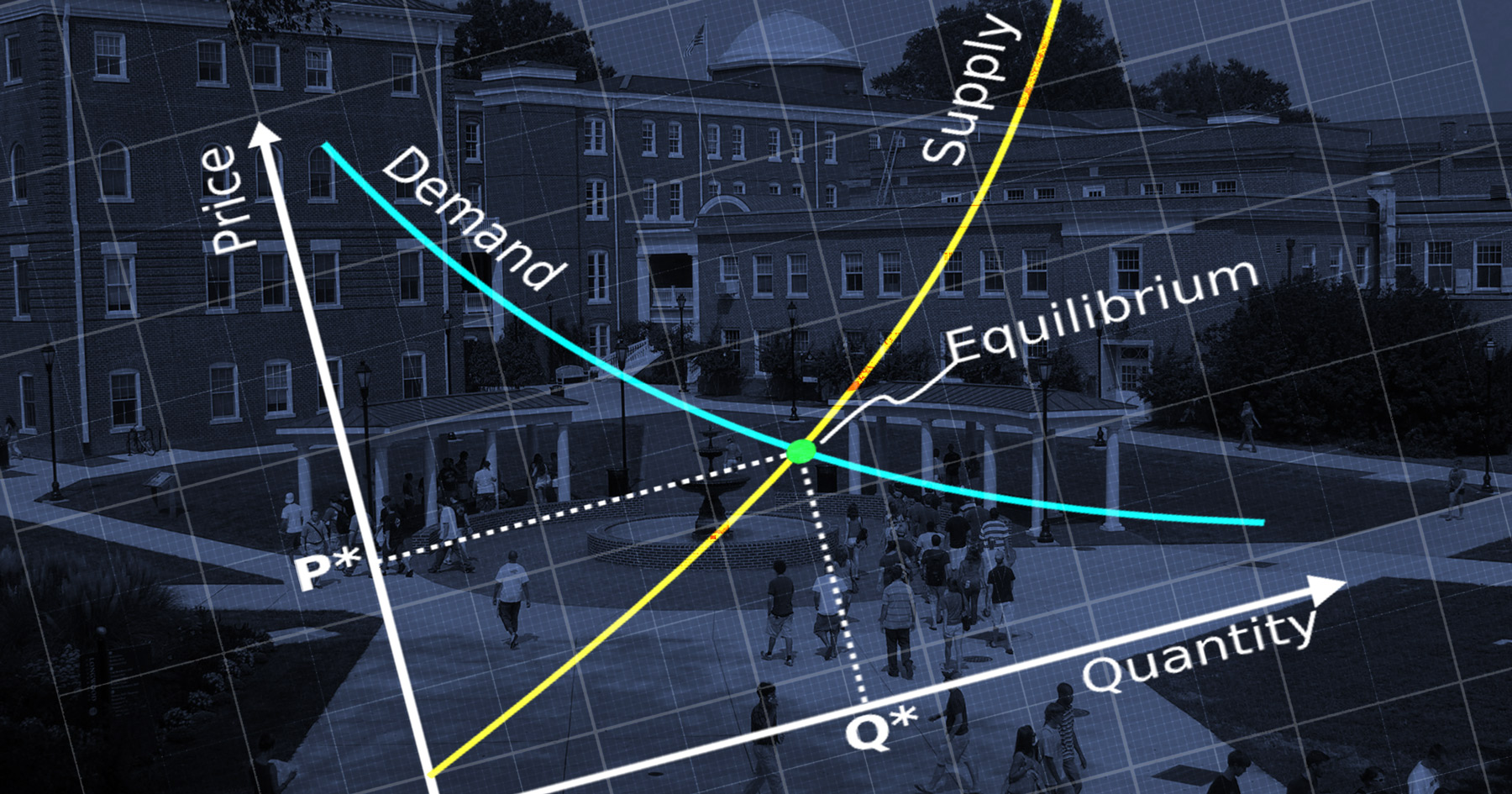
Subsidize something, and you tend to get more of it.

But wait, what if you subsidize demand for something, but don’t really allow (or continue to disallow) increased supply?

Then prices for that something go way up.

This is elementary economics — nothing controversial about it.

Except that politicians and bureaucrats who make public policy tend not to acknowledge this aspect of reality when they propose subsidies. Instead, they expect praise for their “heroic” and “caring” program of destruction.

They need to be educated. But, alas, all this applies best to college education. How does one educate the educators?

A new study, which reliable economists tell me is “sophisticated,” finds that the bulk of recent college tuition price inflation can, indeed, be directly linked to the federal government’s loan subsidies.

This study makes for some opaque reading, alas: “Essentially, demand shocks lead to higher college costs and more debt, and in the absence of higher labor market returns, more loan default inevitably occurs.” Yikes.

The college education bubble has been much talked-about for years, at least amongst skeptics of government policy. But in hushed tones — the big fear, here, is that a bursting of the bubble will lead to — who knows what? I mean, who-knows-what policy reaction.

Probably just more government subsidy and control. And even higher tuition still. Double yikes.

Thankfully, while the brick-and-mortar higher education institutions suck up more and more government-backed money, the Internet is enabling some great alternatives. The future, I think, does not belong to the university system as we have known it.

This is Common Sense. I’m Paul Jacob.

Printable PDF

tuition, supply and demand, subsidy, government


Categories
folly general freedom ideological culture too much government

Discreditable Credit

Capitalism can be rigged a hundred different ways, apparently. China’s is run by its Communist Party, and even current innovations bear the stamp of the Party.

Take “social credit.”

Not the quaint decentralist economic reform movement that was a minor deal in politics on the West Coast of the U.S. and Canada 60 or more years ago.

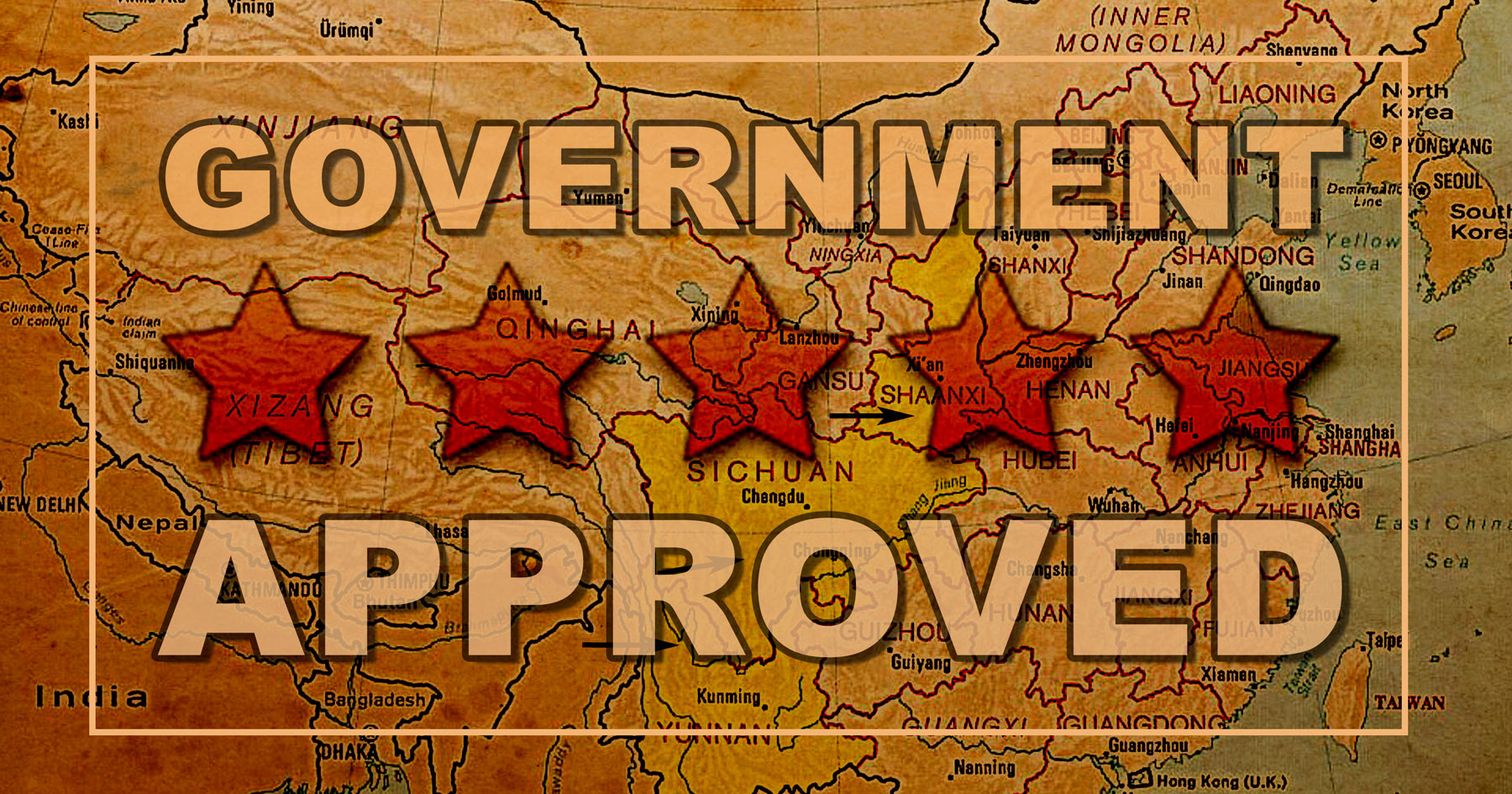
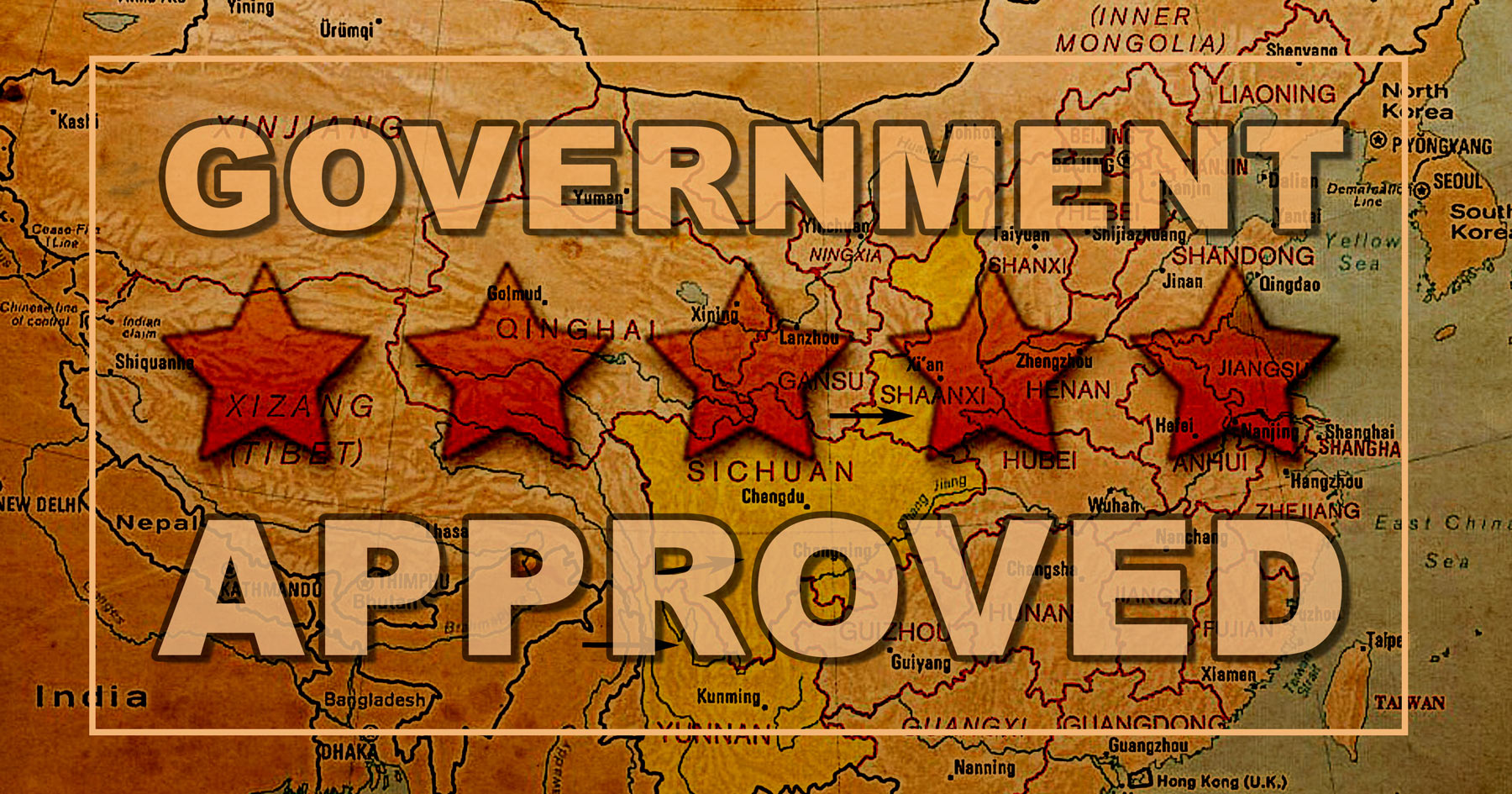
What I’m referring to is the innovative credit scoring system devised by a gaming company in cooperation with China’s commie-run government.

But it’s not quite like the credit scoring systems set up by competing companies in the U.S., which cook up “credit scores” based on going into debt and paying off debt. If you pay your bills, you get a higher score. If you don’t, it plummets.

The new “Sesame” credit scoring system is less interested in the debts you pay off and more in what you buy and what you put up on social media. The company has concocted a secret algorithm, and gives higher scores to good citizens — obedient people — and lower scores to lazy people (inferred from, say, if you play a lot of video games) or to folks who are rebellious free thinkers (posting pictures of Tank Man in Tiananmen Square, for example).

That is what it seems like, so far.

It rewards those Chinese who are industrious (yay?) and who kowtow to Communist Party expectations (yikes!) — and makes me extra glad I live in the U.S., where government is too chaotic and stupid to cook up anything quite this insidious.

This is Common Sense. I’m Paul Jacob.

Printable PDF

China Credit System, Sesame, China, Credit Rating, Common Sense


Categories
general freedom ideological culture

Spoiler Alert — Making Socialism Work

Despite the hoopla, I did not get a chance to watch Childhood’s End, the miniseries that aired this week on the SyFy channel.

But I didn’t really need to — and not just because it failed to receive critical or popular acclaim.

This is the age of the Internet, and — Spoiler Alert! — many cats get let out of many a bag. Facebook, Twitter, water coolers . . . we all hear things outside the designated venues.

Of course, many people knew the plot line of SyFy’s miniseries — simply because it’s based on a 1953 novel by Arthur C. Clarke.

So, when we notice that one of the show’s creators interprets the story’s stark ending as being more personal than cosmic, that it is about accepting the inevitability of death, we are not going to go into a snit about “spoilers.” We can all can handle it like . . . grown-ups.

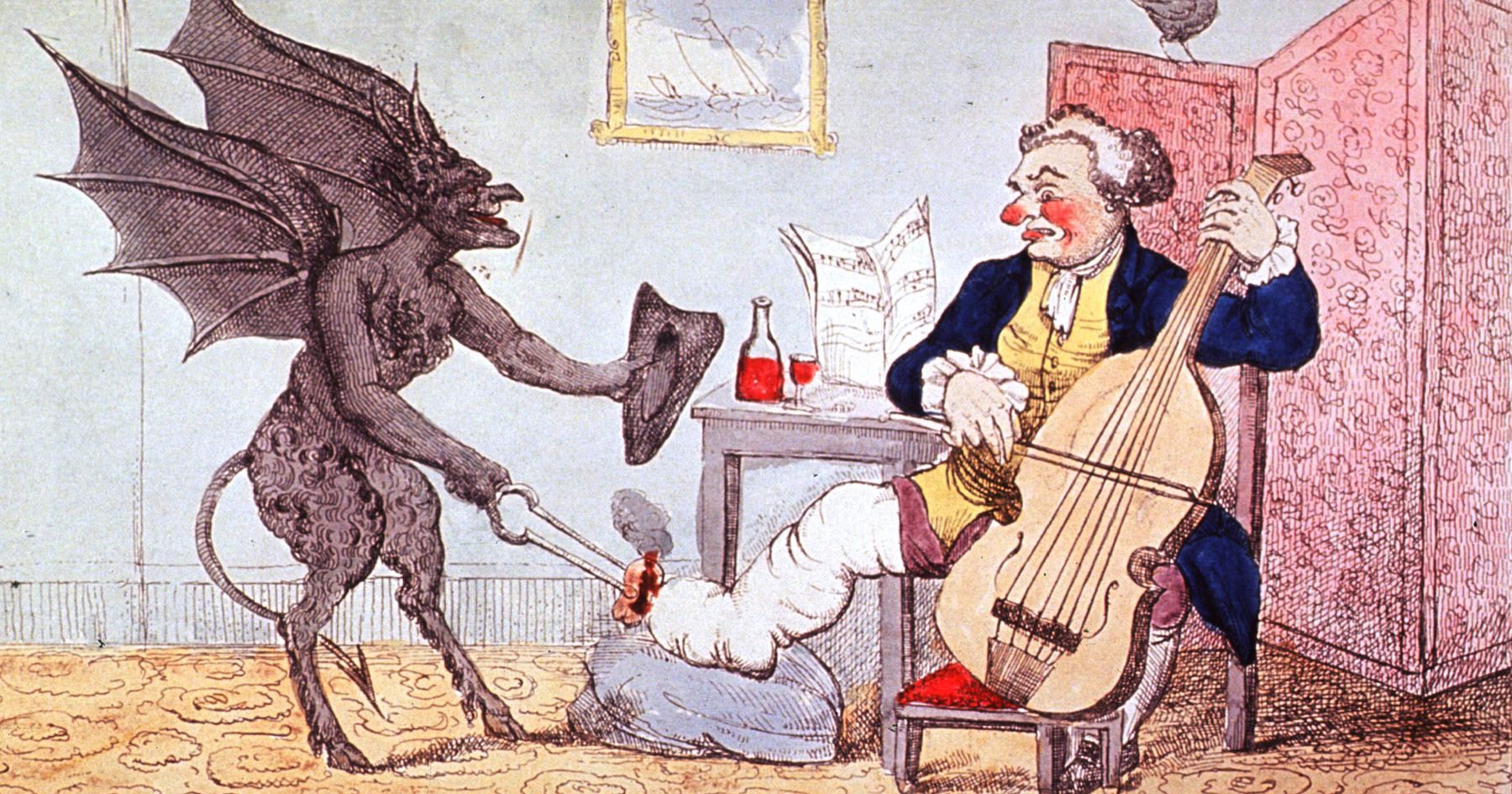
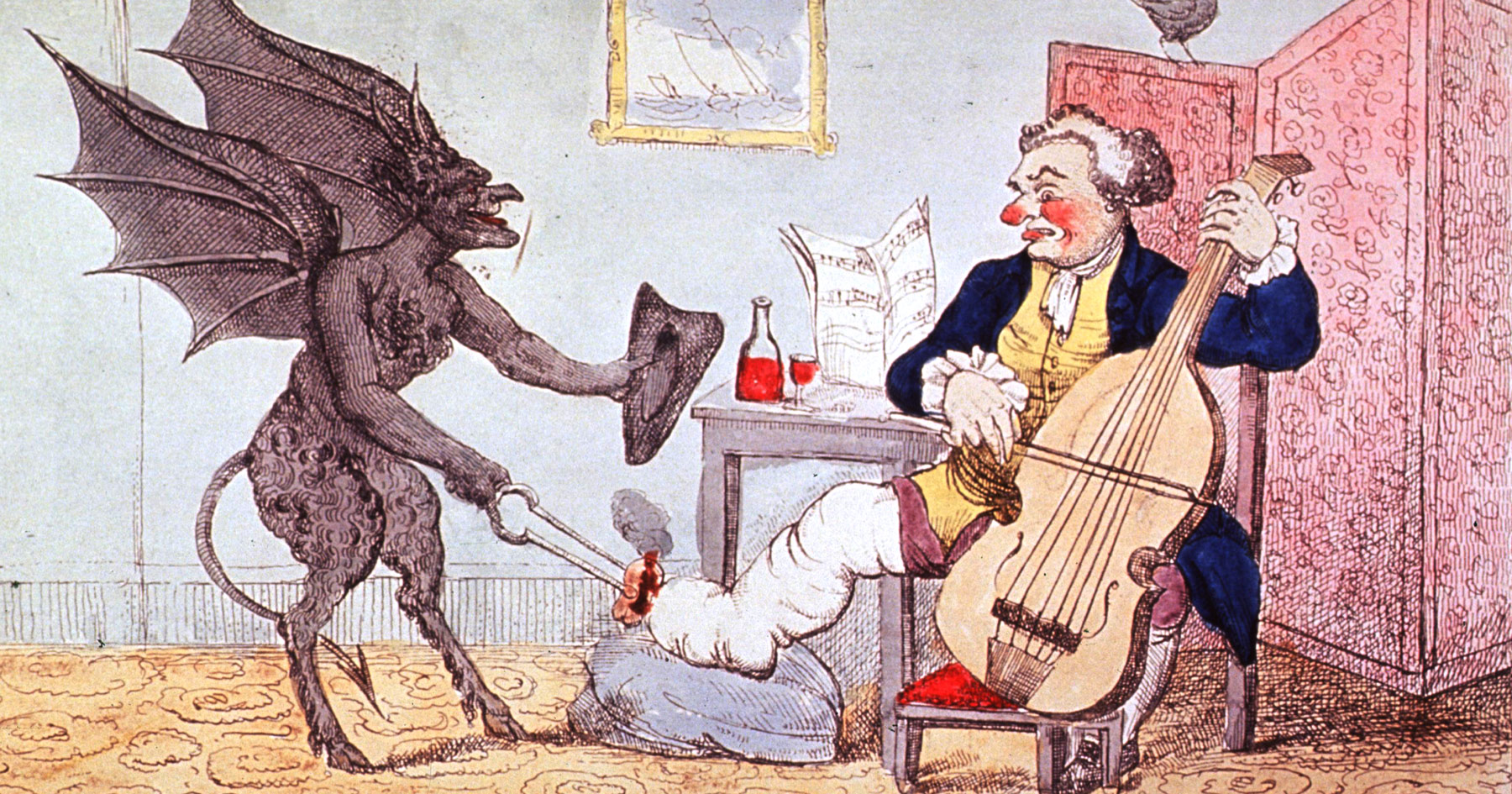
Yes, the tale is in the “out there” branch of science fiction. Aliens come. They bring mankind a Golden Age, an era of plenty, curing disease and ending the need to work. And then, after a long stretch, they reveal themselves, in full-frontal corporeality: they look like devils, with huge horns, red gnarly skin, cloven hooves, wings and a tail. But finally the big truth dawns: the last generation of children becomes clairvoyant, ascend into the air, and, while destroying the planet, become “as one” in the universal Overmind.

Accepting death? Why not this interpretation: sure, socialism can work — but only by stripping us of our individuality and destroying humanity along with all life on the planet.

The devil, you say.

This is Common Sense. I’m Paul Jacob.

Printable PDF

Childhood's End, Arthur C. Clarke, science fiction, TV, internet, devil, socialism, Common Sense, illustration


Categories
education and schooling folly ideological culture responsibility

Anti-Lynch Lynch Mob

America’s worst racial and sexual injustices were institutionally addressed years ago, in the Sixties and soon after — by folks in the Civil Rights movement, everyday citizens, and their representatives.

So what do today’s earnest, Johnny-and-Jilly Come Lately “Social Justice Warriors” have left to complain about?

Why, building names, of course!

The local college in Annville, Pennsylvania, has been embroiled in a bizarre civil rights complaint about their Lynch Memorial Hall. Named after one Dr. Clyde A. Lynch, a Depression Era benefactor, some SJW students are demanding that it be changed, because of, get this, “associated racial connotations.”

“Lynch,” you see. It triggers them.

I kid you not.

Colin Deppen, writing last week on pennlive.com, explained how Dr. Lynch had nothing to do with the lynching of African-Americans in Jim Crow days. The extra-legal hanging tradition began much earlier, in the Revolutionary War, “with a Captain William Lynch of Pittsville, Virginia.” This fellow “headed a self-constituted court with no legal authority that persecuted suspected British loyalists.”

Lynching’s origins? White-on-white violence, not white-on-black.

SJW students, mostly ignorant and incurious, prefer coming off as whiners or moral scolds than learn something.

Or let a coincidence go.

The problem is this: the closer some people get to reaching their goals, they have less and less to do. Yet many “late adopters” covet the moral authority of their predecessors. So they pack all their frustration and passion into making more and more unreasonable demands.

But this may be self-correcting. They look like idiots. And they have obtained our attention. This Lynch Mob nonsense could be the sign of their end times.

This is Common Sense. I’m Paul Jacob.


Printable PDF

racism, political correctness, progressivism illustration, common sense, trigger warning, micro-aggression,


Categories
Accountability general freedom ideological culture national politics & policies responsibility

Finland on 800-Euros-a-Month

Some folks think the world owes them a living.

Must we appease them?

Should government hand every man, woman and child a check each month to make sure we’re all taken care of?

Finland is embracing this basic idea with a pilot program, providing everyone an “unconditional basic income” (UBI). Treating citizens equally is enshrined in Finland’s constitution, so every Finn will receive the same 800-euros a month without regard to income or lack thereof.

It sounds like Democrat George McGovern’s “guaranteed annual income,” which was mocked and ridiculed during the 1972 presidential campaign.

But you might be surprised who has supported the UBI: free-market economist Milton Friedman advanced the similar “negative income tax” back in 1962; Martin Luther King liked it; Austrian economist F. A. Hayek endorsed the concept; Charles Murray, author of Losing Ground, has developed a version of the proposal.

The rationale? Save money by consolidating duplicative welfare programs. After all, the U.S. government runs 79 means-tested benefit programs, each with its costly, redundant bureaucracy.

Counter-intuitively, perhaps, Finland’s social engineers think the move will increase employment. Why? Because welfare benefits currently can be withdrawn when Finns gain employment and the attendant income, which discourages folks from risking their secure base benefits.

That’s the case here, too.

The government passing out money — our money — stinks. Folks should take care of themselves, or depend on charity — not confiscatory taxation. Yet, if this version of a safety net does indeed encourage industry, employment, and good old-fashioned money-making amongst the poor . . . it may very well be a step in the right direction.

This is Common Sense. I’m Paul Jacob.

Printable PDF

Finland, Guaranteed Income, UBI, welfare, income, Common Sense, illustration


Categories
free trade & free markets general freedom ideological culture media and media people national politics & policies

Historic Paris Pact?

The climate change pact just completed at the United Nations conference in Paris is, the Washington Post informs us, “historic.”

The New York Times, LA Times, Chicago Tribune, and just about every other paper uses that very word in their headlines, too.

“The 12th of December, 2015, will remain a great date for the planet,” declared French President Francois Hollande, dubbing it “the most beautiful and the most peaceful revolution that has just been accomplished.”

“History will remember this day,” U.N. Secretary-General Ban Ki-moon predicted. President Obama called it a “turning point for the world.”

Chris Mooney, in a deeper analysis for the Washington Post, agreed that all the hoopla was “more than warranted.”

But Mooney also acknowledged that, “this document, by its very nature, depends on . . . Countries, companies and individuals all across the planet [doing] the right things — and very hard things, at that.”

How hard?

Essentially ending any emission of greenhouse gases in the next half-century.

“Achieving such a reduction in emissions would involve a complete transformation of how people get energy,” the New York Times reported, “and many activists worry that despite the pledges, countries are not ready to make such profound, costly changes.”

As the negotiator for the Federated States of Micronesia put it: “We’ve agreed to what we ought to be doing, but no one yet has agreed to go do it. It’s a whole lot of pomp, given the circumstances.”

“What’s more,” adds Mooney, “even if everyone plays by the rules, the standards and goals set out by the Paris agreement may not be enough to prevent the catastrophic effects of climate change.”

Historic? History will determine that.

This is Common Sense. I’m Paul Jacob.


Printable PDF

climate change, global warming, Paris, accord, Common Sense


Categories
Accountability ideological culture national politics & policies responsibility

Pollsters Are Political Players, Too

Is Trump electable? Can Carson nab the GOP presidential nomination? Does Rand Paul have a chance? Is Chris Christie finished — before a voter has voted?

It’s still pre-primary season, and it is worth remembering that — even as we judge candidates on  various capacities, including their ability to “handle the media” — one arm of the media possesses potentially the most influence along with too little scrutiny: the pollsters.

They are allegedly the most scientific and objective folks in the industry, with closest ties to actual intellectual disciplines, statistics and political science.

But they are also, willy nilly, political players, not just observers.

Though tasked to provide data on public opinion about matters of importance, they also influence public opinion in several crucial ways:

  1. By how they phrase poll questions. This is an art, and can be extremely propagandistic. Pollsters can often “get” the information they want — if they want something in particular, perhaps for partisan reasons — by wording those questions carefully.
  2. By ordering questions in particular ways. The first question sets up a context. The second is then interpreted by those polled in that context. Pollsters can nudge people to reverse their usual opinions by providing an alien context.
  3. By presenting the results, skewed or not. People are influenced by others. Voting for candidates, especially, partly depends on second-guessing other voters. Few people wish to vote for someone who “cannot win.” Therefore, a published poll result that shows popularity can increase popularity, in a sort of multiplier effect.

Polls and poll results can provide useful information. Hey, I’ve used professional pollsters. But we all have to be cautious . . . remembering that voting one’s conscience is a high-percentage play.

This is Common Sense. I’m Paul Jacob.


Printable PDF

polling, polls, pollster, democracy, influence, elections, Common Sense, Bias, illustration


Categories
general freedom

Nix the Union Jack?

“Get a wriggle on,” New Zealand’s Electoral Commission is telling citizens
who want to cast a vote before today’s deadline to mail in ballots.

New Zealand is choosing a new flag.

Maybe.

In the referendum ending today, the first of two, voters will choose one of five proposed new flags. The second referendum comes next year when the chosen new design goes mano a mano against the current flag.

For years, Prime Minister John Key has itched to “scratch” the Union Jack, the United Kingdom’s flag, off the New Zealand national flag.

To assert some independence, I suppose. Hey, I can relate.

HBO’s John Oliver calls New Zealand “Australia’s Australia.” Glance at the two nation’s flags, they’re virtually identical. Populating a remote two-island nation, New Zealanders may share a desire not to live in any other nation’s shadow.

Granted, there were no demonstrations for the flag re-design, in the streets of Auckland, Wellington or Christchurch — or anywhere else, as far as I can tell. This was a referred measure, from politicians to the people — not an initiative.

And the referendums will cost $26 million, something not lost on the citizenry.

Furthermore, a flag is far less important than issues of war and peace, taxes, jobs, you name it.

But I really like that politicians didn’t give a designer a no-bid contract and do the choosing without the people. In fact, after whittling down to offer voters four designs in this referendum, a fifth entry was added after a petition for it on social media caught fire.

Could the flag chosen be as pleasing as the democratic process being used to get it?

This is Common Sense. I’m Paul Jacob.


Printable PDF

New Zealand, flags, flag, democracy, voting, Common Sense