Categories
Accountability general freedom government transparency ideological culture initiative, referendum, and recall national politics & policies porkbarrel politics responsibility too much government

Ethics First

The biggest problem facing Americans? According to a Gallup poll, for the second year in a row, it’s our government.

Maybe I should say “the government.” Few think it represents us. Which is sort of a big problem for a representative government.

Presidential candidate Donald Trump says our leaders are “stupid.” Were that the case, it’d be easier to correct. The reality is worse.

We have an ethical problem in government. Those entrusted to represent us represent, instead, themselves. And their cronies. And special interests.

Charged with creating a level playing field where we can all succeed through hard work, our elected officialdom have tilted that field. Oh, they’re doing just swell. The rest of us? Not so well.

Elected officials from Washington to state capitols have hiked up their pay, finagled perks, per diems and other bennies, and rewarded themselves with lavish pensions. Meanwhile, most Americans lack even a 401K to help save for retirement, much less a pension beyond a meager (and politician-imperiled) Social Security safety net.

Transparency? Well, it’s not just Hillary Clinton who has conducted public business privately. Even with her scandal looming in the headlines, Defense Secretary Ash Carter confidently did likewise.

Let’s end pensions for politicians, nudging them to return to our world. And let’s change the rules so they work serving the public, not for private gain.

Can we count on our elected representatives to rectify their ethical lapses? Not on your life. We need to do it ourselves, using ballot initiatives to put ethics first.

This is Common Sense. I’m Paul Jacob.


Printable PDF

government, cronyism, crony, trust, worry, Common Sense, illustration


Categories
crime and punishment folly free trade & free markets ideological culture national politics & policies too much government

Subsidizing Illegal Aliens

In The Mouse That Roared, a 1955 comic novel by Leonard Wibberley, a tiny English-speaking country in Europe loses market share for its only export, a wine label, to a cheap American knock-off. Seeking compensation for the loss, the duchy decides to do the only rational thing: declare war on America, and then, after the inevitable defeat, reap the rewards of reconstruction financing.

I was reminded of the book when reading about another of the Obama Administration’s subsidy programs, uncovered by Sen. Rand Paul. The program gives money to illegal aliens deported to their country of origin, El Salvador, to start small businesses.

Sort of a Small Business Administration program for deportees.

But Congress’s involvement is nil, and the SBA has nothing to do with it, either. The program, according to the Rand Paul press release, “is administered by the non-profit Instituto Salvadorno Del Migrante (INSMI — translated to Institute of Salvadorian Migrants) and funded through a $50,000 grant from the taxpayer-backed Inter-American Foundation.”

It is not big money, certainly not by profligate Washington standards. Nor is the premise of the program likely to win it praise from anyone looking for a solution to illegal immigration. Indeed, the best way to describe the program is how Rand Paul’s team did describe it: “absurd.”

In The Mouse That Roared, the Duchy of Grand Fenwick makes a crucial mistake in its plan to profit from American largesse: it wins the war.

But some things haven’t changed since then. The American government throws around money absurdly.

And little countries make fools of Big America.

This is Common Sense. I’m Paul Jacob.


Printable PDF

Rand Paul, subsidy, aliens, illegals


Categories
ideological culture media and media people national politics & policies term limits

Cool Car and Hot Coffee for President Cool

The President of the United States claims to be very popular with “the zero to eight demographic.” The kids like his name, which they say in an unbroken string of syllables: Barackobama.

Politics is a lot like football.

Teddy Roosevelt was the coolest president . . . until Barackobama.

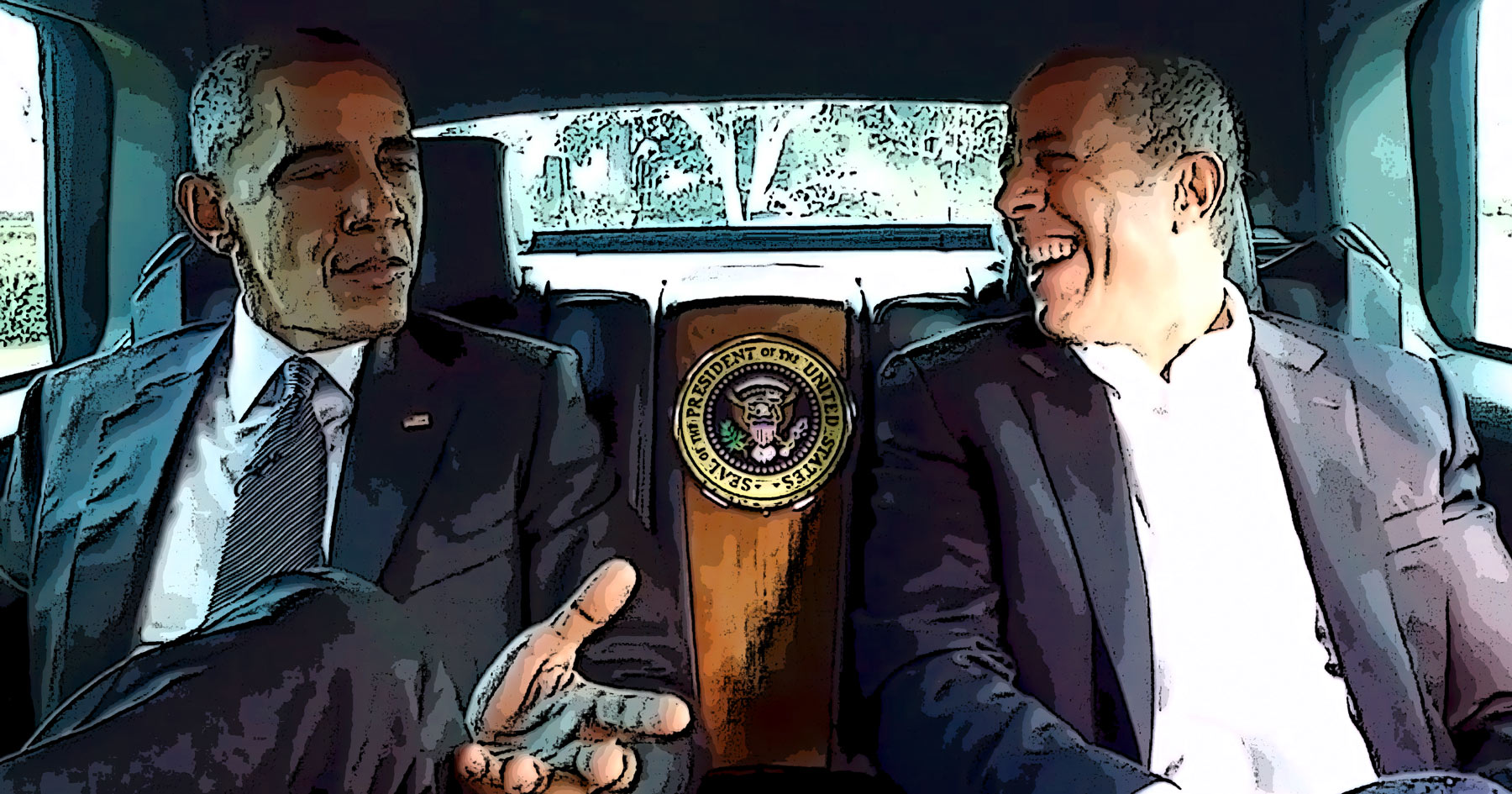
All this, and more, we learn from the latest episode of Comedians in Cars Getting Coffee, Jerry Seinfeld’s online interview show, in which Jerry drives a comedian to a coffee shop for a video-recorded chat.

In the recent Barack Obama episode, the comedian and the Commander in Chief drive inside the confines of the White House fences in a nice silver blue 1963 Corvette Stingray . . . and then go for a coffee inside the White House. Seinfeld’s excuse for this special episode is that the Prez has gotten off just enough funny lines to qualify.

Some of us wonder whether Mr. Obama could be planning an entertainment career after being ejected from office by the normal workings of presidential term limits. As this and other one-on-one interviews have shown, he gives great repartee.

But back to term limits. Aside from the football comment, Seinfeld’s chat did indeed yield a few substantive ideas. Such as:

JS: How many world leaders are completely out of their minds?

BO: A pretty sizable percentage.

And Obama knows why: “The longer they stay in office, the more likely [going bonkers] is to happen.”

“At a certain point,” Obama explains, “your feet hurt, your have trouble peein’, you have absolute power. . . .”

Good thing we have term limits!

Here’s to a future episode of Former Presidents in Limos Getting Lattes.

This is Common Sense. I’m Paul Jacob.


Printable PDF

Obama, Seinfeld, coffee, cool, Common Sense


Categories
Accountability Common Sense First Amendment rights free trade & free markets general freedom ideological culture nannyism national politics & policies responsibility too much government U.S. Constitution

re: Solutions

Today’s the traditional day for New Year’s “Resolutions,” but instead of resolutions, how about some solutions?

Sure, Thomas Sowell has sagely reminded: there are no solutions in social life, only trade-offs.

But, utopian perfection aside, let’s agree that some changes would be better than others, and, let us resolve to solve some nagging problems — or at least trade up. And since the really nagging problems are political . . .

For Republicans: this could be the year to give up on government as society’s chief moral agent, empowered to regulate everybody’s medicine cabinets and bloodstreams. End the failed War on Drugs, with legalizing marijuana the simplest first step. Vice will continue, as it always has. But it’s another kind of vice to think that force, policing and imprisoning folks, will “solve” the problem. Much less even reduce the availability of drugs.

For Democrats: this could be the year to give up on government as micromanager of markets — and people’s marketplace choices. Face it: folks will make decisions that liberals don’t like. They’ll eat at McDonalds and buy large sodas — and the wrong stocks. And guns! But adding to the mass of regulations doesn’t make consumers choose better, it makes stuff more expensive and business less open to competition. Indeed, almost all the regulations designed to help “the little guy” backfire, helping big business by hobbling their upstart competitors.

Our leaders, at present, cannot even balance budgets. They are addicted to debt. To pretend we must have more and more government to prevent our addictions or save us from personal debt is ludicrous.

Can we resolve to stop pretending that bigger government is always the solution?

This is Common Sense. I’m Paul Jacob.


Printable PDF

New Year, 2016, resolutions, Common Sense, illustration
Categories
Today

Slave Trade

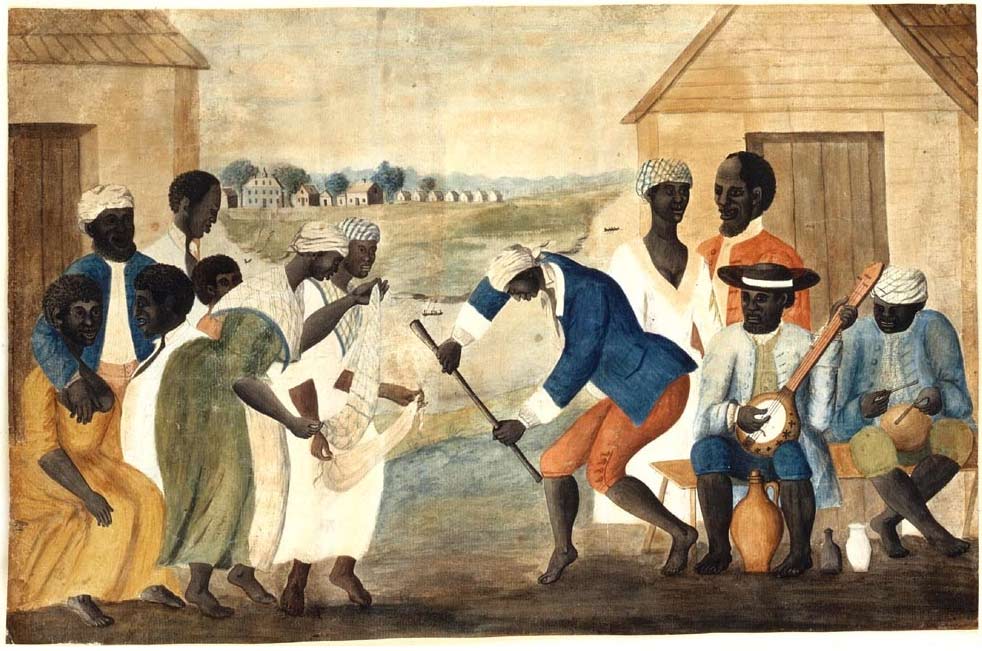
On January 1, 1808, the importation of slaves into the United States was banned.

Categories
Accountability general freedom ideological culture individual achievement national politics & policies political challengers responsibility

Virus and Host

Presidential candidate John McAfee is an adventurer. Best known for founding the first successful anti-computer virus company, he has also been shot at in tropical jungles, by men trained by U. S. forces, with American-bought guns. This range of experience makes him the most interesting presidential hopeful, bar none.

His big issue is cyber-security. He thinks Americans have placed themselves in a too-precarious position. As he sees it, the war on terror has served as a grand distraction from the real threat, a prime example of doing foreign policy and national security completely upside-down wrong.

He has a point.

But he’s neither a Democrat nor a Republican, and not long ago he realized that his own Cyber Party didn’t have the oomph to get him on the ballot in enough states.

So he has announced his candidacy for the Libertarian Party nomination.

Why? He’s obviously not a libertarian in any strict capital-L sense. But the septuagenarian insists that he has been a libertarian at heart since before the word entered common use.

This is what the Libertarians get for their most obvious success: obtaining and keeping ballot status in more states for more election cycles than any other “minor party.”

Think of the Libertarian Party as the host, and one-time Republicans like former Congressman Bob Barr and former New Mexico Governor Gary Johnson — and now McAfee — as viruses, aiming to commandeer the host’s operating system.

Of course, one might also view the LP as a virus attempting to do the same to the federal government.

Shall we root for the viruses, for once?

This is Common Sense. I’m Paul Jacob.


Printable PDF

John McAfee, libertarian, presidential race, president, candidate


Categories
Accountability crime and punishment folly general freedom moral hazard national politics & policies U.S. Constitution

Forfeiting Forfeiture

“The Department of Justice announced [last] week that it’s suspending a controversial program that allows local police departments to keep a large portion of assets seized from citizens under federal law and funnel it into their own coffers,” reports the Washington Post.

The Feds call the paused program “equitable sharing”; as I explained last month, I call it “equitable stealing.”

Even when state and local laws prohibit it, local police have been using this federal program to continue taking people’s money and property without ever convicting them of a crime.

The loophole? They split the loot with the Feds.

Now that has ended. According to the Post, this is the result of “budget cuts” in the recently passed omnibus spending bill; the Wall Street Journal calls it a “reallocation of funds.”

Either way, Happy Holidays!

Yet, sadly, the return to freedom, justice and the American Way may be short-lived.

“The Department does not take this step lightly,” wrote M. Kendall Day, the chief of DOJ’s Asset Forfeiture and Money Laundering Section. “We explored every conceivable option that would have enabled us to preserve some form of meaningful equitable sharing. . . .”

In his letter, he proclaiming a commitment to the principle of guilty-until-proven-innocent and to grabbing people’s stuff, telling state and local and tribal police departments, “We will take all appropriate and necessary measures to minimize the impact of the rescission and reinstate sharing distributions as soon as practical and financially feasible.”

As the Wall Street Journal editorialized, “Congress should make sure that never happens.”

Of course, Congress will likely need a mighty nudge from us.

This is Common Sense. I’m Paul Jacob.

Printable PDF

Asset, Forfeiture, police, crime, Department of Justice, DOJ, illustration, Common Sense


Categories
Accountability folly free trade & free markets general freedom ideological culture moral hazard national politics & policies too much government

Collateral Damage Defines Socialist B.S.

Senator Bernie Sanders gave us a big present last week. In one simple “tweet” he warbled out the essence of his socialism: “You have families out there paying 6, 8, 10 percent on student debt but you can refinance your homes at 3 percent. What sense is that?”

That’s what he broadcast. That’s what this self-proclaimed socialist wrote — or allowed his staff to write — on his official Twitter account, @SenSanders.

And it is not as if he had the excuse of haste. He was repeating a thought from his presidential campaign account in September: “It makes no sense that students and their parents pay higher interest rates for college than they pay for car loans or housing mortgages.”

To the earlier post, Twitter erupted in criticism. The gist? Have you never heard of collateral, sir?

Lenders can charge less on secured loans because, in case of default, the recourse is to take the collateral, the car or house, thereby recouping the loss.

But an unsecured loan? Well, by law one cannot easily slough off student loans — but one can simply not pay, or pay late. Hence the higher rates.

From its beginnings, socialism — and progressivism and Fabianism and fascism and social democracy, following — has been fueled by complaints about markets.

Without showing any understanding of the logic of markets.

Which is why, when put into practice, socialistic and interventionist programs produce such great amounts of negative collateral effects. Socialism is the philosophy of good intentions that yields collateral damage worse than the problems meant to be solved.

Oh, Bernie Sanders! Your initials say so much.

This is Common Sense. I’m Paul Jacob.

Printable PDF

Bernie Sanders, consequences, socialism, economics, illustration, Common Sense


Categories
Accountability crime and punishment responsibility

Do-It-Yourself Policing

While crime was plummeting throughout the country, last year New Orleans experienced a surge — rapes up 39 percent and armed robberies up 37 percent.

Having reduced its police force by 500 officers due to budget problems, the Big Easy called in Louisiana State Troopers to assist a force “historically mired in corruption.” Yet, there was scant progress in keeping citizens safe.

Then crooks broke into Sidney Torrez’s home and Torrez, known as the “trash king” because he made a fortune hauling trash out of the city after Hurricane Katrina, responded with a $100,000 television ad campaign. “The French Quarter is under siege by criminals,” his TV spot declared; it encouraged citizens to “hold the administration accountable.”

Mayor Mitch Landrieu wasn’t pleased, shooting back that, “If it’s so easy, maybe [Torrez] should just take some of that money and do it himself.”

So, Torrez did, teaming up with Bob Simms, a retired aerospace engineer.

In no time, they developed a downloadable app for smartphones, allowing folks to contact police much like we use Uber to contact a car ride. Torrez donated $500,000 and the Batman and Robin-esque duo hired off-duty policemen outfitted with Polaris golf carts to patrol the French Quarter, the city’s “golden goose.”

Other private donations arrived to support the effort. In just months, crime dropped 45 percent in the Quarter. Now the city’s Convention and Visitors Bureau is paying the monthly cost.

Torrez notes that the effort allows “the community a way to self-police,” adding, “I think it can work anywhere.”

“It’s not rocket science,” says Bob Simms . . . the former rocket scientist.

It’s citizen-led government.

This is Common Sense. I’m Paul Jacob.


Printable PDF

New Orleans, crime, police, Common Sense, illustration


Categories
general freedom U.S. Constitution

Merry Christmas, America

In addition to the religious significance of Christmas, Americans share an excellent historical reason to celebrate this day.

In January of 1776, Thomas Paine published his smash hit, “Common Sense.” This pamphlet galvanized public opinion in favor of the American Revolution, which had begun the previous year at Lexington and Concord with the shot heard ’round the world.

That July, the Declaration of Independence was written, signed and proclaimed to the new nation by the Continental Congress.

But by December of the same year, the prospects for the American cause were looking bleak.

British forces, along with their mercenary Hessian reinforcements, had manhandled the Continental Army. Gen. George Washington’s troops were routed at Long Island, pushed out of Manhattan, forced to retreat across the Hudson to New Jersey, and then run out of Jersey across the Delaware River to Pennsylvania “exhausted, demoralized and uncertain of [their] future.”

Soon, the British believed, the American revolt would be extinguished.

“To compound Washington’s problems,” recounts the EyeWitnesstoHistory.com website, “the enlistments of the majority of the militias under his command were due to expire at the end of the month and the troops return to their homes.”

Yet, on Christmas night, Washington marshaled his ragtag soldiers and crossed the icy Delaware, marching his men nine miles to Trenton. In the wee hours of the morning on Dec. 26, the Continentals attacked, catching more than 1,000 Hessian soldiers by surprise and taking nearly all of them captive.

In strictly military terms, the victory was not terribly significant. But in terms of American morale, as well as the perception of important potential allies such as France, the win was an absolutely perfect Christmas gift to the new Republic.

Our Republic, dedicated to liberty and justice for all, continues to this day.

And today, you and I are left to defend it — just like the barefoot minutemen who walked through the snow to face the most powerful military force of their world.

If on this happy and historic holiday you want to launch a surprise attack against modern day tyranny and Big Brother government, to give a gift that will protect and grow freedom, there’s a link here to speed your way across the Delaware and right to the donate page of Citizens in Charge Foundation.

Perhaps you’d like to join Team 1776 by making a monthly pledge of $17.76, or to make a one-time contribution to keep Common Sense coming.

While you’re still free to do so.

Merry Christmas, America!


Printable PDF

Christmas 2015, George Washington, Common Sense