Categories
crime and punishment education and schooling ideological culture media and media people moral hazard national politics & policies

Bias and Blindness

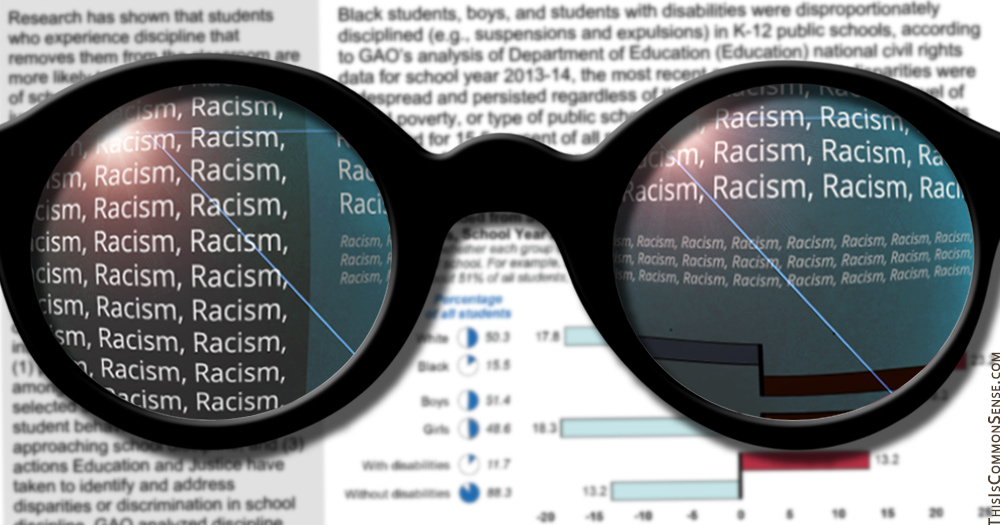
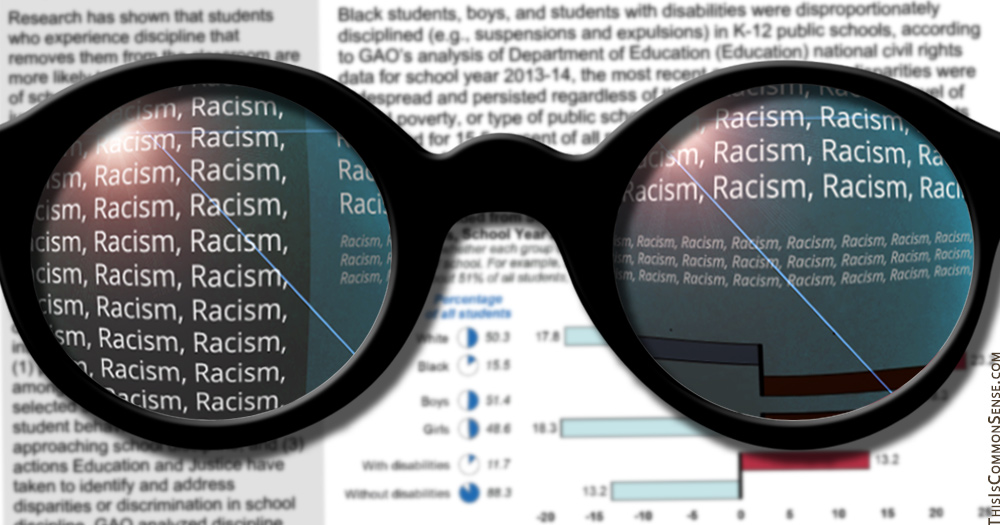
Neither stretching the truth nor ignoring it helps beat back implicit or explicit racism.  Yesterday, my Townhall.com column took the Washington Post to task for misstating the results of a recent GAO report.

The GAO noted wide discrepancies between the percentage of students facing disciplinary actions who are black, male and disabled and the relative percentages of these groups in the overall student population. Yet, the report also specifically stated: “Our analyses of these data, taken alone, do not establish whether unlawful discrimination has occurred.”

Nonetheless, the Post headline told readers: “Implicit racial bias causes black boys to be disciplined at school more than whites, federal report finds.” The article claimed that “a government analysis of data . . . said implicit racial bias was the likely cause of these continuing disparities.”

The same discrepancies regarding boys of all races? And students with disabilities? Even the crickets had no comment.

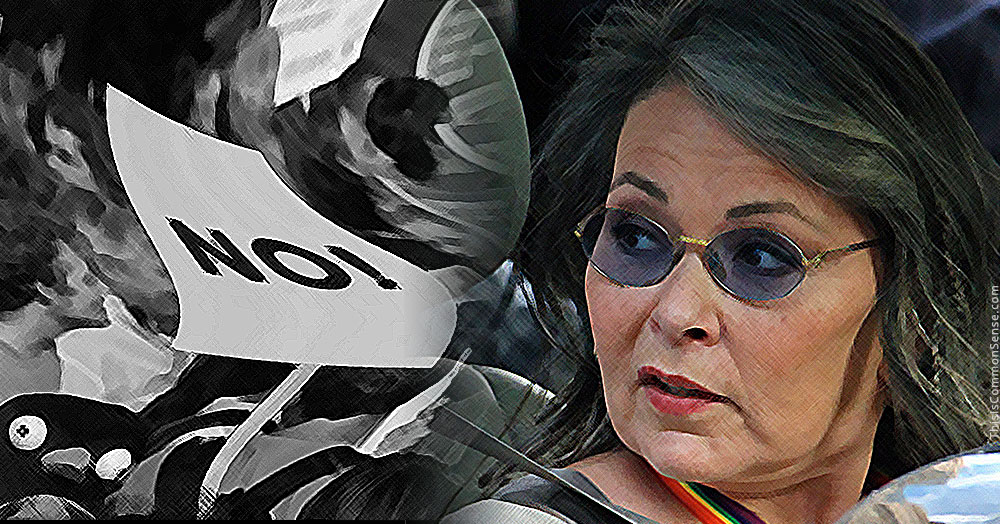
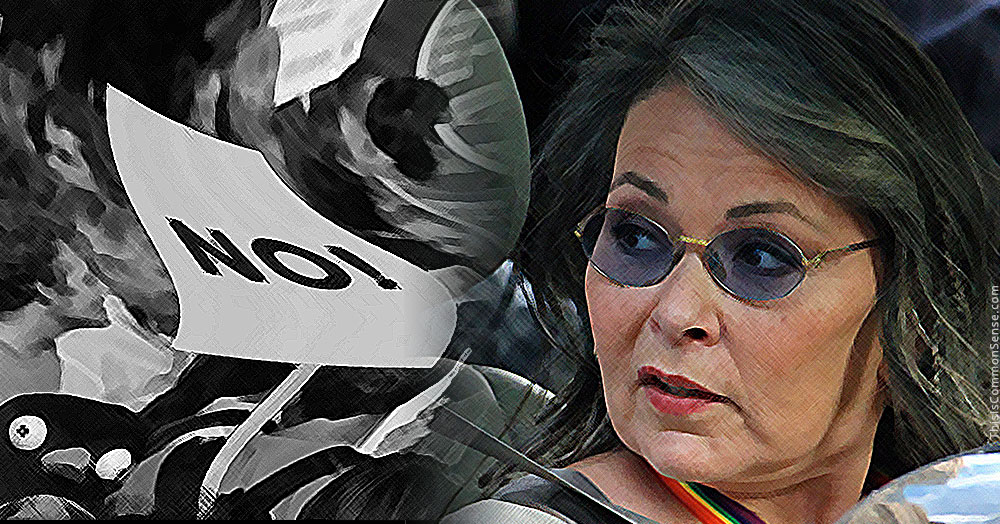
In the Post’s Outlook section, yesterday, readers were treated to further edification on race — this time via C. Nicole Mason with the Center for Research and Policy in the Public Interest. “I feel alienated and slightly betrayed by the reboot” of the sitcom Roseanne,” she writes.

The title of her piece proclaims why: “‘Roseanne’ was about a white family, but it was for all working people. Not anymore.”

The “not anymore” refers to Roseanne’s support of (and Mason’s derangement syndrome over) President Trump. Interestingly, a more legitimate “not anymore” angle was completely missed — or ignored. The Connors now have a black granddaughter. The new show isn’t “about a white family,” but a racially mixed family.

When racism is finally extinguished from this planet, someone remember to tell the race-hustlers.

This is Common Sense. I’m Paul Jacob.

PDF for printing


Categories
Accountability crime and punishment general freedom ideological culture media and media people moral hazard nannyism national politics & policies privacy property rights responsibility Second Amendment rights too much government U.S. Constitution

The Myth of the Monoliths

According to organizers of the “March for Our lives,” the National Rifle Association is wholly evil, a corrupter of democracy, a malign presence straight out of Mordor, bent upon murder — a monolithic influence responsible for every mass shooting event.

The clearest expression of this is by young David Hogg, who figured that the NRA’s sum of contributions to Sen. Marco Rubio, when divided not by the number slain in the recent Parkland shooting but instead by the total number of students throughout Florida, came out to $1.05 per student.

Forget the computation — think nasty imputation.

What Hogg and his friends in the media elide is a simple little fact: the NRA is a membership organization. When critics of the Second Amendment point at the NRA and shout “evil!” they are really pointing at the organization’s millions of members.

People, not malign institutions.

Also neglected? The fact that, as near as I can make out, not one NRA member has mown down students in any school or church in America. Instead, at least one civilian NRA member took out his AR-15 to bring down one such mass-murdering shooter.

“Evil NRA” talk is misdirection and slander.

Also not a monolith? Students. Christian Britschgi, writing at Reason, notes that teenagers made up only 10 percent of marchers at the recent rally, and, catching a whiff of astroturf, cites a poll that found less than a majority of Millenials favoring an “assault rifle” ban.

Citizens of all ages disagree. Pretending that all kids are against guns, or that the NRA is anything other than a citizen advocacy group, distorts reality.

This is Common Sense. I’m Paul Jacob.

PDF for printing


Categories
Accountability moral hazard national politics & policies responsibility too much government

You’re Fired!

If government were reality TV — and it is — this current administration would obviously be The Apprentice.

Who do you most want fired?

Last week, President Trump gave Veterans Administration Secretary Dr. David Shulkin the heave-ho, after a “damning” Inspector General’s report not only charged Shulkin with misusing tax dollars but also detailed myriad problems at the VA that continue to “put patients at risk.”

In a New York Times op-ed, the former Secretary defended his “tenure at the department,” arguing that he had “expanded access to health care by reducing wait times, increasing productivity and working more closely with the private sector.”

Speaking of the private sector, however, Shulkin suggested his firing was orchestrated by those favoring privatization — and that “privatization leading to the dismantling of the department’s extensive health care system is a terrible idea.”

Last April, President Trump signed the Veterans Choice Improvement Act, expanding the ability of vets to access private medical care outside the confines of the VA system. Why? Because IG investigations discovered that wait times were actually killing veterans — and the VA bureaucracy was actively covering up the problem.

“Critics have questioned whether increasing veterans’ reliance on private doctors might move the VA toward privatization,” the Washington Examiner noted at the time, “while proponents of such efforts have accused the VA of resisting steps to implement the program in order to protect the status quo.”

Vets deserve a choice, not a bureaucracy. After failing veterans for decades, Status Quo, you’re fired!

This is Common Sense. I’m Paul Jacob. 

PDF for printing


Categories
ideological culture media and media people national politics & policies

The Sitcom Society

If we are entering a new Golden Age of television, it is for the most part passing the legacy TV networks by.

So, Roseanne Barr to the rescue!

The reboot of ABC’s Roseanne — a hit situation comedy of the late 1980s and much of the 1990s — should put the network and the art form back in the spotlight.

But though it is very popular, the show is not without . . . its political controversy. You see, funny-woman Roseanne plays Roseanne Conner, and she . . . (drum roll) . . . voted for Trump.*

Horrors!

Predictably, our modal mainstream media cultural mavens are not on board. Roxanne Gay, in the New York Times, complains that Roseanne’s views are “muddled and incoherent.”

Roseanne to Roxanne, hello-o-o: the character is fictional. Who said characters in a comedy should have coherent views? One would think the point of comedy would require the opposite.

Jezebel provides another fine example of this. In “What’s Up, Deplorable; Roseanne Is Back,” Rich Juzwiak opines that “[n]ever discussed was the laundry list of hateful, stupid, and wrong things Trump said, nor their even more nefarious implications.” On Twitter, Professor Jared Yates Sexton calls the character’s perspective “a cleaned-up lie,” and amounts to a turning a “blind eye to Trump’s many, many bigoted statements.”

Neither Juzwiak nor Sexton mentions any problem with the main alternative to the president in the last election — something Roseanne does in the show itself.

It’s almost as if what these (and many similar) critics want is a tidy propaganda piece for their opinions; it’s almost as if their objection is to the show’s realism.

Now that’s comedy.

This is Common Sense. I’m Paul Jacob.

 

* In the season opener, Roseanne defends the president from her dippy Democrat sister, whom she had not been speaking with since the election. Her sister, Jackie (played hilariously by Laurie Metcalf), enters the tenth season wearing a red pro-Hillary t-shirt and one of those grab-em-by-the-x pink hats. Their reconciliation is a hoot.


PDF for printing


Categories
Accountability free trade & free markets general freedom national politics & policies privacy subsidy too much government

The Post Office Scam

The President of the United States says that the U.S. Postal Service is scamming us by offering shipping discounts to Amazon, the mail-order giant. “Post Office scam must stop.”

President Trump is hovering in the vicinity of the right idea. But what about government-required discounts for shippers? Are these scams too?

Congress has long required lower postal rates “for religious, educational, charitable, political and other non-profit organizations. . . .”  Robert Shapiro estimates that such mandates cost the agency over a billion dollars a year. The government forces USPS to do a great many things that lose money — things that companies functioning in a free market cannot profitably do.

And American taxpayers must perennially fork over billions to sustain its lumbering operations.

It is true that, in markets, buyers of large quantities of a good or service routinely pay less per unit than buyers of small quantities; such discounts can enhance the seller’s bottom line. The fact that USPS offers discounts to a mega-shipper like Amazon does not in itself show that charging more per parcel would generate more revenue.

The question is, then, which transactions would flourish if the agency were just another market player instead of a government-protected, government-hobbled, government-subsidized bureaucracy?

Like any government-run “business,” the Post Office is itself a “scam.” This scam must stop. Phase out USPS as a government agency and let any company deliver first-class mail to our mailboxes on any honest terms that might attract customers.

This is Common Sense. I’m Paul Jacob.


PDF for printing


Categories
crime and punishment education and schooling folly general freedom moral hazard privacy responsibility too much government U.S. Constitution

Ecstatic with Independence

Utah’s legislature unanimously passed it; the governor signed it — the nation’s first measure protecting what’s become known as “free-range parenting.”

It was once known simply as “parenting.”

Certain activities are now exempt from a state law criminalizing child neglect. Children may legally “walk, run or bike to and from school, travel to commercial or recreational facilities, play outside and remain at home unattended” — thereby allowing “a child, whose basic needs are met and who is of sufficient age and maturity to avoid harm or unreasonable risk of harm, to engage in independent activities . . .”

Back in the day, we apparently played outside in a sort of statutory limbo.

Do we really need a law saying kids can walk on a public street?

Sadly, yes: government agencies across the country are grossly violating the most basic rights of parents to rear independent children.

Regular readers may recall my 2015 defenses* of the Meitiv parents against the absurd charge of “unsubstantiated neglect” leveled against them by Montgomery County (Maryland) Child Protective Services. Ultimately, Maryland authorities acknowledged that permitting one’s kids (in the Meitivs’ case, a 10- and a 6-year-old) to walk on a public sidewalk (from a local park) wasn’t prima facie evidence of a crime. 

The current free-range parenting movement was launched in 2008 when Lenore Skenazy publicly admitted — to mass shock and condemnation — to allowing her 9-year-old son to take a trip alone on New York City’s subway.

“My son got home,” she wrote in the New York Sun, “ecstatic with independence.”

Notice how rare it is to find anyone ecstatic with dependence.

Lesson? An old one: Happiness must be pursued with freedom.

This is Common Sense. I’m Paul Jacob.
 

* My writings on the Meitivs’ battle to keep their kids:


PDF for printing


Categories
Accountability general freedom ideological culture media and media people moral hazard nannyism responsibility too much government U.S. Constitution

The Abortionists’ Cartoon Advice

Let it not be said that Planned Parenthood lacks for principles.

When Donald Trump offered a deal, last year, to fund Planned Parenthood only if the organization would stop doing abortions, the company immediately clarified the situation. “Offering money to Planned Parenthood to abandon our patients and our values is not a deal that we will ever accept,” said the outfit’s executive vice president. “Providing critical health care services for millions of American women is nonnegotiable.”

And, for Planned Parenthood, abortion is indeed critical. “The Trump administration needs to stop playing political games that would put access to the full range of safe reproductive care at risk,” said Senator Kirsten E. Gillibrand (D-NY), “or they will get the fight of their lives.”

Well, that fight was won by Planned Parenthood. The politician who once said he would “shut down the government” over the abortionist enterprise has caved after various roadblocks. Trump signed a stopgap omnibus spending bill, last week, which continues to funnel $500 million towards the outfit.

So, as if to celebrate, a Pennsylvania branch of the abortion mill — er, “reproductive care” service — engaged in a bit of ebullience, a “light-hearted” tweet:

We need a disney princess who’s had an abortion

We need a disney princess who’s pro-choice

We need a disney princess who’s an undocumented immigrant

We need a disney princess who’s actually a union worker

We need a disney princess who’s trans

This caused a firestorm.* And not because its Disney obsession was silly. The problem? The tweet showed that Planned Parenthood is really, really committed to valorizing the killing of fetuses. And that its agenda is far, far left.

The outfit should be left without taxpayer funds.

This is Common Sense. I’m Paul Jacob.
 

* The Tweet was quickly removed.


Printable PDF


Categories
crime and punishment free trade & free markets general freedom moral hazard national politics & policies too much government U.S. Constitution

High on Hemp?

Hemp is not marijuana.

And yet it is.

Earlier this week, Senate Majority Leader Mitch McConnell announced he will introduce legislation to legalize industrial hemp.

He is not concerning himself with marijuana, which is what we call the plant Cannabis sativa when cultivated for its Tetrahydrocannabinol (THC) content, the principal chemical in the plant that makes it ideal for “recreational” uses. Industrial hemp is Cannabis sativa, too, just with minuscule THC.

Hemp products are actually legal to buy and sell in the United States.

Sort of.

But growing it is murky, considering that ingestible hemp is a Schedule 1 drug no matter how little THC it has — despite the fact that Congress has allowed states to regulate the growth of low-THC hemp for “industrial” purposes.  

A complicating factor is that industrial hemp contains an oil, Cannabidiol (CBD), which is neither an ecstatic nor a hallucinogenic drug, but is widely believed to have many therapeutic powers. And is widely sold all over the country, wherever states have allowed for medical marijuana.

Nevertheless the DEA objects to it as much as to THC, saying that all ingestible forms of hemp are illegal.

Because of all this murkiness, McConnell’s bill might seem to be welcome step towards clarity.

Trouble is, since industrial hemp is indistinguishable from cannabis with THC — to look at; to smell; to touch — officials hoping to crack down on marijuana-as-a-psychoactive-drug would be much hampered were industrial hemp commonly and legally grown.

What a mess. The only real solution is to de-list all forms of Cannabis sativa from the War on Drug’s Schedule of Drugs It Unconstitutionally Proscribes.

This is Common Sense. I’m Paul Jacob.


PDF for printing


Categories
Accountability folly free trade & free markets general freedom government transparency local leaders moral hazard nannyism porkbarrel politics responsibility too much government

Bailing on Mass Transit

Around the country, our major metropolitan transit systems have hit the skids. “Between 2016 and 2017, ridership fell in each of the seven largest transit markets,” the Washington Post informs.

You might guess that the reason for declines in ridership might have something to do with bad planning and poor service. Washington, D.C.’s Metro system, with which I am all-too familiar, is a horror . . . run by people I wouldn’t trust to sweep your driveway much less mine, and certainly not to manage how I get between those (or any other) two locations.

But the Post quotes an urban planning scholar who attributes the decline (in part) “to increased car ownership, particularly among low-income and immigrant populations, who were in a better position to afford cars following the Great Recession.”

This puts planners in a pickle since, he explains, if “low-income people are doing better, getting the ability to move around like everyone else, it’s hard to say that what we should do is get them to remove themselves from their cars and back on trains and buses.”

Shockingly sensible — especially coming from a planning specialist. “Transit systems should deliver quality service to low-income people,” he insists. “But low-income people do not owe us a transit system.”

Well, maybe that’s the problem, this notion that governments “owe” this service to “low-income people.”

After all, web-based services like Uber and Lyft have shown how market innovations provide the best ways to move millions.

This is Common Sense. I’m Paul Jacob.


PDF for printing


Categories
crime and punishment general freedom media and media people moral hazard nannyism national politics & policies privacy too much government U.S. Constitution

Unlovely Congress

If you recently tried to post a personal ad on Craigslist, the popular classified-ad site, you were in for a shock. Craigslist has suddenly discontinued all personals. You can still sell your used rototiller, but forget about telling the world you’re lost in Louisville looking for love.

The company doesn’t want to be prosecuted for helping people find each other en route to becoming partners in outlawry.

Congress has just passed legislation subjecting site publishers to criminal and civil liability when their users “misuse online personals unlawfully.” The president’s signature is expected. Craigslist doesn’t want all that open-ended liability. “Any tool or service can be misused,” it observes.

Indeed. If the principle underlying this law were consistently applied, any good or service that facilitates communication (or other human activity!) would expose providers to liability for any illegal conduct abetted by their products. Would curtain manufacturers be exempt? We all know how bad guys plotting evil pull their curtains. Freedom of speech, freedom of casual encounters, freedom of curtain-trafficking, it’s all at risk.

What about Congress’s goal of discouraging prostitution?

Will all U.S. prostitutes now retire?

Not if the last several thousand years are any clue. Especially as other sites follow Craigslist’s lead, prostitutes who had escaped the streets thanks to online means of client-hunting will tend to return to those streets. If so, neighborhoods less seedy and less dangerous thanks to Craigslist etc. will now tend to reacquire such unlovely qualities.

Thanks to (unlovely) Congress.

This is Common Sense. I’m Paul Jacob.


PDF for printing