Categories
Thought

Ludwig von Mises

It is customary to see the radical innovations that capitalism brought about in the substitution of the mechanical factory for the more primitive and less efficient methods of the artisans’ shops. This is a rather superficial view. The characteristic feature of capitalism that distinguishes it from pre-capitalist methods of production was its new principle of marketing. Capitalism is not simply mass production, but mass production to satisfy the needs of the masses. The arts and crafts of the good old days had catered almost exclusively to the wants of the well-to-do. But the factories produced cheap goods for the many.

Ludwig Edler von Mises, “Liberty and Property”(1958).
Categories
too much government

The Really Slow Fast COVID-19 Test

A rapid test for COVID-19 that you could perform in homes, workplaces, and classrooms would be less accurate than the best slower tests. But even somewhat accurate fast tests would help many to cope with the disease more effectively.

If necessary, asymptomatic persons who test positive could be retested by another method while staying isolated. If test-takers have already exhibited COVID-like symptoms (but also bad-cold-like symptoms), a quick positive result means that they could more quickly start appropriate treatment.

An easy, rapid test would be a godsend in situations where it is advisable for people to be retested continually.

In late August, Abbott Labs announced that production of a credit-card-sized, “$5, 15-minute, easy-to-use” test is being increased “to 50 million tests a month.” The U.S. has approved its mass-scale use.

Hooray! Another positive development in efforts to cope with a scourge that is not the Black Death but not just-the-flu either.

Not so fast. 

Great as far as it goes, but as FEE writer James Anthony notes, this is only one approval of one test produced by one company. And the test can be performed only at “point-of-care” sites able to flourish special regulatory approval. So not at every workplace, classroom, or home. 

Yet, according to Abbott, the test delivers results “in just 15 minutes with no instrumentation.” 

Sounds like mere lay persons like you and me would have to . . . follow instructions. 

Like governments should follow ours . . . and get out of the way.

This is Common Sense. I’m Paul Jacob.


PDF for printing

See all recent commentary
(simplified and organized)
See recent popular posts
Categories
Today

Charter

On October 7, 1691, the charter for the Province of Massachusetts Bay was issued.

Also on a seventh day of the tenth month, King George III issued the Royal Proclamation of 1763, which closed Indigenous lands in North America north and west of the Alleghenies to white settlements.


On October 7, 1792, George Mason — “The Father of the Bill of Rights” — died. He had drafted the Virginia Declaration of Rights in 1776, and, at the time of the drafting and ratification of the Constitution, had insisted on the addition of articles to solidify state’s and individual rights within the new order.

George Mason (pictured) has been honored in numerous ways, including by the United States Postal Service with an 18¢ Great Americans series postage stamp; a bas-relief in the Chamber of the U.S. House of Representatives as one of 23 honoring great lawmakers; and with an annual award named for him presented to a person who has made significant, lasting contribution to the practice of journalism in the Commonwealth, awarded by the Society of Professional Journalists, Virginia Pro Chapter.


On October 7, 2003, California Governor Gray Davis was recalled and Arnold Schwarzenegger voted into Davis’s previous gubernatorial spot.

Categories
ideological culture

Papitalism

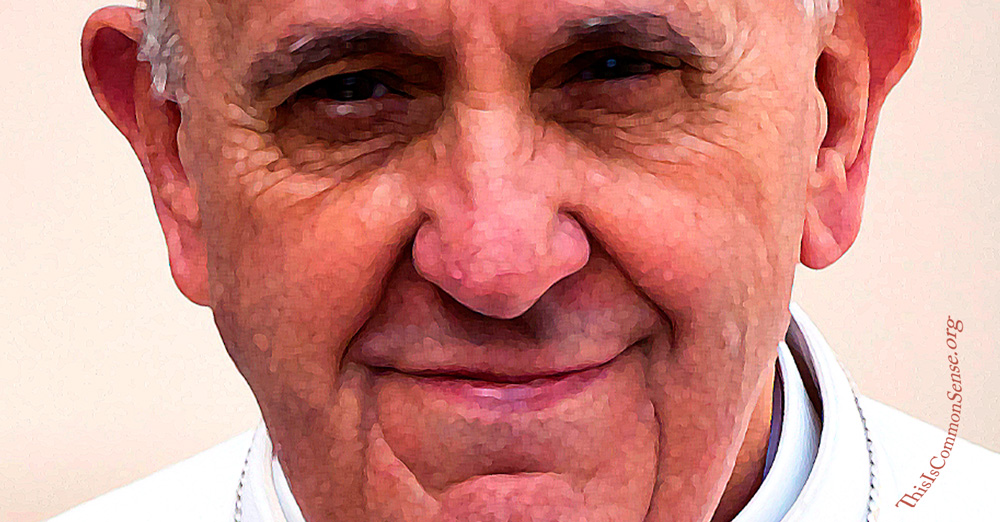
In his new encyclical, “Fratelli Tutti,” Pope Francis continues his attacks upon capitalism.

“The marketplace, by itself, cannot resolve every problem, however much we are asked to believe this dogma of neoliberal faith.” Capitalism “does not resolve the inequality that gives rise to new forms of violence. . . . The fragility of world systems in the face of the pandemic has demonstrated that not everything can be resolved by market freedom.”

What caused the inequality? Nature? Predation? Production? Inequality caused by theft and serfdom is a problem; inequality caused by production and freedom is not.

The pain of lockdowns (whether justified or not) is inflicted by massive restrictions on capitalism. And it turns out these government programs — pandemic “mitigation efforts” — will likely hit poor countries the hardest, causing (as the UN fears) mass starvation.

The pope cannot blame capitalism for that inequality!

Also, which champions of capitalism contend that capitalism resolves (instantly?) “every” problem? 

Capitalism is the socio-economic system characterized by freedom of production and exchange and by respect for property rights. It enables us to earn a living and make plans without worrying that we will be continuously robbed and our plans continuously derailed by governments. A free society shouldn’t pretend it can fix every problem, but it provides many incentives and opportunities to solve, or at least cope with, the problems of life. When free, we can speak and act as we judge best. 

And learn from our mistakes.

It would be a grave mistake to think that capitalism must be blamed for natural inequality, or for government actions to shut down production and commerce in order (we are told) to fight a virus. 

This is Common Sense. I’m Paul Jacob.


PDF for printing

Photo of Pope Francis by Catholic Church England

See all recent commentary
(simplified and organized)
See recent popular posts

Categories
Today

William Tyndale

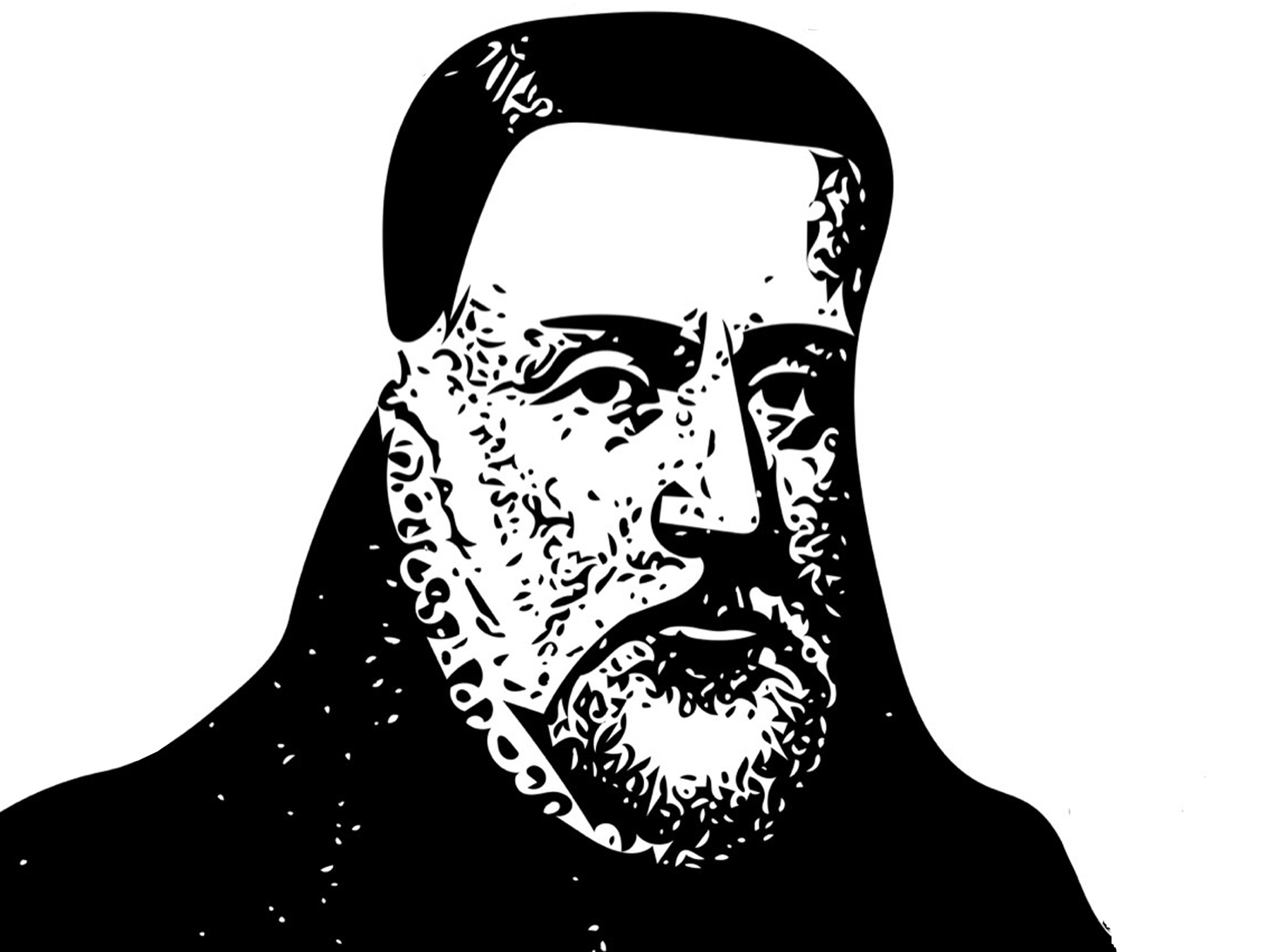
October 6 is the traditional date commemorating the martyrdom of William Tyndale, in 1536. Tyndale translated the New Testament and much of the Old into the English of his day, and in the process added more new words into the English language than any other single writer, with the possible exception of Shakespeare. He also laid the ground for the later, and more famous, King James (“Authorized”) Edition of the Bible.

Among his memorable coinages and turns of phrase coined as translations from Hebrew and Greek into English include

  • Passover (constructed from the Hebrew Pesach or Pesah)
  • scapegoat
  • a moment in time
  • the powers that be
  • the salt of the earth
  • a law unto themselves
  • it came to pass
  • the signs of the times
  • filthy lucre
Categories
Thought

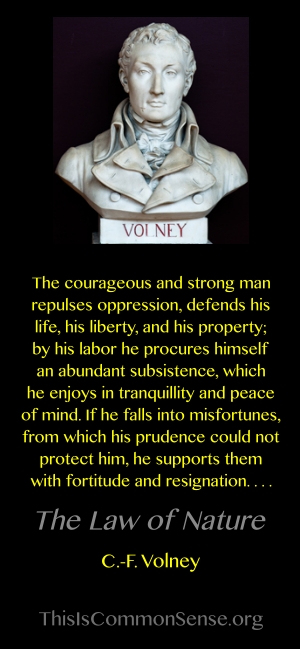
C.-F. Volney

Q. Are courage and strength of body and mind virtues in the law of nature?
A. Yes, and most important virtues; for they are the efficacious and indispensable means of attending to our preservation and welfare. The courageous and strong man repulses oppression, defends his life, his liberty, and his property; by his labor he procures himself an abundant subsistence, which he enjoys in tranquillity and peace of mind. If he falls into misfortunes, from which his prudence could not protect him, he supports them with fortitude and resignation; and it is for this reason that the ancient moralists have reckoned strength and courage among the four principal virtues.”

Constantin-François de Chassebœuf (1757–1820), Comte de Volney, The Law of Nature, Chapter VIII.
Categories
media and media people

Running from “Riot”

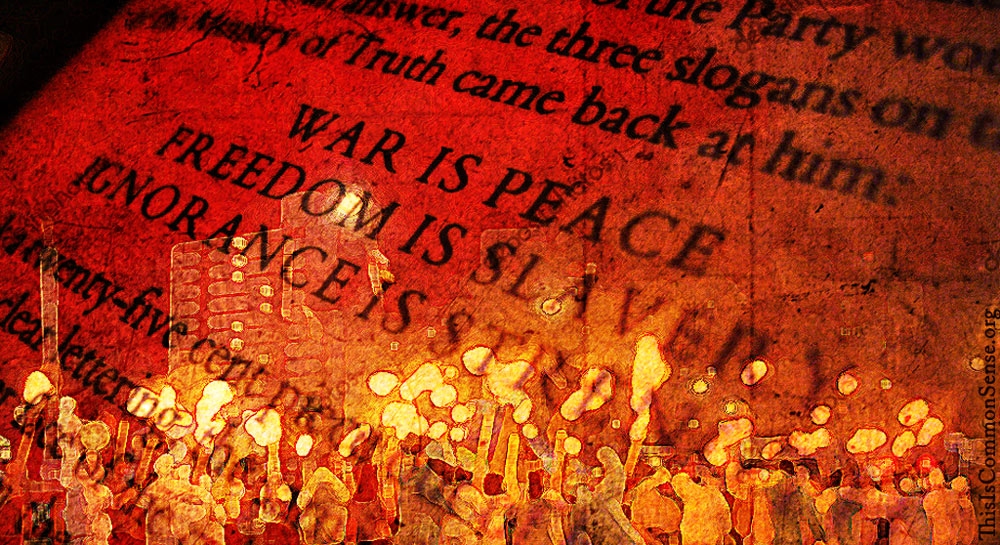
Whenever it got started — ancient Sumer, maybe — doublespeak is linguistic legerdemain, a sad sign of modern times.

Consider the Associated Press’s recent pronouncement about the word “riot.” Use the meeker word “unrest,” the stylebook editors suggest. “Unrest is a vaguer, milder and less emotional term for a condition of angry discontent and protest verging on revolt.”

Nothing like vagueness and timidity to make reporting as crisp and specific as possible.

The AP adds: “Focusing on rioting and property destruction rather than underlying grievance has been used . . . to stigmatize broad swaths of people protesting against lynching, police brutality or for racial justice, going back to the urban uprisings of the 1960s.”

Why the new recommendation? 

Well, all that . . . rioting by the swaths of rioters raises the question — if you regard the rioting as politically inconvenient — how not to report it.

Of course, one could consistently say both that “policing and the law should be reformed in such-and-such a way” and that “people should not destroy the property and lives of others.” Moreover, violating the rights of others should have a social cost. Criminal activity should be stigmatized. There is a major difference between protesting injustice and committing injustice.

Orwell defined doublethink, the method and goal of doublespeak, as “the power of holding two contradictory beliefs in one’s mind simultaneously, and accepting both of them.”

Whether a mind can actually do this is debatable. But disguising from oneself and others what we can all see is one way people try.

This is Common Sense. I’m Paul Jacob.


PDF for printing

See all recent commentary
(simplified and organized)
See recent popular posts

Categories
Thought

Ludwig von Mises

Freedom is to be found only in the sphere in which government does not interfere. Liberty is always freedom from the government.

Ludwig Edler von Mises, “Liberty and Property” (1958).
Categories
by Paul Jacob video

Watch This (& NOT the Debates)

Paul Jacob puts everything in context:

This Week in Common Sense, September 28 – October 2, 2020.

Categories
media and media people national politics & policies

Train or Dumpster?

If you sent Trump into a meeting with Xi Jinping, you’d worry that Trump might say something that maybe he shouldn’t. But you wouldn’t have to worry that China’s warlord would go “Wo-ho-ho! Would you sign this? And drink this?!?!” 

With Biden, well, you would worry, no?

That’s my prime takeaway of Tuesday’s terrible debate, which is near-universally described as a “train wreck” or “dumpster fire.” 

My “meta” take is that the debate format itself was doomed to derail or blow up in flames (depending on metaphor).

It started out with a reasonable “two minutes for you; two minutes for you” method, and then lurched into a free-for-all, with far too many interruptions and back-and-forth. 

You can tell when a moderator lacks control: he talks all the time. 

Chris Wallace talked too much. 

Did you notice that both debaters attempted to answer questions before they had been fully formulated? Once, twice, thrice . . . at first you wonder, “Hey guys, can you calm down a bit?” 

Of course,

  • it is hard to calm down in those situations, and
  • at a certain point you realize the problem lies with the person asking the questions.

Why, pray tell, is there a 62-part interrogative barrage?

To allow the questioner to sneak in something tangential but of a “gotcha” nature, of course — an element of some media-spun controversy. 

Must we select the moderator by sortition?

More structure seems a good idea. And gain the ability to turn off microphones.

Or do the opposite: Put both men in a studio all alone* with live mics and let’s see if they could negotiate the 90 minutes like adults. They might learn something.

And so might we.

This is Common Sense. I’m Paul Jacob.


* Maybe a couple security guards, too, just in case.

PDF for printing

See all recent commentary
(simplified and organized)
See recent popular posts