On October 15, 1894, Alfred Dreyfus (1859 – 1935) was arrested for spying: The Dreyfus Affair began. And thus began a scandal that brought anti-Semitism into the cultural center.
Categories
The Dreyfus Affair
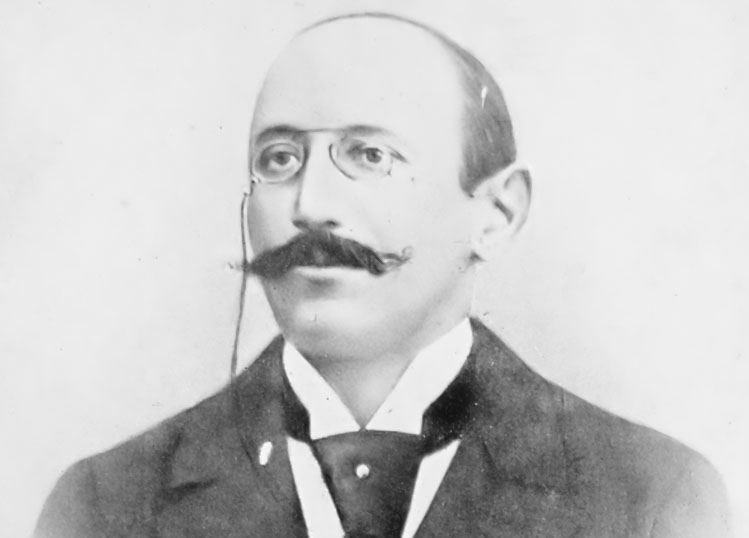
On October 15, 1894, Alfred Dreyfus (1859 – 1935) was arrested for spying: The Dreyfus Affair began. And thus began a scandal that brought anti-Semitism into the cultural center.
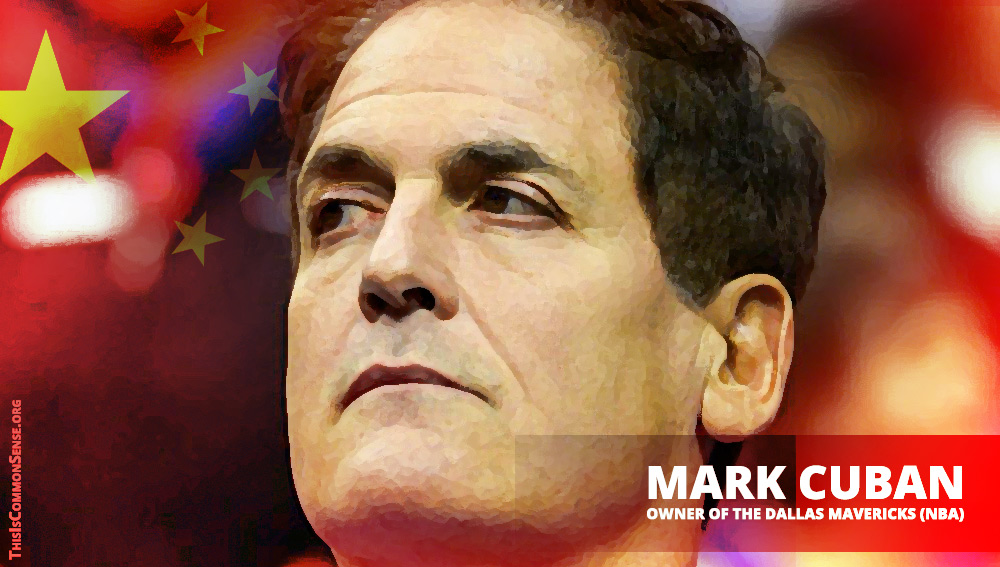
“I’m against human rights violations around the world,” declared Mark Cuban, owner of the National Basketball Association’s (NBA) Dallas Mavericks, joining Megyn Kelly for her Apple podcast.
“Including the ones in China?” Kelly posed ever-so impolitely.
“China is not the only country with human rights violations,” Cuban prevaricated. Adding that, “Any human rights violations anywhere are wrong.”
Then Kelly dropped the bombshell: “Why would the NBA take $500 million dollars-plus from a country that is engaging in ethnic cleansing?”
“So basically,” the NBA owner fumed, “you’re saying nobody should do business with China ever?”
Perhaps not entertaining Chinazis is the right course — especially if doing so leads to kowtowing to Chinese government demands that their genocide be met with your well-compensated silence.
“They are a customer of ours . . .” he continued. “I’m okay with doing business with China. And so we have to pick our battles. I wish we could solve all the world’s problems. But we can’t.”
In addition to the PR problems brought by cuddling up to China, Kelly also asked whether prominently placing “Black Lives Matter” on the league’s courts had contributed to an “unprecedented viewership collapse” for the just-finished NBA Finals.
“Each game has broken another all-time low,” wrote Bobby Burack for Outkick.com. “With a marquee match-up between the Lakers and the Heat and the league’s biggest draw in LeBron James, a drop of almost 60% is inexcusable.”
“Your audience is fleeing,” Kelly noted. “They object to the politicization of their game.”
Cuban demurred, but as Election Day approaches, I bet it has occurred to him more than once that Americans have already used their television remotes to cast some powerful votes.
This is Common Sense. I’m Paul Jacob.
See all recent commentary
(simplified and organized)
See recent popular posts
Hold on! What scheme am I talking about?
Joe Biden hasn’t said that he agrees with other Democrats (including former Democratic presidential candidates) who propose that the U.S. Congress act to dramatically expand the number of U.S. Supreme Court justices.
Joe Biden hasn’t said that at all.
In his first and so-far-only debate with President Trump he refused to say, because if he did then that would become the issue.
“The issue is the American people should speak,” he said, and then turned to the camera. “You should go out and vote. . . . Vote and let your senators know how strongly you feel. Vote now. Make sure you in fact let people know.”
Know what, precisely? To vote to allow a Democratic administration to seize control of the Court, overcoming any constitutional objections to his (or her) socialist schemes?
But then Biden turned against the voters, when asked on Friday, whether voters deserve to know where he stands on court-packing: “No, they don’t deserve” to know. “I’m not going to play his [Trump’s] game. . . .”
So, officially, we “don’t know” whether Biden supports packing the High Court the way FDR tried in 1937.
Do voters deserve better from Biden?
They do not!
O, those voters — always demanding to know positions and agendas and things. Playing right into the hands of the opposition.
Come on, man! Ya gotta vote for the guy to know what’s in him.
I know what’s on your mind. You’re asking, “Are you saying that Joe Biden’s coy covertness toward the imposition of one-party authoritarian government exemplifies a crude disdain for voters’ legitimate desire to know what their vote will get them and is even more disqualifying than his stealth court-packing scheme?”
Please. Don’t put words in my mouth.
This is Common Sense. I’m Paul Jacob.
See all recent commentary
(simplified and organized)
See recent popular posts
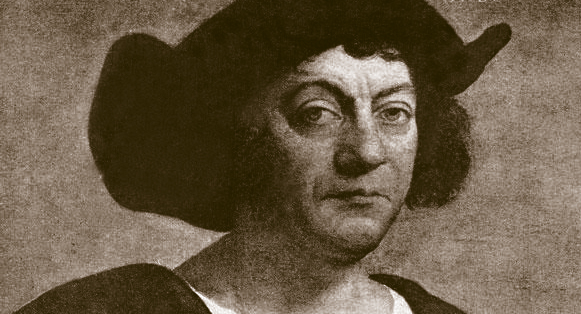
On October 12, 1492, Christopher Columbus landed in the Bahamas, thinking he had reached India.
Exactly two hundred years later, a letter from Massachusetts Governor William Phips ended the Salem Witch Trials.
On this date in 1892, the Pledge of Allegiance was first recited by students in many U.S. public schools, as part of a celebration marking the 400th anniversary of Columbus’s voyage.
The Pledge had been composed that year by Francis Bellamy, a Christian Socialist minister, and was first published in Youth’s Companion magazine, the issue dated September 8, 1892. The recital was accompanied with a salute to the flag known as the Bellamy salute. During World War II, the salute was replaced with a hand-over-heart gesture because the original form (described in detail by Bellamy) involved stretching the arm out towards the flag in a manner that resembled the later Nazi salute. The original form of the Pledge was somewhat less involved than later versions:
I pledge allegiance to my Flag and the republic for which it stands, one nation indivisible, with liberty and justice for all.
In October an editorial addition occurred, the word “to” prefixing “the republic.”
October 11, 1890, marks the founding of the Daughters of the American Revolution.
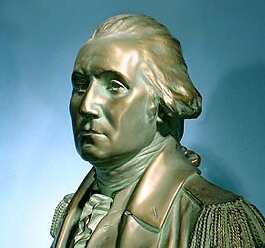
On the same date in 1976, President Gerald R. Ford approved a congressional joint resolution Public Law 94-479 to appoint, posthumously, George Washington to the grade of General of the Armies of the United States, as part of the bicentennial celebrations.
John J. Pershing is the only other American to attain this high title, and the only one to achieve it while alive.

Sixty-one years ago, on October 10, 1957, Ayn Rand’s dystopian/utopian novel Atlas Shrugged was published. Written to expound and defend a specifically individualist, freedom/free-market point of view, it is one of the most influential and literarily successful didactic novels ever written.
On October 10, 1973, Austrian-born American economist, Ludwig von Mises (pictured above) died.
Two-hundred fifty-nine years earlier, the French law-maker and Jansenist Pierre le Pesant, sieur de Boisguilbert died.
Both economists were known for their defenses of freer markets: le Pesant for pioneering the critique of mercantilism, arguing that a nation’s wealth consisted in what its people produce and trade; Mises for systematizing economic theory and advancing the critique of both socialism and latter-day mercantilism (what he called “interventionism”).
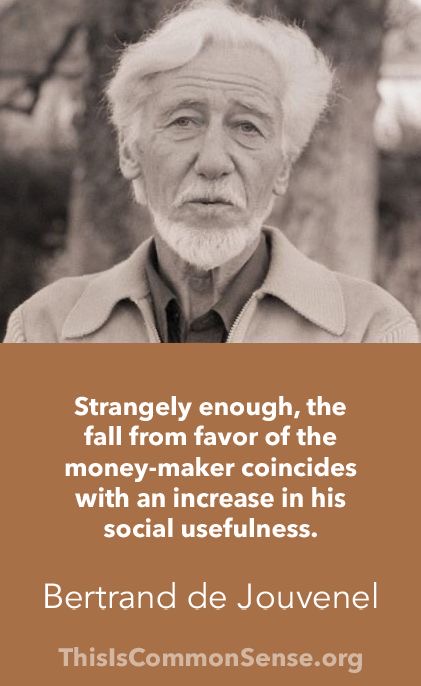
Strangely enough, the fall from favor of the money-maker coincides with an increase in his social usefulness.
Bertrand de Jouvenel, in F.A. Hayek (ed.), Capitalism and the Historians (1954).
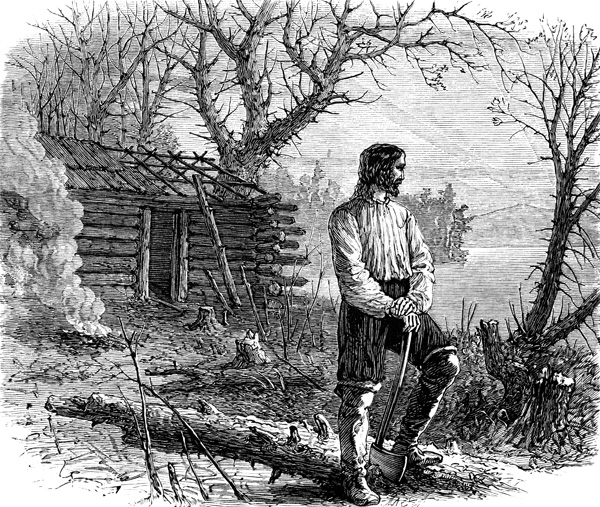
On October 9, 1635, Protestant theologian Roger Williams was banished from the Massachusetts Bay Colony as a religious dissident after he spoke out against punishments for religious offenses and giving away Native American land. He moved south, founding Providence Plantations, where he worked for separation of church and state, the rights of aboriginal Americans, and against slavery.

Can we start laughing again?
If the actual positions of our goofy ruling class won’t do it for you, then . . . what about QAnon?
A few weeks ago, President Trump was asked about QAnon. “At the crux of the theory,” a reporter explained, “is this belief that [Trump is] secretly saving the world from this Satanic cult of pedophiles and cannibals.” She went on to ask the president if that was something he was behind.
“I haven’t heard that, but is that supposed to be a bad thing?”
This may be the most politic and understated response ever given by our impolitic and hyperbolic leader.
Last week, the U.S. House of Representatives took QAnon seriously enough to formally condemn it, asking the intelligence agencies to monitor it closely. Though it is a set of conspiracy theorists, a few enthusiasts apparently have taken criminal actions.
Not included in “the widely supported bipartisan measure”? Seventeen Republicans and “Rep. Justin Amash (L–Mich.),” reported Christian Britschgi on Friday. “The latter argued the resolution posed serious free speech concerns and could be counterproductive.”
Amash had the wit to see that sending the FBI to investigate “conspiracy theorists who believe in a deep state that’s fighting against them” might possibly . . . “just confirm . . . their fears.”
If you are like me, you know little about pedophiles and bupkis about cannibal cults. But if Trump supporters who spin tall tales about Trump directing secret military units to nuke underground nests of alien deviltry unnerve politicians enough to publicly condemn them for doing so, three responses seem rational:
This is Common Sense. I’m Paul Jacob.
See all recent commentary
(simplified and organized)
See recent popular posts
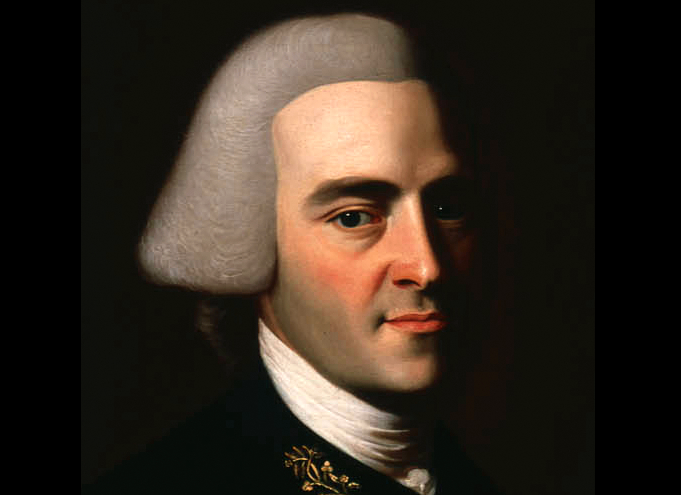
On October 8, 1793, American merchant, president of the Second Continental Congress (1775–1777) and first and third Governor of the Commonwealth of Massachusetts, John Hancock (b. 1737), died.
The date October 8, 1582, does not exist in the records of Italy, Poland, Portugal and Spain, the result of that year’s implementation of the Gregorian calendar.
Fearing a Catholic plot, Protestant countries adopted the more accurate calendar much later. By the time Britain and its colonies got on board in 1752, eleven days had to be “disappeared.” This caused riots in some places, as people suspected some horrible chicanery — and in actual fact the inspiration for the “Give us our eleven days” protest had something to do with taxes, so it might not have been as idiotic as it now seems.