On May 12, 1943, Axis forces in North Africa surrendered.
Categories
Axis in Africa

On May 12, 1943, Axis forces in North Africa surrendered.

“Now Hiring” signs are up everywhere, especially on the windows of restaurants and other retail businesses.
But those signs aren’t disappearing.
Lots of jobs are left open.
No takers.
Week after week.
The job recovery that President Joseph Robinette Biden Jr. says he has placed his fabled “laser-like focus” upon, has been disappointing, to use the words of Washington Post columnist Catherine Rampell.
Oops, make that “extremely disappointing.”
“Economists and analysts had been expecting around a million jobs to be added on net in April,” Rampell wrote last week, “given the rising share of vaccinated Americans and relaxation of restrictions on business. Instead, employers created a measly 266,000 positions, the Bureau of Labor Statistics reported Friday. Job growth for March was revised downward, too.”
This didn’t come out of nowhere, as another Washington Post columnist made clear a few weeks ago. “Many employers, especially restaurants and small retail businesses, are having a hard time finding workers,” explained Henry Olsen. “This is likely the result of trends in covid-19 vaccinations and the generous unemployment benefits that were expanded due to the pandemic.”
Normally when talking about employment and unemployment, we are tempted to put on our economist caps and talk about supply and demand, marginal productivity, monetary policy, etc. But most commentators seem to be honing in on the ultra-obvious: pay people to stay home, they tend to stay home.
Indeed, thinking of the generous unemployment benefits which the U.S. Congress has bestowed upon the country as “stimulus,” we should realize that paying people to stay at home is like hiring them for the cushiest job imaginable. No worker shortage, as many suggest, but malinvestment in the wrong “jobs.”
And thus the opposite of “stimulus.”
This is Common Sense. I’m Paul Jacob.
See all recent commentary
(simplified and organized)
See recent popular posts

On May 11, 1858, Minnesota was admitted as the 32nd U.S. State.
Nine years later, to the day, the Grand Duchy of Luxembourg’s independence and neutrality were affirmed in the Second Treaty of London.

An idea is a putting truth in checkmate. Whoever wishes to have ideas must first prepare himself to desire truth and to accept the rules of the game imposed by it. It is no use speaking of ideas when there is no acceptance of a higher authority to regulate them, a series of standards to which it is possible to appeal in a discussion.
José Ortega y Gasset, The Revolt of the Masses (1929), Chap. VIII: “The Masses Intervene In Everything, And Why Their Intervention Is Solely By Violence.”

On May 10, 1872, Victoria Woodhull became the first woman nominated for President of the United States.
In a landmark Supreme Court decision on May 10, 1893, the tomato was ruled a vegetable, not a fruit.

Paul Jacob’s ongoing coverage of our fantasy-thriller, American politics:
This Week in Common Sense, May 9, 2021.
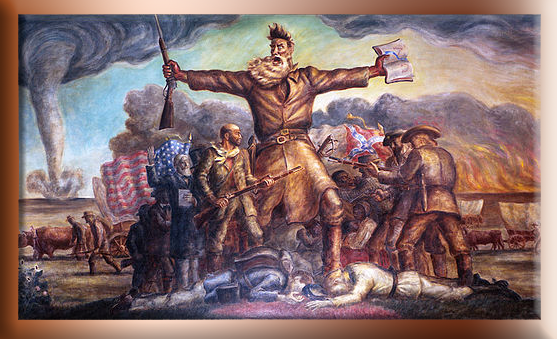
On May 9, 1800, abolitionist revolutionary (and, technically, insurrectionist, perhaps even terrorist) John Brown was born.
In 1883 on this date, Spanish philosopher José Ortega y Gasset was born.

Paul Jacob is on a roll:

On May 8, 1899, Austrian-English economist and philosopher Friedrich August von Hayek was born. He signed the bulk of his books written in the English language as “F.A. Hayek,” and is best known for The Road to Serfdom, The Constitution of Liberty, The Fatal Conceit, and many essays, several of them widely cited, including “Individualism, True and False” and “The Use of Knowledge in Society.”
Years earlier, on the same date in 1873, English philosopher and economist John Stuart Mill died. Now best known for On Liberty (1859) and Utilitarianism (1861), he was and is considered one of the most important economists and philosophers of the Victorian age, with other classics including A System of Logic (1843) and Principles of Political Economy (1848). Mill’s letters to his wife were edited into book form by Hayek.
On May 8, 1946, two Estonian school girls (Aili Jõgi and Ageeda Paavel) blew up the Soviet memorial which stood in front of the Bronze Soldier in Tallinn.

Last week, I asked whether the social media companies that mine our data — which they obtain from our posts — might not expend a little more attention to allowing us to mine our own data with more ease and sophistication.
Today, let’s look at the biggest problem.
Politics.
Facebook and Twitter initially gloried in enabling users to easily communicate political ideas and activism.
Then they realized that people don’t all agree, and that platform headmen Zuckerberg’s and Dorsey’s friends got upset when they lost, blaming Facebook and Twitter for allowing “democracy” to be compromised.
Now, that was overblown. Democracy wins when people use communication technology to convince others — just so long as they do not opt out of democracy’s integral respect for minority rights.
Which is what Democrats accused Republicans — Trump was “obviously” authoritarian.
Which is what Republicans also accused Democrats — and throwing people off a supposedly non-partisan platform for partisan reasons sure looks anti-democratic.
Robby Soave, arguing to the contrary at Reason, says that “Both the Left and the Right Are Exaggerating the Threat Posed by Facebook.” His article’s blurb boasts his thesis: “Facebook can’t kill, jail, or tax you. It can only stop you from posting on Facebook.”
True — but is it true enough? The political ramifications of Facebook’s de-platforming strike me as a great breach of contract — not just a matter of no physical threat. Plus, as mentioned Monday and previously, big tech is not immune to Washington’s political pressure and massive financial clout.
Meanwhile, Mr. Soave quotes Candace Owens, whose advice seems apt to me: “Twitter and Facebook are Fascist companies” that we should be “slowly migrating away from. . . .”
Soave is spot-on to highlight the limits to Facebook’s clout, reminding that we can stop feeding their data mining operations.
This is Common Sense. I’m Paul Jacob.
See all recent commentary
(simplified and organized)
See recent popular posts