Categories
Today

Patriotism & Protest & Ousting

On August 19, 1919, Afghanistan gained full independence from Great Britain. The British attempts to maintain an imperial presence in this region elicited an earlier, infamous essay in protest by English sociologist and anti-imperialist Herbert Spencer (pictured), “Patriotism” (Facts and Comments, 1902).

On this day in 1991, Soviet President Mikhail Gorbachev was placed under house arrest, a crucial event leading to the dissolution of the Soviet Union.

In 1999, a mass rally of Serbians demanded the resignation of Slobodon Milosevic.

Categories
free trade & free markets general freedom national politics & policies

Subminimal Morality

He’s been at the job fourteen years. Congress may kill it.

Matt Thibodeau has disabilities that severely limit how productive he can be and thus how much he can contribute to the bottom line of his employer, Associated Production Services.

Under a longstanding exception to the federal minimum wage, Matt is paid $3.40 an hour for tasks like shrink-wrapping and assembling packages. The rate makes his employment feasible. (The current federal minimum is $7.25.)

Some congressmen want to scrap this exception to the mandatory minimum, calling it unfair and “out of date.”

“I felt like they were being targeted because they couldn’t speak for themselves,” says Matt’s mom, “and so that made us parents even more determined to speak for them.”

What’s out of date, or was never justified to begin with, is Congress’s federal minimum wage regulation.

Any mandatory minimum wage discourages employers from hiring persons not yet productive enough to justify the cost of being employed at the dictated minimum. It prevents low-skilled workers — on the outs of the economy — from getting a foot in the door.

Some employees initially paid only a few dollars an hour will soon improve their productivity and earn a higher wage. Others, like Matt, simply cannot advance further but can provide steady, conscientious labor within the compass of their abilities.

That’s fine. Each party to such an arrangement benefits. And his work enables Matt to be productive and valued, which is tremendously important to him. 

As it is important to all of us.

This is Common Sense. I’m Paul Jacob.


PDF for printing

See all recent commentary
(simplified and organized)
See recent popular posts

Categories
Thought

Destutt de Tracy

Society is purely and solely a continual series of exchanges. It is never anything else, in any epoch of its duration, from its commencement the most unformed, to its greatest perfection. And this is the greatest eulogy we can give to it, for exchange is an admirable transaction, in which the two contracting parties always both gain; consequently society is an uninterrupted succession of advantages, unceasingly renewed for all its members.

Categories
Today

Free to Choose

On August 18, 1920, the Nineteenth Amendment to the United States Constitution was ratified, guaranteeing women’s suffrage.

Eighty-eight years later, Pakistan’s President, Pervez Musharaf resigned under threat of impeachment.

The next year, Rose Director Friedman, economist, wife of economist Milton Friedman, sister of economist Aaron Director and mother of economist David D. Friedman, died. With her husband she had written one of the most popular pro-liberty books of our time, Free to Choose. She had been born in late December, 1910, in Staryi Chortoryisk, in Ukraine, to the Director family, prominent Jewish residents.

With her husband she co-authored their memoirs, Milton and Rose D. Friedman, Two Lucky People, which appeared in 1998. Together they founded the Milton and Rose D. Friedman Foundation, with the aim of promoting the use of school vouchers and freedom of choice in education. She also helped produce the PBS television series, Free to Choose, and assisted her husband in writing his 1962 political philosophy book Capitalism and Freedom.

Categories
government transparency media and media people social media

Conspirators versus Conspiracists

“Conspiracy theories circulated online over social media contribute to a shift in public discourse away from facts and analysis,” proclaims a new study by the Rand Corporation think tank, “and can contribute to direct public harm.”

Titled “Detecting Conspiracy Theories on Social Media,” the study, paid for by Google’s Jigsaw unit, proposes to “improve machine-learning technology for detecting conspiracy theory language by using linguistic and rhetorical theory to boost performance.”

All very fascinating, but . . . do conspiracy theories shift public discourse away from “facts and analysis”?

They do challenge accepted facts, and are themselves examples of extended analyses. 

Often off track? Sure. 

But their problematic nature is not as stated.

The assumption throughout is that conspiracy theories are always in error. But when the report goes on to say that “conspiracists also distrust authority and believe that those who produce the news are lying to them,” there’s no fact check — why do the Rand authors believe we are not being routinely lied to?  

This becomes almost funny with the COVID origination debate. The Wuhan Lab Leak Theory is one of four current popular conspiracy notions the report looks at. And when the report was being written, the lab leak theory was marginalized on social media and pooh-poohed amongst most public health experts. Now we know that there was an actual conspiracy to bury evidence for it.

Truth is: conspiracies happen. Most bandied-about theories may be cuckoo, but a few turn out rock solid.

The honest way to deal with suspicions of a conspiratorial nature is pointed inquiry into relevant facts . . . with careful analysis.

The Rand Corporation and Google are more interested in defending the authorities.

Who often lie.

This is Common Sense. I’m Paul Jacob.


PDF for printing

See all recent commentary
(simplified and organized)
See recent popular posts

Categories
Today

David Crockett

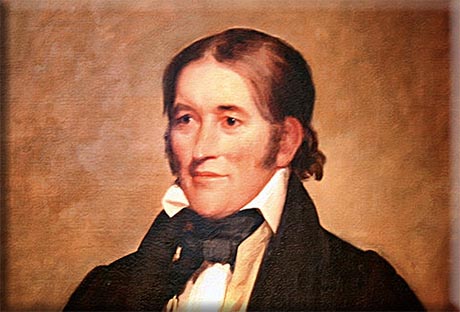
On August 17, 1786, American backwoods hero and politician, David Crockett, was born. Famous as a politician, he brought personal principle and honor and a “common sense” approach in representing Tennessee in the U.S. House of Representatives. He later served in the Texas Revolution, dying at the Battle of the Alamo.

Crockett grew up in East Tennessee, where he gained a reputation for hunting and storytelling, which helped make him a legend in his own time. After being made a colonel in the militia of Lawrence County, Tennessee, he was elected to the Tennessee state legislature in 1821.

In 1825, Crockett was elected to the U.S. Congress, where he vehemently opposed many of the policies of President Andrew Jackson, most notably the Indian Removal Act.

Crockett wrote a number of books, including a biography of Martin Van Buren.

Categories
international affairs

Lack of Intelligence?

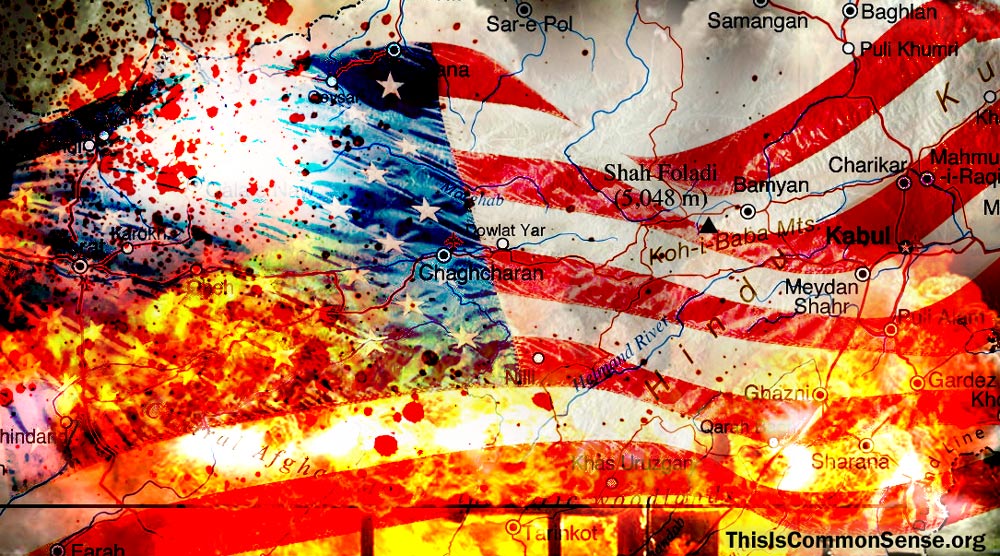
The quick collapse of the Afghan government and the takeover of the entire country by the vicious and barbaric Taliban was no intelligence failure, as Rep. Jackie Speier (D-Calif.) ridiculously charged Sunday.

U.S. intelligence officials had informed the Biden Administration, as well as previous ones, of the inevitable consequences.

Nor is this mess in any way a failure of the US military.

It is a political failure, through-and-through. 

While the withdrawal* could have been handled far better, the big mistake was thinking — for even a nanosecond — that we could remake Afghanistan into a pillar of freedom and democracy. 

Or anything remotely close.

The U.S. has been there for two decades, our longest war, and could have stayed another hundred years . . . and still, when we left, this would be the result. 

As this commentary warned repeatedly.**

I have come to support U.S. alliances with free peoples, within limits . . . the key limit being the American people’s degree of commitment. Such alliances would be more sustainable than our current role as world policeman, better protecting freedom from the admittedly serious danger presented by China and Russia, two exceedingly bad actors. 

We can occupy unfree peoples — for example, the Afghans — perhaps forever if we are willing to expend the blood (our sons and daughters) and treasure, but neither the U.S. nor any other country has shown the capability to remake peoples or nations. 

Liberation is beautiful. But if forced, it won’t take

This is Common Sense. I’m Paul Jacob.


* The U.S. Government bears some responsibility not to get people who work with it killed. We all seem to agree on that, even if we don’t agree on other issues regarding such interventions. So why does our government facilitate the placing of a price on many people’s heads and then cut and run without taking care to protect them? This is not a demand for perfection. But how about some quick visa paperwork and the offer of flights out of Afghanistan? In fact, fill out the stupid paperwork on the flight over here. 

** In 2012, 2013, 2014, 2015, 2016, 2017, 2018, 2019, etc.

PDF for printing

See all recent commentary
(simplified and organized)
See recent popular posts

Categories
Thought

Leonard Read

Why do tourists gape so eagerly at this sort of thing? Most people, I believe, aspire to what these agents and sycophants of the state achieved: ease without work, services for themselves by edict, power and position by wishing plus, of course, a little intrigue.

Leonard Read’s Journals, August 16, 1950, referring to the Château de Fontainebleau, one of the largest of France’s royal châteaux.

Categories
Today

The WINO!

On August 16, 1841, U.S. President John Tyler vetoed a bill to re-establish the Second Bank of the United States (pictured). Enraged Whig Party members — feeling betrayed by the WINO* Tyler — rioted outside the White House in history’s most violent demonstration on White House grounds.


* “Whig In Name Only,” anachronistic joke term. A play on the contemporary initialisms “Republican in Name Only” (RINO) and “Democrat in Name Only” (DINO).

Categories
Thought

La Rochefoucauld

Nous avons tous assez de force pour supporter les maux d’autrui.

We all have strength enough to endure the misfortunes of others.

François de La Rochefoucauld, Reflections; or Sentences and Moral Maxims (1665–1678).