I have heard a socialist ask, “Will collectivism change the soil and the sunshine of Medoc?” No, but wine does not come into existence of its own accord, the vine-stocks and the conditions of soil and of climate do not produce fine harvests spontaneously, but need to be properly utilised, and require an annual expenditure upon the cost of cultivation; and subordinate officials without a direct interest are not the men to apply the required attention to this kind of production.
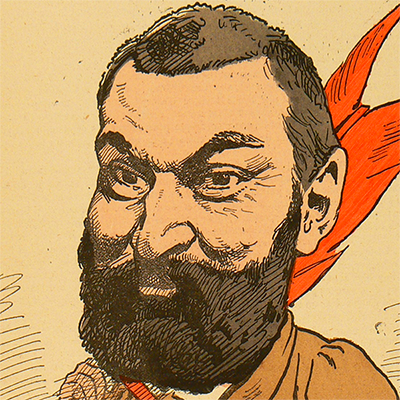
Yves Guyot, Socialistic Fallacies (1910), Book VII, “Collectivist Organization.”
On May 23, 1788, South Carolina became the 8th state to ratify the U.S. Constitution.
Other May 23 events include:
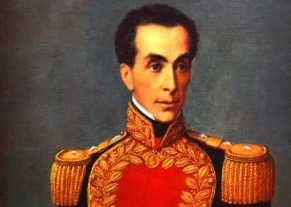
* 1813: South American independence leader Simón Bolívar entered Mérida, where he was proclaimed El Libertador (“The Liberator”), leading the invasion of Venezuela.
* 1900: Sergeant William Harvey Carney became the first African American to be awarded the Medal of Honor, for his heroism in a Civil War battle fought 37 years prior, in 1863.
* 1958: Birthday of American comedian and game show host Drew Carey.
Early in this pandemic, experts — including CDC officials — told us that if you aren’t a medical worker dealing with infected patients, wearing a mask is ineffective in protecting yourself and others.
Many reversed themselves, though without honestly explaining why they had ever downplayed the value of masks to begin with. Masks are even now mandatory some places.
But we still hear naysayers who declare masks to be pointless.
One blithely declares: “The main transmission path is long-residence-time aerosol particles (< 2.5 μm), which are too fine to be blocked.” That’s less than 2.5 micrometers. A micrometer is one millionth of a meter. Yes, small.
But “too fine to be blocked”?
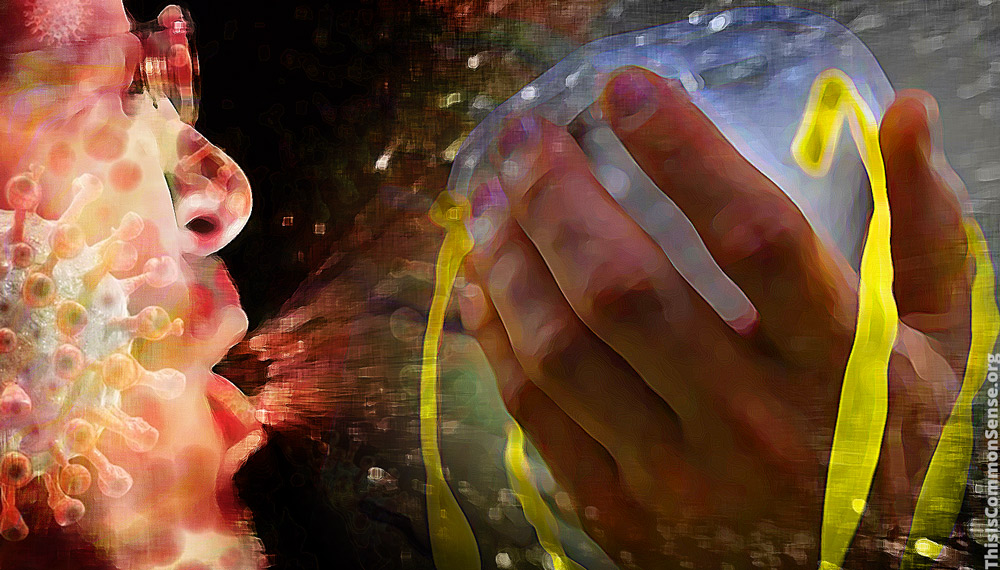
A properly worn mask need not be 100% effective to block tiny particles. Viruses do not fly unerringly through holes and gaps in the mask. They have no guidance system and no little legs enabling them to scamper to a hole if it hits fabric.
Nor is the virus invariably unattached to larger particles.
Obviously, the better the filtering, the more effective the mask.
Suppose you go to a supermarket and
wear a mask,
try to keep your distance from others,
go when fewer people tend to be shopping, and
leave fast.
All pointless?
Short of wearing a hazmat suit or never leaving a one-resident home, no protective measure will be 100 percent effective all the time, infallibly. This doesn’t mean that partly effective measures should be dismissed as entirely ineffective.
The dupe is the more ridiculous that if he only opened his eyes he must see how crude and flimsy are the artifices by which he has been swindled. The aim of the Protectionist in every country is to reduce imports and encourage exports. Since there can be no selling without buying, if he attained his end international trade would cease and each nation be self-sufficing.
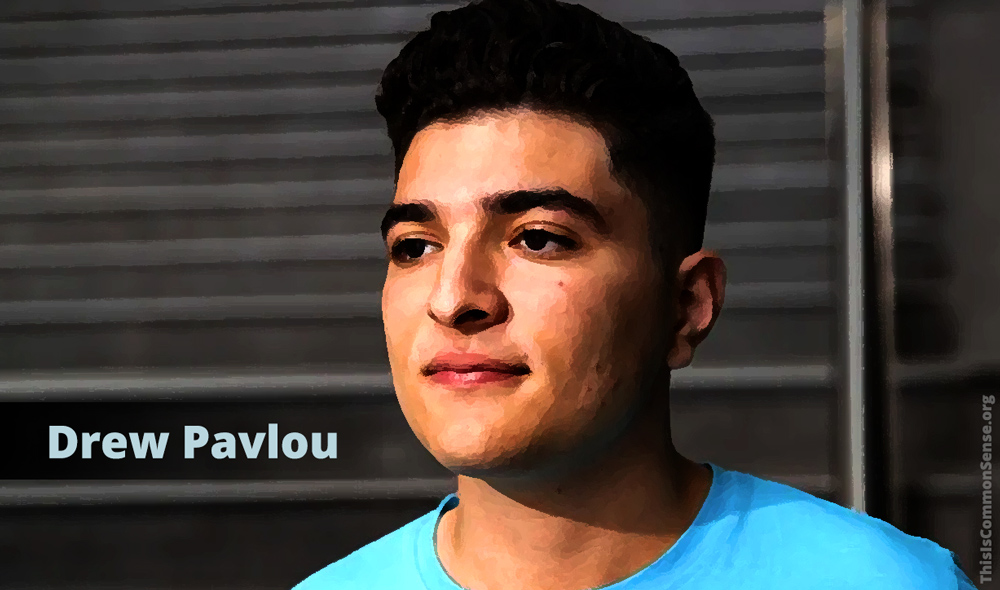
The University of Queensland may expel 20-year-old philosophy major Drew Pavlou. He has been protesting against the Chinese Communist Party and in support of the Hong Kong protesters, but perhaps most tellingly has criticized his school’s ties to China.
Xu Jie, the Chinese consul general in Brisbane, has blasted Pavlou for being an “anti-China activist.”
This same man, Xu Jie, also happens to be an adjunct professor at the university.
The Queensland campus is home to one of many Chinese-funded Confucius Institutes, often benignly described as promoting Chinese culture. FBI Director Christopher Wray says that the institutes “offer a platform to disseminate Chinese government or Chinese Communist Party propaganda, to encourage censorship, to restrict academic freedom.”
The Economistallows that the Institutes “project soft power” with “occasional hints of politics,” offering as an example an exhibition at the University of Maryland, whitewashing China’s relationship to Tibet.
Just a smidgen of politics here and there.
According to Pavlou, “Beijing exercises so much financial leverage over our universities that it can stifle all criticism of the Chinese government on campus.”
Although the school nebulously accuses Pavlou of “harassing” others, his real sin seems to be not going with the flow. Threatening Pavlou with expulsion and even prosecution hardly proves that Queensland would never act to squelch dissent at the behest of China.
There is only one fair resolution. The university should apologize for its CCP ties, reject funding from China, kick out its Confucius Institute, kick out Xu, and commend Pavlou for urging the school to reform its bad conduct.
If the clause of the Constitution under which the Post Office establishment exists were struck from the instrument to-morrow, is any one weak enough to suppose that the activity of commerce would not soon supply a system of its own?
We must not confound liberty with anarchy. Liberty is the reciprocal respect for personal rights, according to certain fixed rules known by the name of law. Anarchy is the privilege of some and the spoliation of others, according to the caprices and arbitrary will of the cunning and the violent, and the feebleness and lack of energy of the timorous.
Sincere enthusiasm is the only orator who always persuades. It is like an art the rules of which never fail; the simplest man with enthusiasm persuades better than the most eloquent with none.
La Rochefoucauld, Réflexions ou sentences et maximes morales, (1665, 1678), eighth maxim.
Shutting down capitalism almost worldwide may prove to be the grandest disaster of all time. Folks on the margin of poverty in poor countries are already starving. Though scads of people seem to think we could ride out a lockdown indefinitely just by cashing government checks, the problem is that if we don’t produce, we cannot buy and consume products.
A “universal basic income” won’t help if the re-distributed money chases few-to-no goods.
So how did we come to believe that we can just shut down most business activity and still survive?
Maybe the idea seems plausible because many people already do not work to survive. As their numbers have increased, our civilization has forgotten that they survive upon the work of others.
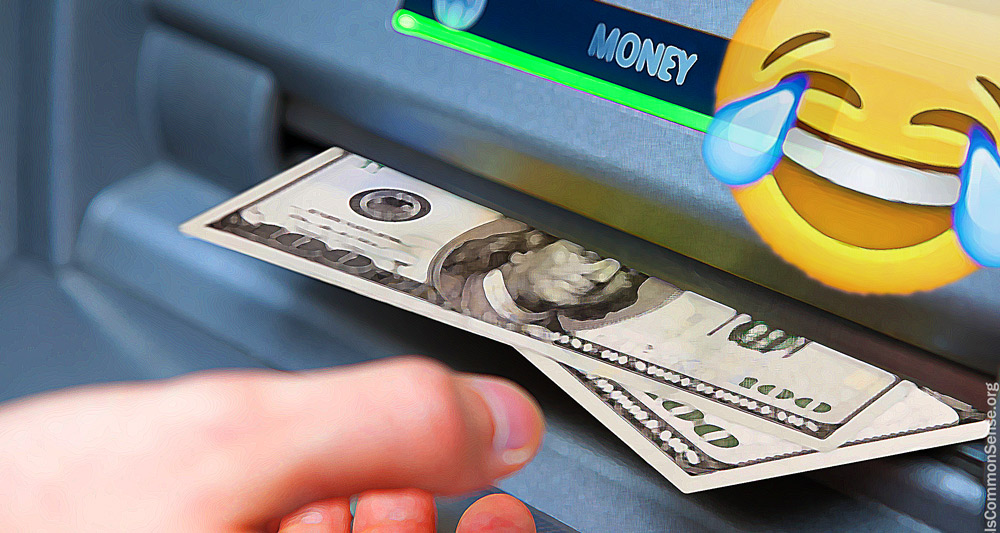
We guffaw at young children who, when their parents say something they want is too expensive, they innocently respond, ‘well, just go to the cash machine!’ But the more people rely upon checks and bank deposits from the government — for any reason — the harder it is to remember that the power to buy stuff doesn’t ultimately come from government. With taxation, redistribution and inflation thrown into the mix, even adults think of government as Cash Machine.
And the Cash Machine as a model for the economy.
To fight a virus, the world has shut down production — as if we do not survive by producing goods in order to consume them.
Government has reduced capitalism — and us — to absurdity.