Categories
initiative, referendum, and recall national politics & policies

Greater Idaho Goes Forward?

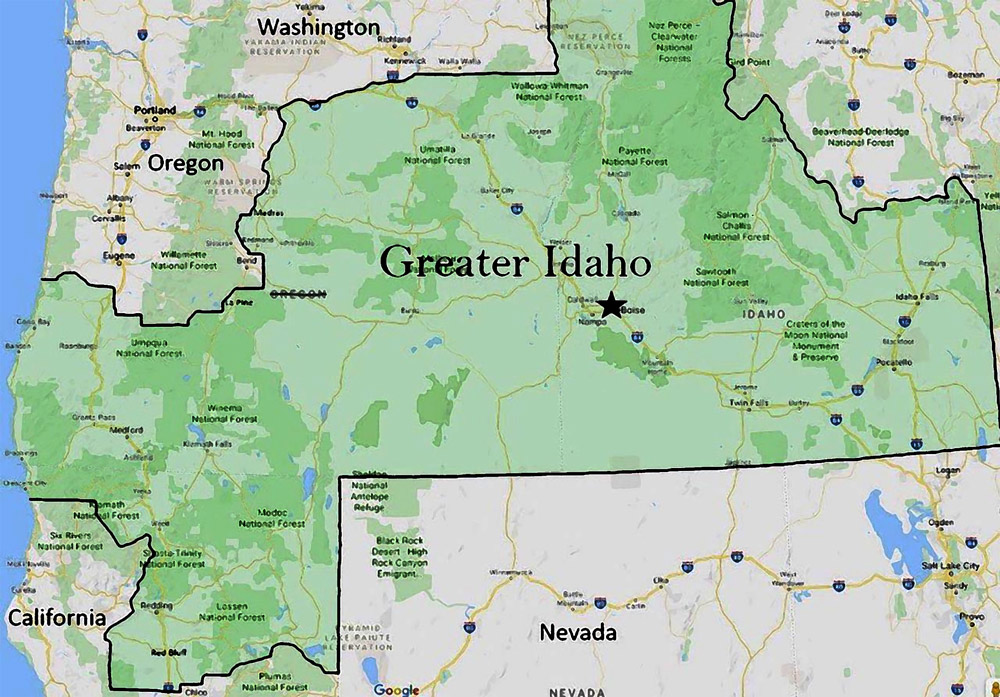
An Oregon casePeople Not Politicians v. Secretary of State Clarno, was decided last week in favor of People Not Politicians, a group that has struggled obtaining signatures to qualify Initiative Petition 57 (IP 57) for the November 2020 ballot — while observing the governor’s stay-at-home orders.

It is hard to collect petition signatures under social distancing.

So the court is forcing the Secretary of State to give the group some leeway in advancing their redistricting measure.

This is good news for another citizen activist group, Move Oregon’s Border. Chief Petitioner Mike McCarter wants to place initiatives on county ballots in eastern, southern, and southwestern Oregon. His idea is to split off from Willamette Valley politics altogether, leaving wokester Portland — of the comedy Portlandia and antifa riots fame — in the distance.

But he does not want to form a new state. The secession is mere prelude to accession . . . to Idaho!

It has been a long time since the United States has fissioned a state, West Virginia during the Civil War being the most recent — Maine and Kentucky before that.

Great idea? Well, this goes far beyond these two western states. California is ripe for break-up, for by such a political reformation the ratio of citizens to representatives could be increased in favor of citizens.

The idea of calling the proposed new, larger State of Idaho “Greater Idaho” seems a bit much. Surely “Idaho” would do.

But the idea is politically more possible because it wouldn’t change the partisan complexion of the United States Senate, thus avoiding riling up one of the two major parties.

Other fissions, and fusions, would be much harder. Too bad. People should be able to insist on better representation. Democratically.

This is Common Sense. I’m Paul Jacob.


PDF for printing

See all recent commentary
(simplified and organized)
See recent popular posts
Categories
initiative, referendum, and recall international affairs term limits

He Tries Harder

He’s the Avis Rent A Car of authoritarianism. 

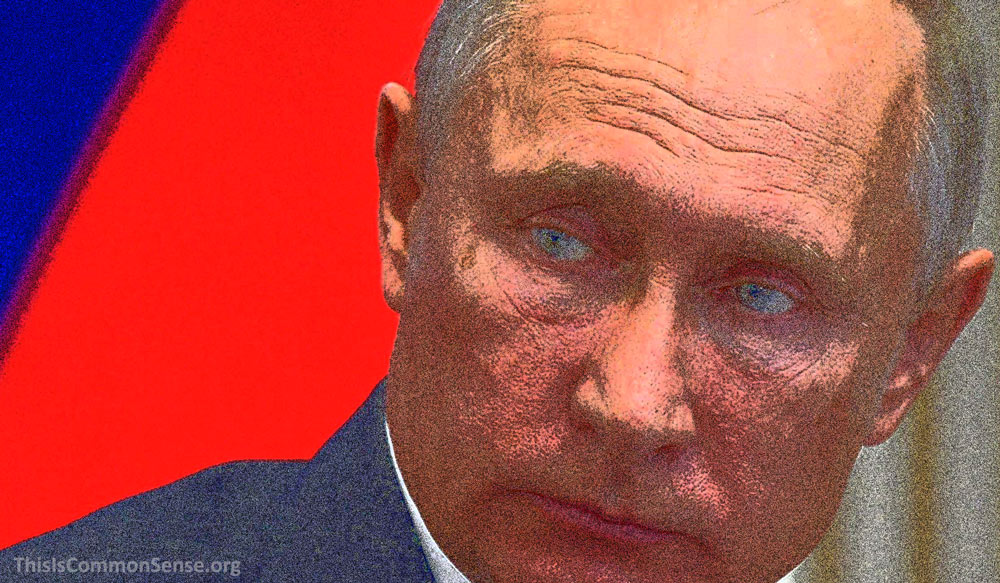
Russian President Vladimir V. Putin is not the most evil tyrant on the planet. That title clearly belongs to Chinese President Xi Jinping. Instead, Putin is No. 2. 

So, of course, he tries harder.

Two years ago, Xi Jinping got the Chinese Communist Party to jettison his term limits without breaking a sweat. Not the slightest pretense of democracy necessary. 

Two weeks ago, Putin finally caught up with Xi by winning an unnecessary and highly fraudulent national referendum designed to legitimize the constitutional jiggering that would allow him to stay in office until he would be 83 years old. 

Beating Joseph Stalin for post-tsar star tsar.

So, how did Putin rig the referendum? 

“Voters are being asked to approve a package of 206 constitutional amendments with a single yes-or-no answer,” explained National Public Radio. Many U.S. states have single-subject requirements for ballot measures to prevent precisely this sort of log-rolling.

Sergey Shpilkin, a well-known Russian physicist, produced statistical evidence that “as many as 22 million votes — roughly 1 in 4 — may have been cast fraudulently,” ABC News reported.

“The European Union regrets that, in the run up to this vote, campaigning both for and against was not allowed,” read a statement from the 27-nation block. With little debate and scant information, the referendum was just pretense.

So, why did Putin go through all the trouble to pretend?

Low approval ratings, a New York Times piece argued, his “lowest level since he first took power 20 years ago.” Putin needed all the help that fake democracy can provide.

Without any of those uncomfortable checks-on-power that real democracy demands.

This is Common Sense. I’m Paul Jacob.


PDF for printing

See all recent commentary
(simplified and organized)
See recent popular posts
Categories
national politics & policies too much government

A Modest Anti-Capitalism?

Socialists are so “modest”!

But how modest?

Ask Rep. Ilhan Omar, who recently proclaimed to be “fighting to tear down systems of oppression that exist in housing, in education, in health care, in employment, in the air we breathe.” 

Gasp?

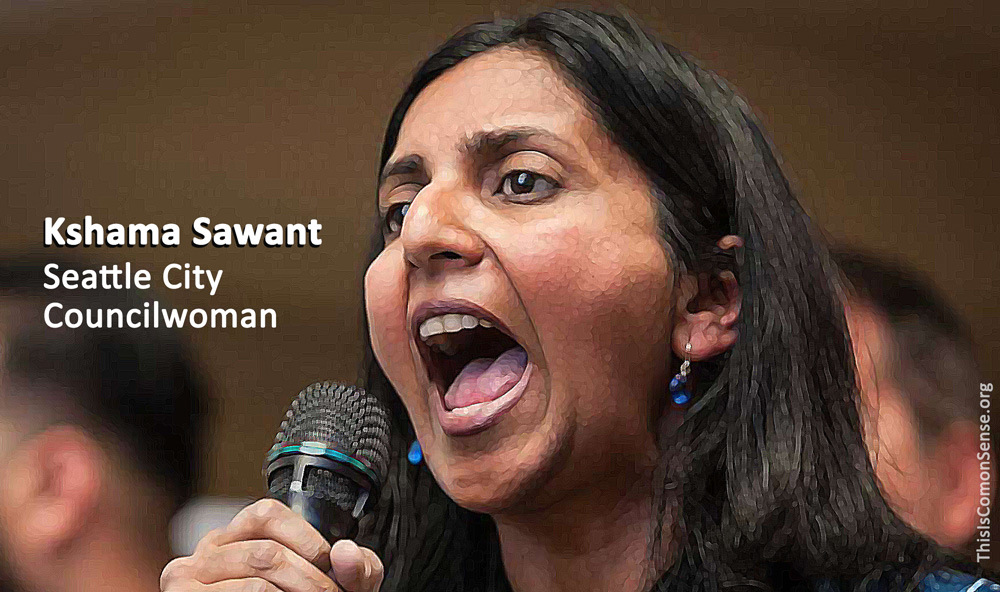
Well, maybe that isn’t so clear. So listen to Seattle City Councilwoman Kshama Sawant.

“I have a message for Jeff Bezos and his class,” Sawant warned. “If you attempt again to overturn the Amazon Tax, working people will go all out in the thousands to beat you. And we will not stop there.”

Does that sound like a threat? Or is it really just a harmless expression of politics-as-usual?

“You see, we are fighting for far more than this tax,” the self-proclaimed socialist elaborated. “We are preparing the ground for a different kind of society, and if you, Jeff Bezos, want to drive that process forward by lashing out against us in our modest demands, then so be it. Because we are coming for you and your rotten system. We are coming to dismantle this deeply oppressive, racist, sexist, violent, utterly bankrupt system of capitalism. This police state. We cannot and will not stop until we overthrow it, and replace it with a world based, instead, on solidarity, genuine democracy, and equality: a socialist world. Thank you.”

And thank you, Ms. Sawant, for making yourself ultra-understandable.

You want to destroy private property and free markets and robust political debate and replace them with . . . well, let’s just say that if you complain about a police state now, wait’ll you get a load of what follows from your “modest” demands.

This is Common Sense. I’m Paul Jacob.


PDF for printing

See all recent commentary
(simplified and organized)
See recent popular posts
Categories
Thought

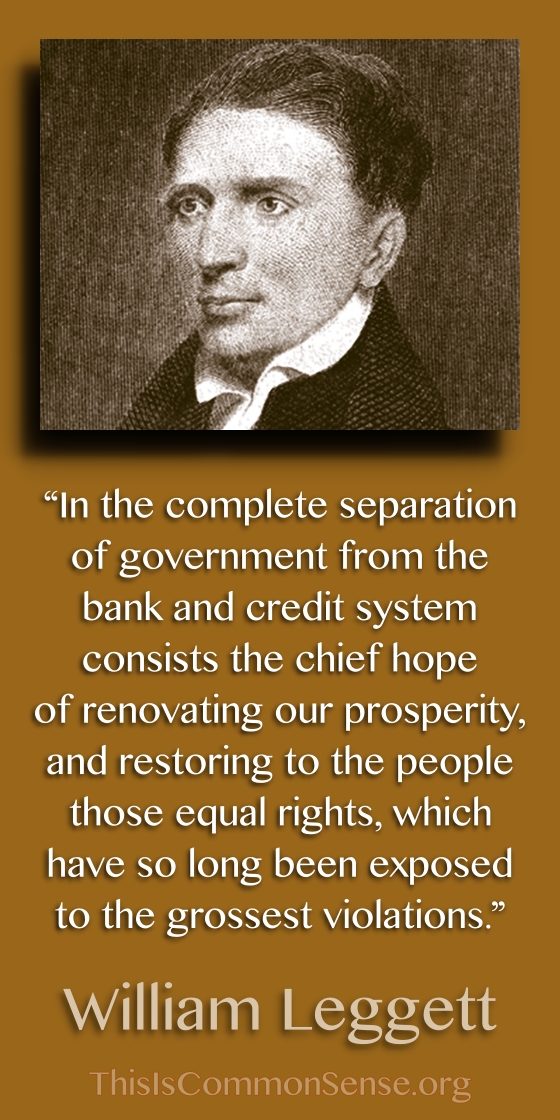
William Leggett

In the complete separation of government from the bank and credit system consists the chief hope of renovating our prosperity, and restoring to the people those equal rights, which have so long been exposed to the grossest violations. Leave credit to its own laws. It is an affair between man and man, which does not need special government protection and regulation. Leave banking to be conducted on the same footing with any other private business, and leave the banker to be trusted or not, precisely as he shall have means to satisfy those who deal with him of his responsibility and integrity. All this is a matter for men to manage with each other in the transaction of private affairs.

William Leggett (1801–1839), Plaindealer (July 22, 1837).
Categories
Today

Anti-Bankster

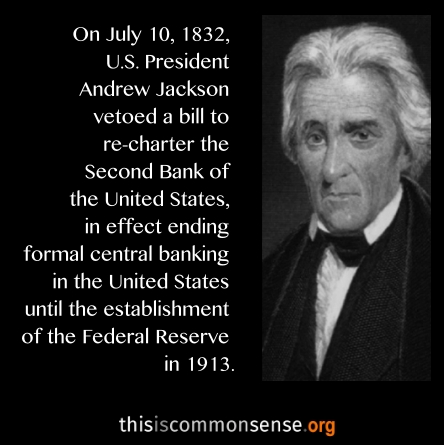
On July 10, 1832, U.S. President Andrew Jackson vetoed a bill to re-charter the Second Bank of the United States, in effect ending formal central banking in the United States until the establishment of the Federal Reserve in 1913.

Categories
international affairs national politics & policies scandal

WHO Don’t You Love?

“It leaves Americans sick,” tweeted Sen. Robert Menendez, the Foreign Relations Committee’s top Democrat, “and America alone.”

Feeling lonely? 

The Trump administration has officially informed both the United Nations and Congress that the U.S. will withdraw from the World Health Organization effective July 6, 2021. 

“China has total control over the World Health Organization,” the president asserted, and covered up critical information about COVID-19, thereby enabling a very deadly worldwide pandemic.

And did so with the WHO’s help, he argues.

“Elements of Trump’s critique have resonated well beyond the White House,” notes the virulently anti-Trump Washington Post. “Foreign governments and current WHO advisers have questioned why the WHO amplified false Chinese claims in the early days of the outbreak and repeatedly praised Beijing as the virus spread.”

Back in April, President Trump demanded the WHO agree to “substantive improvements” within 30 days. “We will be terminating our relationship,” Trump announced a month later, “and directing those funds” to other global health efforts. This week, it was made official.

Funds? The U.S. is the largest donor nation, providing 15 percent of the WHO budget — more than $400 million in 2019. The BBC reports, “The withdrawal will call into question the WHO’s financial viability.”

Of course, many Democrats, global health experts, and editorial pages attacked the move as “dangerous,” “likely to cost lives” and lead to a loss of U.S. “influence.”*

Influence

Those running the United Nations or its agencies cannot now ignore U.S. complaints. 

The threat of funding cuts? 

No longer are they mere bluster only for show.

Mr. Trump may feel lonesome . . . what other U.S. president would buck** the establishment to stop our tax dollars from flowing to an unaccountable U.N. agency? 

This is Common Sense. I’m Paul Jacob.


* “On my first day as President,” Democratic Party candidate Joe Biden pledged on Twitter, “I will rejoin the WHO and restore our leadership on the world stage.”

** Some have disputed the president’s constitutional authority to unilaterally withdraw from the WHO. “[T]he U.S. joined the WHO via a joint resolution rather than through the mechanism set out in the Constitution’s Treaty Clause, it is what is sometimes termed an ex post congressional-executive agreement,” explains University of Pennsylvania Law Professor Jean Galbraith. “Presidents have withdrawn the U.S. from such agreements on a few prior occasions.”

PDF for printing

See all recent commentary
(simplified and organized)
See recent popular posts
Categories
Today

“Cross of gold”

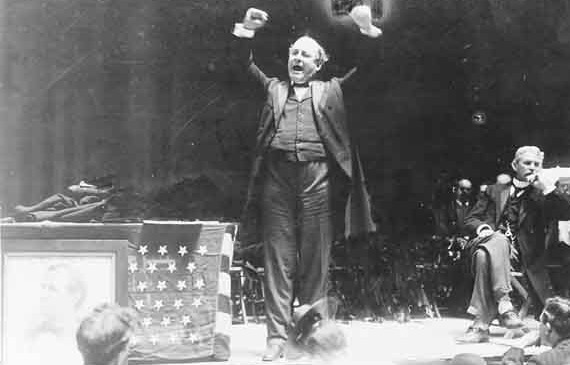
On July 9, 1896, William Jennings Bryan delivered his “Cross of Gold” speech advocating bi-metallist inflationism at the 1896 Democratic National Convention in Chicago, Illinois, a triumph of rhetoric over reason that solidified the takeover of the Democratic Party by reformers utterly ignorant of basic economics.

Categories
Thought

Dwight Macdonald

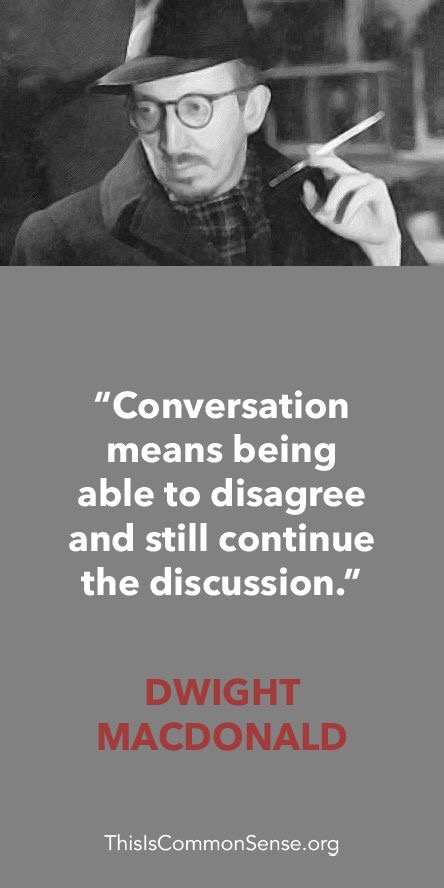
Conversation means being able to disagree and still continue the discussion.

Categories
international affairs media and media people

Bolsonaro’s Little Flu

“I know that nobody can recover from dying, but the economy not working leads to other causes of death and suicide,” said Brazilian President Jair Bolsonaro regarding his reopening of his country’s economy. “We have suffered very harsh criticism in this regard, but today it shows that we are right. The fact that I am infected shows that I am a human being like any other.”

Some of that strikes this reader as not well put, but there are two important points: shutting down commerce does lead to horrendous consequences, especially for the poor, and . . . President Bolsonaro — who is often characterized as a Brazilian Trump-like figure — has been infected with SARS-CoV-2 and has COVID-19, if in mild form.

He has taken hydroxychloroquine and azithromycin, the much-disputed treatment. 

The news report from CNN mentions his diagnosis and immediately follows it up with “after months of downplaying the virus.”

Now, downplaying threats is one way of handling them, for psychological reasons: sometimes the worst thing to fear is, as FDR said, “fear itself.” In the beginning, Bolsonaro called the virus a “little flu.”

“More than 65,000 people have now died of the virus in Brazil, according to figures released by the country’s health ministry on Monday,” CNN explains. “So far, 1,623,284 cases have been confirmed.”

That’s a 4 percent lethality rate — but that rests upon an under-tested population, and CNN admits that “some local experts say the real number of people infected could be 12 to 16 times higher.”

Like so many major news reports, CNN does not describe the curve of coronavirus deaths, just says they’re up.

Apparently, good reporting has a high lethality rate.

This is Common Sense. I’m Paul Jacob.


PDF for printing

See all recent commentary
(simplified and organized)
See recent popular posts
Categories
Today

Luther Martin

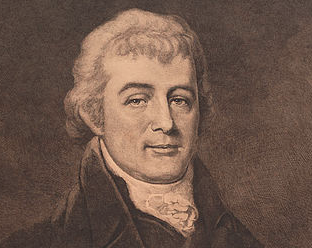
On July 8, 1839, American industrialist John D. Rockefeller was born. On this same date in 1907, businessman and politician George W. Romney was born. Died on this date, American founding politician, Luther Martin [pictured], in 1826.

Martin is famed among founding fathers for refusing to sign the U.S. Constitution, seeing the new compact as unduly centralizing and nationalistic.