Categories
Today

B of E

July 27 births include that of Samuel Smith (1752), an American who served as a captain, major, and lieutenant colonel in the Continental Army, and later as a politician in several capacities in the state of Maryland; Hilaire Belloc (1870), author of a classic analysis of modern political governance, The Servile State; and American singer and songwriter Bobbie Gentry (1944).

On July 27, 1694, the Bank of England received a royal charter, beginning a long history of central banking in England. Subsequent inflationary booms and deflationary busts are usually considered “mysterious” by people connected with the bank.

Categories
by Paul Jacob video

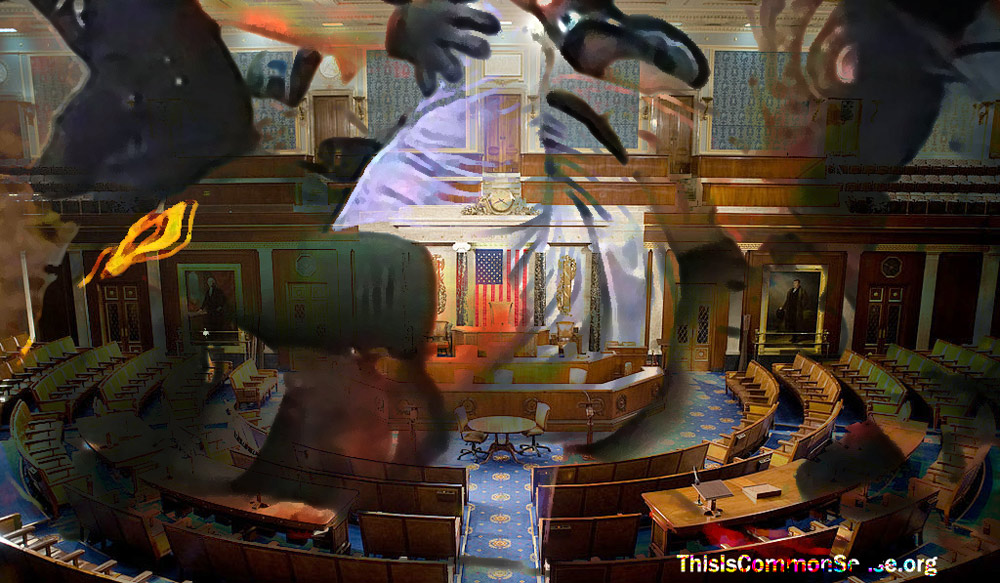
Watch: The Mobocracy

Paul’s video version of the weekend podcast:

This Week in Common Sense, July 20 – 24, 2020.

Categories
Thought

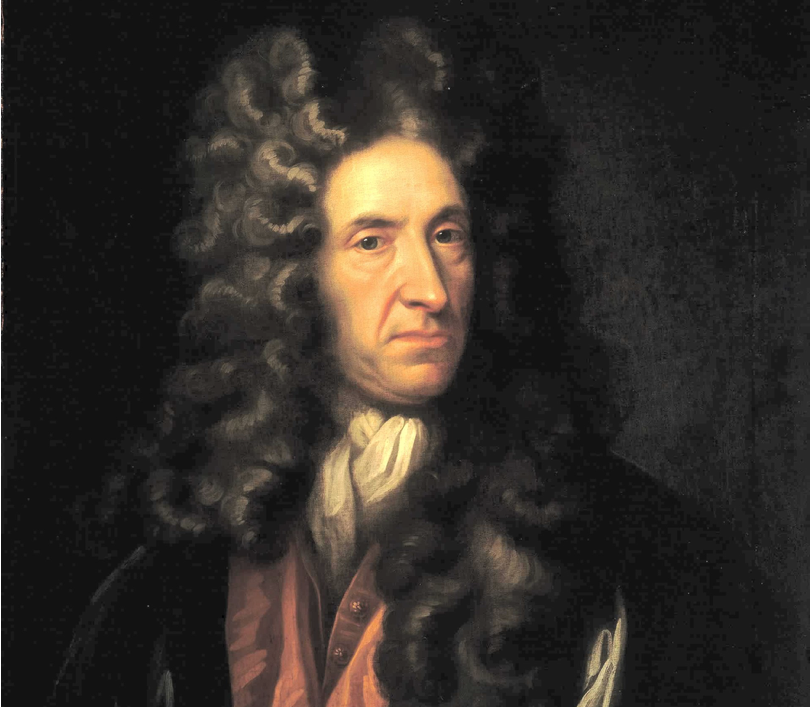
Daniel Defoe

We had no such thing as printed newspapers in those days to spread rumours and reports of things, and to improve them by the invention of men, as I have lived to see practised since. But such things as these were gathered from the letters of merchants and others who corresponded abroad, and from them was handed about by word of mouth only; so that things did not spread instantly over the whole nation, as they do now. But it seems that the Government had a true account of it, and several councils were held about ways to prevent its coming over; but all was kept very private.

Daniel Defoe, of the London pandemic of 1665, A Journal of the Plague Year / Written by a Citizen Who Continued All the While in London (1722).
Categories
crime and punishment insider corruption national politics & policies

The Thick Blue Line

In Minnesota — Land of 10,000 Lakes and a startling number of police killings of unarmed, innocent citizens, including George Floyd — the state legislature has “passed the most expansive criminal justice reforms in the state’s history.”

Though acknowledged as merely a start, it is good news. As are the banning in many major departments of neck restraints, and the kibosh placed on chokeholds in the nation’s capital.

Yet Eric Gardner died back in 2014 when placed in a chokehold by New York City police. Nevertheless, there is still no NYC ordinance against it. Numerous other cities also lack any such rule or law.

Why the glacial slowness?

It isn’t for lack of popular support. According to Cato Institute’s newly-released poll, 63 percent favor ending qualified immunity for police. 

So what is it? It’s no mystery; we do not need a blue ribbon investigative effort.

The Washington Post reports that reform-minded police chiefs and city officials “have repeatedly . . . run headlong into two formidable and interconnected forces: veteran officers who resist these efforts and the powerful unions fighting discipline.”

That second factor is key. Police unions are “powerful,” in part, because their political endorsement at election time means more to elected officials than the reform-minded opinions of mere citizens. 

So when you learn that, at the federal level, Democrats recently killed all prospects for criminal justice reform this year, you will not find yourself flummoxed.

Sadly, this festering dysfunction in our representative system corrupts our justice system.

And deaths result.

This is Common Sense. I’m Paul Jacob.


See all recent commentary
(simplified and organized)
See recent popular posts

Categories
Thought

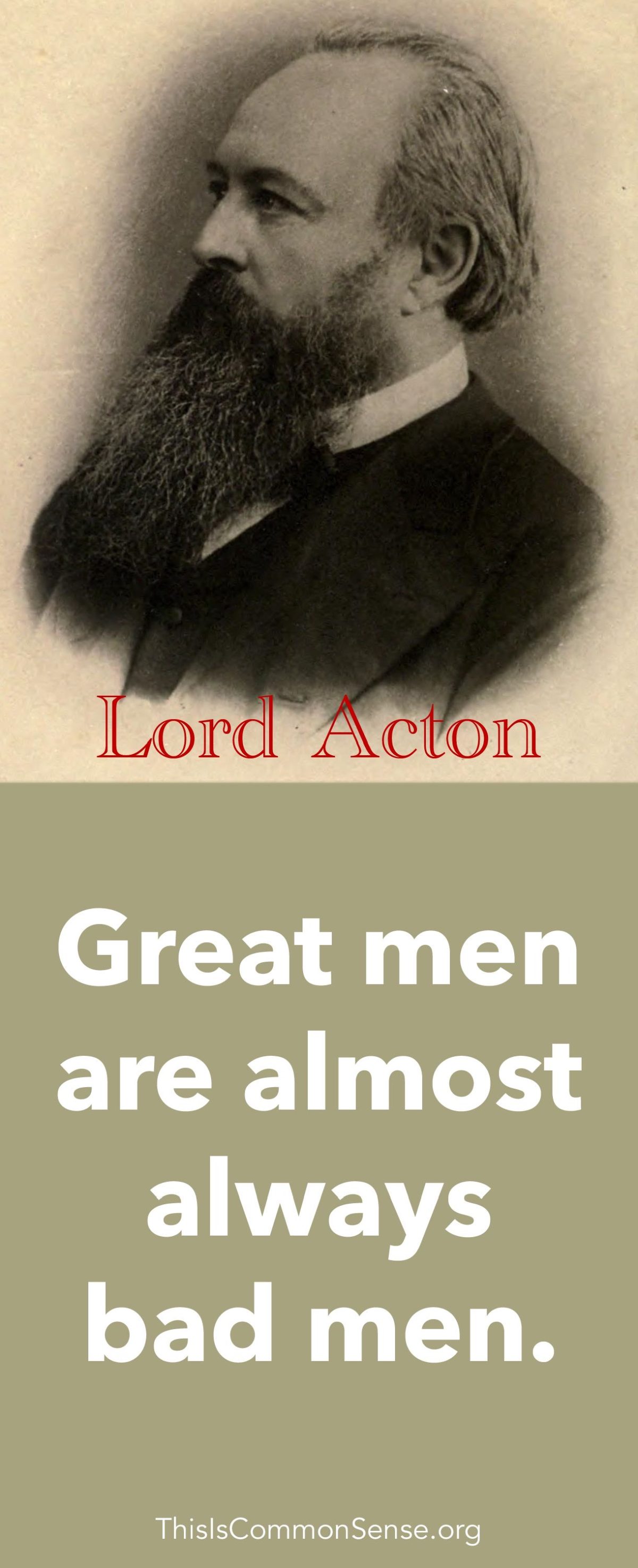
Lord Acton

Great men are almost always bad men.

John Emerich Edward Dalberg-Acton, 1st Baron Acton, 13th Marquess of Groppoli, KCVO, DL (1834 – 1902).

Categories
Today

Year of Our Ford

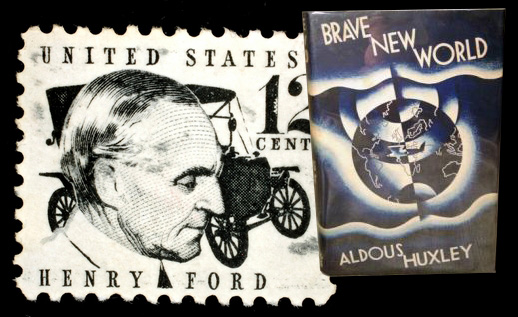
On this day in 1903, the Ford Motor Company sold its first car. Less than 30 years later, Aldous Huxley satirized Ford’s assembly line procedures in his novel Brave New World. Arguably, both the assembly line and the satire advanced freedom.

Categories
crime and punishment Fourth Amendment rights

Cops vs. Mobs, Tyranny vs. Law?

“He was stuffed into what may have been a rental van operated by unmarked federal agents,” explained Cato Institute’s Patrick Eddington, “and taken to the federal courthouse, where he was interrogated without counsel. He wisely refused to answer questions and was then subsequently released without any kind of charges being filed.”

Eddington concluded: “I think most people would call that kidnapping.” 

The “he” — detained and questioned by federal agents* in Portland, Oregon — is Mark Pettibone. Whether the van was rented is irrelevant, nor do these agents or their vehicles require any marking.

And criminal suspects can lawfully be held for questioning. 

“So that we understand how police may remove someone from the streets,” Cato Daily Podcast host Caleb Brown adroitly offered, “we understand that they need to identify themselves. . . . that people who are placed under arrest retain certain rights to communicate with the outside world, to assert their ability to have a lawyer present for questioning.

“It seems that perhaps,” added Brown, “asking for a lawyer was the trigger here” resulting in Mr. Pettibone’s release.

Eddington agreed, but then announced that it “really does have the feel of Argentina or Chile in the 1970s, with the disappearances that took place. The only thing lacking was Mr. Pettibone being murdered by those agents.”

That is one big “only”!

“This is being done essentially to try to suppress protests in this country,” argued Eddington. “It has nothing to actually do with protecting monuments.” 

“We’re talking only about violent rioters,” Homeland Security Deputy Secretary Ken Cuccinelli told NPR. “We’re not talking about actual protesters. We’re not seeking to interfere at all with anyone peacefully expressing themselves — period, full stop.”

Following the rule of law means protecting peaceful protests. And welcoming an investigation into the federal role in Portland. More concerning than Mr. Pettibone’s detention is the continued use of so-called non-lethal weapons, which seriously injured a protester weeks ago.

But the rule of law also means protecting Portlanders and their property against violence and destruction. And welcoming an investigation into the state and local dereliction of duty in Portland. 

This is Common Sense. I’m Paul Jacob.


* The Department of Homeland Security acknowledged that agents with the CBP (Customs and Border Protection) were “cross designated to support FPS” (the Federal Protection Service) in Portland “because of the demand for more manpower in light of the violence.”

Note: Walter Olson, a senior fellow at The Cato Institute’s Robert A. Levy Center for Constitutional Studies and founder of the blog, Over​lawyered​.com, details what we know about the Portland controversy. 

See all recent commentary
(simplified and organized)
See recent popular posts

Categories
Thought

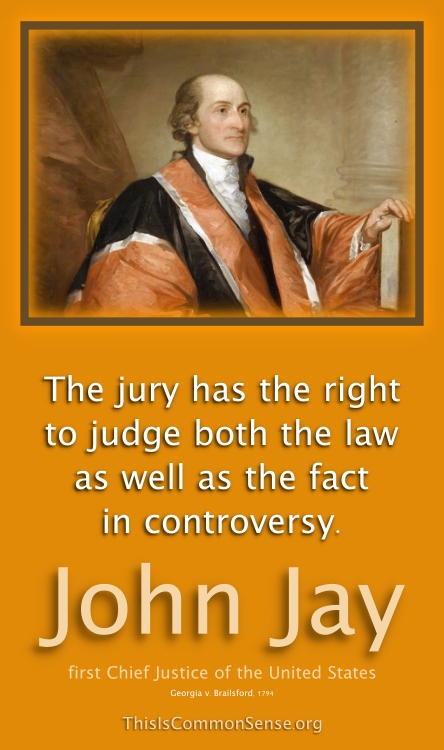
John Jay

The jury has the right to judge both the law as well as the fact in controversy.

Supreme Court Chief Justice John Jay, in Georgia v. Brailsford, 1794.
Categories
ideological culture

The Wide World of Woke

Courtesy of the UK’s Daily Mail we read of yet another example of the Wide World of Woke: “New push to RENAME body parts like the Adam’s apple and Achilles’ tendon because they are ‘irrelevant and misogynistic.’” 

Because of the Daily Mail coverage, this bizarre tale of one “council member for the Royal Australian and New Zealand College of Obstetricians” and her goofy itch to jigger the medical nomenclature of body parts has received a lot of attention. Is there anything of major moment, here?

Well, the doctor doesn’t like the fact that embedded in medical terminology are semantic artifacts of past, less woke times.

“The word ‘hysterectomy,’” explains reporter Lauren Ferri, “originated from a time when women were treated for female hysteria by removing the uterus.” Adding that the good doctor “now prefers to use the term ‘uterectomy’ instead.”

To treat hysteria now we prescribe masks or marches.

But our doctor Down Under is not alone. Apparently woke medical folk around the world have many, many concerns:

  • Adam’s apple — Biblical*
  • The speculum — apparently named after a slave trader
  • The Pfannensteil incision — named after the male doctor who developed it
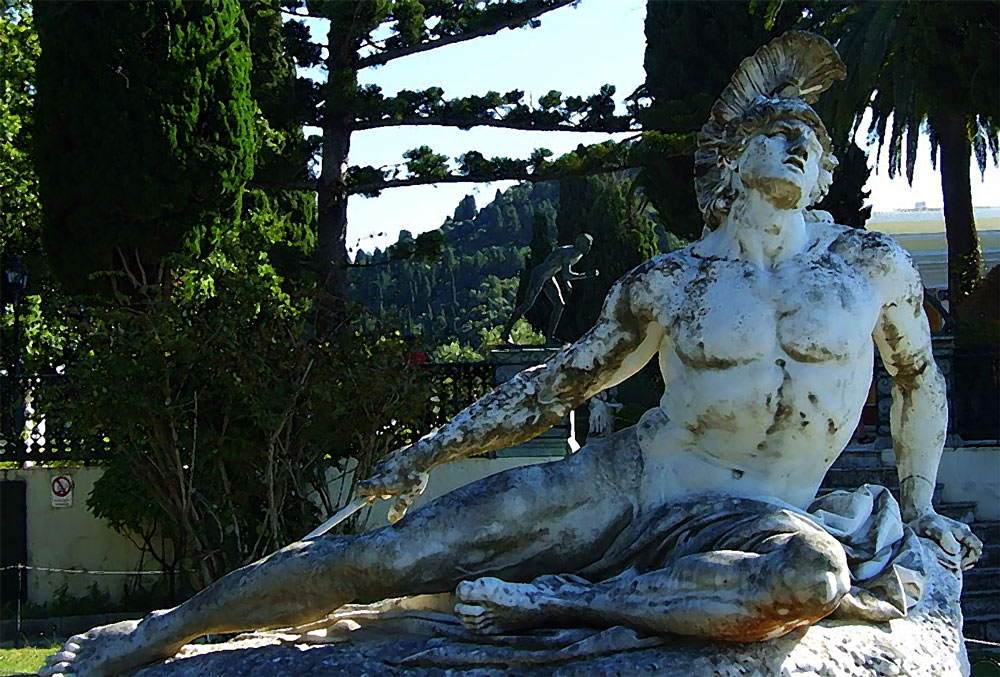
  • The Achilles tendon — named after the mythical hero who, as an infant, was dipped into the River Styx

The article mentions but does not link to “American researchers [who have] published a report reviewing 700 anatomical and histological eponyms and found that only one was named after a woman.”

All this no doubt seems trivial and unimportant — right up until we remember Orwell’s warning about those who wish to rule over language and to erase the past.

Like destroying monuments and altering history books: it should not be decided by a woke few.

This is Common Sense. I’m Paul Jacob.


* The lore mentioned in the article is quite extra-biblical, and not worth repeating.

PDF for printing

Photograph of the statue of Death of Achilles.

See all recent commentary
(simplified and organized)
See recent popular posts
Categories
general freedom media and media people

The Four Froms

Liberty was a straightforward concept.

Once. 

Then The New York Times got ahold of it back in April with a featured editorial: “The America We Need.” 

“Our society was especially vulnerable to this pandemic,” the paper alleges, “because so many Americans lack the essential liberty to protect their own lives and the lives of their families.”

The fight against the Wuhan virus has been deficient due to a deficit of . . . “essential liberty”? 

This isn’t the Merriam-Webster definition of “liberty,” i.e. the “quality or state of being free” or “freedom from physical restraint.” Dump that retro “narrow and negative definition,” advises the editorial; it represents an “impoverished view of freedom” that “has perpetuated the nation’s defining racial inequalities and kept the poor trapped in poverty.”

Freedom of speech, religion, the press, etc., are all negative. Trade them in for a “broad and muscular conception of liberty: that government should provide all Americans with the freedom that comes from a stable and prosperous life.”

Prosperity for all! For free! Come on down!

Noting the “extraordinary nature of the crisis,” the editorial calls for “permanent changes in the social contract” to take the nation “beyond the threadbare nature of the American safety net.”

Free stuff from the government, housing, healthcare — all very positive ideas of liberty. 

But what about these positives’ negatives?

“A government big enough to give you everything you want,” former President Gerald Ford once explained to Congress, “is a government big enough to take from you everything you have.”

The cost of “positive freedom” is our freedom from dependence, from interference, from coercive control, from . . . oppression.

Positively negative, if you ask me.

This is Common Sense. I’m Paul Jacob.


PDF for printing

Illustration adapted from Liberty Leading the People (La liberté guidant le people) by Eugène Delacroix (1830)

See all recent commentary
(simplified and organized)
See recent popular posts