Categories
national politics & policies political economy too much government

The Slow Bullet

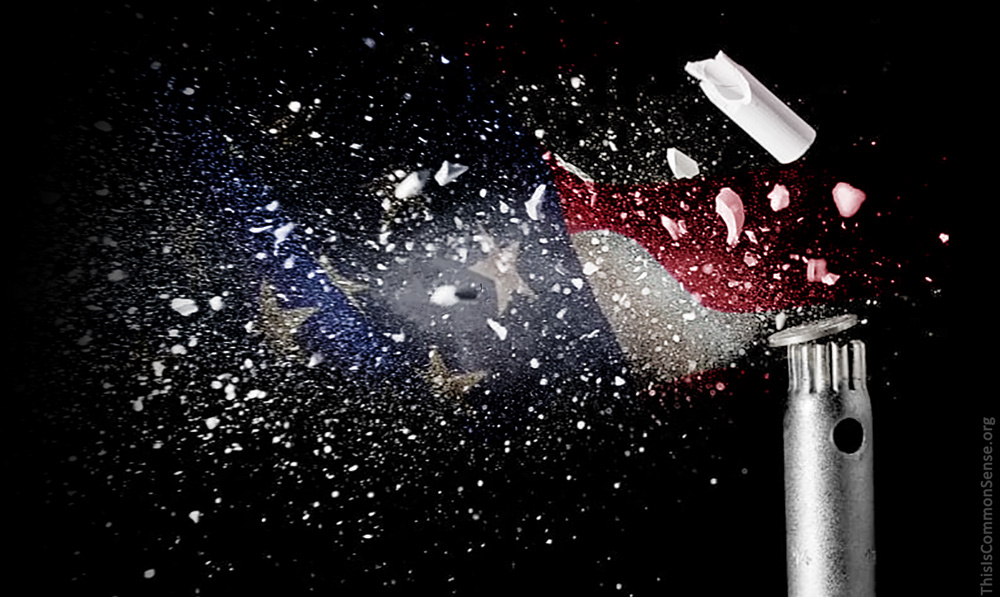
Modern government finance is like Russian Roulette . . . but with incredibly slow bullets.

We spend money. We create money out of thin air. We borrow it. We promise the Moon. We deliver rocks. With each action, we spin the chamber and pull the trigger. That slowround doesn’t immediately hit, so we do it again.

Calling the perennial deficits and ballooning debt a “predictable crisis,” Nick Gillespie at Reason writes that our federal government’s debt “is already choking down economic growth, but in the future, it could lead to ‘sudden inflation,’ and ‘a loss of confidence in the federal government’s ability or commitment to repay its debts in full.’” And worse: “‘Such a crisis could spread globally’ causing some ‘financial institutions to fail.’ That’s all according to the nonpartisan Congressional Budget Office (CBO), which has been warning Americans about the long-term consequence of the ballooning debt for years.”

This is an old warning. I have been talking about it for years, too. So have you. But once politicians start playing the game, it’s hard for them to stop. They see and we see the benefits, but that slow motion slug has yet to strike the target. 

Gillespie makes a better analogy than “slow bullets” (which don’t exist): “Like the coronavirus, the debt problem has the potential to seemingly appear out of the blue and turn our world upside down in a matter of weeks.”

Nassim Nicholas Taleb gained fame talking about “black swans,” major events we cannot predict. But he insists that the financial crisis resulting from government overspending is not a black swan. It’s predictable. We just do not know when.

Here’s a fourth analogy:

In free fall, you don’t feel a thing . . . until you hit the pavement.

This is Common Sense. I’m Paul Jacob.


PDF for printing

See all recent commentary
(simplified and organized)
See recent popular posts
Categories
Today

Solomon Islands Independence

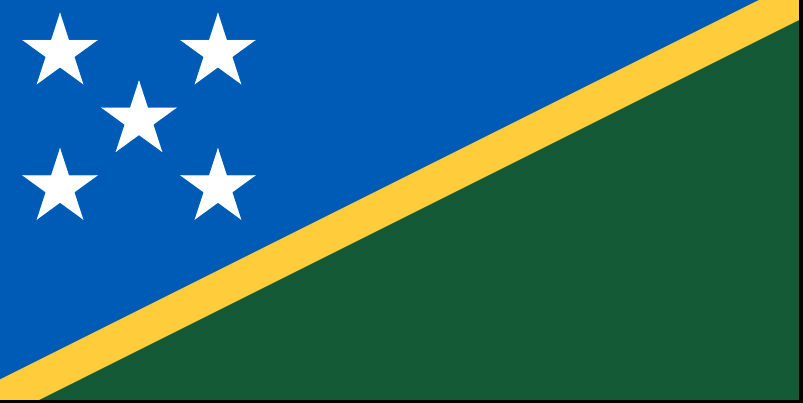
July 7 is Independence Day in the Solomon Islands, commemorating the island nation’s political separation in 1978.

The “separation” may be over-stated, however: though self-government was achieved in 1976, and political independence for the islands obtained two years later, Solomon Islands remains a constitutional monarchy with the Queen of Solomon Islands, currently Great Britain’s Queen Elizabeth II, as its head of state. Sir Frank Utu Ofagioro Kabui has been the Governor General since 2009, and Manasseh Damukana Sogavare has served as Prime Minister since late April.

Categories
First Amendment rights

Protest Hits the Pavement

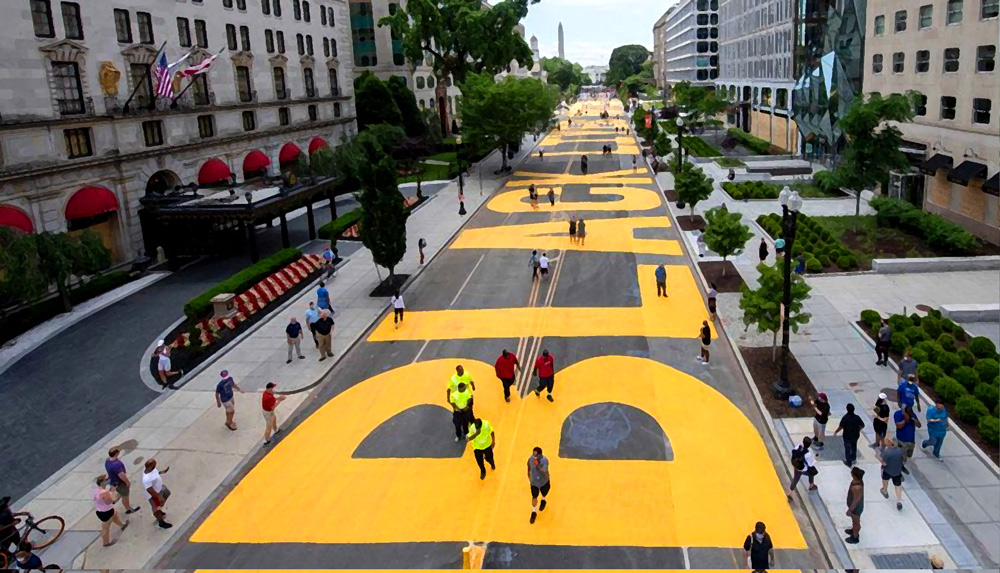
Social justice activists and Washington D.C. city officials have collaborated to paint the slogan “Black Lives Matter” on 16th Street near the White House. 

The city has also allowed the words “Defund the Police” to be painted on the street.

Does this mean that the roadways of our nation’s capital city are now a public forum accessible to anyone who files the proper forms?

So far, doesn’t look like it. 

So Judicial Watch (JW) is suing for the right to paint its own motto, “Because No One is Above the Law,” on a DC street. JW went to court because its applications to perform a similar paint job have fallen on deaf ears.

It contends that its First Amendment right of freedom of speech is being violated.

“We have been patient,” Judicial Watch says. “We also have been flexible. We have stated our willingness to paint our motto at a different location if street closure is necessary and the city is unwilling to close our chosen location. All we ask is that we be afforded the same opportunity to paint our message on a DC street that has been afforded the painters on 16th Street.”

I can’t wait until all this gets cleared up. I suppose it’ll be one or two paint jobs per applicant. 

ThisisCommonSense.org” has a nice ring to it, eh? 

Something about “unalienable rights [to] Life, Liberty, and the pursuit of Happiness” would also be a great message, assuming it’s still legal to quote the Founders whose legacy we celebrated over the weekend.

This is Common Sense. I’m Paul Jacob.


PDF for printing

See all recent commentary
(simplified and organized)
See recent popular posts
Categories
Thought

Kenneth Minogue

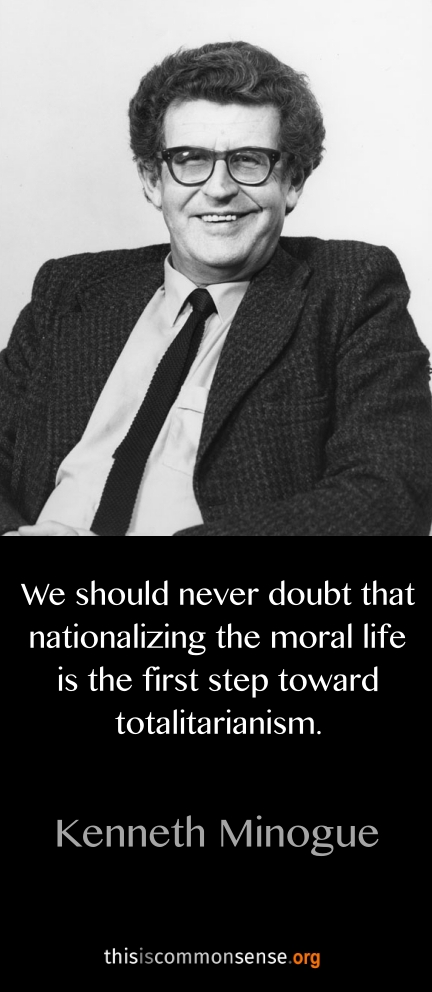
We should never doubt that nationalizing the moral life is the first step toward totalitarianism.

Kenneth Minogue, The Servile Mind (2010), Encounter Books, pp. 2-3.
Categories
Today

Tyranny?

July 6 serves better as a “Today in Tyranny” marker than anything positive, at least when you consider these events:

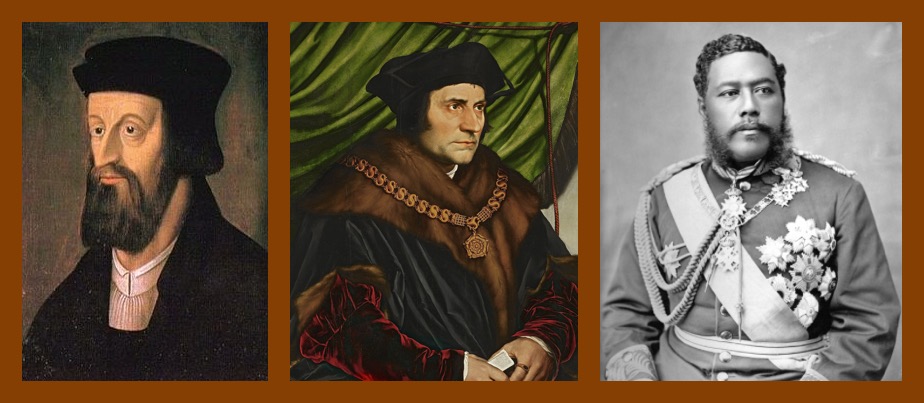
  • 1415 – Jan Hus was burned at the stake.
  • 1535 – Sir Thomas More was executed for treason against King Henry VIII of England.
  • 1887 – David Kalakaua, monarch of the Kingdom of Hawaii, was forced at gunpoint by Americans to sign the Bayonet Constitution giving Americans more power in Hawaii while stripping Hawaiian citizens of their rights.
  • 1939 – The Nazi “Third Reich” closed the last remaining Jewish enterprises in Germany.
Categories
by Paul Jacob video

Watch: The “Refrigerator Warranty” Essay Explained

The video version of the podcast is up. There were some technical difficulties, but this is still a good episode:

This Week in Common Sense, June 29 – July 3, 2020.
Categories
audio podcast

Listen: The Freedom Warranty

This weekend’s podcast is set around the big day this weekend, Independence Day. Paul Jacob has a lot to say. And he says it here:

This Week in Common Sense, June 29 – July 3, 2020.
Categories
Thought

John Adams

On July 2, 1776, the Continental Congress approved the Lee Resolution:

Resolved, That these United Colonies are, and of right ought to be, free and independent States, that they are absolved from all allegiance to the British Crown, and that all political connection between them and the State of Great Britain is, and ought to be, totally dissolved.

That it is expedient forthwith to take the most effectual measures for forming foreign Alliances.

That a plan of confederation be prepared and transmitted to the respective Colonies for their consideration and approbation.

The Lee Resolution, July 2, 1776, as adopted by the Continental Congress.

That evening the news hit the papers:

This day the Continental Congress declared the United Colonies Free and Independent States.

Pennsylvania Evening Post, July 2, 1776.

John Adams wrote to his wife Abigail:

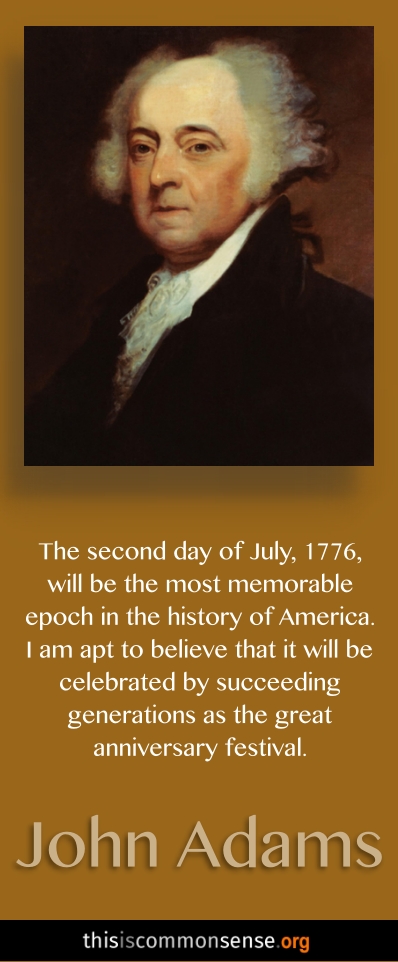
The second day of July, 1776, will be the most memorable epoch in the history of America. I am apt to believe that it will be celebrated by succeeding generations as the great anniversary festival. It ought to be commemorated as the day of deliverance, by solemn acts of devotion to God Almighty. It ought to be solemnized with pomp and parade, with shows, games, sports, guns, bells, bonfires, and illuminations, from one end of this continent to the other, from this time forward forever more.

John Adams to Abigail Adams, personal correspondence, July 3, 1776.

John Adams was almost immediately proven wrong: July 4, 1776, when the Declaration of Independence was approved by Congress, was the day Americans chose to celebrate the dissolution of ties with Great Britain.

Categories
Today

The Fourth

July Fourth events include:

1054 – A supernova was spotted by Chinese, Arab, and possibly Amerindian observers near the star Zeta Tauri, remaining, for several months, bright enough to be seen during the day. Its remnants form the Crab Nebula.

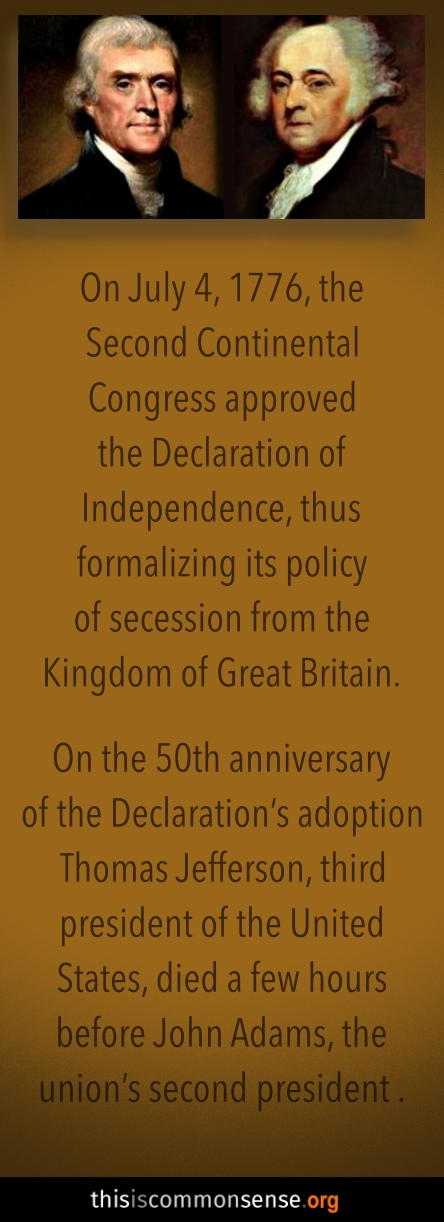
1776 — The Second Continental Congress approved the Declaration of Independence, thus formalizing its policy of secession from the rule of the Kingdom of Great Britain.

1803 — The Louisiana Purchase was announced to the American people.

1804 – Nathaniel Hawthorne, American author of The Scarlet Letter, House of Seven Gables, The Blithesdale Romance, and other classics, was born. Hawthorne became part of the Young America literary movement spawned by Loco-Foco political activism in New England.

1826 – Thomas Jefferson, third president of the United States, died a few hours before John Adams, second president of the United States, on the fiftieth anniversary of the adoption of the United States’ Declaration of Independence.

1826 – Stephen Foster, composer of “Old Black Joe,” “Beautiful Dreamer,” and many other classic American songs, was born.

1827 – Slavery was abolished in New York State.

1831 – Samuel Francis Smith wrote “My Country, ’Tis of Thee” for Boston’s July 4th festivities, set to the tune of Great Britain’s national anthem, “God Save the King/Queen.”

2009 – The Statue of Liberty’s crown re-opened to the public after eight years of closure that resulted from security concerns following the September 11, 2001, attacks.

Categories
Common Sense general freedom

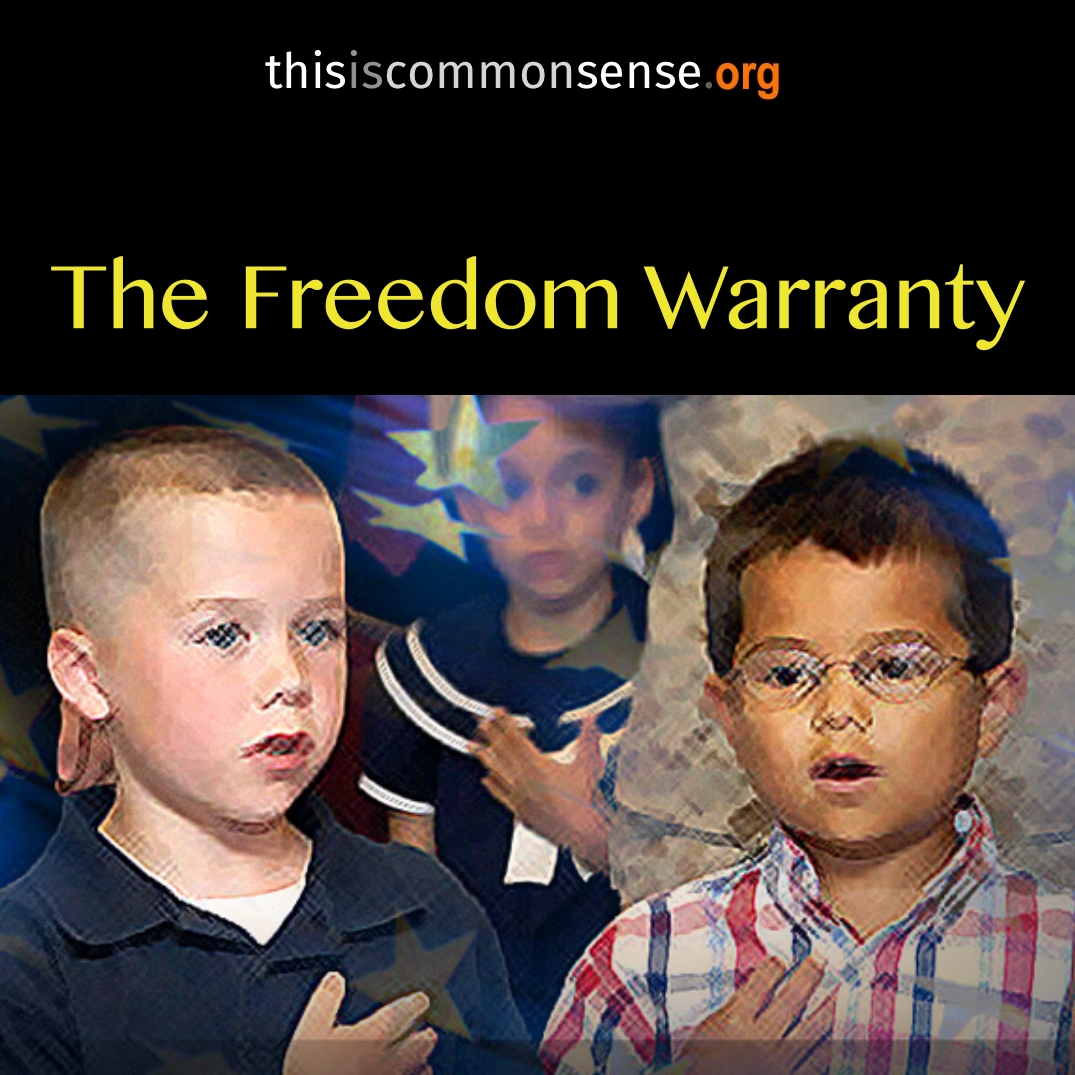
I pledge allegiance to my refrigerator warranty . . .

. . . and to the refrigerator for which it stands, one cooling unit, under electric power, indivisible from the side by side freezer, with cold drinks and frozen TV dinners for all.

Silly to pledge allegiance to a refrigerator or its warranty? Perhaps no more so than to pledge allegiance to our nation’s flag or our beloved Republic, for which that flag stands.

Wait a second: Doesn’t our Republic deserve our allegiance?

Well, what is meant by “allegiance”? The first dictionary definition reads: “the obligation of a feudal vassal to his liege lord.” 

The word “allegiance” does indeed derive from feudal times. Even further variations of the definition — “the fidelity owed by a subject or citizen to a sovereign or government” or “the obligation of an alien to the government under which the alien resides” — are tied to a relationship whereby “We, the People” are inferior to our nation-state.

But not in America. We are not “subjects” nor “aliens.” We are the sovereigns.

That wonderful frost-free icebox is ours; it works for us. This Republic is also ours and it was designed to work for us. In clear and deliberate language. In fact, language not dissimilar from an appliance warranty — though written more accessibly for the common person.

We are the government. So, do we really need to pledge our allegiance to ourselves?

As Judge Andrew Napolitano asked on his Freedom Watch show several years ago — before Fox mysteriously cancelled the show — “Does the government work for us or do we work for the government? Are true patriots guided by symbolism such as flag waving and pledges or by their commitment to personal freedoms?”

Perhaps it doesn’t matter. Most folks reciting the Pledge surely do not view themselves as feudal serfs.

Still, words matter. And actions and rituals matter as well. Tomorrow we celebrate Independence Day — not simply as a method to get out of work, but as a way to remind ourselves and our children that this country was conceived in liberty, in the hope we can continue to expand on and live in freedom. (That’s why I say “Independence Day” rather than the “Fourth of July,” since what happened is much more important than the date it happened.)

The Founders who signed the Declaration of Independence — pledging their lives, fortunes and sacred honor — didn’t see fit to establish a pledge for citizens to recite. Their pledge was to each other and to the country.

The Pledge of Allegiance, on the other hand, was written by an admitted socialist, Francis Bellamy, in 1892. In addition to the Pledge, Mr. Bellamy also came up with a salute for school children and others to make toward the flag. To prove that truth is stranger than fiction, what came to be known as the Bellamy Salute was very similar to the salute adopted by Mussolini and the Italian fascists . . . as well as the Nazis, for use in tandem with their exclamation of “Heil Hitler!”

In 1942, after U.S. entry into World War II, Congress amended the Flag Code to advise folks to place their hand over their heart, instead of giving the Nazi — er, Bellamy Salute.

Don’t go off the deep-end here: I’m not suggesting that reciting the Pledge of Allegiance makes one a Nazi, or even a far milder brand of socialist. When Americans recite the Pledge, they do so for love of country and to affirm the freedoms our Republic is designed to protect and defend.

What I am declaring is that we Americans must understand our history, our government, and our exceptional place in the world well enough to stop defining patriotism as the repetition of someone else’s words about an alien concept of allegiance. Instead, let’s celebrate the words that are quintessentially ours: the Declaration of Independence, the Constitution and the Bill of Rights.

As we celebrate our Independence Day, our break from the monarchy of the Old World, we ought to appreciate that this break threw out any allegiance to rulers as if they wielded divine power over us and substituted for that corrupt rule a constitutional republic, where the citizens had protection against government encroachment on their freedoms, written down in black and white and fully enforceable.

The Constitution is a warranty of sorts. And the more we think of government in practical terms, like a refrigerator or an agreement for services, rather than some mystical force that tells us what to do, the better for actually maintaining our freedom and keeping our Republic.

As Tom Paine wrote: “It is the duty of the patriot to protect his country from his government.”

We cannot protect our freedom by repeatedly declaring allegiance to the Republic, much less its three-color stand-in. 

Instead, saving our Republic requires citizens to stand up and demand that our government adhere to the contract.

This is Common Sense. I’m Paul Jacob.


PDF for printing

See all recent commentary
(simplified and organized)
See recent popular posts