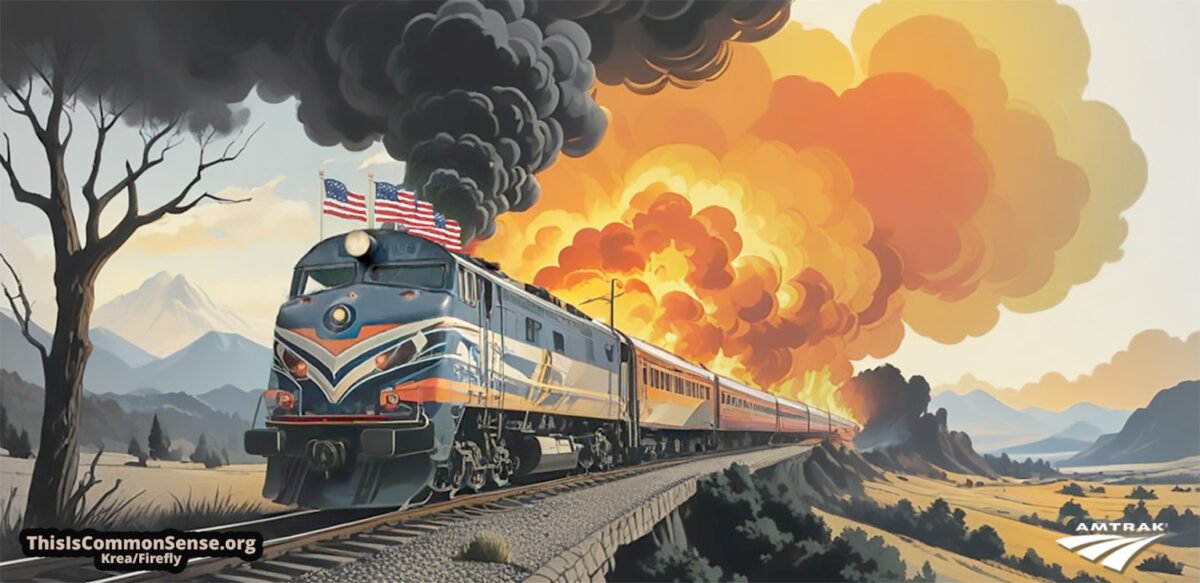
It’s unclear “what problem Amtrak privatization proposals are intended to solve,” an Amtrak white paper argues.
The authors assert that “giving the United States the passenger rail system it needs will require substantial, assured, multi-year federal funding. . . .”
That flies in the face of experience. But if you are looking for a problem to solve, consider the biggest current story about Amtrak, its thieving employees.
Buckle up, for the rail gets bumpy: Sixty-one of 119 Amtrak employees exposed in 2022 for perpetrating a healthcare scam were kept on the job until a recent internal investigation.
For several years, these employees had collected kickbacks from doctors willing to file fake medical claims.
Amtrak now promises that it is (finally) cleaning house.
The organization’s inspector general says that the large number of employees “who cavalierly participated in this scheme to steal Amtrak’s funds suggests not only a serious lapse in basic ethics, but a troubling workforce culture . . . in which blatant criminal behavior was somehow normalized.”
A culture that DOGE has been finding in many governmental endeavors.
What governments lack are decent feedback mechanisms that real markets provide. Amtrak operates in a fake reality of “needs” — those infinite “needs” mentioned in the white paper against privatization.
Businesses succeed; businesses fail — and if the latter, they move aside to let others try to do better. But the white paper treats business failure as proof that government funding is mandatory.
For taxpayers, always on the hook for Amtrak failures, privatization is a solution.
Privatization would also mean less tolerance for keeping thieves on payrolls.
This is Common Sense. I’m Paul Jacob.
Illustration created with Krea and Firefly
See all recent commentary
(simplified and organized)
See recent popular posts
One reply on “The Great Rail Robbery”
We love traveling with Amtrak but it is terribly dysfunctional. It is relaxing, but a time schedule is non-existent. Luckily we never cared about being late. I mean, what can we do about it anyway. It is what it is.