Categories
free trade & free markets general freedom regulation

Leave Us Alone to Do Our Work

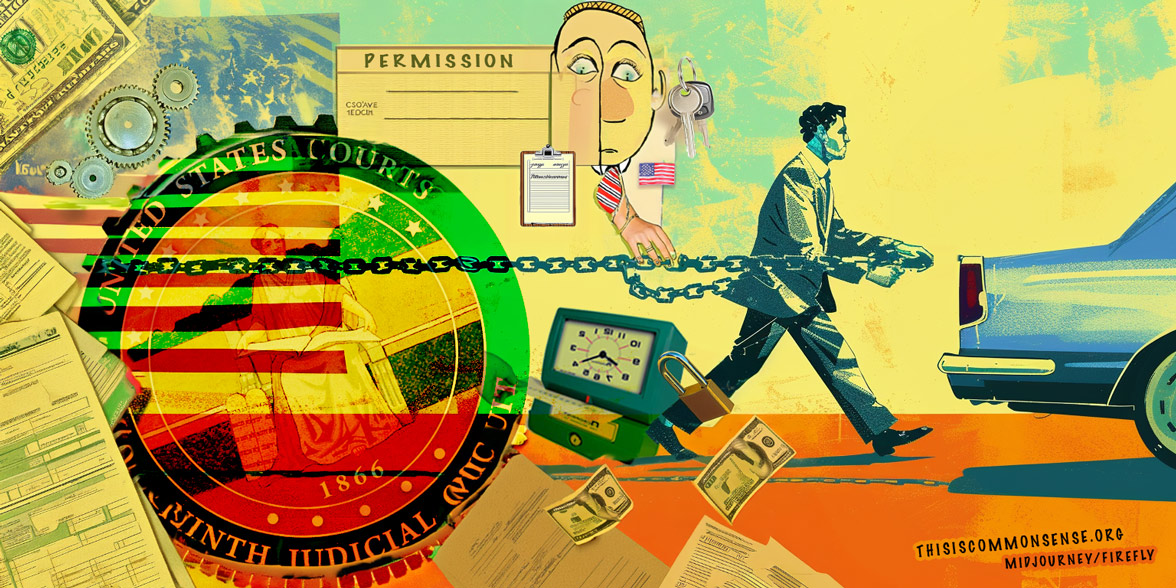
Drearily, an appeals court has dismissed Uber’s challenge to California’s anti-​gig-​work law.

According to the 9th Circuit, the ride-​sharing company couldn’t show that the California anti-​freelancer law AB5, which took effect in 2020, unfairly targeted Uber while allowing other types of contract work to continue unhindered.

In fact, the many exceptions to AB5 — determined by abundance or lack of political pull of various groups — mean that Uber is hardly alone in suffering from uneven application of the law.

But suppose AB5 had in fact been evenly imposed on everybody. Suppose every single gig worker in California, without exception, had been forced to become a regular employee of all of his clients — with all the additional costs for employers that this entails — or else lose all work altogether.

This would be worse, not better. 

Inconsistent tyranny is bad for the victims. Absolutely consistent and uniform tyranny is bad for the victims — which would be greater in number.

Maybe the 9th’s misjudgment won’t stand. If the case makes its way to the U.S. Supreme Court, maybe the high court will unambiguously affirm our right to contract with each other in order to make a living and get stuff done.

Meanwhile, the fate of Uber also hinges on another court case, one determining the fate of Proposition 22, a 2020 California initiative affirming Uber’s right to contract with drivers.* A labor union says Prop 22 is unconstitutional. The state supreme court is deciding whether this is so. 

It is not so.

This is Common Sense. I’m Paul Jacob.


* Citizens in Charge, a pro-​initiative and referendum group, for whom I serve as president, filed an amicus or friend of the court brief with the California Supreme Court in this case.

PDF for printing

Illustration created with Midjourney and Firefly

See all recent commentary
(simplified and organized)
See recent popular posts

Categories
folly free trade & free markets general freedom moral hazard national politics & policies tax policy too much government

Whose Side Are They On?

Excuse me if I drive over familiar roadways. But we are witnessing one of the great revolutions in human cooperation.

And our governments and politicians are working mightily to block traffic.

I refer, of course, to Uber and Lyft and the like.

The innovation that these companies bring to market? Enabling everyday drivers to leverage their personal investment in a capital good — a car or SUV — to make extra bucks (or even a living) while efficiently serving people who want rides.

Ride-​hailing apps on smart-​phones provide more security and consumer guidance than the old taxi services ever bothered to even try. The elaborate online rating system, where drivers rate riders and vice versa, provides a new market in information that outstrips government “regulation” as a consumer defense system.

And consumers get better rides, cheaper.

The Uberization of ride sharing competes directly with taxis, of course, and that’s a problem … for taxi companies. And the politicians who have regulated them for years. This regulation never was about consumer protection, but politicians just feathered their own nests with campaign contributions through crony capitalism, helping some taxi services at the expense of others.

And customers.

The latest idiocy hails from Massachusetts, which has enacted a 20¢ per trip tax on all ride-​sharing apps, with 5¢ of each charge slated for subsidizing the old, established taxi services.

Taxachusetts’s Republican governor, Charlie Baker, has been sucked in to the government racket, choosing to support old cronies rather than customers.

Still, it could have been worse. The advocates of the tax had initially demanded Uber be banned.

This is Common Sense. I’m Paul Jacob.


Printable PDF

Uber, Lyft, Taxi, protection, tax, crony, cronyism, illustration


Illustration based on original cc photo by GörlitzPhotography on Flickr


Categories
Accountability crime and punishment folly free trade & free markets general freedom ideological culture nannyism national politics & policies

Digs at the Gig Economy

In Texas’s progressive enclave of Austin, the government has regulated Uber and Lyft out of the city.

Massachusset’s uber*-progressive Sen. Elizabeth Warren cautions that the “much-​touted virtues”of the “gig economy” that these services represent are actually dark signs of the times, providing workers a false “step in a losing effort to build some economic security in a world where all the benefits are floating to the top 10 percent.”

Vermont’s Sen. Bernie Sanders, the independent candidate for the Democratic Party’s presidential nomination, is also no fan. Why? These services are not regulated.

Sanders’s charge that these person-​to-​person (P2P) ride-​sharing services are “unregulated” is of course the opposite of the truth. They are self-​regulated for safety and efficiency in ways that taxi services never were. How much extra value did governments add, with their regulations of the taxicab industry? They just reduced competition and made cabs more expensive.

P2P online cooperation is revolutionary. And “progressives” are stuck in the past, itching to suppress that revolution. “Initially,” writes Jared Meyer in the July issue of Reason, “hostility mostly came from state and municipal governments, at the behest of local special interests.” But as the services became more popular, opposition shifted. To the national Democrats like Sanders, Warren and … Hillary Clinton. She promises to “crack down on bosses who exploit employees by misclassifying them as contractors or even steal their wages.”

Par for the course: the Internet provides more opportunity than ever, and all some progressives see are the old socialist fears of “exploitation” and “greed” … while they greedily suck up to unions and special interests.

The bright side, Meyer argues, is that they are on the losing side.

This is Common Sense. I’m Paul Jacob.


*I guess the pun here is intended. Or not. You choose, P2P style.


Printable PDF

Uber, Lyft, sharing, economy, HIllary, Bernie, illustration


Categories
crime and punishment folly free trade & free markets general freedom

Drive Free or Die

Ever told your kids to share? That’s aiding and abetting, you know.

Sharing is illegal.

At least, it is in Portsmouth, New Hampshire … regarding Uber.

The popular ride-​sharing company may be widely heralded as the flagship of the new sharing economy, but a Portsmouth city ordinance effectively blocks the service, requiring that the company provide background checks on all drivers, which Uber calls “draconian.”

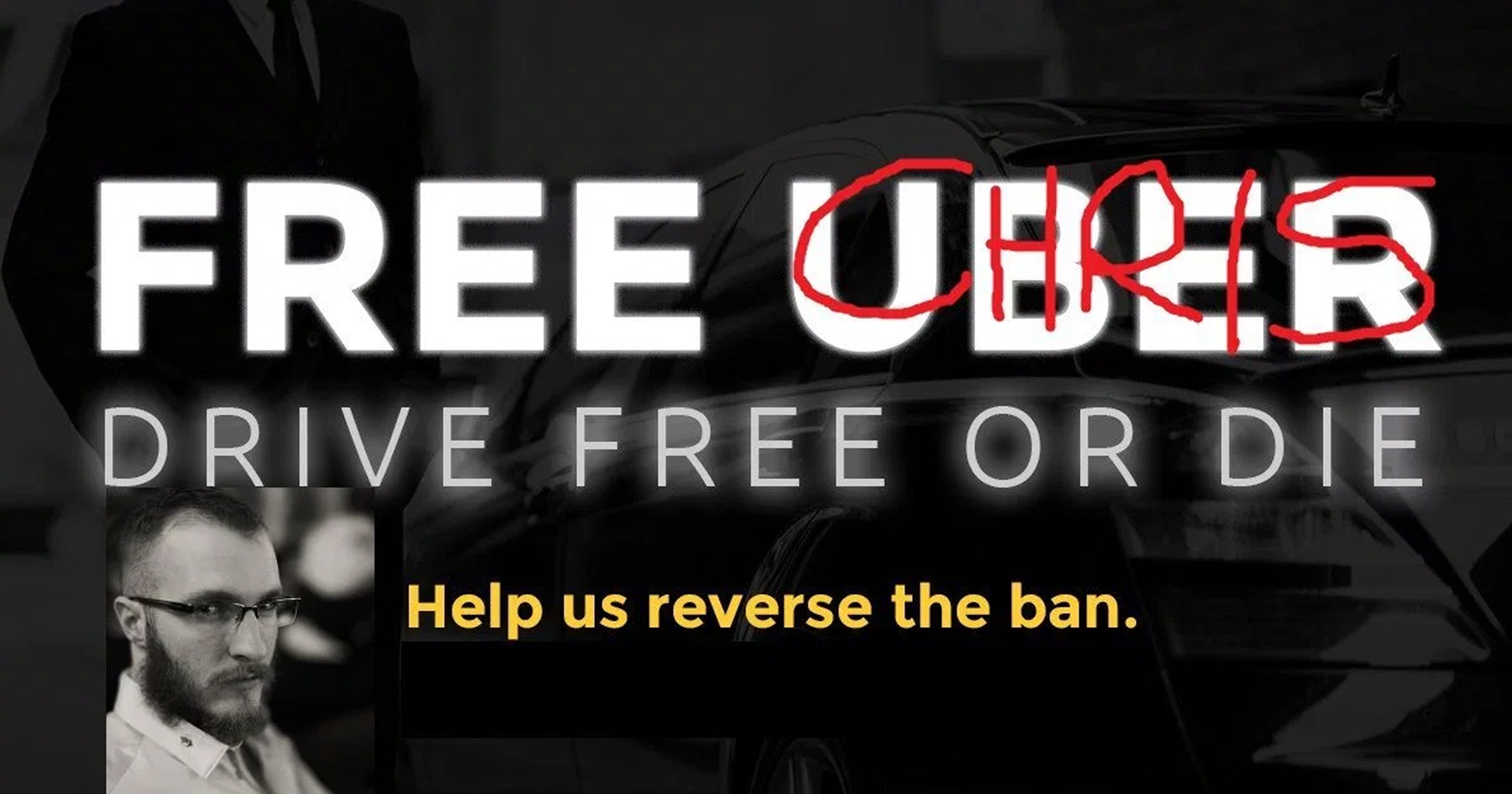
While the company is trying to get the city to alter that mandate, several Uber drivers have ignored the ban, continuing to pick up passengers. In October, police stopped Stephanie Franz, who now faces a $500 fine.

Chris David has also continued to drive for Uber. After he recorded a verbal altercation with a cabbie on a city street and posted it to YouTube, David was charged with wiretapping — a felony.

Taxi companies are upset, too, claiming the ordinance creates “a free-​for-​all.” A Portsmouth Taxi executive bemoaned, “Anybody can come in.”

Before the ordinance took effect in September, only 28 cabs were allowed to operate. “That’s like limiting the number of restaurants and bars in Portsmouth to 28 to keep them full day and night,” argued Assistant Mayor Jim Spilane.

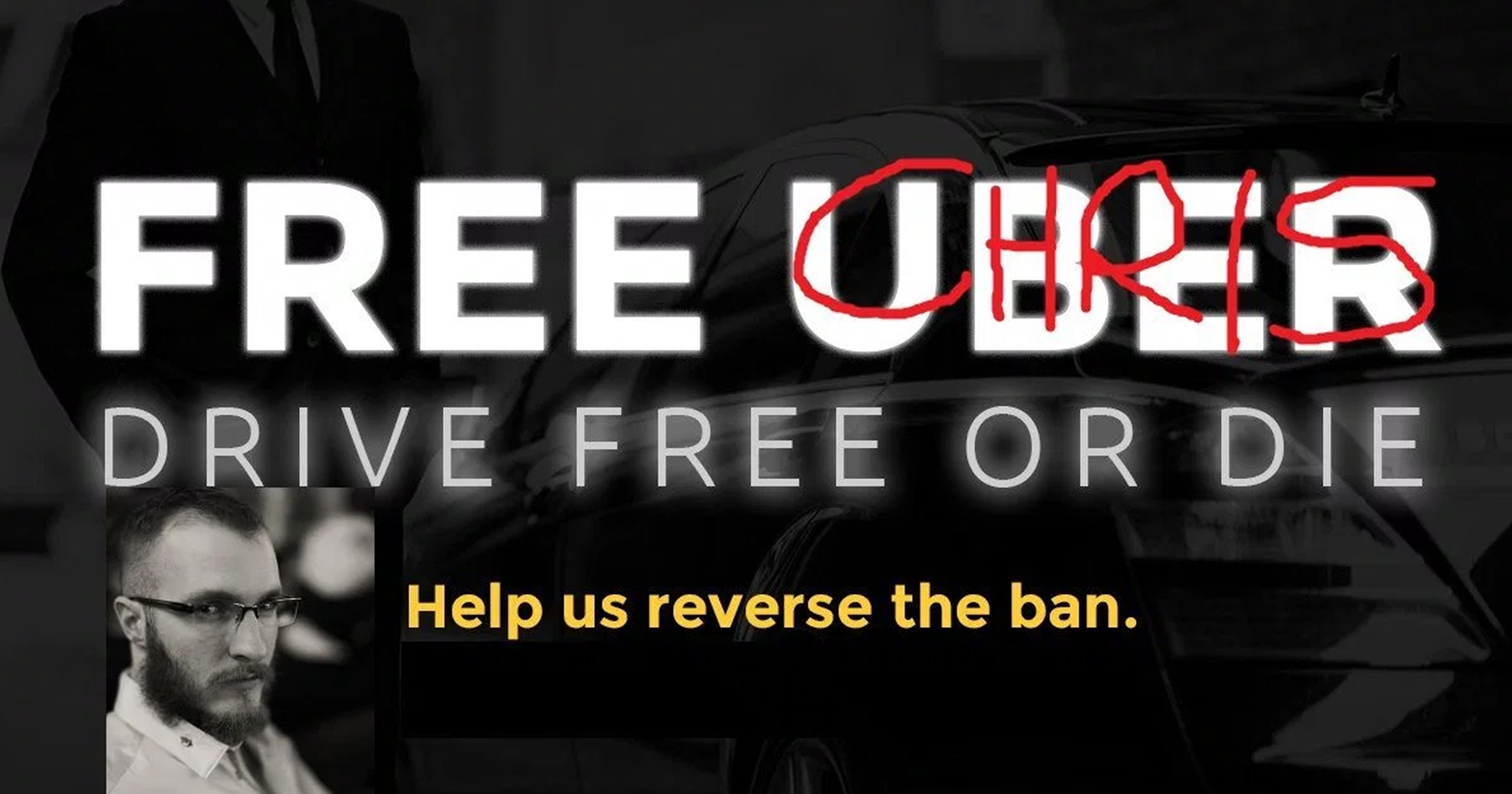
In the “Live Free or Die” state, barriers to earning a living and heavy-​handed criminal charges have led to the pro-​Uber slogan, “Drive Free or Die.”

Tonight at 6:30 pm, there’s a #FreeUber rally at the Portsmouth City Hall. If you’re nearby, please go help explain that government regulations ought to accommodate economic advances, not frustrate them.

That is, if you can find a legal ride.

This is Common Sense. I’m Paul Jacob.


Printable PDF

Uber, taxi, sharing, free uber, Common Sense


Categories
folly free trade & free markets general freedom nannyism responsibility

The Uber-​Huge Mistake

Uber’s challenge to old-​fashioned ride service — to the taxi industry — is at least twofold.

One, it shows government regulation to be counterproductive and kind of witless.

Two, it shows that innovation — particularly by decreasing transaction costs — can rapidly transform a market for the good of consumers.

Recently, politicians who play to special interests — in this case, to taxicab companies and taxi drivers — have made some spectacular blunders. Perhaps the best-​known is Bernie Sanders, who claims to see severe “problems” with Uber’s online ride-​sharing service, but whose campaign staff uses Uber for ride-​sharing … and nothing else. Hah!

But the London transit regulators have made the biggest splash.

Their latest proposal? To require Uber drivers to wait five minutes before picking somebody up.

Evens the playing field, you see.

Uber is so much quicker to respond to the paying riders’ needs that taxicabs apparently cannot compete in Old London Town.

The folks at Uber publicized the expected company reaction: the regulation would be a “huge mistake.”

But really, it’s a HUGE ADMISSION.

It shows that Uber’s service is superior, and that government regulators are more interested in protecting providers (taxicabs) than customers (pedestrians seeking rides).

It also shows these regulations for what they really are: protectionism for special interests, not protection for the safety of consumers.

Remember what Frédéric Bastiat said about protectionism: it’s always about placing obstacles in front of some producers (and the market in general) to aid a select (literally privileged) group of producers, regardless of consumer wants and needs.

Hobbling Uber to save taxicabs! What’ll they think of next?

This is Common Sense. I’m Paul Jacob.


Printable PDF

Uber, car, ride, London, taxi, regulation, waiting, Paul Jacob, Common Sense


Categories
free trade & free markets

A Ride on the Private Side

If you’d like to catch a flight without the usual delays and post-​911 regulation-​inflicted hassles, used to be you had to own your own plane, charter one, or buy a time share in one.

Now you can use a smartphone app to book a seat on a private jet — just as you use an app to book an Uber driver outside the confines of the hyper-​regulated taxi industry. Sure, private-​jet seats are still pricey. But the New York Times reports that lower-​end bookings are comparable in price to that of first-​class seats on Delta or American.

Private JetNew services find spots for you on planes en route to pick somebody up that would otherwise be empty, or let you subscribe to blocks of time for use on a variety of jets. Result? More and more passengers are able to ride private jets thanks to startups like JetSmarter and Magellan Jets.

Those of us who lack the means to exploit this option-​expanding development should still welcome it as a step in the right direction, away from burdensome regulatory regimes that slow us all down. I doubt we’ll get rid of the regulatory bog at the airport any time soon. After all, we’re still stuck with the government-​subsidized USPS postal monopoly despite the competition in package delivery provided by UPS and FedEx.

But without the pressure and example of such relatively unencumbered alternatives, our situation would be worse; our prospects, dimmer.

This is Common Sense. I’m Paul Jacob.

Categories
free trade & free markets general freedom ideological culture

The Uber Rebellion

Customers in Germany and elsewhere have flouted irrational attacks on the popular ride-​sharing service Uber.

As I have explained before, Uber’s software lets passengers and drivers connect in a way that bypasses regularly regulated taxicabs. Cabbies don’t necessarily oppose the innovation. Many see Uber’s app as a nifty way to get customers. And, of course, many riders see it as a nifty way to get rides.

But taxi dispatchers? Well, that’s another story.

At least it is in Germany, where an organization for dispatchers called Taxi Deutschland has kvetched that the San Francisco company lacks the Necessary Permits to do electronic dispatching in Deutschland. Thanks to TD’s loud complaints, a German court issued a temporary injunction against Uber, prohibiting it from conjoining ride-​seekers and ride-​givers in happy synchrony.

Uber decided to keep operating in the country anyway, despite the threat of huge fines.

They’ve gotten lots of moral support. In response to the injunction, customers quietly but firmly told regulators “Laissez nous faire!” — a.k.a. “You’re not the boss of me!” — by doubling, tripling and even quintupling demand for Uber’s app. Matthew Feeney of Cato Institute points to jumps in signups in the days following the court’s order: in Frankfurt a 228 percent jump, Munich 329 percent, Hamburg 590 percent.

Last July, in the U.K., Brits surged their signups eight times over after protests against the company.

Keep up the good work, rebels.

This is Common Sense. I’m Paul Jacob.

Categories
free trade & free markets too much government

Old Rules Gotta Go

Old hat. Long in the tooth. Creaky as an outhouse door.

These are just some of the expressions that apply to how our cities, states and metro areas are run — by ancient principles that do not serve the common good.

Last weekend I wrote about the ongoing revolution in transit, the peer-​to-​peer online app services offered by Uber, Lyft and the like. These ride-​sharing services allow normal folks to give and receive car rides at great convenience.

They blow mass transit “out of the water” and throw taxi service sideways. Super-​convenient, they make it cheap and safe for people to co-​operate in new and productive ways.

Art Carden, at EconLog, notes the “social waste” that governments add to the system. While the new app-​based services provide true solutions to the high transaction costs of negotiating among many people, governments give us squabbles: “the battle over the rules governing the conditions under which people will be allowed to do certain things is pure social waste,” Carden argues. “The social waste is reflected in the resources consumed in the fight over the rules.”

We’ve gotta have rules, of course. But they needn’t require micromanagement, massive restrictions, or high taxes.

The new era will be run (if allowed) on the basis of convenient co-​operation, transaction costs reduced by communications technology.

The old era that still rules the roost runs on clunky old ideas that Carden rightly calls “mercantilism,” the political ideology that Adam Smith argued against … in 1776.

Government should undergird free markets, not intrude and dominate by licensing near-monopolies.

This is Common Sense. I’m Paul Jacob.

Categories
free trade & free markets

Let Us Drive

How about letting us drive?

Who’s us? Passengers — taxi-​ride buyers. Plus anyone else who participates in the market transactions that take us places.

Many Orlando, Florida cabbies are eager to work with the ride-​sharing company that makes the smartphone app Uber. They’re tired of leasing cabs for $129 a day while scrambling for enough price-​controlled fares to earn a decent living after paying that steep cost. Uber drivers provide their own car and let the firm’s technology connect them to customers. Uber gets 20 percent of fare revenue.

The politics are mostly hostile to the innovation in places like New York City where markets are mangled by super-​high license fees and other regulations. The politics are also tough in Orlando, which has been cracking down on Uber drivers. But the mayor and Uber executives have been talking about a deal under which Uber could operate if it submits to … regulation. (Sigh.)

Cab companies in the City Beautiful expect to rapidly lose revenue if innovators like Uber and Lyft get to operate freely. But Orlando taxi drivers expect to gain.

“If you talk to 1,000 drivers,” says one, “950 will tell you they are going to Uber.” Says another: “Let Uber come here. It’s going to be good for the customer and the driver.”

Let them come. Also kill all regulations, including fare caps, that make it harder for cab companies to adapt. Let terms of trade be driven — regulated — by traders. Not by governments.

This is Common Sense. I’m Paul Jacob.

Categories
free trade & free markets too much government

P2P Jitneys

Virginia state government has banned Web-​based/​app-​based car-​ride services Uber and Lyft from operating in the state. After applying heavy fines. After demanding the services follow rules originally devised for taxis and limo and bus services.

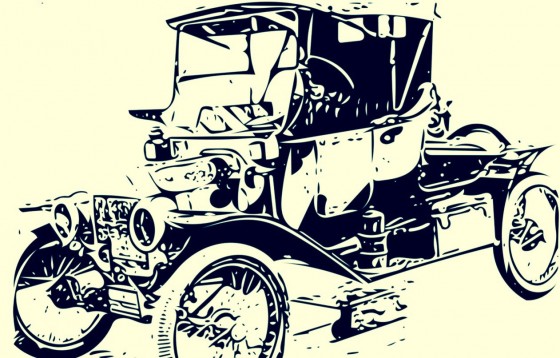
It seems tantamount to banning the automobile a century ago because the horse-​and-​buggy regulations on the books didn’t fit.

Uber and Lyft call what they provide “ride-​sharing” services, allowing people with smart-​phone and tablet apps to “hail” rides they need, from almost anywhere to almost anywhere. The folks providing the rides have signed up and even taken classes, and both parties rate each other after the transaction. Riders can “steer clear” of low-​rated drivers if they want. And drivers can not offer rides to low-​rated riders, as well.

It’s quite a service.

I first heard about this idea from economist David Friedman, a generation ago. He called it a “jitney” system, and offered it as an alternative to mass transit systems that are just too capital intensive to make a profit while still servicing diverse needs.

Now, the idea is off to a good start with two excellent services. Technology has allowed for safe, low-​transaction-​cost contracting between strangers. This sort of person-​to-​person (P2P) revolution could change everything.

Including government patronage. Or the need for much government regulation. Taxicab services are heavily regulated in most places. The excuse is usually safety and traffic considerations, but let’s be frank: it’s mostly a government power grab. Horning in on territory. Collecting a fee.

Uber and Lyft leverage the capital car-​owners invest, and such P2P services are probably the most efficient contracting systems possible. If free market principles should apply to anything, it is jitney services.

So, Virginia, lay off. Free the P2P.

This is Common Sense. I’m Paul Jacob.