Categories
general freedom ideological culture

American History Month

When we think of Black History Month, whom do we tend to think of?

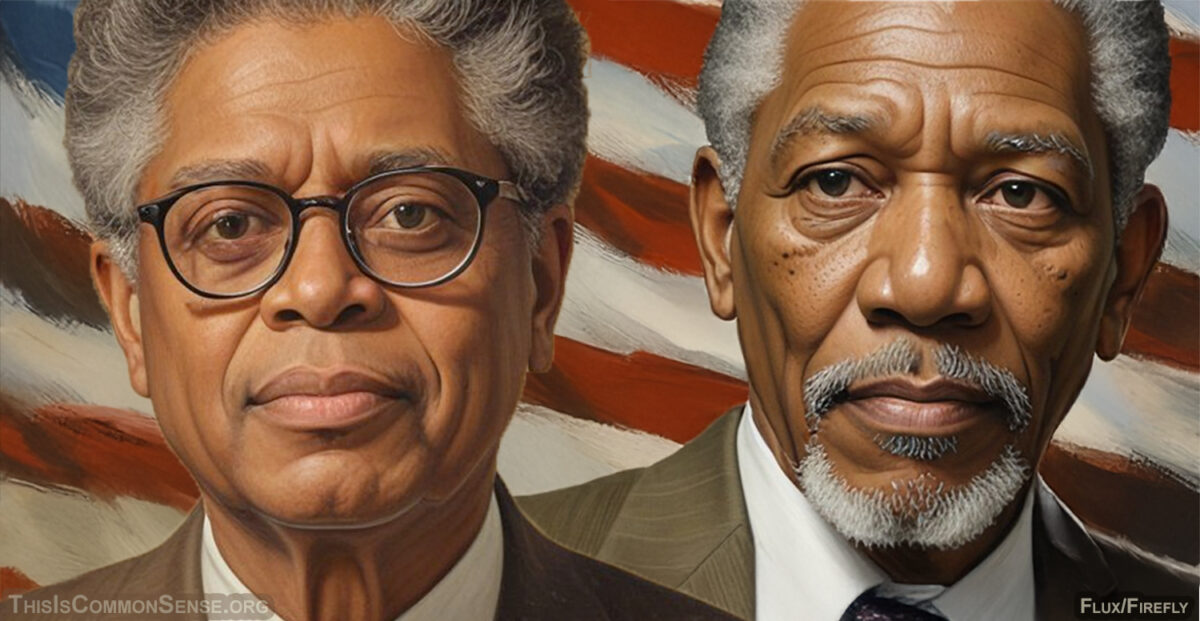
One person I think of is Morgan Freeman, who “detests” this commemoration, “the mere idea of it.… You are going to celebrate ‘my’ history?! The whole idea makes my teeth itch.… My history is American history.”

He also dislikes the term “African-​American,” calling it a misnomer.

“Most black people in this part of the world are mongrels. And you say Africa as if it’s a country when it’s a continent, like Europe.”*Freeman regards his skin color as only one attribute, and not one that goes very far to distinguish him as an individual.

What events and which achievers might we ponder in addition to Harriet Tubman, Frederick Douglas, Martin Luther King, other champions of civil rights, great inventors, scientists, educators, business, artists, even actors like Freeman and Denzel Washington? The list of celebration-​worthy black Americans is endless.

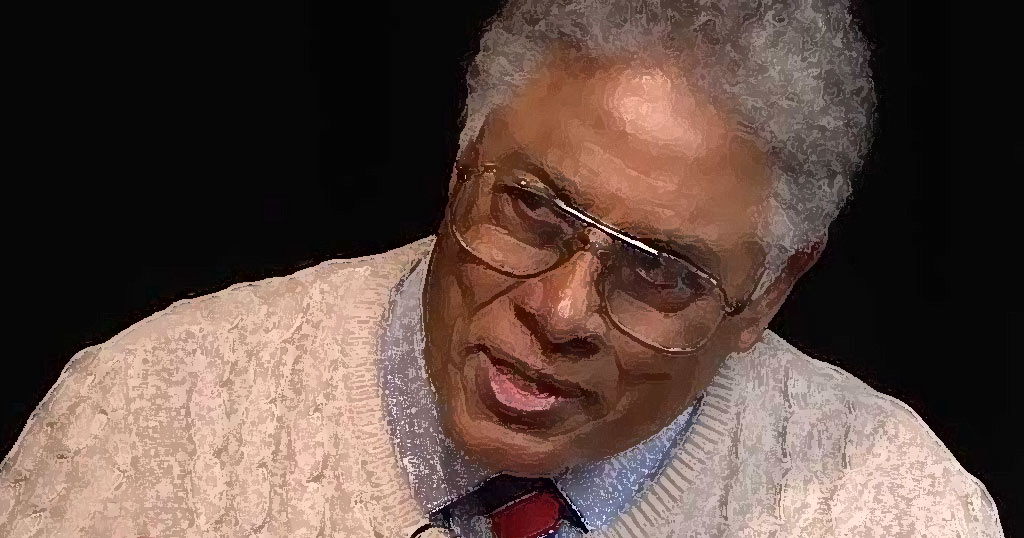
In a proclamation about Black History Month, the new White House mentions a name that doesn’t always make the list: scholar Thomas Sowell.

Highlighting Sowell may make the teeth of many progressives itch, for he advances unconventional perspectives and reasoning about race and the real impact of racism on economic as well as other features of American life and our global civilization. He has done this for decades, especially in books featuring provocative titles, including Civil Rights: Rhetoric or Reality? (1984), The Vision of the Anointed (1995), Black Rednecks and White Liberals (2005), and Discriminations and Disparities (2018), often criticizing policies such as “affirmative action.”

Black history is American history — and vice versa — every month of the year.

This is Common Sense. I’m Paul Jacob.


* Of course, in this part of the world, most of us are “mongrels.”

PDF for printing

Illustration created with Flux and Firefly

See all recent commentary
(simplified and organized)
See recent popular posts
Categories
education and schooling ideological culture

Cowardice 101

An anonymous author at Quillette reports a 2017 conversation between the author, a professor, and a student, Daniel. Daniel had carefully analyzed abundant evidence of race-​based “affirmative action” policies at their university and the destructiveness of those policies.

The author says he stressed that “it would be unwise for Daniel to launch a campaign against the admissions committee,” no matter how solid the data.

Bury the findings, was his advice. The campaign would fail and “probably” do no long-​run good. (Implying that bad cultural trends are not even partly reversible, or at least “probably” aren’t; ergo, good men, do nothing.)

Also, publishing “would probably end up hurting him rather than helping him.”

Suppose a scholar like Thomas Sowell, who has compiled massive evidence contradicting the assumption that racism or the legacy of slavery “explains” all economic patterns and disparate outcomes, had followed such vicious advice when starting out?

“Don’t do it! Don’t report your research and conclusions, Mr. Sowell! You’ll never advance by pursuing the truth! Just go along to get along. Like me.”

According to the professor, Daniel was not entirely consistent in his indictment of quotas. The professor could have encouraged him to be more consistent. Instead, he encouraged him to give up.

Our quisling Quillette academic could have told Daniel: “You’re right, and I can help you to strengthen your argument. Why don’t we co-​author something about this so that you won’t have to deal with the flak alone?”

Did the possibility even occur to him?

What an education.

This is Common Sense. I’m Paul Jacob.


PDF for printing

See all recent commentary
(simplified and organized)
See recent popular posts
Categories
general freedom ideological culture individual achievement too much government

The Pattern Here

Thomas Sowell, who retired from his syndicated column last week, may be the greatest public intellectual of our time.

Though he is “an original,” an iconoclast, his work is best seen as the carrying on of a tradition. Or two.

Consider his most famous research area: race. An African-​American, Sowell is the age’s most persuasive dissident to the dominant strains of racial advocacy. He brought much common sense to a subject beset with unhinged passion.*

And yet even here he was obviously drawing on traditions that, if not well known, were firmly established.†

One of Sowell’s most important contributions, in books such as A Conflict of Visions and The Vision of the Anointed, is his distinction between two very different ways of looking at the social world:

  • the “constrained vision” .… of most conservatives and classical liberals; and
  • the “unconstrained vision” … of so many socialists, anarchists and progressives.

For many conservatives, this is Sowell at his best. But is it original? A few of my readers could probably lecture me on its origins in a famous essay by F. A. Hayek, “Individualism: True and False.”‡

Over at the Foundation for Economic Education, David R. Henderson addresses the one area where I tend to disagree with Sowell: foreign policy. Henderson gently calls out Sowell’s apparent credulity regarding the dishonesty of our war party leaders. Sure, Henderson writes, “[t]here are downsides to distrust.… But there are upsides too.”

Mourning the loss of trust in presidents, Sowell blames it on presidents lying to us in recent decades. But, as Henderson notes, “war presidents” lying to us about war is not new — providing examples.

Pity that Sowell, of all people, does not see the pattern here.

This is Common Sense. I’m Paul Jacob.


* See Sowell’s Ethnic America: A History, Race and Culture: A World View, and The Economics and Politics of Race: An International Perspective; but also popular argumentation, such as Pink and Brown People and Black Rednecks and White Liberals. And then there is the important Civil Rights: Rhetoric or Reality?

† Economists W. H. Hutt and Gary Becker, at the very least, provided the background for Sowell’s research with their respective books The Economics of the Colour Bar and The Economics of Discrimination.

‡ See F. A. Hayek, Individualism and Economic Order. In another essay, Hayek provides Sowell with the seed of Knowledge and Decisions.


Printable PDF

Thomas, Sowell, intellectual, race, Common Sense


Categories
Common Sense general freedom U.S. Constitution

Slavery & Racism

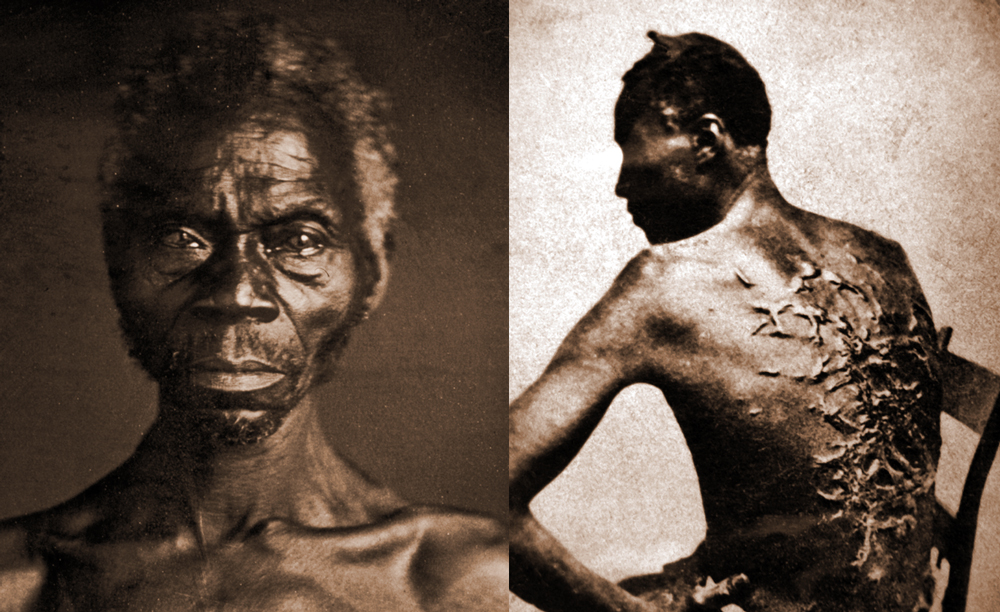
On Sunday, I marked an awful event in our history: The official beginning of chattel slavery as such in Britains American colonies.

At first, John Casor, an African indentured servant, had gained some control of his life. He charged his master, Anthony Johnson, a free black, with having forced him to labor longer than the term of his indentureship. He won, was freed, and then indentured himself to one Robert Parker. 

But Johnson sued, and, on March 8, 1655, won Casor back as a slave for life.

The case established a civil ground for slavery, also enabling free blacks to own slaves. Even as late as the Civil War, the South harbored families of obvious African descent who themselves owned African-​Americans as slaves.

On the surface, American slavery wasnt about race. But in the 1640 case of John Punch, sentenced to a life of slavery as criminal punishment for running away from his indentured servitude, his fellow escapees whites merely got longer terms of forced labor.

Racism, Thomas Sowell explains, became increasingly important to the peculiar institutionas time went on. If you exalt the notion thatall men are created equal,how do you square that with your slave-holding? 

By denigrating the humanity of blacks.

This vile ugliness of racism is still with us, to some degree … and slavery, too at least, in small pockets around the globe and in a much bigger way in the Muslim world. An estimated eleven million slaves are held in Africa and the Middle East. And black Africans are still the main victims.

Sunday was also the 240th anniversary of Tom Paines first American call for slaverys abolition.

Ending slavery: its way past time.

This is Common Sense. Im Paul Jacob.


Printable PDF

Categories
free trade & free markets general freedom too much government

Against Enabling Segregation

Rosa Parks, born February 4, 1913, became a symbol of the Civil Rights Movement for her actions on December 1, 1955. Ordered to move from the first row of the “colored” section after seats reserved for white passengers had filled up, Parks refused.

“When that white driver stepped back toward us, when he waved his hand and ordered us up and out of our seats, I felt a determination cover my body like a quilt on a winter night.”

Economist Thomas Sowell believes that the conflict might never have even come up as an issue, had the bus been privately run.

“Why was there racially segregated seating on public transportation in the first place?” he asked on the occasion of her death in 2005. “[T]here was certainly plenty of racism in the South, going back for centuries. But racially segregated seating” did not have the same unbroken history. Sowell pointed out that no matter what their own views, owners of the private transit lines of the 19th and early 20th century lacked motive to enforce segregation and thereby alienate many of their passengers.

When markets aren’t overrun by politics, both buyers and sellers must focus on the value they want from trade — a good product or competent service. Participants are penalized if they routinely set aside those benefits in order to indulge an animus.

In the 20th century, the trend towards taxpayer-​funded mass transit displaced economic incentives with political ones.

Only governments can force entire industries to routinely act on an irrational prejudice.

This is Common Sense. I’m Paul Jacob.

Categories
video

Tom Sowell on warm, fuzzy words and phrases

Punching fog, warming up fuzzy phrases, and understanding “social justice”:

“Society” is neither omniscient nor omnipotent. The justice society can provide cannot require either complete knowledge or total power. Pretending it can, or should, is pure folly.

Categories
free trade & free markets national politics & policies too much government

Going After the Gold

What does gold have to do with medical care? Ingested, it’s a poison. It’s not often used in treatment.

So why did the Obama administration place a provision further regulating the buying and selling of gold into the Democrats’ medical reform legislation? 

Economist Thomas Sowell explains, in a recent column, why politicians are obsessed with the yellow metal. Before FDR, gold provided a check against politicians’ desire to spend the money government could “just print.” Because, in those long-​ago days, paper dollars were backed by gold, Americans would cash the paper in for gold when it looked like the Treasury had gone on a printing spree. So inflation (the increase of the supply of money, and the consequent diminishing of its value, leading to increasing prices) was checked.

In 1933, FDR confiscated most of America’s circulating (and hoarded) gold, and Nixon took us off the gold standard completely in the ’70s, morphing our monetary system into a pure fiat (inflationary) standard. 

Also in Nixon’s time, it became legal, again, for Americans to own gold.

So why make it harder, now, to trade in gold — when gold is not money?

Because investors, in times of inflation and crisis, turn to gold as a hedge. Against politicians, basically. And, says Sowell, “the Obama administration sees people’s freedom to buy and sell gold as something that can limit what the government can do.” 

Gold, like freedom, “cramps the government’s style.”

That speaks volumes about gold … and “Obamacare.”

This is Common Sense. I’m Paul Jacob.


Categories
free trade & free markets national politics & policies too much government

Nothing Doing

When you don’t know what to do, the thing to do is nothing.

Well, maybe.

Economist Thomas Sowell, in a recent column, notes that we recovered from downturns in the economy more quickly before the federal government took it upon itself to fix things. The first major fix was with the Great Depression. Which dragged on and on.

Today, our leaders have spent trillions of borrowed money to fix the economy, with poor results.

Sowell’s column is great, right up until near the end, when his plea for politicians to “do nothing” ignores a lot of … something.

After the huge 1987 stock-​market crash, he explains, President Reagan did nothing. But then “the economy rebounded, and there were 20 years of sustained economic growth with low inflation and low unemployment.”

But were those 20 years really so benign? Activity by presidents, by Congress and most of all by the Federal Reserve set up the systemic problems that led to the Crash of 2008. Consumer price inflation was low during Sowell’s Reagan-​blessed period, but all the while the Fed was feeding first a dot-​com bubble and then a housing bubble. And it engaged in a series of bailouts of financial institutions.

Maybe Reagan and later politicians didn’t do enough in the “do nothing” department. They should have reined in (or abolished) the Fed. They should have abandoned “too big to fail.” They should have stopped subsidizing creditors in busts and home-​owners in booms.

This is Common Sense. I’m Paul Jacob.

Categories
free trade & free markets too much government

No More Woolworths

The New York Times offers summer internships at $900 per week. From what I’ve gathered, most other editorial and journalistic internships don’t pay nearly that much.

Many pay nothing. 

So why would anyone work for nothing? Well, for experience. 

Thomas Sowell, in his recent book Applied Economics, tells the story of a young man named Frank, who applied for a position in a retail store and got it. When he asked about his wages, his employer said, “Pay you! You don’t expect me to pay you, do you? Why, you should pay me, for teaching you the business!” This, as Sowell notes, seems harsh, exploitative: Three months of hard work without pay.

But Sowell asks “Who benefited most?” 

The answer is the young Mr. Frank Winfield Woolworth, who went on to found a retail empire, eventually hiring his old boss, the same man who wouldn’t pay him. But the old man sure did teach Woolworth the business.

Unfortunately, such relationships are illegal. “Convinced that many unpaid internships violate minimum wage laws,” the New York Times relates, “officials in Oregon, California and other states have begun investigations and fined employers.” The regulators’ campaign against internship programs is now going nationwide.

Bottom line: No more Woolworths. 

Sure, the Woolworth chain died long ago. What’s left of the company is called Foot Locker. But I’m talking about future innovators, future Frank Woolworths.

Which makes this crackdown a prime example of a counter-​productive policy.

This is Common Sense. I’m Paul Jacob.