Categories
general freedom media and media people U.S. Constitution

The Rates that Matter

Millions more Americans have been infected with SARS-CoV-2 than are considered “confirmed cases,”* at rates ranging from 6/1 (Connecticut, early May) to 24/1 (Missouri, late April), making the fatality rate of COVID-19 much lower than feared.

Unfortunately, we cannot trust our news sources to be forthright about this.

The “death count” had been the pandemic’s repeated headline for months, Dr. Ron Paul noted yesterday, “all of a sudden early in June the mainstream media did a George Orwell and lectured us that it is all about ‘cases’ and has always been all about ‘cases.’ Death, and especially infection fatality rate, were irrelevant.”

There’s a reason for this re-focus. Since peaking in April, deaths, you see, “had decreased by 90 percent and were continuing to crash. That was not terrifying enough so the media pretended this good news did not exist.”

And the case number increases do look ominous, despite being almost innocuous: “This is not rocket science: the more people you test the more ‘cases’ you discover.”

And that is not the only change of spin regarding the pandemic, as Jeffrey Tucker dramatized on Twitter:

“Flatten the curve!”
“What does that do?”
“Pushes infections to the future”
3 months later
“There are new infections!”
“What should we do?”
“Flatten the curve!”

At Mr. Tucker’s stomping grounds, the American Institute for Economic Research, Gregory van Kipnis wrote last month that the “most frightening aspect of the coronavirus-19 (COVID-19) epidemic in the US is that it brought about exaggeratedly heightened fear of death.”

We have something to fear from the virus and its attack upon the respiratory system, but we have more to fear from fear itself.

That staple of propagandistic media.

This is Common Sense. I’m Paul Jacob.


*  A confirmed case is of a patient who has seen a doctor for symptoms of the disease and has tested positive with the diagnosis seconded and logged by scientists associated with a national health agency.

PDF for printing

See all recent commentary
(simplified and organized)
See recent popular posts
Categories
free trade & free markets ideological culture media and media people

Dead Economists Walking?

Zombies don’t exist. Not like in the movies.

Or like in the pages of The New York Times.

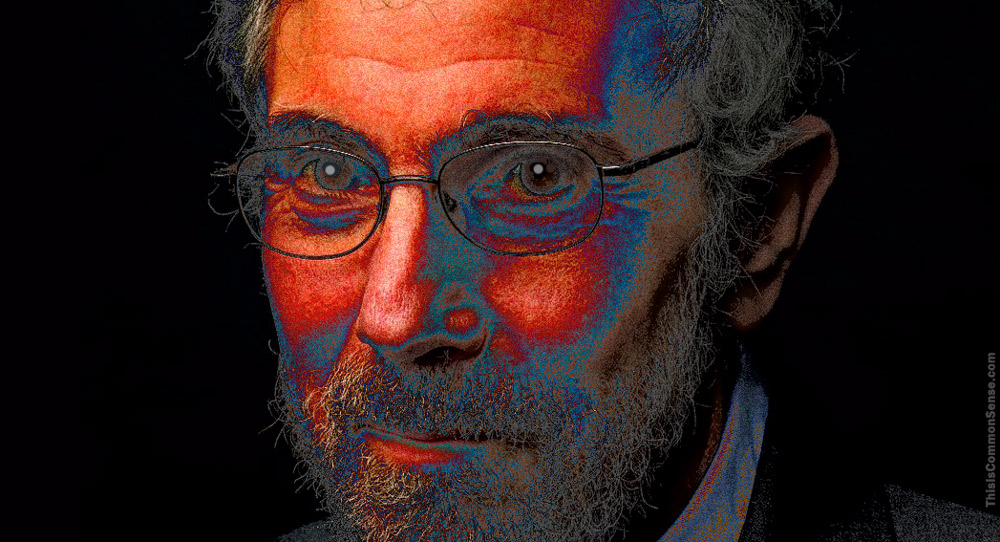
The Times’s economist Paul Krugman has a new book out, Arguing with Zombies, and, if I ever had the tiniest margin of utility nudging me towards reading it, John Goodman’s review in Forbes has dissuaded me. For Krugman doesn’t argue with anyone — he argues against economists whom he mischaracterizes.

No, that’s apparently too kind. He argues against, says Goodman, economists who don’t exist. “Zombies are economists who believe that every tax cut pays for itself with increased revenue,” Goodman explains. “They hate the poor. They are closet racists. They do the bidding of billionaire puppet masters who pay their salaries and fund their research. Their goal in life is to make the rich richer and the poor poorer.”

Goodman concludes by noting that Krugman knows better, for “if you are thinking that Krugman has never met a Republican, you might be inclined to cut him some slack.” But no, “it turns out Krugman actually worked in the White House during the Reagan administration. That means he knows the tax cuts weren’t devised by economists whose motivation was to make the rich richer. He knows his fellow economic advisors to the president weren’t puppets, doing the bidding of billionaires. He knows they weren’t closet racists. He knows they didn’t hate the poor.”

Krugman — a Nobel Laureate — calls his enemies the worst names imaginable. Yet, Krugman the Zombie Hunter is one reason our political culture is so monstrous right now.

Not zombie-monstrous, partisan-monstrous. 

Meanwhile, the two sides that hate each other are united at least in one way, in creating another monster: the $2.2 trillion bailout, and the record new deficit.

This is Common Sense. I’m Paul Jacob.


PDF for printing

Paul Krugman, economist, propaganda,

See all recent commentary
(simplified and organized)
See recent popular posts

Categories
ideological culture national politics & policies

An Opportunity to Forgo

“We just marked the anniversary of 9/11.” 

That’s what Democratic presidential aspirant and South Bend, Indiana, Mayor Pete Buttigieg reminded last night’s debate audience. “All day today, I’ve been thinking about September 12th, the way it felt when for a moment we came together as a country.”

The terrorist attacks in New York City and at the Pentagon, and the attempt foiled by brave citizens who were killed in the crash of their airliner in Shanksville, Pennsylvania, did indeed result in a wonderful bond of unity throughout our country.

Having lost more than 3,000 citizens, we came together.

“Imagine,” instructs Buttigieg, “if we had been able to sustain that unity.”

Before we all sing along with John Lennon, though, consider: (1) It is not so easy for government to re-create the sort of public horror, fear, grief, etc., necessary to ensure maximum national unity, and (2) please don’t try. 

The purpose of government is not to produce a pressure-cooker society where we forever exist on a wartime footing.

Do you miss the good old days of World War II? Totalitarianism threatened much of the globe; 70 million people died in the war. But it unified our country, which defeated Nazism, fascism, and a murderous empire.

We must memorialize the victory, not repeat it . . . just for unity’s sake. 

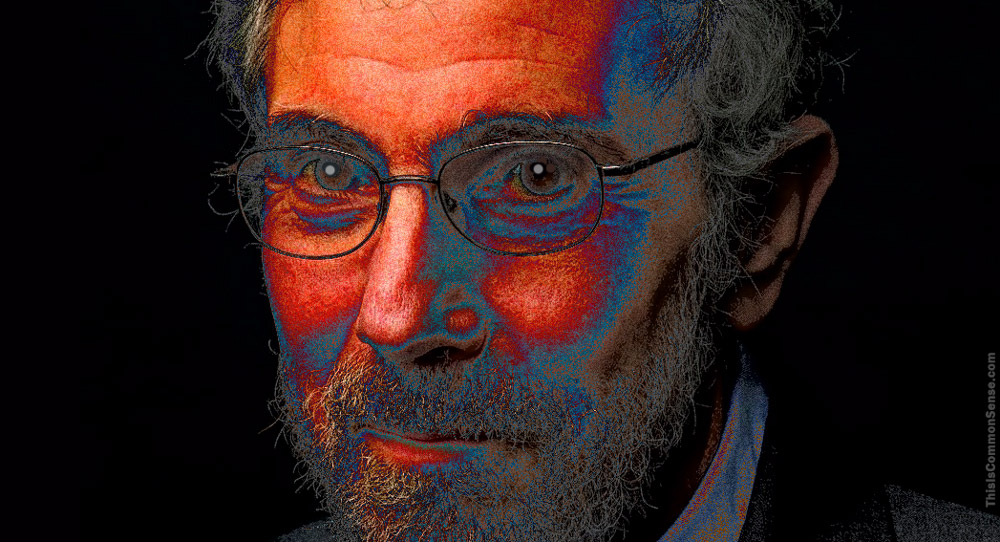
Yet the Green New Deal resolution introduced by Rep. Alexandria Ocosio-Cortez (D-NY) states that “the House of Representatives recognizes that a new national, social, industrial, and economic mobilization on a scale not seen since World War II and the New Deal is a historic opportunity. . . .”

Opportunity

Our motto should be ‘Liberty’ — not ‘never let a crisis go to waste.’ 

This is Common Sense. I’m Paul Jacob.


PDF for printing

national unity, war, peace, nationalism,

See all recent commentary
(simplified and organized)
See recent popular posts

Categories
crime and punishment Popular

Less Hate

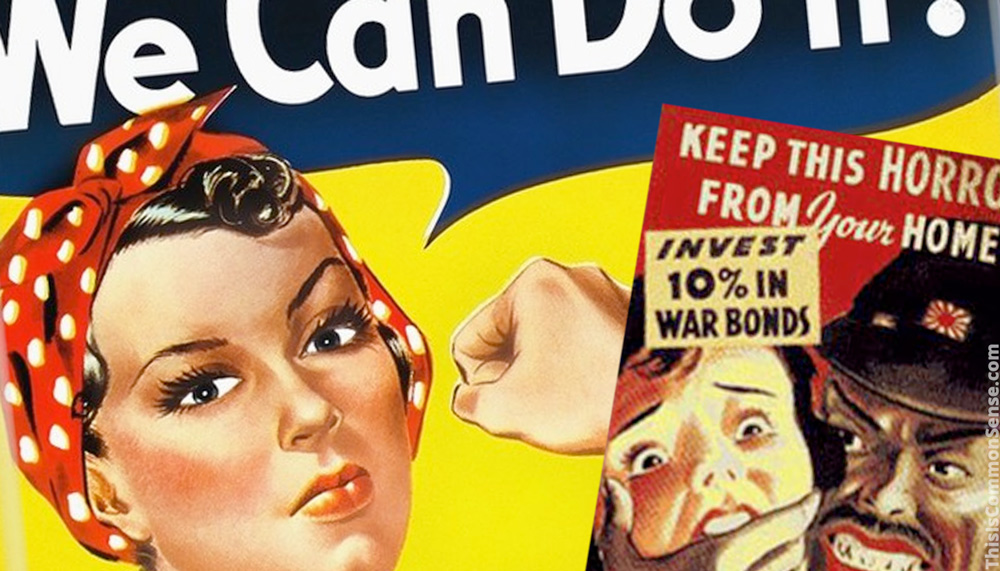
Just how awful are Americans? Racist and sexist “hate crimes” are all said to have ramped up since the election of Donald Trump.

Wilfred Reilly took a close look, in Quillette, at the hate crime cases in Seattle, which had been reported as having increased “by 400 percent since 2012.” What he discovered throws cold water on the heated assertions. It turns out that “most of the situations contained in the 500-plus documented incidents for 2018 turned out not to be hate crimes at all.”

As you might expect, defining “hate crime” isn’t easy, and Seattle has “remarkably broad municipal hate-crime policies” which go far beyond “attacks motivated by racial or sexual animus.” Crimes relating to issues such as “marital status, political ideology, age and parental status” also count.

But for there to be a “hate crime” there must first be a crime. Looking for the “archetypal Seattle hate incident” in the data, what Wilfred Reilly found was “a mentally ill homeless man yelling slurs at someone.” What this really suggests is that Seattle has a homelessness problem.

Which it does.

Behind the panic? We see mis-reporting, based on a need for generating clicks, as well as mis-perceptions, often based on availability bias — where we judge trends by a few ready-at-hand examples, not with careful attention to full data sets.

The Quillette article does not discuss a more ominous possibility, where some folks yearn for the worst, the better to hate their political opponents. Though Reilly addresses this sort of hate-generated “hate crime” panic in his book, Hate Crime Hoax: How the Left is Selling a Fake Race War, published earlier this year.

This is Common Sense. I’m Paul Jacob


PDF for printing

hate crime, Seattle, statistics, propaganda,

See all recent commentary
(simplified and organized)
See recent popular posts
Categories
ideological culture media and media people national politics & policies

No. No. No. No.

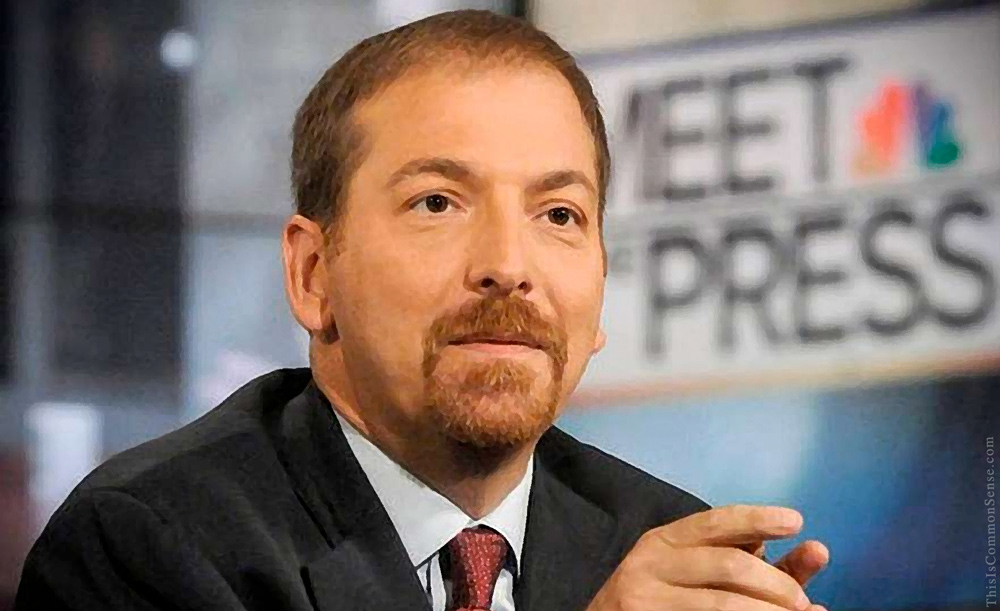
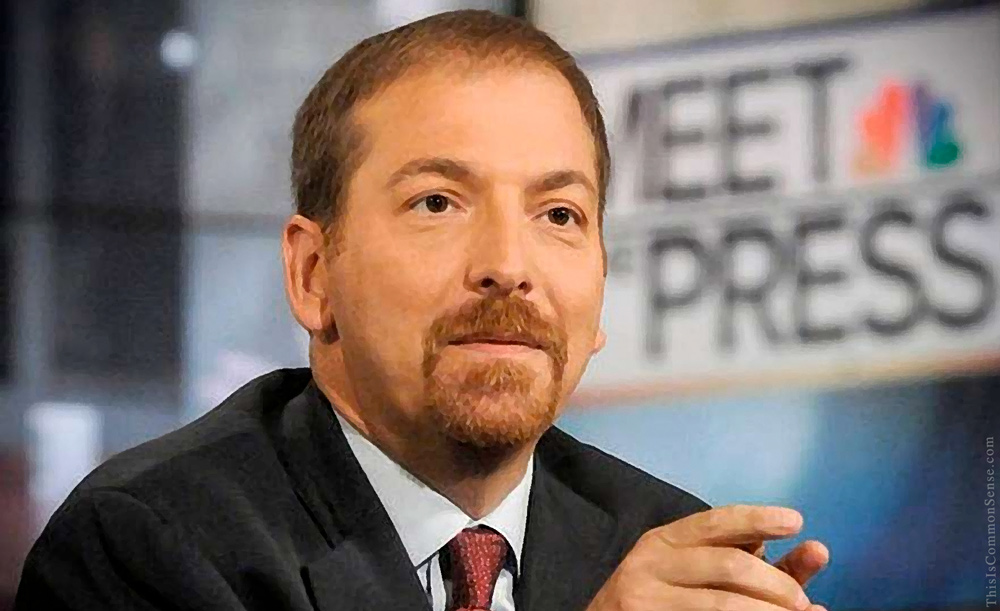
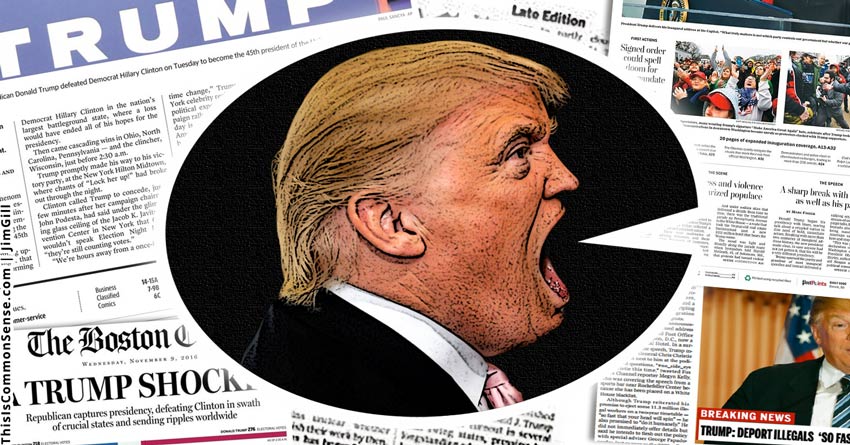
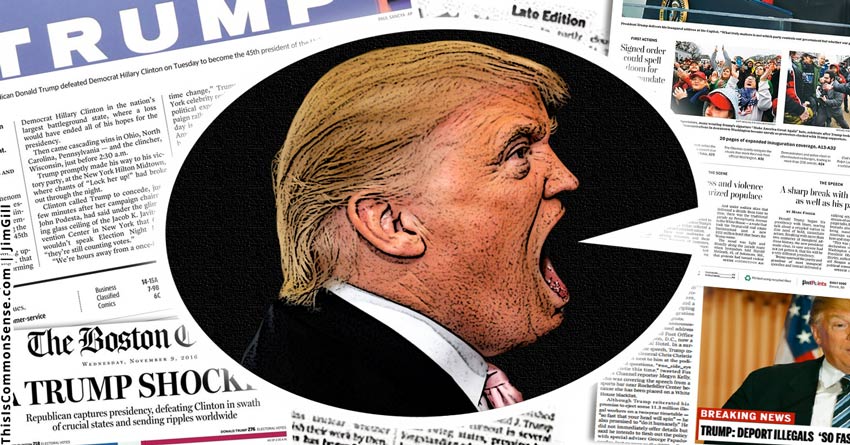
“Look, I think one of the best things going in Donald Trump’s favor — we know this — is the mainstream media,” David Brody, the Christian Broadcasting Network’s White House correspondent, told Meet the Press host Chuck Todd yesterday. 

“I hate to say it. I know I’m sitting on a Meet the Press roundtable, but the truth of the matter is 62 percent think the media is biased,” added Brody. “So, in other words, if you look at the approval ratings of Donald Trump versus the approval rating of the media —” 

“The conservative echo chamber created that environment,” interjected Mr. Todd. “It’s not — no. No. No. No. It has been a tactic and a tool of the Roger Ailes created echo chamber.”

“So, let’s not pretend it’s not anything other than that,” Todd insisted. (So, it IS something other than that?)

“Well, hang on,” Brody responded. “Yes and no. Because remember, the independents are part of Donald Trump’s base. . . . [T]hose Independents also distrust media. This is not just Republicans. It is many Americans across —”

“Oh, no. No. No. I take your point,” Todd again interrupted. “I’m just saying it was a creation — it was a campaign tactic. It’s not based in much fact.”

Hmmm. Todd does not dispute Brody’s assertion that a supermajority of the country sees bias in the Fourth Estate. Nor does he deny that in a battle between Trump and the so-called mainstream media, the approval-rating-challenged president bests the media most days.

Instead, the former Democratic Party campaign staffer-turned-journalist smugly maintains that one cable TV channel, talk radio and a spate of conservative websites have totally invented a fantasy of an anti-conservative bias where absolutely none exists.

Meet the press bias.

This is Common Sense. I’m Paul Jacob.


PDF for printing


Categories
education and schooling general freedom ideological culture moral hazard nannyism national politics & policies too much government

Grading Democracy on the Curve

Voters, we are told, are amazingly ignorant. So, what to do?

“Ultimately, the ideal democracy is one in which as many citizens as possible vote,” writes Dambisa Moyo at The Guardian, “and the voters are armed with the most objective information. Yet today only a fraction of the electorate are voting, and many are armed with a diet of hyped-up statistics and social media propaganda.” Among her proposals is a voting booth access test: “why not give all voters a test of their knowledge?”

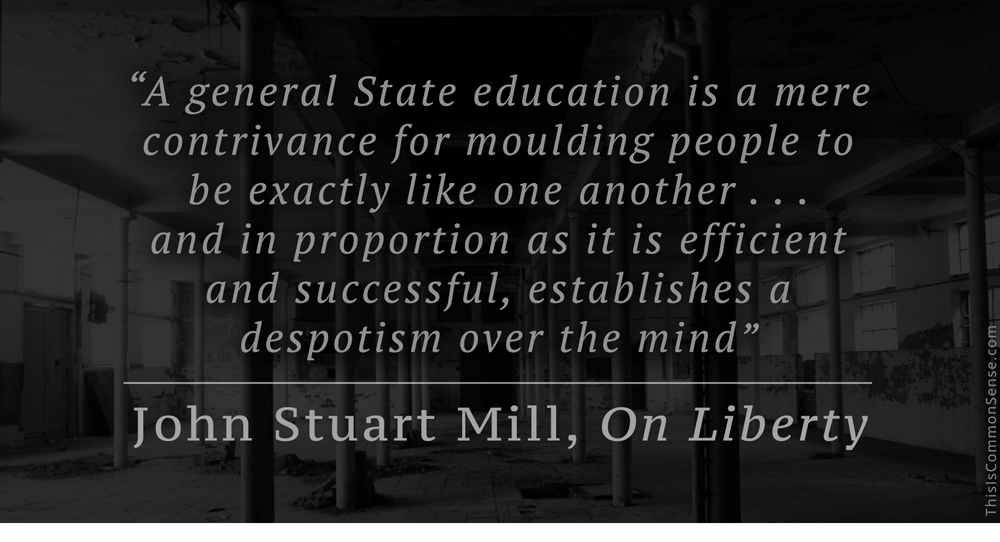
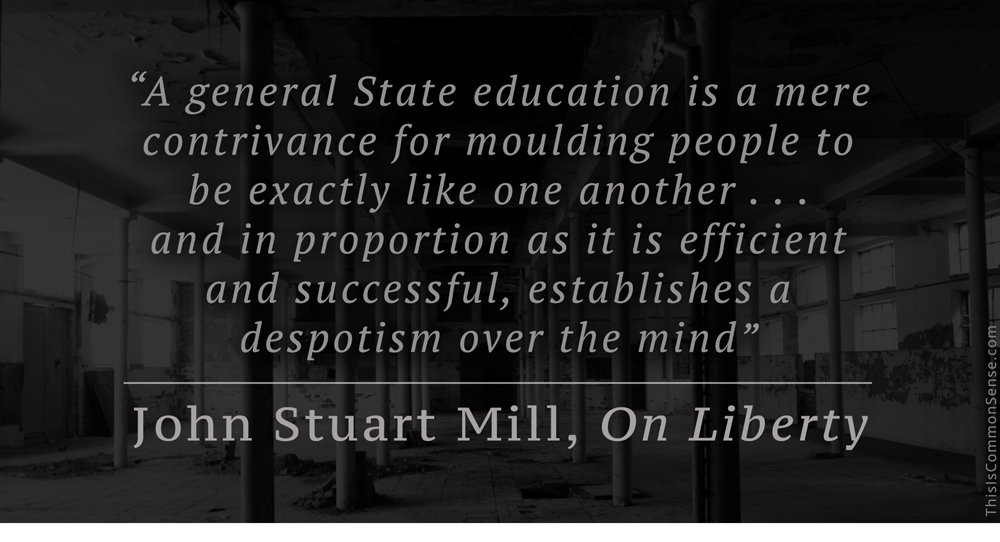
I can think of a whole bunch of reasons, as can Ilya Somin, over at Volokh Conspiracy, who considers just a few. One of the more interesting is this: whereas Moyo has no wish to shove poor people out of the voting booth, and so envisions public schools to teach to the test — “the knowledge needed should be part of the core curriculum” — Somin quotes John Stuart Mill about the very political dangers of the very idea of public schooling: “A general State education,” wrote Mill in On Liberty, would inevitably be devised to please and serve “the dominant power in the government, whether this be a monarch, an aristocracy, or a majority of the existing generation” and must constitute “a despotism over the mind.”

Though Moyo does observe incumbency and political careerism as big problems, she is innocent of the more fundamental issues.

Indeed, she does not consider the obvious: today’s voter ignorance of politics and government is in no small part the result of government schools.

For politicians, general ignorance is not a bug, it’s a feature.

Let’s look for solutions to political problems that do not give politicians more power.

This is Common Sense. I’m Paul Jacob.


PDF for printing


Categories
Accountability folly general freedom ideological culture media and media people national politics & policies too much government

We Are At War — So What Else Is New?

As if on some hellish, punitive treadmill, we keep “experiencing” the last federal election, over and over.

Hillary Clinton, who didn’t get a majority of all votes and who lost in the Electoral College, keeps on grinding through her long list of people who failed her.

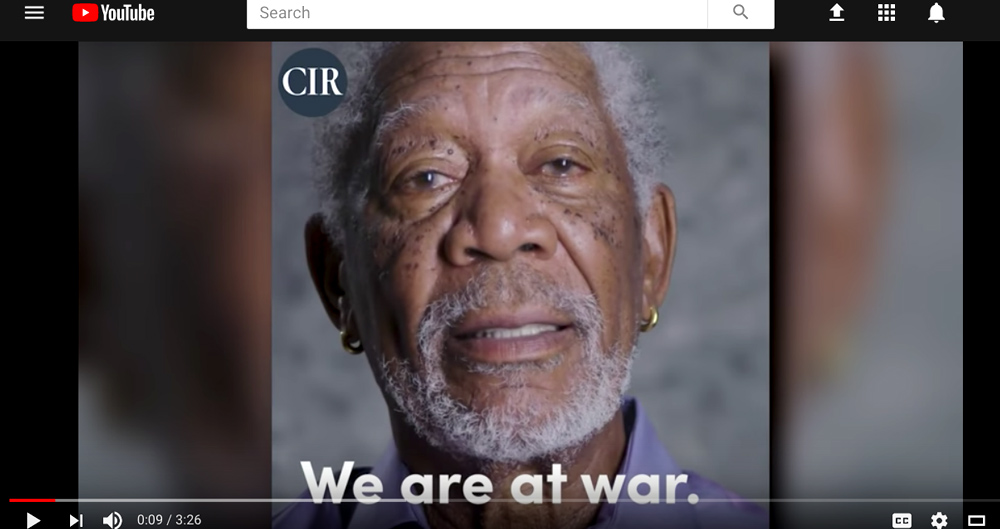
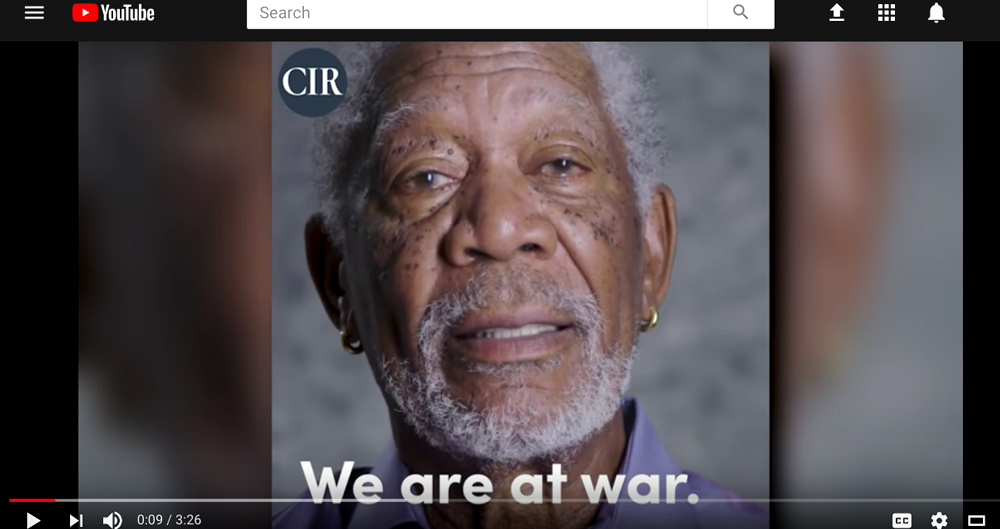
Her nuttiest charge, that “Russia ‘Hacked’ the election,” reached its apogee, last week, in the bizarre video featuring Morgan Freeman. The actor, who’s played both the President and God, intones that “We have been attacked; we are at war.”

Financed by a cobbled-together Committee to Investigate Russia, the notion seems to be: stretch Hillary Clinton’s conspiracy theory into the talking points for . . . a coup d’état.

Congress is, of course, investigating “what Russia did.”

Unearthed, so far? Not much.

As James Freeman wrote, in The Wall Street Journal, considering the paltry Russian presence on Facebook, “if Russian disinformation managed to change the outcome of the U.S. presidential contest, the Kremlin must have created the most influential advertising in the history of marketing.”

And when you add in the FBI’s multiple FISA requests to bug Trump’s campaign manager, it’s hard not to come to this conclusion: it was not Trump, but the Deep State that colluded with the Russians.

The Committee/Freeman video talks about “using social media to present propaganda and false information,” which puts the “hack” on the level of ideas — not real manipulation. Propaganda from the Kremlin is not appreciably different from propaganda from Clinton or Trump.

Lies were everywhere, and if “false information” were worth declaring war over, the American people would have revolted against Washington, D.C., decades ago.

This is Common Sense. I’m Paul Jacob.


PDF for printing


Categories
Accountability folly ideological culture media and media people moral hazard nannyism national politics & policies too much government

Almost Right

The popular fact-checking sites, such as Snopes and Politifact, cannot stick to the facts.

When Sen. Rand Paul (R-Ky) predicted that a recent repeal of “three regulations” would save “hundreds of millions of dollars and tens of thousands of jobs,” Politifact rated the statement “Half True,” on the grounds that, well, not all experts agreed.

In 2015, objecting to a reported low figure for the Clinton Foundation’s grants to other groups that actually did things, PunditFact gave a “Mostly false” judgment despite admitting that the statement was “technically true.”

NBC engaged in a similar move, admitting to the technical truth of a claim about unemployment, but said it was “extremely misleading.”

Snopes found reasons to tag a “Mixture” rating onto the simple fact that Omar Mateen, the Pulse nightclub mass murderer, was a registered Democrat. He was*.

The funny thing is, these sites are “Almost Right”: fact checking isn’t enough.

Facts can be true, but deceptively used.

Unfortunately, these “fact-checkers” repeatedly fail to clearly distinguish matters of fact from matters of context. They could offer a double analysis and double rating: True/False for the factual; Clear/Caution, to cover interpretations and implications.

Why don’t they?

Perhaps for the same reason the CIA is planning a Meme Warfare Center — to provide a “full spectrum meme generation, analysis, quality control/assurance and organic transmission apparatus”** — instead of a Center for the Analysis of Popular Argument: the idea is not to increase knowledge.

It is to maximize influence.

Which leaves us on meme patrol, ever vigilant.

This is Common Sense. I’m Paul Jacob.


* What Snopes did was speculate that the terrorist perhaps changed his mind after initially registering a decade before the shooting.

** I wrote more about this in Sunday’s Townhall column (from which this Common Sense foray is adapted; see relevant links here), and first broached the goofy/ominous CIA proposal with Saturday’s featured video.


Printable PDF


Categories
Accountability folly ideological culture media and media people national politics & policies political challengers

Bigly Truthiness

“Journalists should be tough when powerful people say untrue things,” writes the Books and Arts columnist for The Economist.

I’m with “Johnson,” that pseudonymous author, except for one thing. In calling President Trump a Big League liar, he himself seems to miss the whole truth, nothing but the truth.

At the very least, The Economist scrivener proves himself rather obtuse . . . especially for a column de plume tipping the hat to the great Samuel Johnson. Many of the Trumpian falsehoods he mentions are indeed whoppers. No doubt. But a few cry out for a more subtle reading.

After distinguishing between falsity, lying, and fantasizing, “Johnson” speculates that Trump may actually believe “his own guff.”

But then, about Trump’s murder rate statements, Johnson quickly runs off the rails: “Mr. Trump said something wildly wrong about something easily checkable, leaving an adviser, Kellyanne Conway, flailing to cover for him. . . .” But Conway did suggest that Trump may have been speaking about certain cities wherein the murder rate has gone up.

Trump often speaks as hyperbolist: murder has gone up in a few major cities; he relates the fact as if murder had gone up generally. This annoys sticklers. Me, included. But Trump’s been using the rhetoric of exaggeration.

You could call it the rhetoric of inexactitude.

It’s how he trolls.

Trump could also be charged with “truthiness,” comedian Stephen Colbert’s signature 2005 coinage about confidence in factoids for intuitive reasons, sans evidence.

But so might this “Johnson.” When subtle men miss homespun subtleties, one has to wonder whether they might miss it for . . . intuitive reasons.

This is Common Sense. I’m Paul Jacob.


Printable PDF


Categories
folly ideological culture moral hazard national politics & policies tax policy

Rebranding the Odious?

Being a clever person is hard work. Many of the truly clever things about everyday life have already been said. New and innovative cleverness? A rare thing indeed.

But if you are in the business of being clever, that puts you in a pickle, if “being relevant” and “worth our attention” is part of your cachet.

Take Alain de Botton, a very clever man who has written at least one brilliant book . . . and several not-so-brilliant ones. He has tackled Proust, Epicureanism, and is now deeply into religion.

Well, maybe not so deeply.

He wants politicians to follow the lead of religious leaders, who, he asserts, are masters of rebranding. (I had thought that was for marketing specialists.)

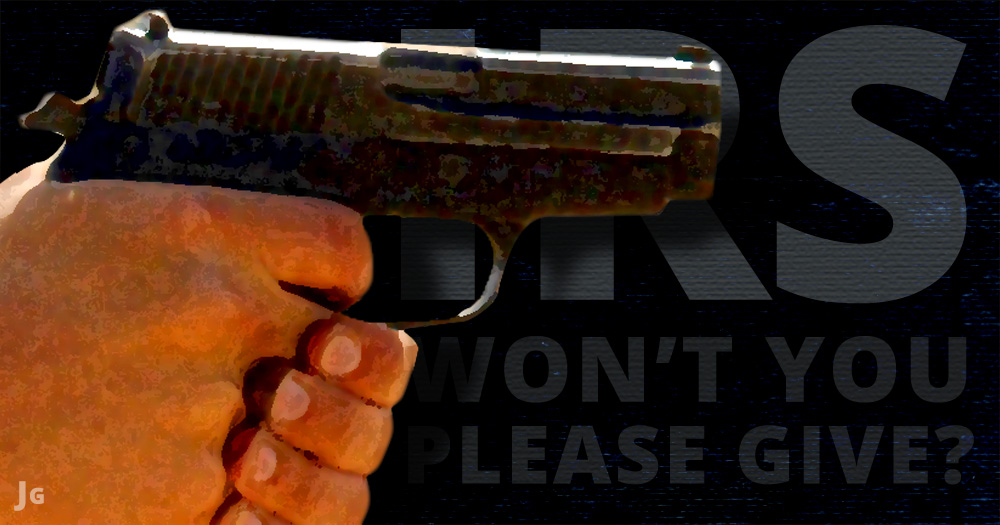
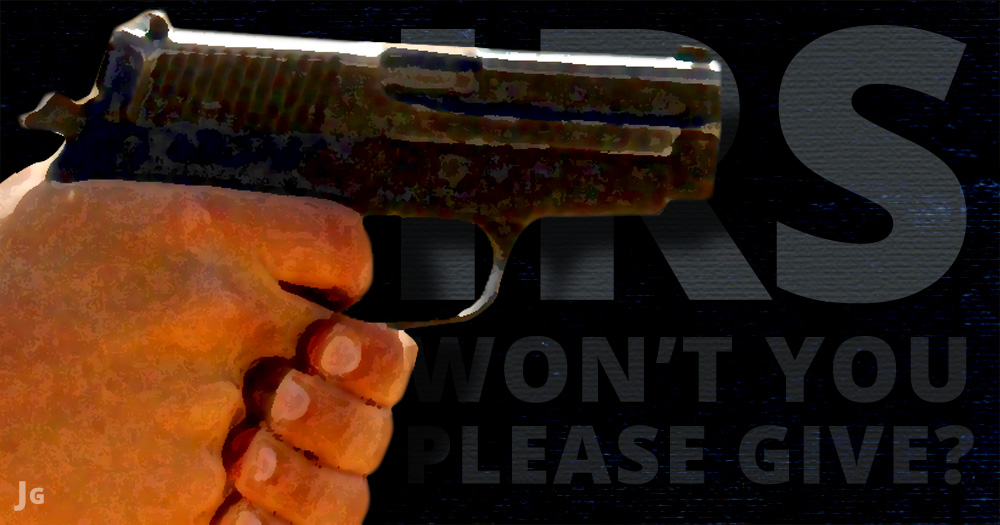
Recognizing that the word “tax” is an odious one — few people really like paying their taxes — de Botton says that politicians should follow what “religions do” and “rebrand ‘tax’ as ‘charity.’”

Charity, he notes, is a “much more appealing word.”

Well, yeah. That’s because charity is a word for love. It is all about deep concern, sympathy, etc., and “acts of charity” are expressions of love and concern.

And the only way that acts of charity can be determined to be expressions of concern is that they are voluntary. Taxes, on the other hand, are not voluntary. They are taken by force (try not paying them — force will find you).

Forcing people to “be charitable” will automatically scuttle that very purpose.

Trying to rescue politics from the stench of compulsion should not be done with rebranding, but by limiting government.

The less government, the less force.

And more scope for charity.

This is Common Sense. I’m Paul Jacob.


Printable PDF

tax, taxes, charity, IRS, I.R.S., Alain de Botton, branding, rebranding, illustration, folly, Common Sense


Common Sense Needs Your Help!

Also, please consider showing your appreciation by dropping something in our tip jar  (this link will take you to the Citizens in Charge donation page… and your contribution will go to the support of the Common Sense website). Maintaining this site takes time and money. Your help in spreading the message of common sense and liberty is very much appreciated!