Categories
Accountability folly national politics & policies

Hillary Clinton, Double-Agent?

Democratic presidential candidate Hillary Clinton rails against a “political system hijacked by billionaires and special interests.” Billionaire George Soros just wrote a $6 million check to a pro-Hillary SuperPAC.

“Our democracy should work for everyone,” states HillaryClinton.com, “not just the wealthy and well-connected.” Last week, we discovered Mrs. Clinton was paid a whopping $675,000 by Goldman Sachs, the politically-connected Wall Street investment firm, for three speeches after she left the State Department.

Nice work if you can get it.

Her top donors read like a Who’s Who of Wall Street,” editorialized Investor’s Business Daily. “But sure, she’s going to clean up campaign finance.”

Not only that, Hillary also claims she’ll take on and harshly regulate those same powerful Wall Street interests.

In last Thursday’s debate, Mrs. Clinton took umbrage at the idea that rival Senator Bernie Sanders “would characterize me, a woman running to be the first woman president, as exemplifying the establishment.”

This led columnist Danielle Allen, also a woman, to opine: “Clinton does not merely exemplify the establishment. She and her husband, former president Bill Clinton, are the Democratic Party establishment. . . . That candidate Clinton could deliver her line with a straight face goes to the heart of her trustworthiness problem.”

Responding to Bernie Sanders’s questions about her significant financial support from powerful interests, Hillary told the debate audience, “I know this game. I’m going to stop this game.”

Mrs. Clinton is very believable as to the first claim. The second? Not so much.

This is Common Sense. I’m Paul Jacob.

Printable PDF

HIllary Clinton


Categories
general freedom national politics & policies political challengers

Standing with Rand

Rand Paul, the junior senator from Kentucky, suspended his presidential campaign yesterday. He took fifth place in Iowa, but garnered just four percent of the vote.

I’ll miss him.

“Ours has been a unique voice in this race,” the senator rightly declared, “one that says Big Government threatens Americans from all walks of life, rich and poor, black and white — from the coal miner who has lost his job over President Obama’s destructive EPA regulations to the teenager from a poor family facing jail time for marijuana.”

Some of Rand’s message resonates in the Republican Party; other parts, not so much.

An anonymous senior Paul aide told Politico that the problem — in addition to “Trump” — was “this foreign policy environment,” noting that “Rand was more flavor of the month a year ago . . . before they were beheading people in the Middle East. . . .”

Still, the GOP would be wise to heed Paul’s message, especially on foreign policy.

“I will not ignore the terrible cost of decades of war and chaos in the Middle East, and the unintended consequences of regime-change and nation-building,” the senator assured supporters. “I will continue to fight for criminal justice reform, for privacy, and your Fourth Amendment rights.”

In assessing his presidential campaign, Paul told reporters, “Brushfires of Liberty were ignited, and those will carry on, as will I.”

That’s good. Like his father, Dr. Rand Paul has become freedom’s foremost firebrand. We need him in the U.S. Senate.

This is Common Sense. I’m Paul Jacob


Printable PDF

Rand Paul, 2016 Presidential Race, Common Sense


Categories
folly ideological culture national politics & policies

No Red Flag?

The Iowa caucuses were pretty much a dead-heat for the Democrats, with Hillary Clinton winning a number of precincts by the flip of a coin and barely edging out Sanders.

Leaving aside conspiratorial notions like trick coins, the Democratic results are most interesting in one obvious way: half of the Democratic activists in this Midwestern state proved themselves just fine with voting for a self-proclaimed “socialist”; the other half were apparently hunky-dory to cast their ballots for an ethically-challenged political insider most often described by voters in an ABC News survey with the word “liar.”

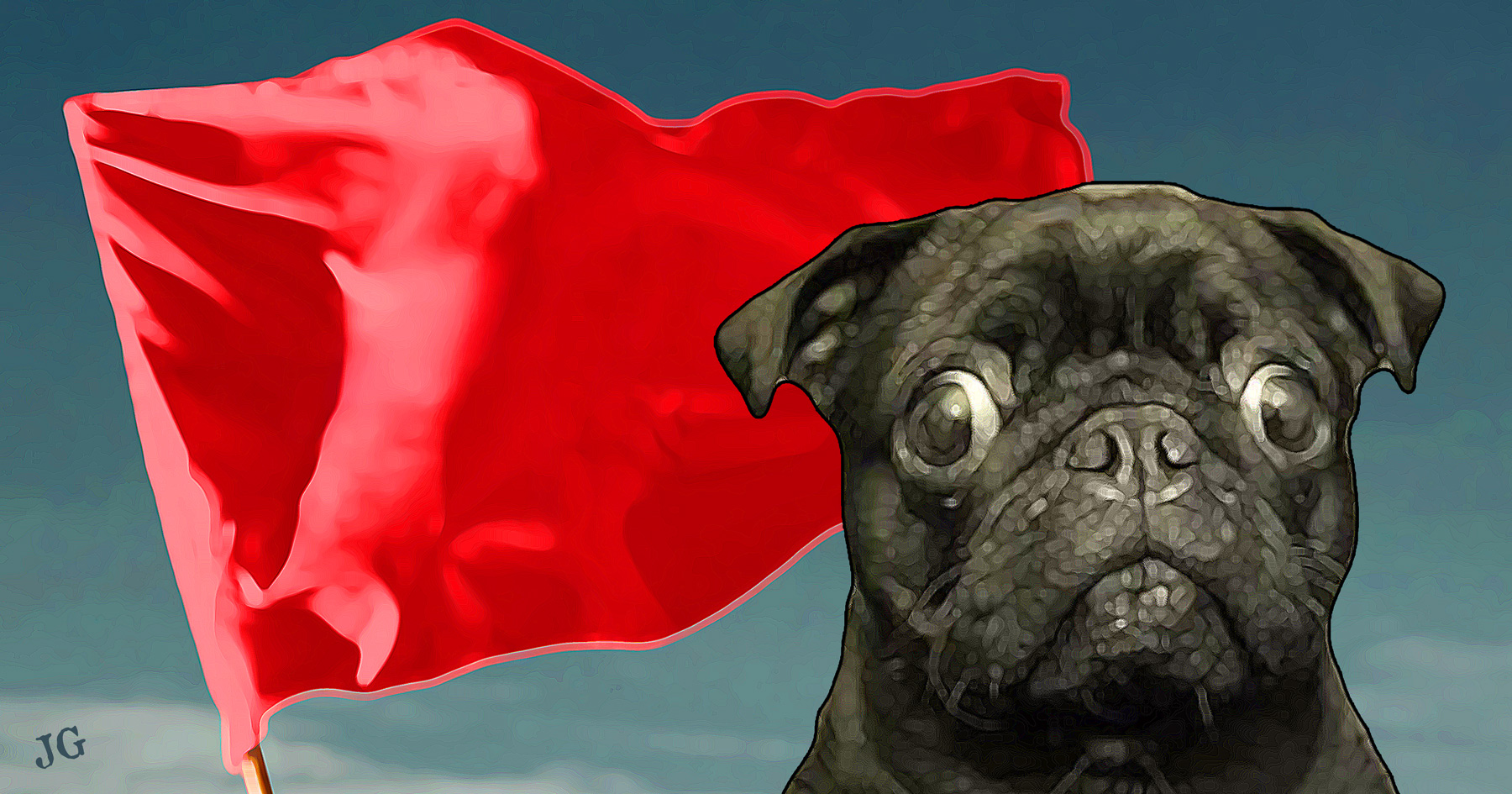
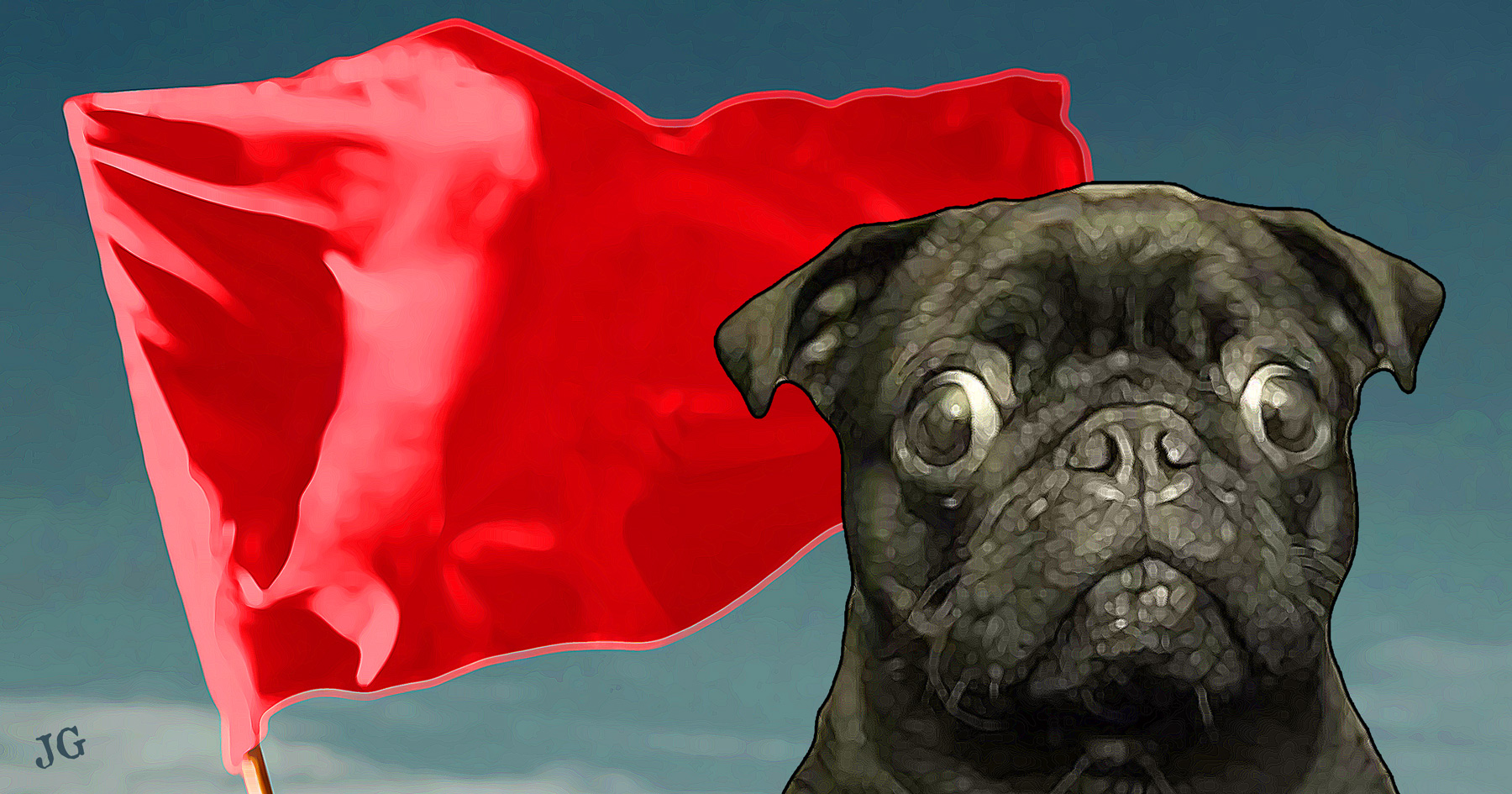
No red flags, Dems?

Though Fox News’s Bill O’Reilly keeps talking about Mrs. Clinton’s possible indictment, partisanship being what it is, how is that going to happen? Despite a rising swell of support for Sanders, Clinton’s juggernaut seems fated to roll over the land.

But really, which is more disappointing:

  1. Lack of revulsion or censure for Clinton’s haughty incompetence and disregard for the law? or
  2. Lack of incredulity at someone identifying his Big Gov redistributionism as “socialist”?

Monday wasn’t a red letter day, it was a red flag day.

On the Republican side, the establishment took a drubbing. Former Gov. Jeb Bush, son and brother of former presidents, received less than three percent of the Republican vote — even though, including SuperPACs, he has raised the most money. By far — his campaign shelled out $2,884 for each Iowa vote.

Moreover, Ted Cruz, the GOP establishment’s worst nightmare, won. Let’s hope his success overcoming attacks from the governor and the crony corn lobby will help others find the political courage to oppose ethanol subsidies and mandates.

This is Common Sense. I’m Paul Jacob.

Printable PDF

Primary, Bernie Sanders, Hillary Clinton, red flag, Common Sense


Categories
Accountability folly free trade & free markets moral hazard porkbarrel politics too much government

Crony Corn

The presidential campaign officially begins in Iowa. The Hawkeye State is also the nation’s corn-growing champion. Each year, Iowans sell 47 percent of that crop to produce ethanol, which accounts for a not-insignificant 8 percent of the state’s gross product.

Ethanol has friends in Washington, too. Congressional wizards have mandated that the gasoline pumped into cars throughout the land be diluted with ethanol — talk about a market guarantee!

At National Review, Jeremy Carl explains that “energy-policy experts of all political stripes can agree . . . mandates and subsidies to promote the use of corn ethanol (a policy first implemented by Jimmy Carter) are wasteful boondoggles that harm our environment and food supply while imposing billions of dollars of hidden costs on consumers. However, most energy-policy experts are not running for president in the Iowa caucuses.”

In 2008, both Sen. Hillary Clinton and Sen. John McCain flip-flopped to support the ethanol subsidies they had previously opposed.

But, this year, Sen. Ted Cruz and Sen. Rand Paul haven’t pandered along.

When Cruz rose to first place in the polls, Gov. Terry Branstad attacked, arguing, “It would be a big mistake for Iowa to support [Cruz]” because “his anti-renewable fuel stand . . . will cost us jobs, and will further reduce farm income . . .”

Yesterday, Fox News Sunday host Chris Wallace asked Cruz, “Why should [Iowa] voters side with you over the six-term governor of this state?”

“I think there should be no mandates and no subsidies whatsoever,” Cruz replied.

In today’s Iowa caucus, can Cruz overcome the forces of crony corn?

This is Common Sense. I’m Paul Jacob.

Printable PDF

pig, port, corn, ethanol, subsidies, gas, fuel, Common Sense, Paul Jacob


Categories
Accountability folly ideological culture media and media people national politics & policies

Hard Words, Soft Left

“The word ‘socialist’ is a really hard word,” warned former Michigan Gov. Jennifer Granholm.

“Now, I love Bernie Sanders, really,” Granholm added, acknowledging she’s okay with his socialist policies — just not the term.

Not in mixed company.

The former governor of the Wolverine State was responding to a question — “How about the charges ‘he’s a socialist’?” — from Martha Raddatz, who was hosting ABC’s This Week that week.

“The socialist label is something that he applies to himself, right,” Granholm noted. “So the question is how does that play across America?”

Armed with a Gallup poll, Granholm answered that socialism doesn’t play very well at all. Voters are “even” less apt to vote for a “socialist” than for an “atheist.” In case you wondered.

So, what is the difference between a socialist and a Democrat?

“You’re the chairman of the Democratic Party, tell me the difference between you and a socialist,” Chris Matthews had implored Rep. Debbie Wasserman Schultz on MSNBC months ago.

“The relevant debate we’ll be having over the course of this campaign,” dodged the DNC chair, “is what’s the difference between a Democrat and a Republican.”

Chuck Todd, noting that Bernie Sanders “is an unabashed socialist” who is always praising European social democracies, echoed the question on Meet the Press: “what is the difference?”

“It’s always fun to be interviewed by Chris Matthews and I know that he enjoys that banter,” bobbed an answer-less Wasserman Schultz. “The important distinction we’ll be discussing in this campaign [blah, blah, blah] . . .”

Earlier this month, Matthews likewise asked Hillary Clinton to state the difference. Mrs. Clinton said she wasn’t a socialist but, instead, “a progressive Democrat.”

“Debbie Wasserman Schultz wouldn’t answer the question either,” Matthews replied.

This is Common Sense. I’m Paul Jacob.

Printable PDF

socialism, democrats, Hillary Clinton, Common Sense


Categories
folly general freedom ideological culture insider corruption national politics & policies political challengers

The Anti-Republican Party Establishment

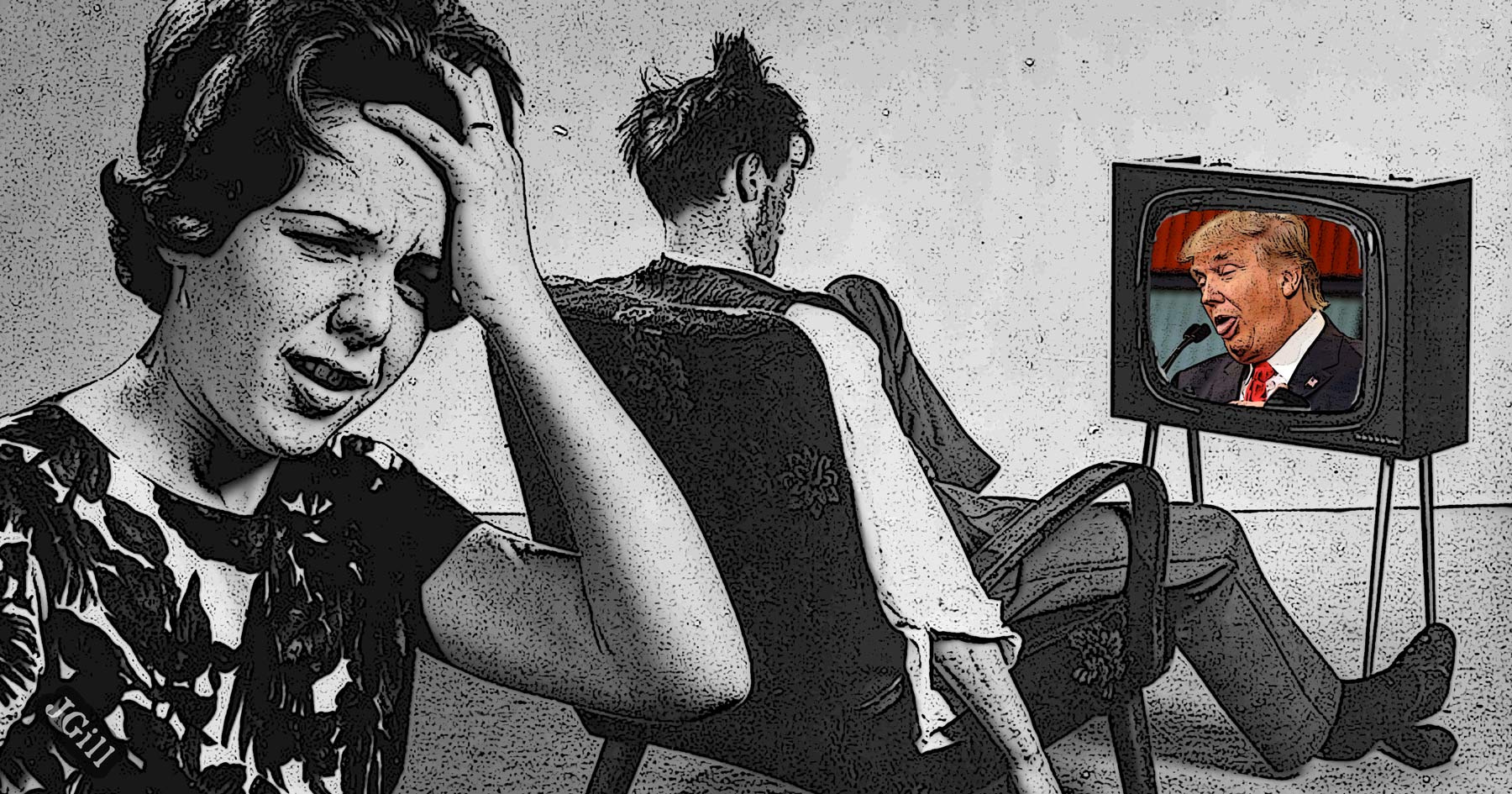
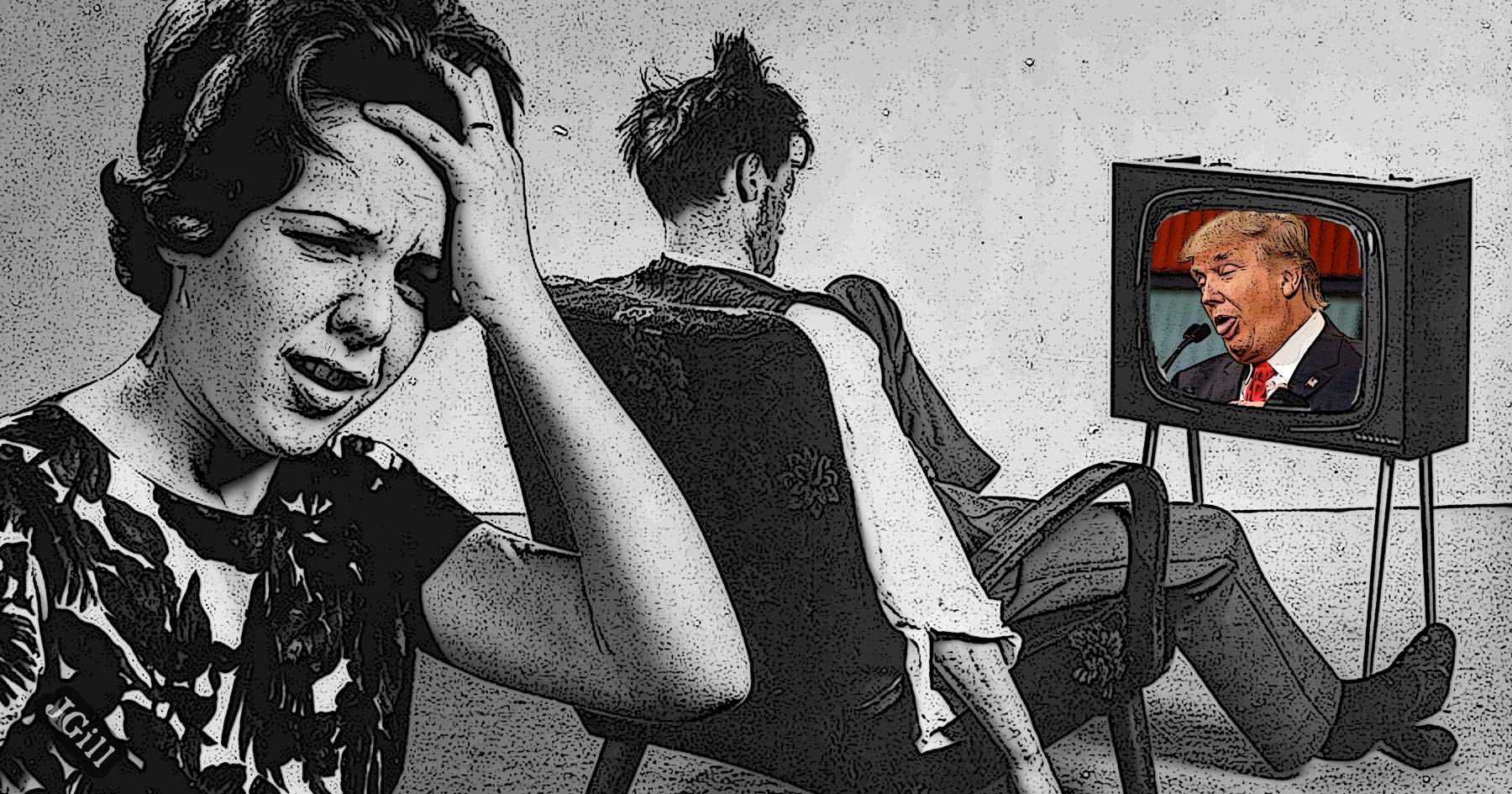
Yesterday, we decried the rigged superdelegate voting process used by establishment Democrats to Hillary Clinton’s benefit — and party members’ detriment. Today, we switch parties to find the GOP establishment in full panic mode, so terrified at the prospect of a Ted Cruz victory that they’re now rallying around Donald Trump.

Republican Party stalwart Bob Dole, the 92-year-old former Senate Majority Leader and a 35-year Washington insider, called Sen. Cruz an “extremist.” A Cruz victory would lead to “cataclysmic” losses for the party, Dole contends, and by the way . . . “Nobody likes him.”

“Nobody in Washington,” Dole means.

As for Trump? Dole thinks Trump could “probably work with Congress, because he’s, you know, he’s got the right personality and he’s kind of a deal-maker.”

The right personality?

Iowa Sen. Chuck Grassley, a fixture in Congress for the last 41 years, introduced Trump recently by clumsily validating Trump’s campaign slogan: “we have an opportunity, once again, to make America great again.”

And again.

According to former House Speaker Newt Gingrich, “Trump does not have any particular enemies down here. I don’t think anyone gets up in the morning and is irritated with him. That’s not how it is with Cruz.”

Former GOP congressman turned lobbyist Vin Weber says that the establishment’s hated of Cruz “has forced some people to look past all of Trump’s issues and think about what he could offer.”

Offer?

The Republican establishment really, really, really despises Sen. Ted Cruz. But they can live with Donald Trump.

Hmmmm . . . advantage Cruz.

This is Common Sense. I’m Paul Jacob.

Printable PDF

Cruz, Trump, Republican, primary, nomination, president, campaign, Common Sense, Paul Jacob, James Gill, illustration


Categories
Accountability ballot access folly ideological culture nannyism national politics & policies

The Anti-Democratic Party Establishment

Democrats aren’t very good at democracy.

Consider the party’s presidential contest, as I did yesterday at Townhall.

As an appetizer, I noted the Democratic National Committee policy of hiding their debates from viewers by placing them on weekend evenings pitted against major sporting events.

For meat and potatoes, ponder my warning of the very ugly scenario of Sen. Bernie Sanders capturing as much as 58 percent of the primary and caucus vote and resulting delegates, but still losing to Hillary Clinton.

How could that possibly happen?

Because of folks designated as “superdelegates” — those awarded voting delegate status for holding a party office or being an elected or former elected official.

Democrats brag that they’ve reduced these insiders’ impact. Democratically-unaccountable superdelegates once accounted for 30 percent of Democratic Party convention delegates; now it’s only 15 percent of the total. Still, Clinton leads Sanders 380 to eleven among superdelegates.

At that rate, she could lose the actual state elections and still win the party’s presidential nomination.

The Democrats’ dereliction of democratic duty doesn’t end there, either.

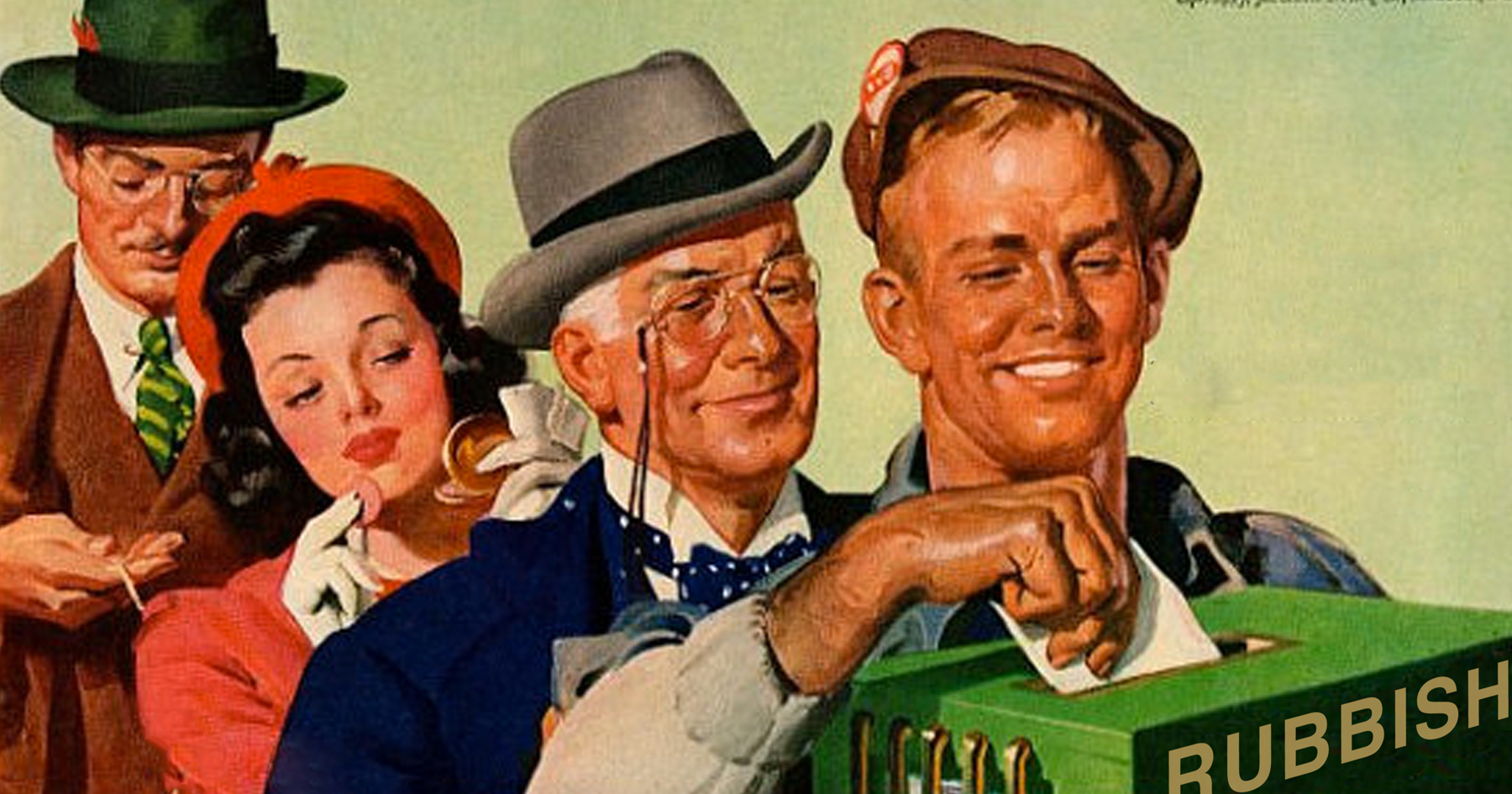
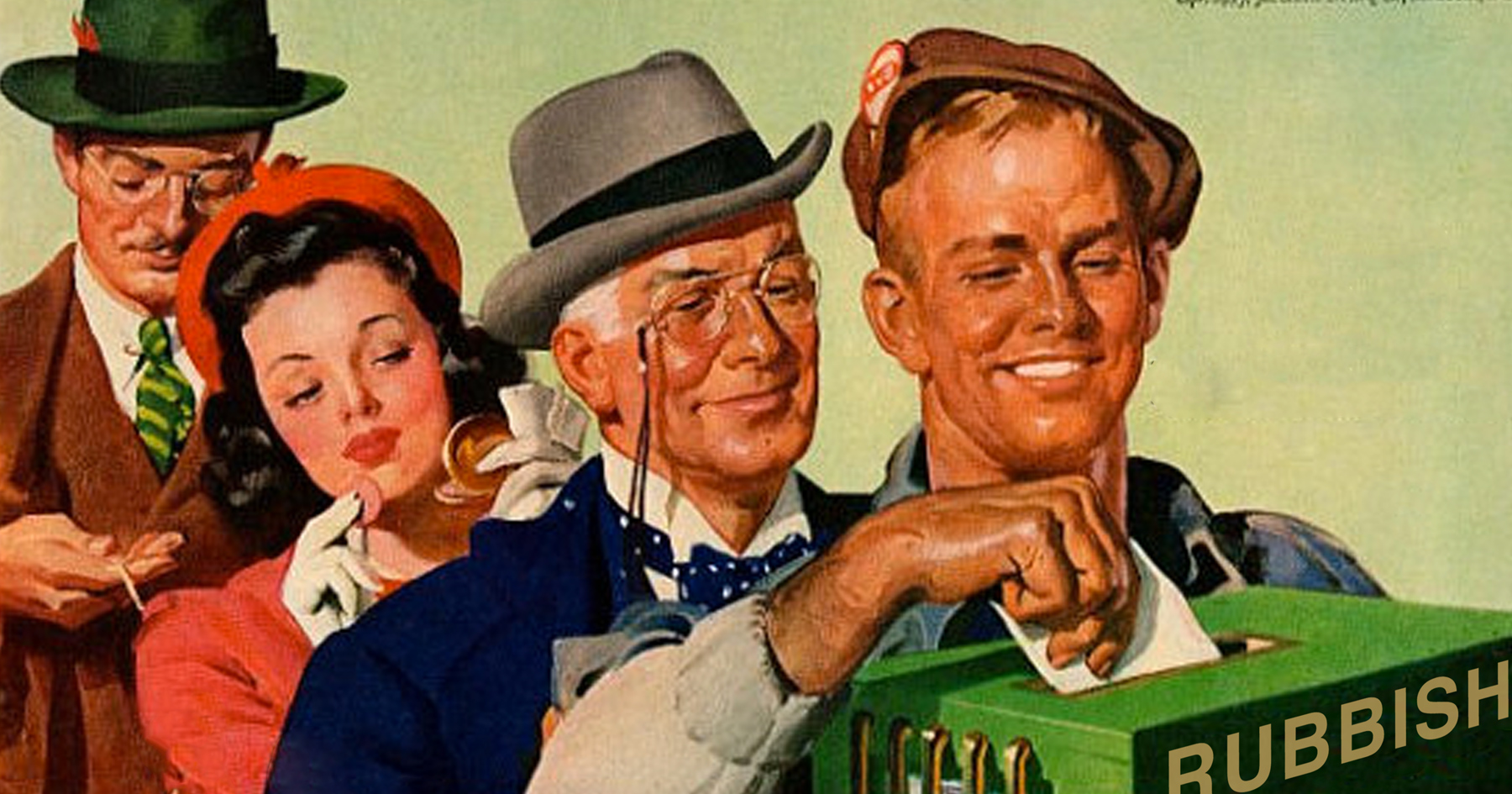
The process by which various powerful party “interests” endorsed either Sanders or Clinton is quite telling. Journalist Zaid Jilani reports in The Intercept that, “Every major union or progressive organization that let its members have a vote endorsed Bernie Sanders.”

“Meanwhile,” Jilani found, “all of Hillary Clinton’s major group endorsements come from organizations where the leaders decide. And several of those endorsements were accompanied by criticisms from members about the lack of a democratic process.”

Seems the insiders have decided Mrs. Clinton will be on the Democratic Party presidential menu, whether Democrats like it or not.

This is Common Sense. I’m Paul Jacob.


Printable PDF

superdelegates, democracy, democrats, Sanders, Clinton, voting,


Categories
Accountability folly free trade & free markets general freedom ideological culture moral hazard national politics & policies political challengers responsibility tax policy too much government

Berating Bernie?

Bernie Sanders has risen in the polls. He may even beat Hillary Clinton in the first caucus and primary contests for the Democratic presidential nomination.

A cause for celebration! Witnessing a huge hunk of Americans accept Mrs. Clinton, the consummate and corrupt insider, is too disheartening.

Bernie Sanders, for all his faults, is at least not an insider like Hillary.

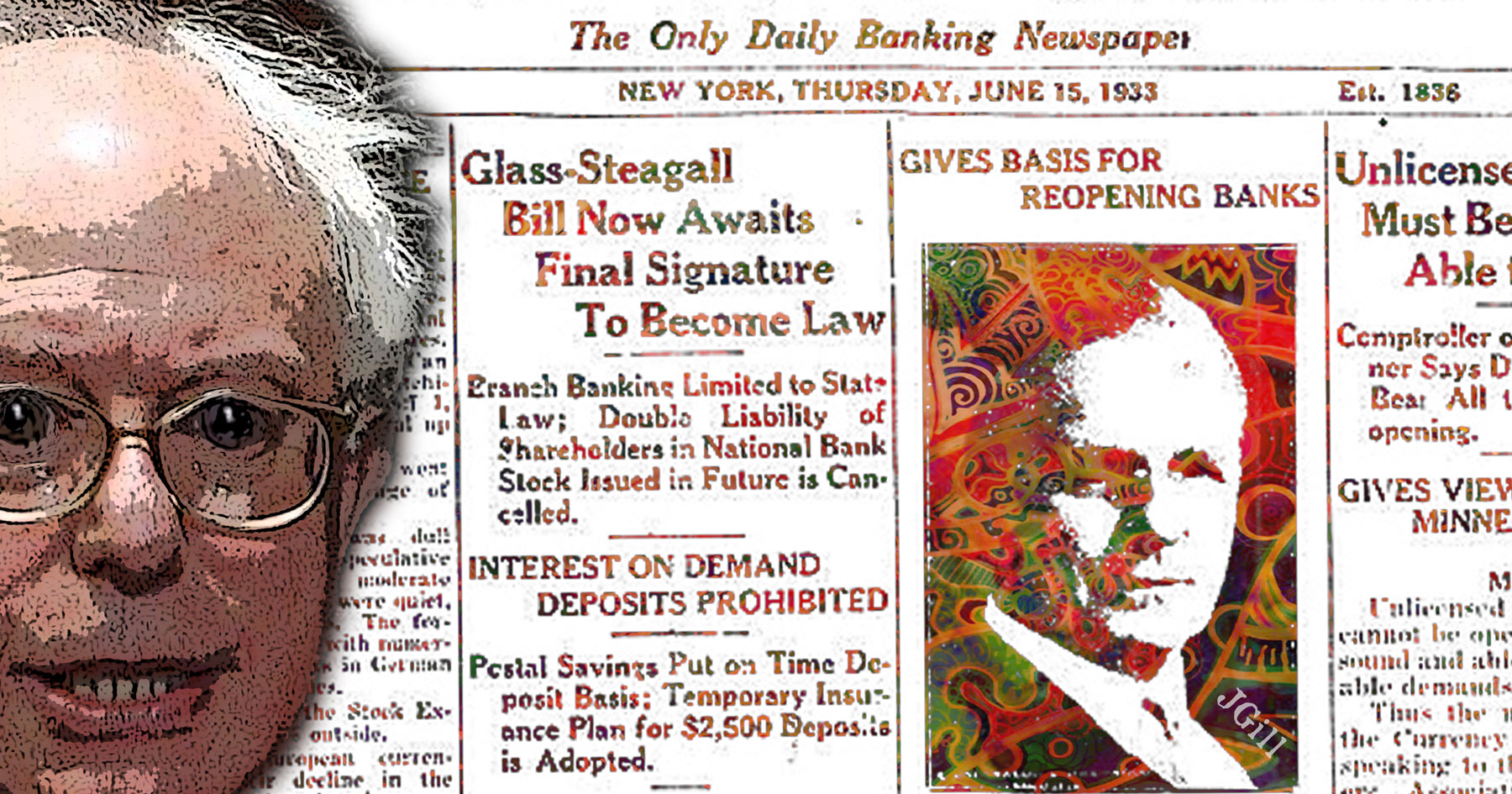
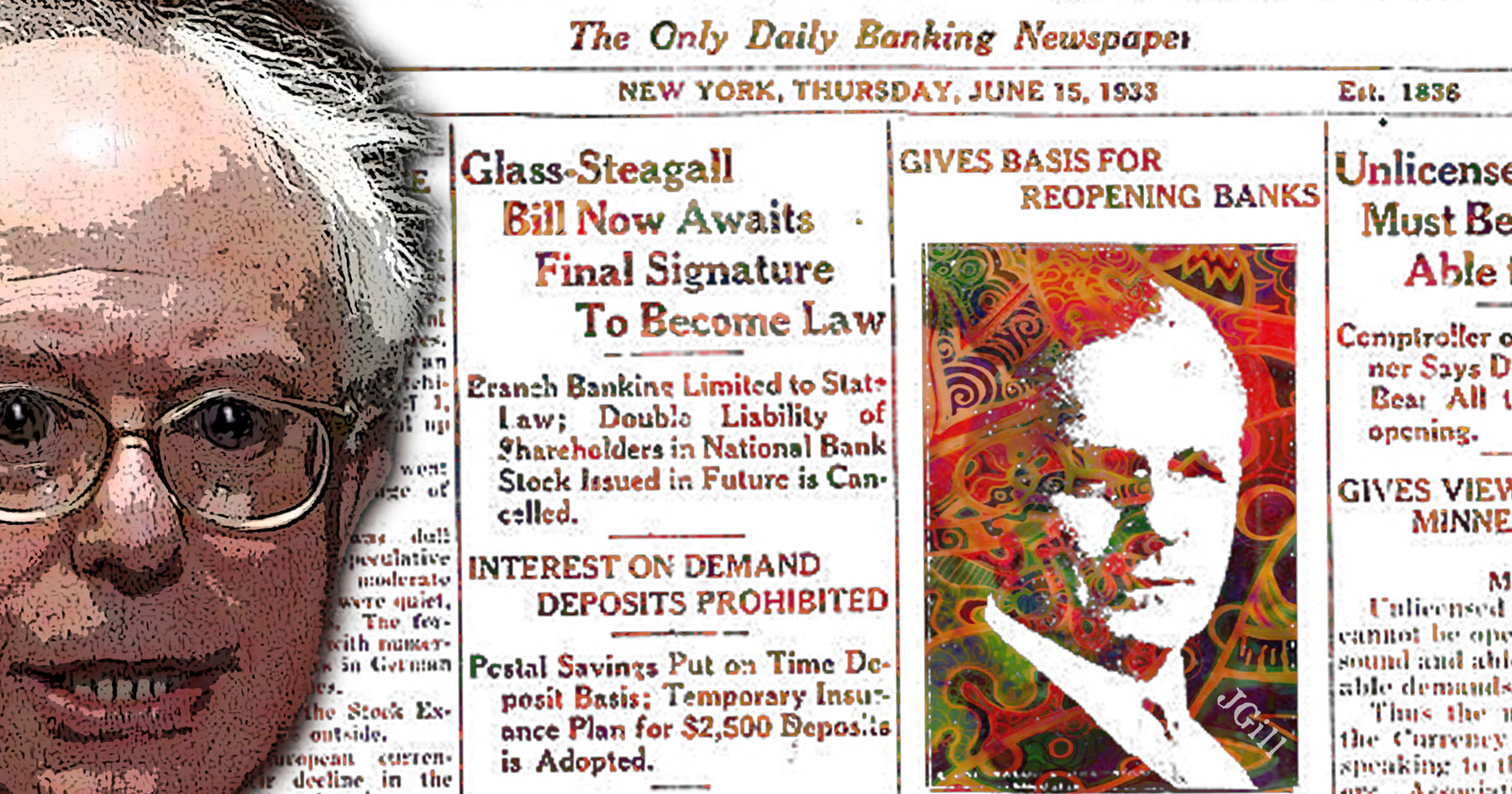
And even when he’s obviously wrong, he’s a breath of fresh atmosphere. Take his recent call for turning the credit ratings institutions into non-profits, or into government-run bureaus. It’s good to hear someone on the left blame something other than the partial repeal of Glass-Steagall as the cause of the Crash of 2008, and (thus?) of the current “Great Recession.” Glass-Steagall was utterly irrelevant to the institutions that were hit hardest in 2008’s collapse; it has, nevertheless, served as leftists’ idée fixe for years now. Embarrassing.

The ratings agencies, on the other hand, did play a part in the crash.

Still, remember: their prominence and importance (and very existence) in financial sectors rests entirely upon one provision of FDR’s New Deal.

More importantly, Bernie’s favored solution — government bureaus — is no solution at all. Europe’s ratings system failed in 2008, too, as Mark A. Calabria has noted, and “it was the international financial regulators, not the rating agencies, who decided that Greek debt was ‘risk-free.’”

Earth to Bernie: government regulatory failure is normal.

Calabria agrees that we need to have a political conversation about the ratings agencies, but insists it be “based on facts,” not ideology.

I’m all for the facts, but ideologies are inevitable. And ideologies promoting Big Government inevitably fail.

This is Common Sense. I’m Paul Jacob.


Printable PDF

Bernie Sanders, Glass Steagall, ratings, agency, Common Sense, illustration, Paul Jacob, James Gill


Categories
Accountability folly ideological culture moral hazard nannyism national politics & policies too much government

Bernie’s Bogus “Medicare for All”

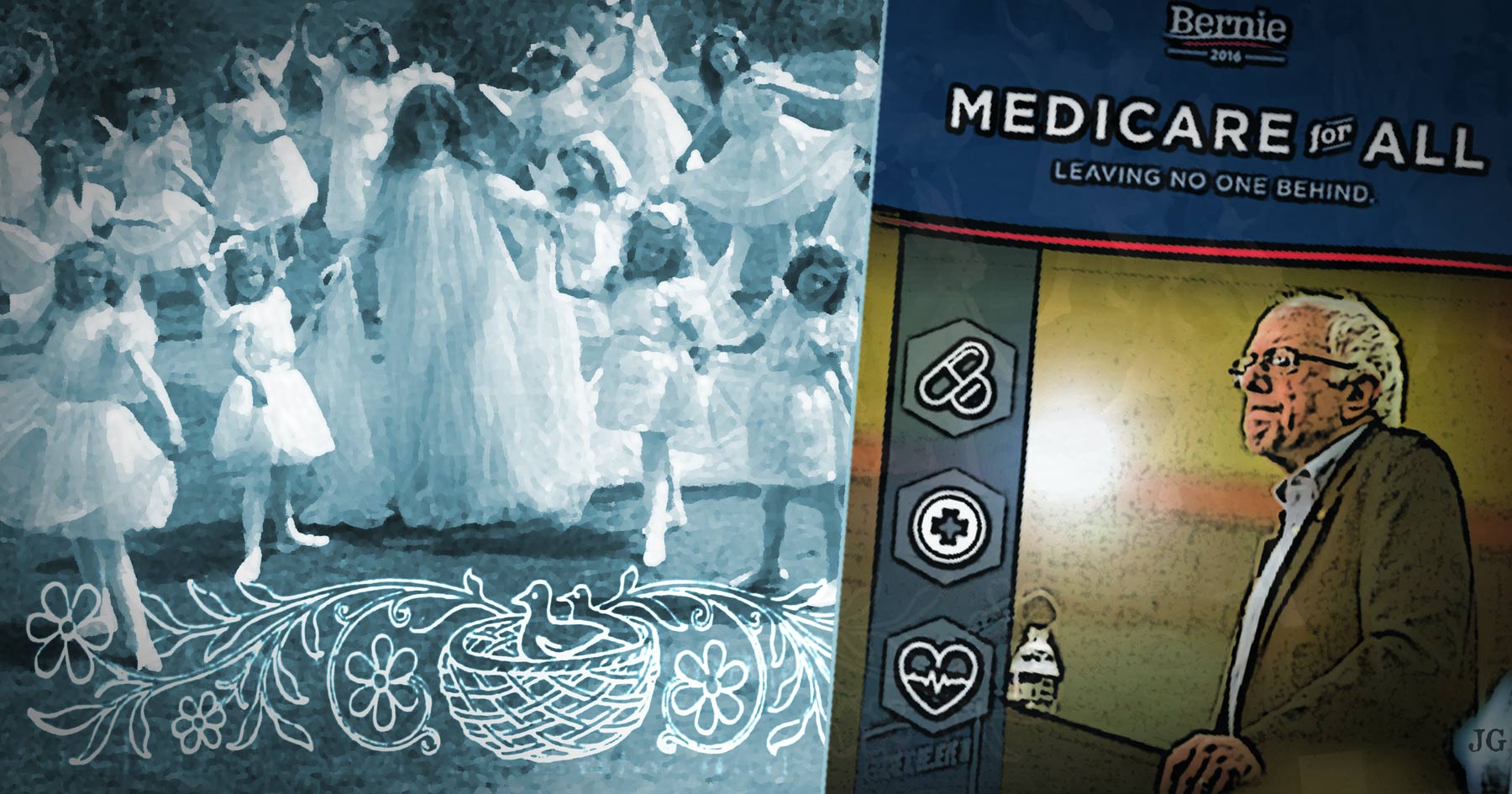
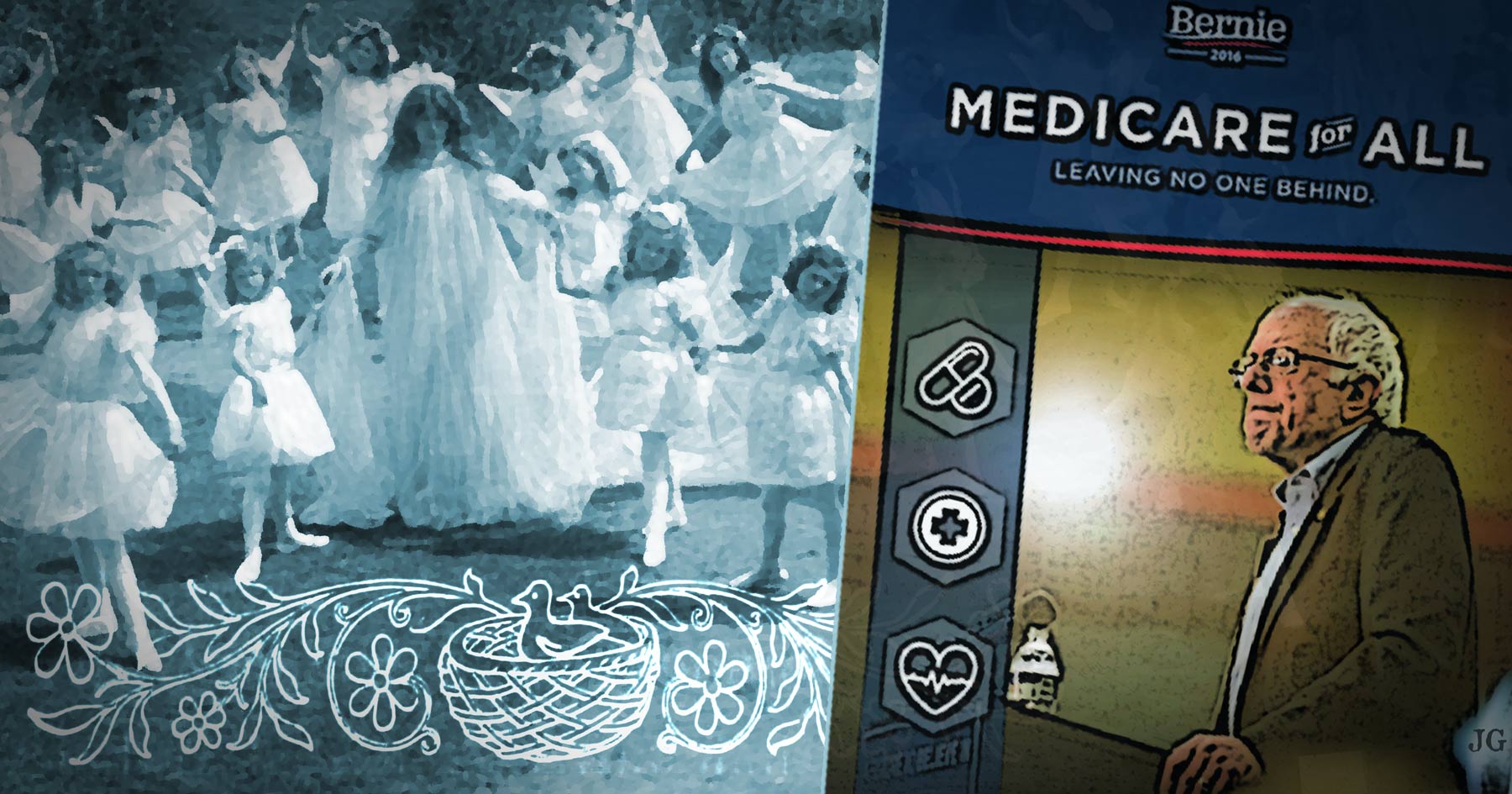
Bernie Sanders promises universal health care, but, up until the other day, just waved his hands in the air, without specifics. Now he has a plan.

Sort of.

Ezra Klein, writing at Vox, says Sanders’s “Medicare for All” is not a plan at all. It’s a “gesture towards a future plan.”

But that doesn’t mean that the thing isn’t “well sold.”

After praising the Obamacare/Affordable Health Care Act for giving “health insurance” to more than 17 million people, the preamble of Sanders’s proposal made its most predictable statement: “Twenty-nine million Americans today still do not have health insurance and millions more are underinsured and cannot afford the high copayments and deductibles charged by private health insurance companies that put profits before people.”

Forget that deductibles are integral to the very idea of insurance. Forget that profits are absolutely necessary for the success of an industry. Forget that profits come from serving people.

Remember, instead, the leftist clichés.

Sanders’s plan, such as it is, is a lie — or, in Klein’s phrasing, “has nothing to do with Medicare.” Sanders aims to get rid of deductibles and copays, on which Medicare depends. It’s what makes Medicare distinct from, say, socialized medicine.

Insurance covers individually unforeseeable but actuarially manageable risks. Socialized medicine gets rid of the idea of “payment for service” on every level — and thus the very idea of insurance — and turns the whole thing over into a tax-and-spend program, i.e., what Sanders really wants.

That won’t be cheap, as Megan McArdle demonstrated some time back during the Vermont “single payer” kerfuffle.

The only option for increasing value while lowering prices? Go the opposite direction from socialism.

This is Common Sense. I’m Paul Jacob.

Printable PDF

Medicare for All, Bernie Sanders, healthcare, analysis, bogus, Common Sense, illustration


Categories
Accountability general freedom moral hazard national politics & policies political challengers responsibility tax policy

Bankrupt Leadership

Sen. Rand Paul wasn’t the only thing absent from the GOP presidential stage last Thursday.

Also missing? Any meaningful talk about reducing federal spending and avoiding a sovereign debt crisis. The debt looms over all our heads. But you wouldn’t know it to listen to the GOP hopefuls. (And the same nearly goes without saying for the Democratic Party’s debt-denying presidential aspirants.)

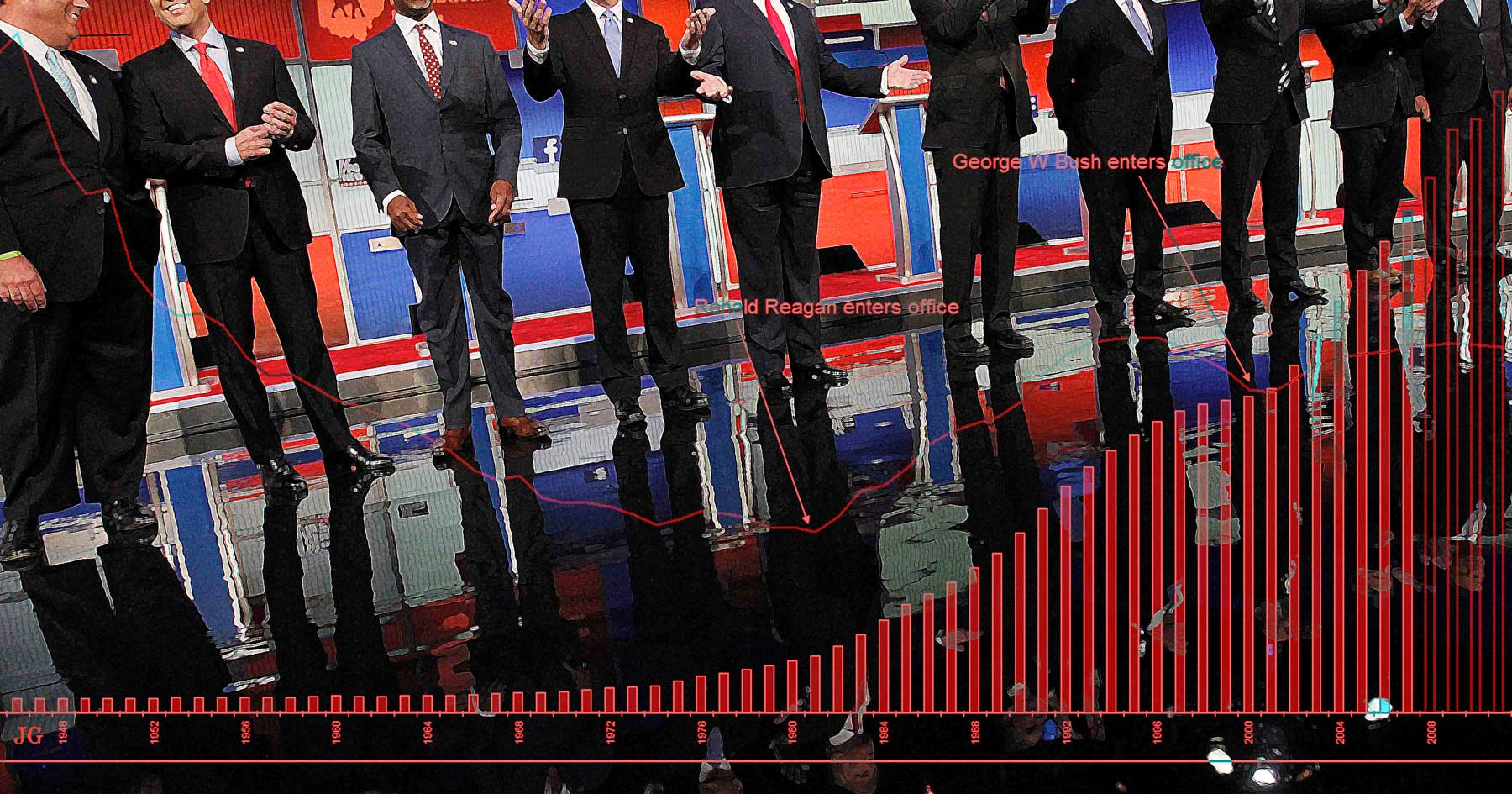
Way back when the Bush Administration had lost America’s confidence, deficits and debts were a common concern. Much of the disgust that birthed the Tea Party movement was disgust at Republican over-spending, as well as at the bailouts that spurred the initial protests. And then came Obama, Obamacare, and a 70 percent increase in federal debt.

Why the silence now?

Nick Gillespie, of Reason, figures that Republicans don’t really care about deficits and debts.

Andrew Flowers, of FiveThirtyEightPolitics, wonders whether the GOP has abandoned the issue because Republicans don’t want to face the fact that Obama has, indeed, reduced deficits — though definitely not the debt, which has nearly doubled.

Alternative theory? Republicans have given up hope, because the last two Democratic presidents, Bill Clinton and Barack Obama, have successfully threatened government shutdown over even the itty bittiest spending cut, safe in the knowledge that the mainstream media’s full spin-cycle will be blaming conservatives.

This has made it easier for Big Government Republicans to embrace greater military funding and other spending programs, as Gillespie notes.

But real leadership recognizes the present danger of debt.

This is Common Sense. I’m Paul Jacob.

Printable PDF

national debt, debt, deficit, debate, Republican, Democrat, Tea Party, CommonSense