Categories
deficits and debt folly national politics & policies responsibility

Biden Blames Business

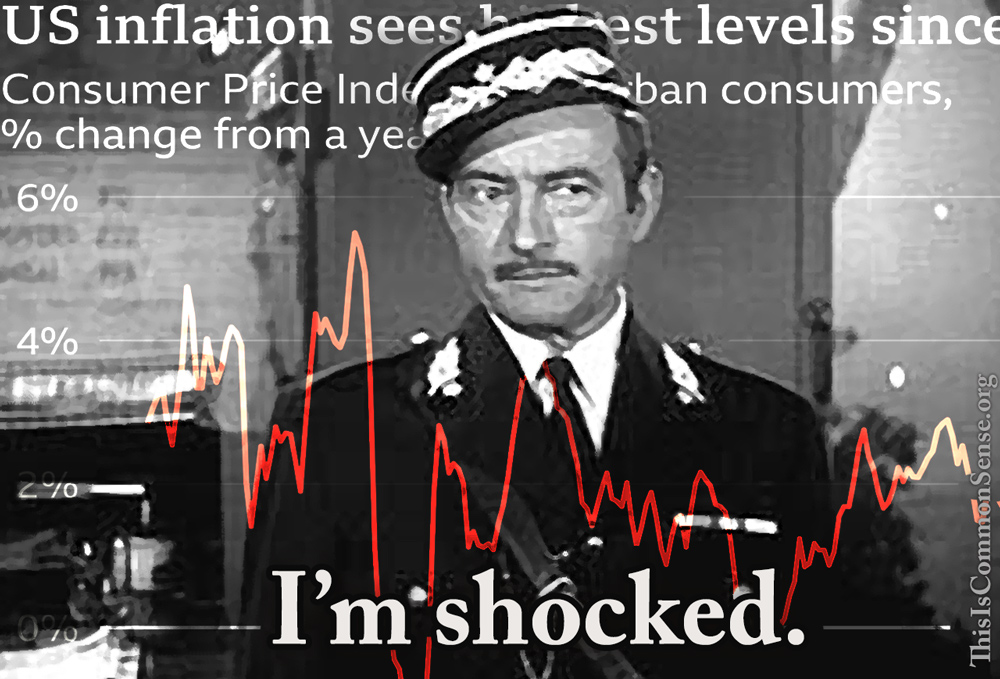
Inflation’s up, and President Joseph Robinette Biden, Jr., thinks he knows why.

Economist Bruce Yandle, famed for his “Bootleggers and Baptists” theory of regulation, reports in Reason that the aging president blamed “the country’s three largest meatpackers” for contributing to July’s CPI rate of 5.4 percent, and the fuel industry for its part in August’s 5.3 percent annualized rate. 

Profiteering!

I’ve always wondered how anyone can get away with this tired old accusation. Businesspeople aim to profit at all times and in every place. Profit is why they go into business. Are they making too much inflation-adjusted profit during an inflationary period but not when inflation is low? Seems unlikely.

But Biden’s looking into it! “There’s lots of evidence that gas prices should be going down,” the prez claimed, “but they haven’t.”

What evidence? Biden presented none. 

After throwing so much money into the economy to “stimulate” it after the big hit commerce has taken from state-perpetrated lockdowns, what could we expect but rising prices? “Inflation is always and everywhere,” a great economist has said, “a monetary phenomenon.”

Bruce Yandle is on that same page. Referring to Mr. Biden’s bizarre blame game, Yandle suggested that maybe — just maybe — Biden “should look inside the halls of the West Wing.”

Specifically at all the spending, like the current “$3.5 trillion spending package.” The puppet masters pulling Biden’s strings must, Yandle asserts, “be aware that calling for more spending to calm inflation is like pouring gasoline on an already smoldering fire.”

The real problem is “too much printing-press money” backing deficit spending.

Blaming excess profits? A distraction.

A big lie.

This is Common Sense. I’m Paul Jacob.


PDF for printing

See all recent commentary
(simplified and organized)
See recent popular posts
Categories
national politics & policies responsibility

The Accelerators

“We can do $10 trillion,” declared Rep. Alexandria Ocasio-Cortez (D-NY) last week.

“I know that may be an eye-popping figure for some people,” explained the photogenic pop-eyed pol, “but we need to understand that we are in a devastating economic moment, millions of people in the Unites States are unemployed, we have a truly crippled health-care system and a planetary crisis on our hands, and we’re the wealthiest nation in the history of the world.”

In other words, the sky is falling . . . and we still have checks.

The Bronx congresswoman, described as “one of the most influential members” by MSNBC’s Rachel Maddow, trumpeted that tidy sum in response to last week’s “go big” proposal by President Joe Biden to spend a special new $2.2 trillion under the loose label of infrastructure, which AOC argued “is not nearly enough.”

This new two-tril spending bill is “a follow-up to the $1.9 trillion stimulus approved in March.” And just Part 1 of a two-package infrastructure and other stuff Biden plan. 

“The White House is reportedly willing to spend $4 trillion across the two packages,” Business Insider reports, “a sum that would bring recovery spending under his term to nearly $6 trillion.”

Biden’s term has been only 76 days.

A couple trillion here, a couple trillion there and pretty soon you’re talking real money . . . except under Modern Monetary Theory, which Ocasio-Cortez embraces. The idea being: government can print as much money as politicians want to spend

While this road to bankruptcy has been paved with the partisan political intentions of big spending politicians of both major parties, right now it is the Democrats hitting the gas.

This is Common Sense. I’m Paul Jacob.


PDF for printing

See all recent commentary
(simplified and organized)
See recent popular posts
Categories
Accountability folly free trade & free markets general freedom moral hazard property rights responsibility too much government

Poison Is Poisonous

Venezuela’s socialist economy has been collapsing.

No big mystery. If, out of hostility to capitalism, a society keeps destroying everything that production, trade, and prosperity depend upon, the economy suffers. The benefits of markets don’t flow no matter what.

One assault has taken the form of hyperinflation — runaway printing of currency, done in part to dissolve government debt. Many Venezuelans are resorting to barter. It’s easy to understand why.

Or is it? A Reuters reporter says that economists say that “the central bank [of Venezuela] has not printed bills fast enough to keep up with inflation, which . . . reached an annual rate of almost 25,000 percent in May.”

So go faster!?

Dude. Dude. The massive expansion of Venezuela’s money supply is what’s causing massive jumps in prices. Just like any other economic good, the medium of exchange is subject to the laws of supply and demand.

Other things being equal, enormously increasing a supply of a good will enormously lower its market value or price. Money, too, has a price — in terms of the non-monetary goods being bought. If the pre-hyperinflation price of a dollar in terms of bread is one loaf and the post-hyperinflation price is one bread crumb, you won’t reverse the decline by printing even more dollars or bolívars even faster.

If you’re ingesting poison, you can’t fight the effects by being poisoned more and harder. The very first thing to do is stop ingesting the poison.

This is Common Sense. I’m Paul Jacob.


PDF for printing


Categories
Accountability folly ideological culture nannyism responsibility

Venezuela’s New Firing Squad

We’ve watched Venezuela’s big-daddy socialism descend into dystopia:

  • Arbitrary arrests of political opponents;
  • An economy managed by government decree, in which inflation “may top 700 percent this year” and toilet paper, food and medicine are in terribly short supply;
  • The once oil-rich country has become “the worst performing economy in the world,” with hundreds of thousands of Venezuelans clogging border crossings with Colombia;
  • Meanwhile government workers “enjoy” a two-day work-week to save electricity, avoiding the wasted hours caused by daily blackouts;
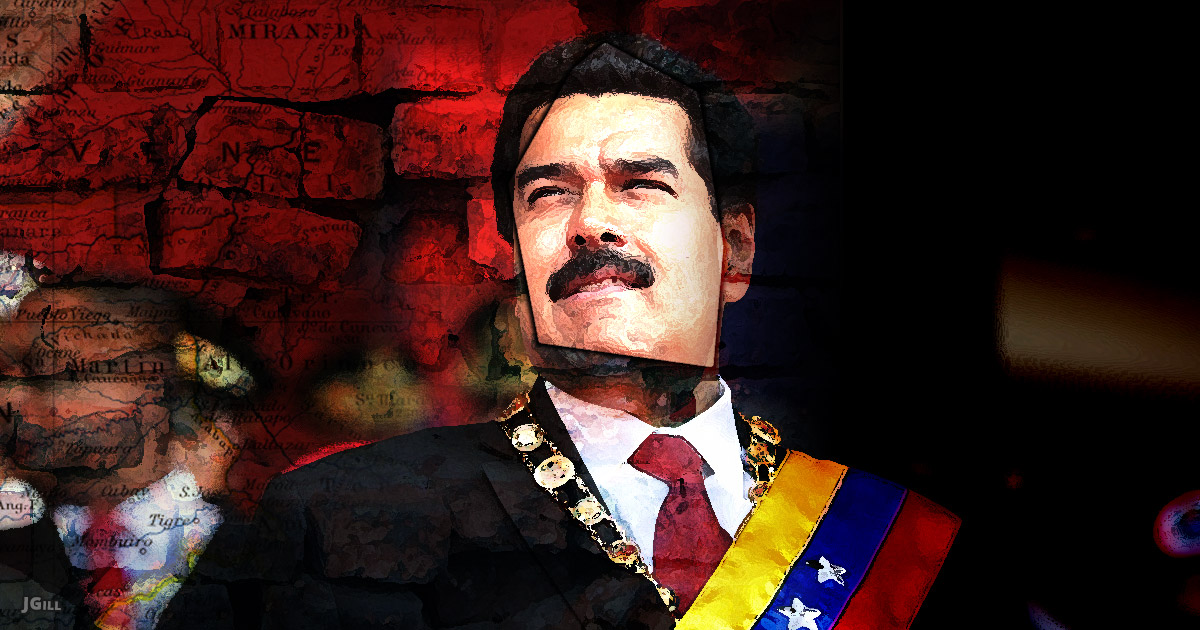
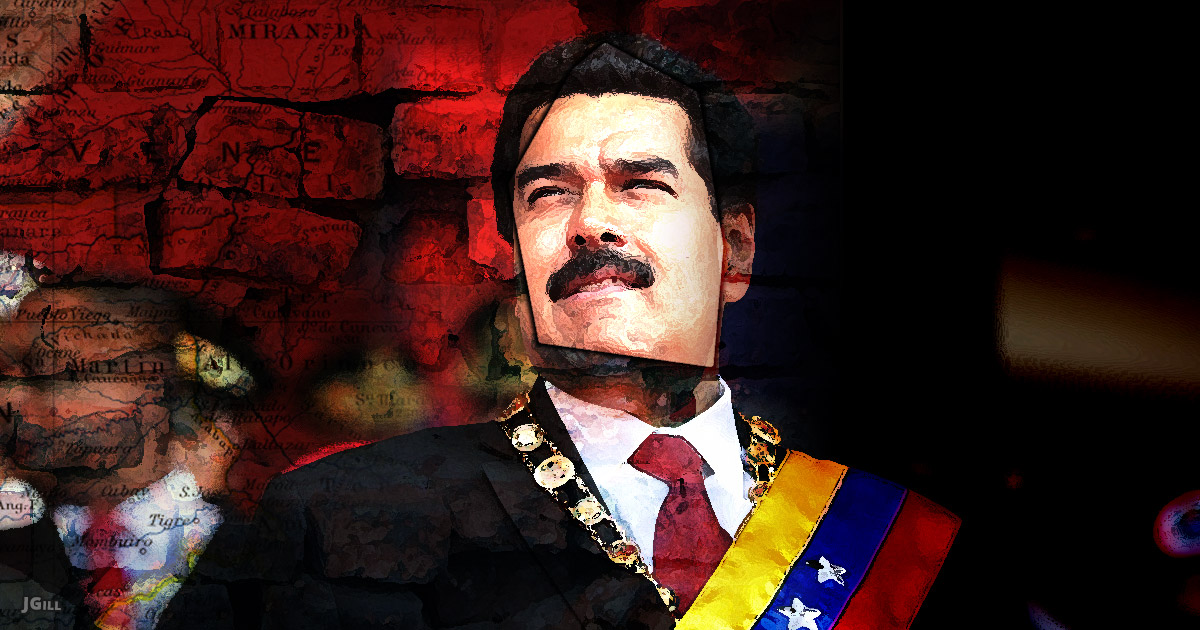
  • And President Maduro has decreed that citizens can be conscripted — drafted into service — for 60 days, forced to pick crops.

“Venezuela brings back fedual [sic] serfdom to try to alleviate food shortages,” read one online headline. (Don’t laugh, that may be how we spell “feudal” someday.)

Still believing in magic . . . “Maduro ordered a 50 percent increase in the minimum wage last month,” informed the National Post, “but the latest studies show that salaries still fall far short of the amount needed to obtain basic household goods and food.”

Socialism has failed, again, and in doing so demonstrates something more than economic shortcomings. As the late President Ford warned, “A government big enough to give you everything you want is a government big enough to take everything you have.”

The Venezuelan people have the right to recall the president enshrined in their constitution, a particularly popular right at present . . . but the Maduro dictatorship refuses to take prompt, lawful action to facilitate the recall.

Not to mention unjustly arresting citizens circulating the recall petition or telling high government ministers to fire any government worker who signs.

So much for the socialist revolution . . . now tyrannically blocking a real revolution.

This is Common Sense. I’m Paul Jacob.     


Printable PDF

Maduro, Venezuela, socialism, collapse, illustration


Categories
folly nannyism national politics & policies

Doom Fails to Arrive on Schedule

Doom is not always bad. I’d appreciate the doom of nonsensical doomsaying, for instance. . . although I doubt that that glorious day will dawn anytime soon.

Equally unlikely is an apology from ABC and Chris Cuomo for pitching, back in 2008, a muddled ABC special, “Earth 2100,” about all the disasters expected to arrive by 2015, among other years.

The idea? Forecast the harm inflicted by allegedly man-made global warming and collateral calamities, via the scientific methodology of being safely vague or just making stuff up. One way the network secured data was to ask viewers to pretend they’re in the future and then “report back.” (Well, it was 2008, a more primitive era. They did things like this back then.)

Here’s a sample of what ABC purveyed as possibly impending:

  • “Temperatures have hit dangerous levels.” (Time for air conditioning and/or heat!)
  • “We’ve got more people, less and less resources. That’s a recipe for disaster.” (Let markets be fully unfettered so we can be sure to get more and more instead!)
  • “It’s June 8, 2015. One carton of milk is $12.99.” (Unless that’s a big carton, no. Try $3 or $4 a gallon.)
  • “We’re going to see more floods, more droughts, more wildfires.” (Good work, Nostradamus!)

We still get storms. (Always had ’em; always will.) And inflationary Fed policy and other bad governance still swirl on the horizon. So let’s have shelter, fire departments, umbrellas, and market-friendlier policies; and let’s not reside on hurricane-prone beaches.

Thanks for the heads-up, Chris.

This is Common Sense. I’m Paul Jacob.


Printable PDF

DOOM


Categories
free trade & free markets ideological culture too much government

Their Solution Is Our Problem

J.D. Tuccille at Reason took on journalist Matthew Yglesias’s vox.com video that I wrote about yesterday, focusing on Yglesias’s pooh-poohing of the sheer size of the national debt. Tuccille noted that Yglesias under-reported its humungosity, and that the Congressional Budget Office finds, counter to Pollyanna-liberals, no small reason to worry about the ballooning debt.

But I’m still shaking my head that Yglesias really did argue the federal debt is no problem, because — get this! —  the Fed can always just print more money. 

We know! What he sees as a solution we see as a problem.

The modish government-as-savior view of society seems pure simplicity: major inputs and outputs — money supply, fiscal spending, debt, inflation — all of which liberal-progressives will “expertly” adjust.

Fed this, no wonder people ask questions like “why haven’t we seen inflation, following the huge influxes of quantitative easing?” Well, it is not just about consumer prices, but investment prices, too, which we have long known to be more volatile than consumer goods; investments can easily suck up new money to create an unstable boom, which bursts.

The biggest problem for today’s market recovery — aside from subsidies and wage controls and all the folderol that directly discourage new jobs — is federal government irresponsibility itself (symbolized neatly by the federal debt) which signals to investors and other market participants that they cannot make viable long-term plans.

Economist Robert Higgs called this effect “regime uncertainty.” It’s the uncertainty bred by bad policy.

Just the kind Yglesias and his comrades adore.

Fiddle with the economy’s dials, oh wise ones, and uncertainty seems a certain result.

This is Common Sense. I’m Paul Jacob.

Categories
free trade & free markets ideological culture too much government

Not a Problem?

Increasing public debt is bad for a number of reasons. Journalist Matthew Yglesias, speaking on vox.com, gives voice to a very different, very Pollyannish perspective: “Debt is just not a problem right now,” he says.

Why?

“The U.S. can never run out of dollars.” After all, the Fed can just print more.

That’s not an uncommon view where I live, near the center of privilege, Washington, D.C.

The video starts with an instruction: “Stop freaking out about the debt.” It sports nifty, simple graphics and comforting music. Matt Yglesias sounds convinced himself.

Nothing he says convinces me. But I’ll concentrate just on the frank inflationism.

Yglesias mentions inflation. But it’s obvious he means CPI numbers, even though he offers the short-hand “too much money chasing a fixed amount of stuff” definition to stand in for the “supply of money increasing faster than the demand for money” definition that I hear from competent economists.

But while he admits that price inflation can be a problem, what he is promoting is inflationism. That’s the doctrine that central bank fiddling with increases in the rate of money growth is the way to control the economy. And that it’s costless.

Like money cranks of the old days, he only sees the costs of not inflating the credit system.

It never enters into his ideologically-driven thoughts that maybe artificially lowering interest rates fakes out investors and consumers, getting them to make bad investments that destabilize relative prices that, when they unravel, wreak havoc.

Inflationists are folks who are always trapped by the cure they prescribe. We’re left with boom-bust forever and ever.

This is Common Sense. I’m Paul Jacob.

Categories
free trade & free markets too much government

Banning Consequences

When bad government policies create problems, government officials often pretend that the causes are unrelated to the effects. Instead they enact further bad policies. They may even seek to outlaw the effects, as if prohibiting puddles could stop the rain.

Suppose a government greatly expands the money supply, which leads to a general rise in prices obvious enough to cause people to complain about sticker shock. Governments may try to “solve” the problem with slogans and price controls.

In Argentina, which is lurching toward 30 percent inflation, they’re skipping the Whip Inflation Now buttons and going straight to the price controls. The government has temporarily frozen prices in the largest supermarkets. The two-month freeze is the result of an “agreement” between the trade group representing big stores and the Argentine government.

Now what happens?

Well, customers will race to the big stores, but small stores won’t lose business except in the short run. As the inflated demand outstrips a deflating stock of goods, the big stores and their suppliers won’t see much point in replacing goods that they can sell only unprofitably or at a loss. If they do replace the sold-off stock, they’ll likely do so with shoddier stuff in smaller packages.

Monetary inflation imposes hardship; price controls worsen the hardship. By the same logic, you help somebody whose leg you just broke by smashing his other leg too. You may think that this procedure would restore health, but actually—no.

This is Common Sense. I’m Paul Jacob.

Note on the illustration: The French assignat was an early instance of paper money inflation in Europe.

Categories
education and schooling free trade & free markets too much government

Harvard Shrugs

Wait for it: There’s another financial bubble ready to pop.

I’m not an economist, so I could be as wrong as, uh, a Keynesian strung out on (and pushing) “economic stimulus.” But the usual signs of an over-priced market sure seem to apply to higher education, today. After all, colleges and universities are sustained and over-fed by massive debt . . . in this case, government-guaranteed student loans, now passing the trillion-dollar mark.Harvard Shrugs

From your local community college to the Ivy League, the whole industry reeks of insider advantages, constricted supply and inflated demand. So of course prices rise.

Beyond all reason.

The latest sign on the way to the bubble’s bursting comes from Harvard. That august institution’s Faculty Advisory Council for the Library issued a memorandum last week declaring that the cost of subscribing to peer-reviewed journals has become too great to bear. Robert T. Gonzaleaz, writing at io9, puts this news in perspective:

What does it say about the world of academic publishing, the accessibility of knowledge, and the flow of information when the richest academic institution on the planet cannot afford to continue paying for its peer-reviewed journal subscriptions?

When I look at the prices of textbooks and journals and academic books, I wince. Were this industry marked by laissez-faire policies and free markets, the typical leftist “anti-greed/anti-business” attitude might make sense. But this is an industry riddled with government intrusion, as far-reaching as the intrusions into housing and banking that led to 2008’s financial debacle.

How could the over-sold, over-subsidized, over-controlled college-university industry remain immune to a similar catastrophic deflation?

This is Common Sense. I’m Paul Jacob.

Categories
free trade & free markets national politics & policies too much government

Ups and Downs

Inflationism is the ideology of increasing the money supply to spur economic activity and “growth.” In the 19th century, economists were generally against it, though certain “innovators” (cranks) thought that increasing the supply of money would “increase aggregate demand” with no bad repercussions. “Cross of gold” kind of nonsense; “free silver” idiocy.

In the 20th century, alas, inflationism went mainstream.

Today, a few respectable economists — high-profilers like the New York Times’s Paul Krugman and U.C. Berkeley’s Brad DeLong, for example — embrace inflationism. Occasionally their arguments sound sophisticated, but all are just warmed-over rehashes of very old errors.

It’s the economic equivalent of the “perpetual motion machine”: the eternal quest to get something for nothing, progress on the cheap. It inevitably fails — but only after fooling people by “working” for a while.

Reason’s Tim Cavanaugh, discussing declining housing prices, notes that “it’s becoming harder for the Fed, HUD, the Treasury Department and the National Association of Realtors to pretend the 25-year real estate inflation was anything but a $15 trillion rip-off.” He welcomes the deflation of housing prices. The idea that one’s house should increase in value by always increasing in price — that’s really just a recipe for social disaster. It endured as long as it did only “through government subsidized debt.”

Thank Congress; thank their Fannie and their Freddie; thank the inflationist Fed.

“Creating” money and loosening credit tends to nudge up prices . . . but not all prices equally. It signals people to over-invest in certain sectors, often real estate. This creates a sector boom . . . that then must “bust.”

The alternative? The honesty of sound money.

This is Common Sense. I’m Paul Jacob.