Categories
First Amendment rights

Campaign Finance Folly Foiled

The Institute for Free Speech and its clients, Connecticut State Senator Rob Sampson and former Connecticut State Senator Joe Markley, have won a long-​awaited judicial victory.

The Connecticut Supreme Court affirmed that it was okay for the senators to criticize the state’s governor at the time, Dannel Malloy, in a campaign mailer. The State Election Enforcement Commission had contended otherwise.

In 2014, Markley and Sampson had collaborated on a mailer to defend their anti-​big-​spending, anti-​big-​taxing views against those of the governor. According to the Commission, the mailer thereby violated the state’s campaign finance law. The reason: it benefited the governor’s political opponent. 

That opponent supposedly should have paid a third of the cost of the mailer.

By the agency’s anti-​speech reasoning, any statements in any campaign mailer that might somehow benefit some political candidate in the state — even a citation of the Declaration of Independence or a logic- (as opposed to fact-) check — would violate campaign finance law. 

Certainly, were the principles of logic widely disseminated in the state, this would pose a grave danger to a huge majority of candidates.

The SEEC fined Sampson and Markley. 

Now the state supreme court has ruled that doing so violated the First Amendment; “candidates must be able to communicate where they stand on issues in relation to other candidates and public officials.…”

Good. But couldn’t the judgment have come quicker? The same court issued an interim ruling back in 2021. The justices could have clobbered the SEEC’s lunatic presumption back then.

Freedom of speech delayed is freedom of speech denied. 

This is Common Sense. I’m Paul Jacob.


PDF for printing

Illustration created with PicFinder and Firefly

See all recent commentary
(simplified and organized)
See recent popular posts
Categories
crime and punishment First Amendment rights judiciary

States Without Standing

Friends of freedom of speech had been looking forward to a certain U.S. Supreme Court decision, Murthy v. Missouri.

The Biden administration has for years worked to suppress social-​media speech that disputes official government doctrines about biology, pandemic policy, elections, and other controversial matters. In short, the kind of speech the First Amendment was designed to protect.

Several suits have been launched against the federal government’s censorship. This one had been brought by Louisiana, Missouri, and other states, abundantly proving that administration officials actively pressed social-​media companies to suppress speech.

By a 6 – 3 vote, the court tossed lower-​court rulings that favor the states’ position. According to the decision’s coiled reasoning, the states lack legal right to sue. They lack standing.

Dissenting: Justices Alito, Gorsuch, Thomas.

The majority made a big point of ruling only on this question of “standing” — which none of us speakers of speech have, apparently — and not on the main question. We can hope, I guess, that some other case will someday be brought by plaintiffs whose rights the majority will concede have been infringed by the government’s infringing actions, which by their nature assault the right of freedom of speech of all Americans.

Meanwhile, in the words of Louisiana Attorney General Liz Murrill, the court’s decision “gives a free pass” to the government’s efforts to “threaten tech platforms into censorship and suppression of speech that is indisputably protected by the First Amendment.”

This isn’t a minor procedural setback.

This is Common Sense. I’m Paul Jacob.


PDF for printing

Illustration created with ChatGPT4o and Firefly 

See all recent commentary
(simplified and organized)
See recent popular posts

Categories
crime and punishment First Amendment rights

Assange: Freedom & Statuary

Julian Assange, the founder of Wikileaks, has been set free, time served. 

On Monday, presidential candidate Robert F. Kennedy, Jr., called him a “generational hero,” celebrating his release from a decade and a half in confinement, under threat of U.S. prosecution for publishing hacked documents.” 

Loathed by the American establishment, left and right, Mr. Assange had ruffled feathers of the war machine and then the Democratic Party — the latter for publishing the contents of Hillary Clinton’s infamous email stash. The attempt to get him to America from overseas was a complex (and failed) ordeal that pushed him first into confinement in an Ecuadorian embassy and then placed in a maximum-​security London prison.

Assange, who admitted guilt in a plea deal deal, did not agree to set foot on the American continent, so the court hearing took place in a U.S. District Court in Saipan on Tuesday.

“The bad news,” RFK, Jr., went on, “is that he had to plea guilty to conspiracy to obtain and disclose national defense info. Which means the US security state succeeded in criminalizing journalism and extending their jurisdiction globally to non-citizens.”

Empire’s gonna imperialize.

While Mike Pence, the 48th Vice President, fully objected to the plea deal, Representative Thomas Massie (R.-Ky) echoed Kennedy’s sentiments: “My plane landed in DC & I just heard Julian Assange will soon be free due to a deal. His liberation is great news, but it’s a travesty that he’s already spent so much time in jail. Obama, Trump, & Biden should have never pursued this prosecution. Pardon Snowden & Free Ross now.” 

Massie mentions two more persecuted individuals, leaker of unconstitutional NSA secrets, Edward Snowden (hiding from the American empire in Russia) and darknet (“Silk Road”) publisher Ross Ulbricht (a prisoner now in Tucson’s federal penitentiary, sentenced to two life terms).

In a follow-​up tweet, Kennedy offered “Next steps,” including erecting “a monument to Assange in Washington as a civics lesson for the American public about the importance of free speech,” pardoning Ed Snowden, and releasing Ross Ulbricht … “to show our commitment to transactional freedom.”

That latter commutation has been promised by former president and current Republican candidate Donald Trump. But “transactional freedom” is not exactly the byword of our age.

And statuary is hardly in vogue.

This is Common Sense. I’m Paul Jacob.


PDF for printing

Illustration created with PicFinder and Firefly

See all recent commentary
(simplified and organized)
See recent popular posts
Categories
crime and punishment First Amendment rights general freedom

Doxxing Dissent

California lawmaker Steve Padilla is apparently indifferent to the speech-​enabling virtues of anonymity. The state senator (18th District) has no problem violating the First Amendment rights of persons who conceal their identity the better to speak out.

Padilla is proposing legislation, SB1228, to compel social media companies to compel social media “influencers” who’d rather remain anonymous to identify themselves. A company that fails to comply would risk being penalized.

And I hear it often: why anonymity? Folks should own up to their speech!

But many people have good reasons for remaining anonymous when they publish their views. One is to protect themselves from harassment by private parties. Another is to protect themselves from harassment, or worse, by governments.

Tiffany Donnelly of the Institute for Free Speech observes that the United States has a long history of anonymous political speech.

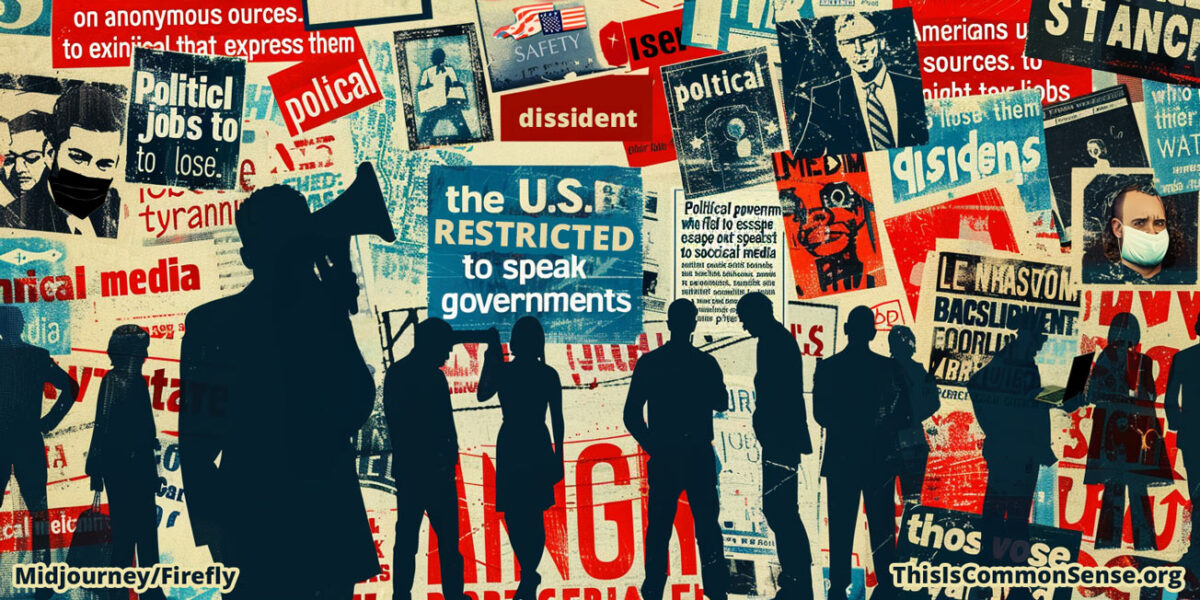
Investigative journalism “often relies on anonymous sources. Americans use social media to express political opinions that might cause them to lose their jobs. Political dissidents who fled to the U.S. to escape tyrannical governments use social media to speak out against those repressive regimes.”

Once social media companies collect the ID data, then what?

Perhaps the information is supposed to just sit in the companies’ computers. But once it becomes known that certain anonymous but controversial writers are being forced to supply personal information, this information becomes a target — for hackers, state governments hiring hackers, disgruntled moderators who may decide to “out” the commentators they dislike.

The bill won’t stop “misinformation,” but it will discourage discourse. 

Specifically, dissent.

It’s this bill that should be stopped.

This is Common Sense. I’m Paul Jacob.


PDF for printing

Illustration created with Midjourney and Firefly

See all recent commentary
(simplified and organized)
See recent popular posts

Categories
crime and punishment First Amendment rights judiciary

Most Important Time Periods

The attorneys general of a few states, a few activist groups, and a few congressmen have acted to bring to light a mass of eyewitness and documentary evidence that the federal government has been working hard, behind the scenes, to censor our speech.

The guilty parties have been caught red-handed.

Now that the matter is before the U.S. Supreme Court, reports on oral arguments suggest that not every justice is as acquainted with the point of the Bill of Rights as we’d like.

Its function is to stop government from doing various rights-​violating things at will. But Justice Ketanji says: “Your view has the First Amendment hamstringing the government in significant ways in most important time periods.”

Justice Kagan, chiming in: “I’m really worried about that.”

Tyrants worry about having too little flexibility to stomp our speech “in most important time periods,” prevention of which stomping is the very purpose of the First Amendment.

We, for our part, worry about having our speech stomped.

Some of the justices also seem not to grasp that when government officials contact you and ask you to do this and that, no overt threats are necessary for officials to rely on the threat of governmental power.

The bossing is not always subtle, though. Perusing the evidence, Justice Alito says he couldn’t imagine officials “taking that approach to the print media.” The federal speech police treat “Facebook and these other platforms like they’re subordinates.”

Are they?

This is Common Sense. I’m Paul Jacob.


PDF for printing

Illustration created with Firefly

See all recent commentary
(simplified and organized)
See recent popular posts

Categories
crime and punishment First Amendment rights general freedom

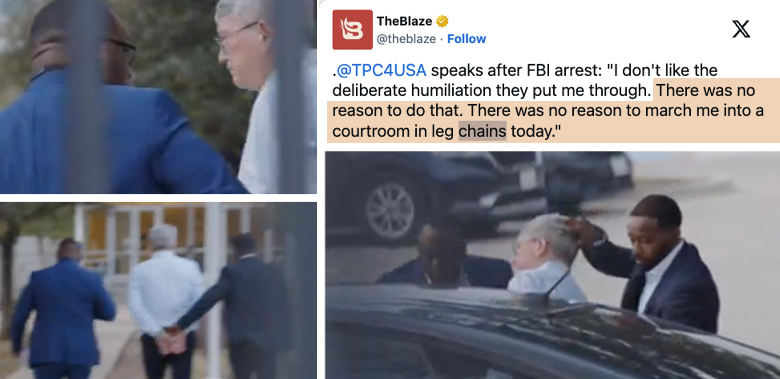
Did Steve Baker Commit Journalism?

The safest thing to do — politically, anyway — is plant yourself in a corner and sit still. But people tend to want to move around, live, do their jobs.

Steve Baker, reporter for Blaze Media, recently was forced to “self-​surrender” to federal authorities for committing initially unspecified crimes.

Was doing his job the crime? 

His fed-​embarrassing journalism about the January 6 “insurrection” and the way many people have been incarcerated for years for little more than trespassing — was that the crime?

As video of the not-​always- innocuous but often-​innocuous goings-​on of January 6 has been released, Baker has been among those examining the record and noting apparent contradictions in the official story.

When he turned himself in to the FBI last Friday, he was facing charges that the FBI had flatly refused to divulge. But now the Blaze reports that, three years after January 6 “insurrection,” Baker is being charged for things like “entering [restricted areas] without lawful authority” or “parading … in a capitol building.”

Trespassing. Arrested for trespassing three years later? 

Or arrested for his reporting on the events of January 6 and its sequels over the course of those three years?

Before Baker turned himself in, the FBI did give him the information that he should arrive in shorts and flip-​flops. So that, Glenn Beck writes, “it would be easier for them to put on the orange jumpsuit and ankle irons. Suffice it to say, he wore a suit and tie.”

This is Common Sense. I’m Paul Jacob.


PDF for printing

See all recent commentary
(simplified and organized)
See recent popular posts

Categories
education and schooling First Amendment rights

Hope for Campus Free Speech

The Understatement of the Month Award goes to David Lat, who says in a recent post that “when it comes to free speech and intellectual diversity, U.S. law schools continue to face challenges.”

One Big Challenge, more like: the contempt university policymakers routinely show for the speech of members of disfavored groups, if and when they say things that members of favored groups dislike.

Lat points to a decision, last month, by the Law School State Senate of Columbia Law School. The organization denied official recognition to a group formed to combat antisemitism, Law Students Against Antisemitism.

Reason: some pro-​Palestinian students objected to LSAA’s definition of “antisemitism.”

The objection is cause for debate, sure, but not for preventing an organization from formally operating. Fortunately, after much attention was paid to the Senate’s decision by the Foundation for Individual Rights and Expression (FIRE) and others, the Senate reversed itself.

In addition to bad publicity, one thing that may help improve prospects for free speech on campus is a new rule issued by the American Bar Association, Standard 208.

Standard 208 requires law schools that want to be accredited by the ABA to “protect the rights of faculty, students, and staff to communicate ideas that may be controversial or unpopular.” This requirement is more encompassing than existing (if often ignored) protections of academic freedom for faculty members.

The ABA’s action is a big step, but not sufficient, Lat says. The cultures of our schools must change too.

This is Common Sense. I’m Paul Jacob.


PDF for printing

Illustration created with PicFinder and Firefly

See all recent commentary
(simplified and organized)
See recent popular posts
Categories
First Amendment rights general freedom ideological culture

GOP, ACLU, and NRA Together Again

Occasionally, the stars align and adversaries become allies.

So it is that dozens of Republican congressmen have filed an amicus brief to support an NRA lawsuit against Maria Vullo, a former New York State regulator of the financial services industry. And so it is that the NRA will be represented before the Supreme Court by the American Civil Liberties Union.

After the 2018 Parkland shooting, Vullo pressured financial service companies to boycott organizations like the National Rifle Association that advocate Second Amendment rights.

The NRA sued, contending that Vullo had acted against their First Amendment rights. When the Supreme Court agreed to take their case, the NRA thought: who better to represent us before the justices than the ACLU?

The ACLU, which has not always been consistent in defending free speech, agreed.

Its national legal director, David Cole, says that “the ACLU has long stood for the proposition that we may disagree with what you say but will defend to the death your right to say it.”

Although this case is also about speech, more directly it is about using governmental force to try to stop people from conducting peaceful financial transactions.

If such intimidation of financial companies — or, what is being challenged in separate litigation, of social media companies — were allowed to stand, government would be fully unleashed to threaten market actors in order to prevent constitutionally protected actions and speech that officials dislike.

Our constitutional rights made meaningless.

This is Common Sense. I’m Paul Jacob.


PDF for printing

Illustration created with Midjourney and Firefly

See all recent commentary
(simplified and organized)
See recent popular posts

Categories
First Amendment rights Fourth Amendment rights media and media people national politics & policies political challengers

The Citizen Threat

“The Republicans,” said Tucker Carlson — speaking of elected Republicans — “who really do hate their own voters in a way that’s pathological, are just re-​upping the spy laws to allow the Biden Administration to spy on their voters.”

Mr. Carlson is not wrong, at least about Republican leaders aiding Democrats in spying on conservatives and others who sometimes vote GOP.

Yes, the federal government’s surveillance and criminal “justice” apparatus has been directed by Democrats — the Biden Administration specifically, and whoever runs that — to target, as The Enemy, conservatives and others associated with (or merely adjacent to) the Republican Party.

This cannot be dismissed as a conspiracy theory. Democratic thought leaders pushed this new anti-​terrorism paradigm from the first moments of the Biden Administration, in public

Or at least on MSNBC, where John Brennan clearly reconceived opposition to his Democratic Party as a movement looking “very similar to insurgency movements that we’ve seen overseas.” 

“Even libertarians,” he said, constituted “an insidious threat” to, not the Democratic Party, but “our Democracy.”

This perspectival shift, of seeing policy and political opposition as “insurgency,” is key to the new anti-​democratic mindset.

And very real. It could end our small‑r republican experiment.

Which brings us back to Republican politicians and their willingness to let Democrats institute a permanent pogrom against all who oppose Democrats’ big government programs.

Why do this? Out of hatred? Disdain? Fear?

Let’s not ignore the age-​old impulse of politicians to squelch the speech of opponents. The longer in office, the more these careerists tend to view their own constituents as threats. After all, anyone might freely offer a complaint that emboldens or comforts the opposition. This is a bipartisan principle.

Better an enforced silence about the dictates of Washington, sadly, if you are a Washingtonian delivering dictates.

This is Common Sense. I’m Paul Jacob.


PDF for printing

Illustration created with PicFinder and Firefly

See all recent commentary
(simplified and organized)
See recent popular posts
Categories
crime and punishment First Amendment rights judiciary

Court Halts Imprisonment for Speech

Left-​wing enemies of right-​wing freedom of speech, specifically the freedom of speech of Douglass Mackey, recently got their way when U.S. District Judge Ann Donnelly sentenced him to seven months in prison.

But now, a month after sentencing, another court has said wait a minute.

As I reported in October, Mackey was convicted for actions in 2016 that nobody could have known would later be treated as crimes. The FBI had arrested him shortly after Joe Biden became president in January 2021 — as if waiting for a favorable political climate for an obviously partisan action.

According to selectively prosecuting U.S. Attorney Breon Peace, Mackey threatened democracy and sought to “deprive people of their constitutional right to vote.”

What attempted deprivation of voting rights? Did Mackey lock people in their homes so that they could not go out to vote? Steal ballots? Glare and scream at people walking toward a voting site?

No, all that this obvious opponent of Hillary Clinton did was publish satirical posts telling Hillary voters to vote by text, much easier that way. Obnoxious, maybe; or silly. But the posts had no power to hypnotize or derange anyone or, for that matter, prevent anyone from double-​checking with an election office or Google. And prosecutors brought in no voters who claimed to have been fooled by the obvious jest — which arguably was satire, a jape upon Mackey’s political opponents.

There’s no there there. Nevertheless, Mackey’s liberty has been at risk at least since 2018, when his legal name behind his pseudonymous social media presence was revealed.

It’s still at risk. But the Second Circuit Court of Appeals has blocked Mackey’s seven-​month imprisonment until his appeal can be decided and the free-​speech issues properly adjudicated.

This is Common Sense. I’m Paul Jacob.


PDF for printing

Illustration created with PicFinder and Firefly

See all recent commentary
(simplified and organized)
See recent popular posts