Categories
Accountability folly free trade & free markets general freedom government transparency initiative, referendum, and recall moral hazard nannyism national politics & policies property rights

The Return of the Philosopher King

On Sunday, at Townhall, I addressed the whining attacks on referendums and “democracy” that followed the Brexit referendum.

The most outrageous? A broadside from Jason Brennan.

“To have even a rudimentary sense of the pros and cons of Brexit,” argues this Robert J. and Elizabeth Flanagan Family Associate Professor of Strategy, Economics, Ethics, and Public Policy at the McDonough School of Business at Georgetown University, “a person would need to possess tremendous social scientific knowledge. One would need to know about the economics and sociology of trade and immigration, the politics of centralized regulation, and the history of nationalist movements.”

In other words, most Brits needn’t worry their pretty little heads about deciding their future; experts have everything under control.

Brennan has a new book coming out, Against Democracy, wherein he posits that we need “a new system of government — epistocracy, the rule of the knowledgeable.”

Sound familiar? ’Tis the old Platonic whine in new wineskins.

This Philosopher King is necessary, you see, because citizens don’t posses the advanced degrees to judge whether Brennan is right or wrong. We can’t even find a Holiday Inn Express in the phonebook. Or a phonebook.

Nonetheless, why not consult other known knowers?

The late William F. Buckley, Jr., well-educated and well-spoken on political matters, once declared that he would “rather entrust the government of the United States to the first 400 people listed in the Boston telephone directory, than to the faculty of Harvard University.”

“Incestuous, homogeneous fiefdoms of self-proclaimed expertise are always rank-closing and mutually self-defending, above all else,” warned journalist Glenn Greenwald, an expert on such hooey.

“I know no safe depositary of the ultimate powers of the society but the people themselves,” wrote Thomas Jefferson, “and if we think them not enlightened enough to exercise their control with a wholesome discretion, the remedy is not to take it from them, but to inform their discretion by education.”

Most decisions in a free society are thankfully made by individuals (not voters, bureaucrats, or academics) about their own lives.

But when legitimate decisions of governance must be made, I’ll take democracy over rule by experts.

This is Common Sense. I’m Paul Jacob.


Printable PDF

technocracy, expert, epistocracy Brexit, illustration
Categories
free trade & free markets general freedom too much government

Hysteria, Assassination, and Big Government

The biggest political story of the month? Brexit.

The people of Great Britain will vote, this week, whether to remain in, or exit, the European Union. (Britain+exit=“Brexit,” you see.)

Establishment forces in Britain have engaged in hysterical, hyperbolic overkill, warning of grave disaster were Britain to leave the union. America’s President Barack Obama contributed to this, recently, when he warned that an independent Britain might find itself placed “at the back of the queue” in trade talks.

Tragically, things got more troubling last week when anti-Brexit, pro-union campaigner Jo Cox, a Member of Parliament and prominent Labour Party activist, was brutally slain last week in front of her local library. The man had just left a mental health facility, after requesting help.

At first, major media reported that the killer had shouted “Britain First,” an old patriotic motto as well as the name of a pro-Brexit political party, while shooting and stabbing her. Of the several eyewitnesses to have allegedly testified to this murderous shout, only one is sticking to the story . . . a member of the British Nationalist Party, which is antagonistic to Britain First. Other eyewitnesses deny the story.

Next, both sides promised to cease campaigning, out of good taste. Still, polls fluctuated, while remaining close.

Much of the furor has risen over immigration policy, especially fears about EU laxity towards Muslim refugees.

But the bedrock issue is Big Government. The EU is not effectively controlled by citizens; indeed, membership representation is mostly show, a mockery of republican government.

That is why, if I were British, I’d vote to Brexit.

This is Common Sense. I’m Paul Jacob.


Printable PDF

Brexit, EU, European Union, independence, democracy, illustration


Categories
Accountability folly incumbents meme national politics & policies term limits

Indicting Incumbency

How does that old, pithy anti-term limits slogan go, again? “We already have term limits, they’re called indictments!”

Wait . . . is that it?

Must be. This election year — the year of the outsider, the year of unbridled contempt for establishment, Washington, D. C., politicians — has seen only one incumbent congressman defeated by the voters.

Just one. It came late last month in the wake of a 29-count felony indictment charging Congressman Chaka Fattah (D-Pa.) with bribery, theft, bank and mail fraud, racketeering, and more.

In all the other congressional primary contests pitting incumbents against challengers across the country so far this year, a solid 100 percent were won by the incumbent — zero won by challengers.

Rep. Fattah, whose corruption trial began in federal court on Monday, has pled not guilty to all charges, proclaiming his innocence. “Chaka Fattah’s lifestyle is not on trial,” his defense attorney told jurors. “Philadelphia politics are not on trial. [Congressional] earmarks, donations, grants to nonprofits are not on trial.”

But Congressman Chaka Fattah certainly is.

The incumbent’s previous re-election had been a breeze — completely unopposed in the all-important Democratic Primary, and then garnering 88 percent of the vote against his sacrificial GOP challenger. That was in 2014, before the felony charges.

Following the indictment, the Washington Post reported that Fattah “found it difficult to raise money after the party establishment all but abandoned him.” So, even in this single instance, the FBI and the party establishment, more than voters, sent this 22-year incumbent packing.

I have a new slogan: “We don’t have term limits, and we need ’em!”

This is Common Sense. I’m Paul Jacob.


Printable PDF

term limits, indictments, democracy, elections, meme, Congressman Chaka Fattah, illustration


Common Sense Needs Your Help!

Please consider showing your appreciation by dropping something in our tip jar  (this link will take you to the Citizens in Charge donation page… and your contribution will go to the support of the Common Sense website). Maintaining this site takes time and money.

Your help in spreading the message of common sense and liberty is very much appreciated!


Categories
Accountability ballot access general freedom national politics & policies political challengers

Delegates Unbound

An article in Politico calls Curly Haugland a “rule-mongering crank,” a “gadfly,” “stubborn” (twice), a “pain in the ass,” and a “pedantic curmudgeon.”

And merely in the first paragraph!

Who is this Curly fellow, you ask? Haugland’s a successful small businessman in Bismarck, North Dakota, and a member of the Republican National Committee. He’s also a no-nonsense member of the party’s Rules Committee.

Long before Trump was an issue in the party (or even “in” the party), Mr. Haugland was urging Republican leaders to do something anathema to Washington-types: follow the rules.

“The rule says, specifically,” Curly told CNBC, “that it’s a vote of the delegates at the convention to determine if there’s a majority, not a primary vote. . . . The media has created a perception that the voters will decide the nomination. Political parties choose their nominee, not the general public.”

The entire electorate chooses the president, of course, but it seems fair enough that parties choose their own nominee. They might be wise to do it through primaries including the broader public or through state conventions reserved to party members or any number of ways. But however done, it should be by the rules.

And without taxpayer money.

Delegates have been free to vote their conscience throughout the history of the GOP, from just prior to the Civil War, when Lincoln gained the nomination at a contested 1860 convention, until today. It’s been a rule. The only exception was in 1976, when President Ford’s campaign worked to change the rule, binding delegates to block Ronald Reagan’s insurgent candidacy. Coincidentally, the leader of that ’76 effort was Paul Manafort, who today is running Trump’s convention effort.

Curly Haugland’s beef isn’t with Trump, but with the media and the RNC leadership, for not telling folks the truth.

No telling if GOP delegates will vote their conscience in Cleveland, but thank you, Mr. Haugland, for speaking truth to power. Republican delegates may be listening.

This is Common Sense. I’m Paul Jacob.

 

P.S. If you missed the first two commentaries in this series, here they are:
Fat Lady Score – It’s a time for choosing.
Listen to Whom? – People in political parties have rights, too.


Printable PDF

Curly Haugland, voting, Republican, democracy, Donald Trump, illustration


Common Sense Needs Your Help!

Please consider showing your appreciation by dropping something in our tip jar  (this link will take you to the Citizens in Charge donation page… and your contribution will go to the support of the Common Sense website). Maintaining this site takes time and money.

Your help in spreading the message of common sense and liberty is very much appreciated!


Categories
Accountability general freedom government transparency moral hazard national politics & policies political challengers responsibility

Big-Dollar Impact

Last Saturday, The Washington Post’s top-of-the-front-page headline blared, “50 donors with outside impact.”

If that doesn’t curdle your blood, readers were further warned of a new “Gilded Age.” Yes, in concentrated fundraising the Post heard “echoes of the end of the 19th century, when wealthy interests spent millions to help put former Ohio governor William McKinley in the White House.”

McKinley. The horror. The echoes.

Hopefully, self-immolations can be kept to a bare minimum as Americans discover the report’s main (only) thrust: 41 percent of $607 million contributed to 2,300 super PACs this election cycle has come from just 50 donors . . . at least, if you also aggregate gifts from the relatives of these 50 folks and their business interests as well.

Isn’t that terrifying? Destructive of democracy? Are our elections simply being bought by the billionaires?

No. No. And no.

Any common sense analysis of this year’s presidential contests, both Republican and Democrat, must acknowledge that big money did not trump. Pun intended. Sen. Bernie Sanders is now outraising Hillary Clinton with millions of small donations — not “millionaires and billionaires.” Jeb Bush’s massive financial warchest made no discernible difference.  Even the Post concedes “the mixed impact that big-money groups have had on the presidential contest so far.”

Mixed? Name a single state where “big spending” determined the outcome.

Ideas matter. And securing the resources to advance and advertise ideas obviously matters, too. Same goes for candidates — and their ideas.

More money, more campaign spending, means more ideas and candidacies can reach the political marketplace. That’s where voters, not big donors, do the deciding.

This is Common Sense. I’m Paul Jacob.


Printable PDF

campaign finance reform, contributions, Hillary Clinton, Bernie Sanders, corruption


Common Sense Needs Your Help!

Also, please consider showing your appreciation by dropping something in our tip jar  (this link will take you to the Citizens in Charge donation page… and your contribution will go to the support of the Common Sense website). Maintaining this site takes time and money.

Your help in spreading the message of common sense and liberty is very much appreciated!


Categories
Accountability ballot access folly ideological culture nannyism national politics & policies

The Anti-Democratic Party Establishment

Democrats aren’t very good at democracy.

Consider the party’s presidential contest, as I did yesterday at Townhall.

As an appetizer, I noted the Democratic National Committee policy of hiding their debates from viewers by placing them on weekend evenings pitted against major sporting events.

For meat and potatoes, ponder my warning of the very ugly scenario of Sen. Bernie Sanders capturing as much as 58 percent of the primary and caucus vote and resulting delegates, but still losing to Hillary Clinton.

How could that possibly happen?

Because of folks designated as “superdelegates” — those awarded voting delegate status for holding a party office or being an elected or former elected official.

Democrats brag that they’ve reduced these insiders’ impact. Democratically-unaccountable superdelegates once accounted for 30 percent of Democratic Party convention delegates; now it’s only 15 percent of the total. Still, Clinton leads Sanders 380 to eleven among superdelegates.

At that rate, she could lose the actual state elections and still win the party’s presidential nomination.

The Democrats’ dereliction of democratic duty doesn’t end there, either.

The process by which various powerful party “interests” endorsed either Sanders or Clinton is quite telling. Journalist Zaid Jilani reports in The Intercept that, “Every major union or progressive organization that let its members have a vote endorsed Bernie Sanders.”

“Meanwhile,” Jilani found, “all of Hillary Clinton’s major group endorsements come from organizations where the leaders decide. And several of those endorsements were accompanied by criticisms from members about the lack of a democratic process.”

Seems the insiders have decided Mrs. Clinton will be on the Democratic Party presidential menu, whether Democrats like it or not.

This is Common Sense. I’m Paul Jacob.


Printable PDF

superdelegates, democracy, democrats, Sanders, Clinton, voting,


Categories
general freedom

Nix the Union Jack?

“Get a wriggle on,” New Zealand’s Electoral Commission is telling citizens
who want to cast a vote before today’s deadline to mail in ballots.

New Zealand is choosing a new flag.

Maybe.

In the referendum ending today, the first of two, voters will choose one of five proposed new flags. The second referendum comes next year when the chosen new design goes mano a mano against the current flag.

For years, Prime Minister John Key has itched to “scratch” the Union Jack, the United Kingdom’s flag, off the New Zealand national flag.

To assert some independence, I suppose. Hey, I can relate.

HBO’s John Oliver calls New Zealand “Australia’s Australia.” Glance at the two nation’s flags, they’re virtually identical. Populating a remote two-island nation, New Zealanders may share a desire not to live in any other nation’s shadow.

Granted, there were no demonstrations for the flag re-design, in the streets of Auckland, Wellington or Christchurch — or anywhere else, as far as I can tell. This was a referred measure, from politicians to the people — not an initiative.

And the referendums will cost $26 million, something not lost on the citizenry.

Furthermore, a flag is far less important than issues of war and peace, taxes, jobs, you name it.

But I really like that politicians didn’t give a designer a no-bid contract and do the choosing without the people. In fact, after whittling down to offer voters four designs in this referendum, a fifth entry was added after a petition for it on social media caught fire.

Could the flag chosen be as pleasing as the democratic process being used to get it?

This is Common Sense. I’m Paul Jacob.

Printable PDF

New Zealand, flags, flag, democracy, voting, Common Sense


Categories
meme term limits

We already have term limits, you moron…

Uhmmm,Yeah. So…how’s that Been working out for you?

(Public Approval Rating for congress: 15% | Re-election rate for congress: 90%)


Click below to get a high resolution version of this image (suitable for printing and sharing)

Term Limits, meme, illustration, congressional approval rating, re-election rate


Photo credits (endorsement of this message is not implied): cc Randy Stern on flickr / cc Raelene Gutlerrez on flikr


Categories
crime and punishment folly general freedom ideological culture

South Dakota Déjà Vu

In the words of Yogi Berra, the recently deceased baseball great: “It’s déjà vu all over again.”

We’ve followed the incredible case of Dr. Annette Bosworth extensively this year. She was convicted of twelve felony counts of petition fraud for circulating petitions that were signed at her medical office by patients (and her sister), while the doctor was in the Philippines on a medical mercy mission.

I don’t defend Dr. Bosworth signing that affidavit, stating that she witnessed those signatures, but I also don’t see criminal intent. Her attorney advised her it was lawful and all the signers were legitimate voters who truly wanted her to run for the U.S. Senate. Talking about felony fraud in such a case seriously misses the forest for the trees.

Bosworth wasn’t sentenced to prison time, thankfully.

But she lost her medical license.

Let’s hold people accountable, but not with an over-the-top vengeance likely to scare the average citizen away from political participation altogether. That’s been my message to South Dakota Attorney General Marty Jackley.

What about déjà vu?

Today, in a Pierre courtroom, Annette’s husband, Chad Haber, will be arraigned on felony charges for signing as the circulator on a petition with two signatures affixed when he was with his wife on that medical trip.

AG Jackley loudly proclaims that this is not his indictment; it was filed by a county prosecutor. But anyone who didn’t fall off the turnip truck yesterday knows how these things tend to work.

Haber challenged Jackley last election and the feud is well known and long-running. Being a prosecutor requires judgment, something Jackley lacks . . . as he will no doubt prove in court.

This is Common Sense. I’m Paul Jacob.


Printable PDF

Chad Haber, Annette Bosworth, Marty Jackley, South Dakota, illustration, Paul Jacob, Common Sense


Categories
folly general freedom ideological culture term limits

Congo Prez Prizes Service

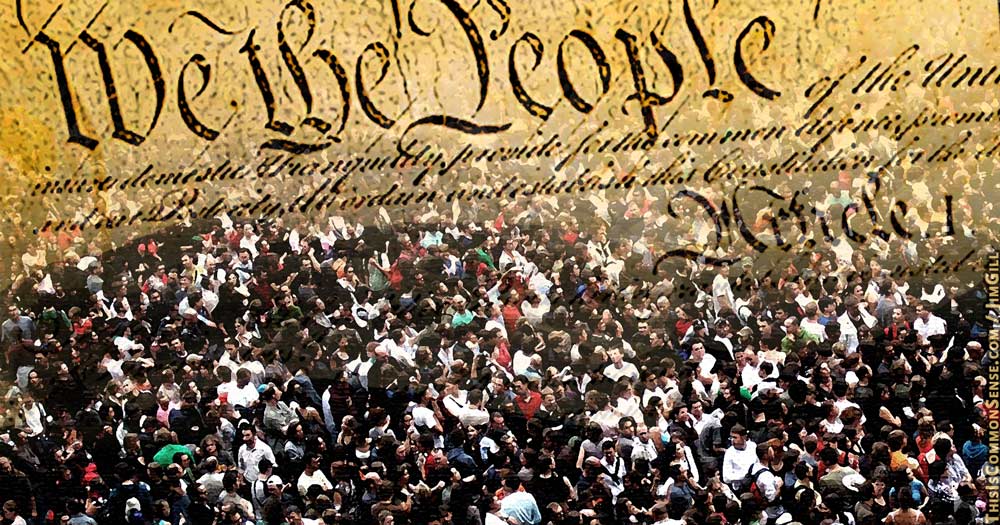
Congo-Brazzaville’s president, Denis Sassou Nguesso, is quite the statesman.

He’s actually done what many an illustrious American pol with an obsession about “campaign finance” would merely like to do, but cannot (that darn First Amendment!): prohibited all talk about politics prior to the next election.

Indeed, the government has shut down the Internet and cellular SMS services, simply to prevent undue influence prior to the upcoming votes. Democracy requires a veil of ignorance, we’re told, and Nguesso’s taken that august philosophical scheme to its logical conclusion: no information running through the information superhighway of the modern age . . . at gunpoint.

And like many a long-term American insider, he’s balking at term limits, too. He has served his legally limited two terms. So he and his fellow statesmen put a referendum onto the upcoming ballot to overthrow them.

Just so he can serve longer.

Think of the sacrifice! He really must be looking out for his earnest and ardent supporters.

But he didn’t stop there. To fulfill his mandate, and continue in office, he has to entreat the people to overturn Congo’s mandated retirement age. At 71, he’s now too old to legally run, even if he were a first-termer.

Trifecta! — a pol so insistent at continuing his life of never-ending public service that he fights against ageism, term limits, and the corrupting influence of free speech!

I’m sure he has many, many secret sympathizers in our Congress, and in the legislatures of our several states.

This is Common Sense. I’m Paul Jacob.

Printable PDF

Congo-Brazzaville’s president, Denis Sassou Nguesso, Nguesso, Africa, democracy, voting, elections, collage, photomontage, illustration, JimGill, Paul Jacob, Common Sense